



Hyaluronic acid is a humectant: it pulls water toward the surface of your skin and helps it stay there, so skin looks plumper and smoother and feels softer within minutes. It works best on damp skin, followed by a cream or oil that keeps the water from escaping. Used that way, once or twice a day, it suits almost every skin type, including sensitive skin, and it sits comfortably beside vitamin C, niacinamide and peptides.
A molecule your skin already makes
Hyaluronic acid is not a foreign active. It is a long chain of sugar units that your body produces on its own, found in the eyes, the joints and the connective tissue, and above all in the skin, which holds about half of the body's supply. In the skin it supports collagen and elastin and acts as a moisture reservoir, binding water so the surface stays supple.
On a label you will usually see it as sodium hyaluronate, the salt form of the same molecule. It is stable, easy to dissolve into a serum, and does the same job.
Why skin holds less of it over time
The amount of hyaluronic acid in skin starts to fall from our twenties, slowly, and by around fifty it is often described as roughly half of what it was. The change is gradual, a few percent a decade, which is why most people notice it as a slow shift: skin that used to feel comfortable after cleansing starts to feel tight, and fine lines show more on a dry day than a humid one.
A topical hyaluronic acid does not replace what your skin makes. What it does is add a water-binding layer at the surface, so skin looks and feels better hydrated while you use it.
What it does on the skin
The first effect is immediate. Water drawn to the surface makes skin feel softer and look smoother, a little like a plant after watering. Larger hyaluronic acid molecules also form a light film that slows the loss of water from the skin through the day.
The second effect builds with regular use. In a study of 76 volunteers, a cream with just 0.1% hyaluronic acid, applied twice a day, raised skin hydration by about 10% and made skin measurably more elastic, with fine lines a little less deep. That low figure is worth noticing: you do not need a high percentage for hyaluronic acid to do its work. How it is used matters more.
How to apply it: damp skin, then seal
Because hyaluronic acid draws water from wherever it can find it, it needs water to work with. On dry skin, in dry air, with nothing on top, it has less to draw on. The fix is simple and takes seconds.
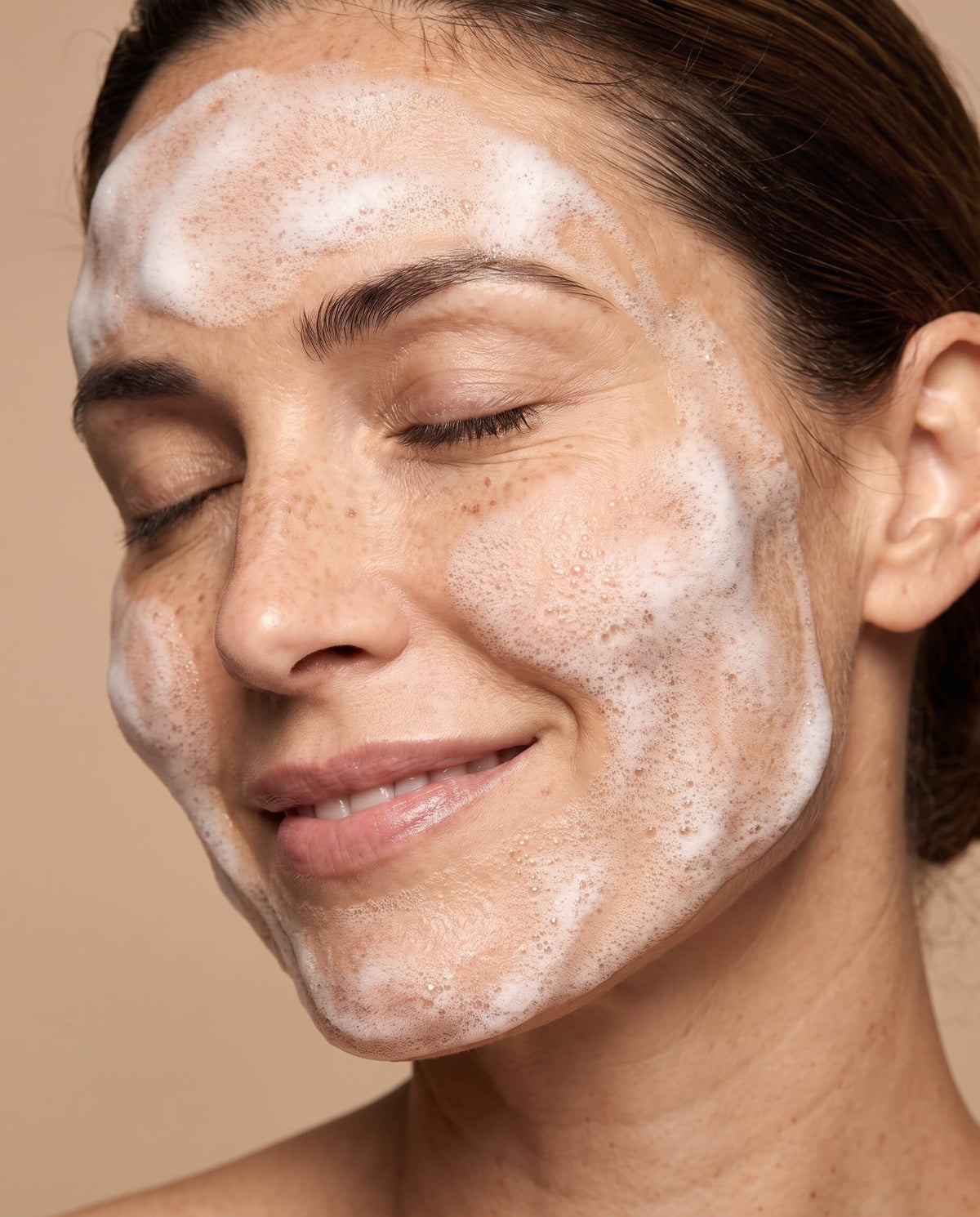
- Cleanse and leave skin slightly damp. Pat your face with a towel rather than rubbing it dry.
- Or mist first. A few spritzes of Rose Petal Mist Face Toner give a dry face a fresh layer of water to hold on to.
- Press in your hyaluronic acid serum. Use the number of drops the product suggests and press with your palms rather than rubbing.
- Seal it. Follow with a moisturizer or face oil while skin still feels fresh. The cream or oil slows evaporation, so the water the serum attracted stays in the skin.
This matters most in heated rooms in winter, in air-conditioned offices, and on planes, where the air pulls moisture from skin all day.
Where it goes in your routine
Think thinnest to thickest. Water-based serums go on after cleansing and toning, before oils and creams. If your hyaluronic acid is inside a richer formula, it simply goes wherever that formula goes.
Here is how it falls in a day with our face formulas:
- Morning: cleanse, mist, then three or four drops of the Vitamin C Collagen Boosting Face Serum with Niacinamide, which contains sodium hyaluronate alongside vitamin C, niacinamide, aloe and cucumber. Follow with moisturizer or a face oil, then sunscreen.
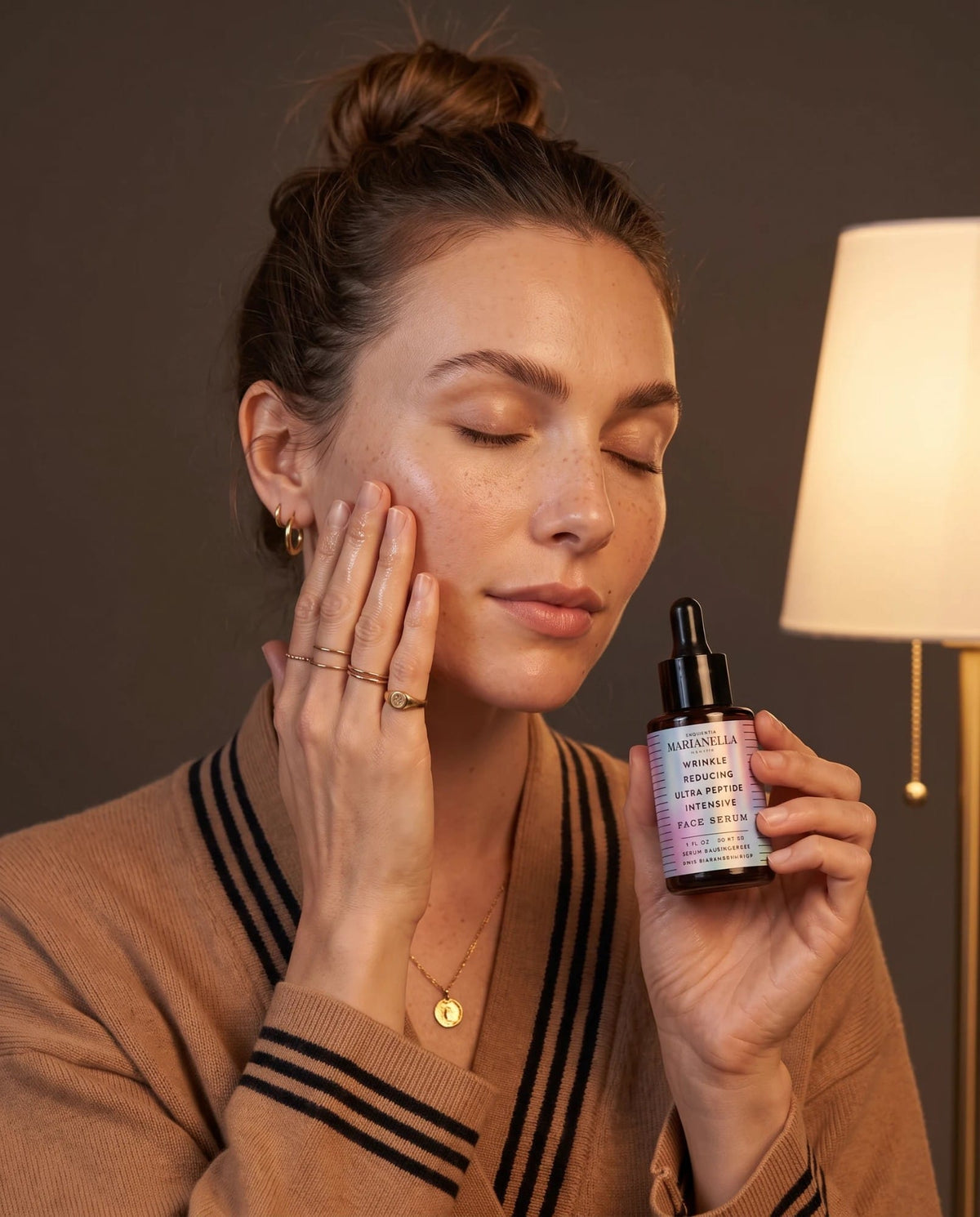
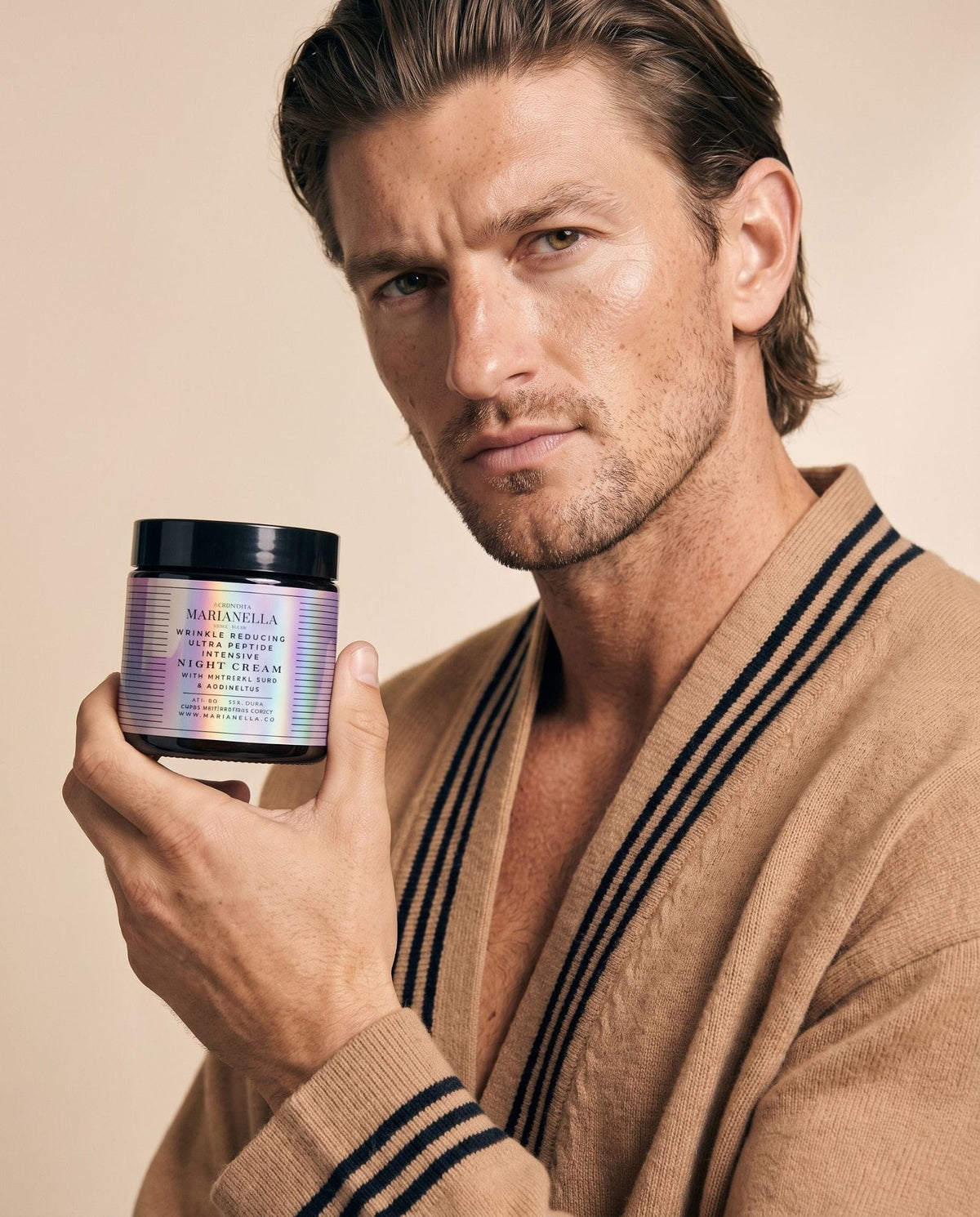
- Evening: cleanse, then two to four drops of the Wrinkle Reducing Ultra Peptide Intensive Face Serum, which pairs peptides with sodium hyaluronate. Give it a minute, then finish with the Ultra Peptide Night Cream, or with four to six drops of The Midnight Youth Potion, both of which also contain it.
Hyaluronic acid is one of the easiest ingredients to combine. It does not clash with vitamin C, niacinamide or peptides, and it is often added to formulas with stronger actives to keep skin comfortable. The one rule from our own product pages: keep the Vitamin C serum out of any routine that also uses retinol or benzoyl peroxide, and skip the Ultra Peptide formulas on nights you use retinol.
Who gets the most from it
Almost everyone, but a few kinds of skin notice it most.
- Dehydrated skin. Dehydrated skin lacks water, even if it is not dry or flaky, and it can be oily at the same time. A water-binding serum is the most direct help, and the difference shows within days.
- Skin in dry air. Winter heating, air conditioning and long flights all pull water from skin. A humectant under a cream keeps it comfortable.
- Skin that is starting to feel tight. As skin's own supply slowly falls, a daily layer of hydration helps fine lines look softer.
- Sensitive skin. Because the body makes hyaluronic acid itself, reactions are rare. Both of our serums that contain it list sensitive skin among the types they suit.
If you want to see which of our formulas contain it and why, we explain each one in where hyaluronic acid shows up in our formulas.
Questions about using hyaluronic acid
Can hyaluronic acid make my skin feel drier?
It can, if it goes onto dry skin in very dry air with nothing over it, because it then has little water to draw on. Apply it to damp skin and seal it with a moisturizer or face oil, and it does what it should.
Does hyaluronic acid go on before or after face oil?
Before. Water-based serums go on first, and oils and creams go on last to hold the moisture in. An oil-serum that already contains sodium hyaluronate, like The Midnight Youth Potion, goes on as the last step.
Do I need hyaluronic acid if I already use a moisturizer?
Not always, but they do different jobs. A humectant draws water into the surface; a cream or oil slows its escape. Together they keep skin hydrated longer than either one alone.
Can I use it morning and night?
Yes. It is gentle enough for twice a day. With our formulas, that might mean the Vitamin C serum in the morning and an Ultra Peptide formula at night.





















Leave a comment
This site is protected by hCaptcha and the hCaptcha Privacy Policy and Terms of Service apply.