

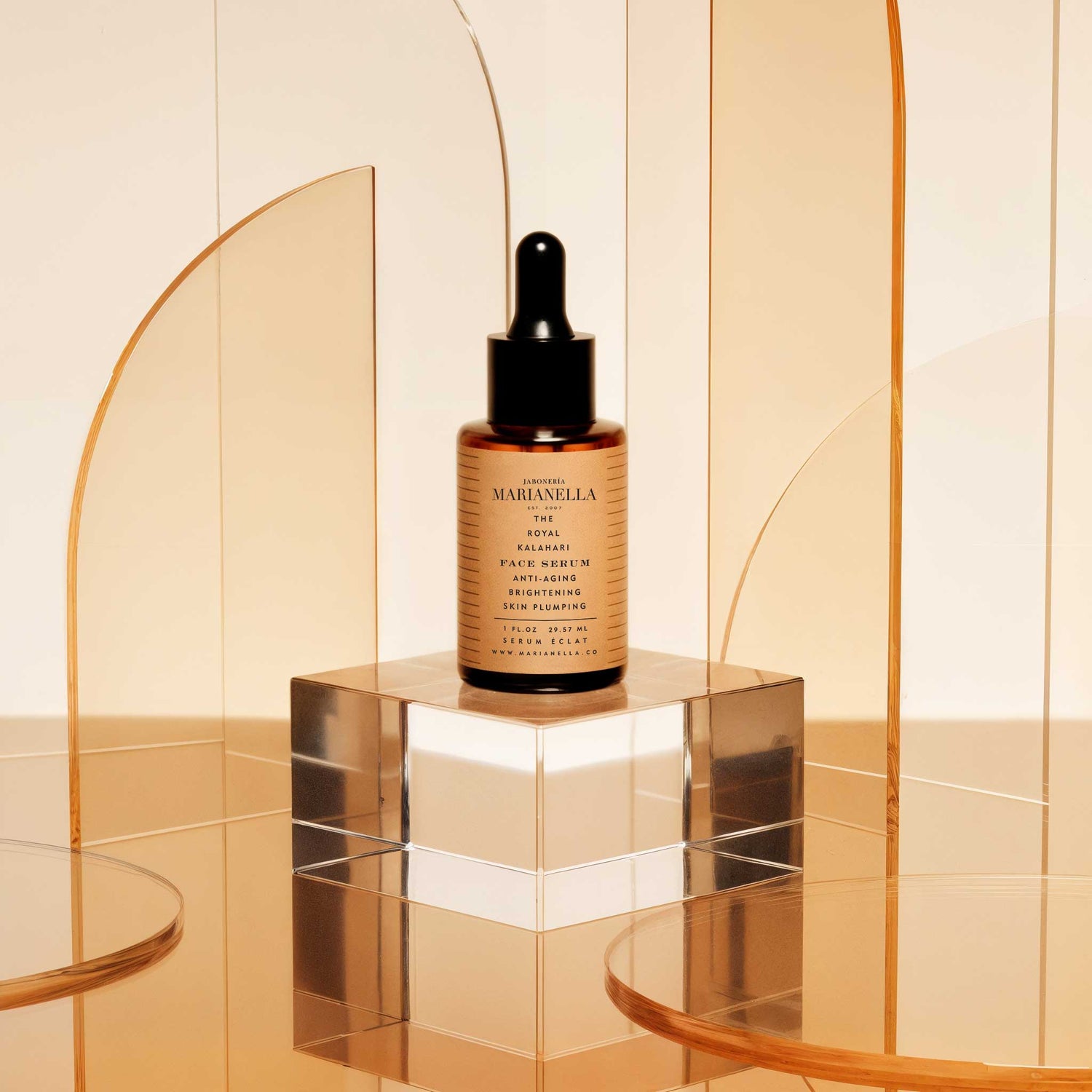
Hyaluronic acid skincare benefits are well-documented, well-researched, and in 2026, well understood by the science community. If you are building a serious skincare routine, hyaluronic acid (HA) is not optional. It is the molecule your skin already depends on to stay plump, resilient, and hydrated. The question is not whether you need it. The question is whether the product you're using delivers it intelligently.
What Is Hyaluronic Acid?
Hyaluronic acid is a naturally occurring glycosaminoglycan found throughout the body's connective tissue. Glycosaminoglycans are long unbranched carbohydrates, or sugars, called polysaccharides. It is a sugar molecule your body already produces naturally, found in your skin, eyes, and joints. About 50% of all the hyaluronic acid in your body sits in the skin, where it acts as a moisture reservoir, binding water to keep tissue hydrated, plump, and structurally stable.
In skincare products, it is used as a humectant, meaning it attracts and holds water on and within the skin's surface to deliver visible smoothing and plumping effects. HA has the ability to hold up to one thousand times its mass of water, a key component of its functional role of maintaining softness with elasticity and structure in skin.
Your skin contains hyaluronic acid in both the deeper dermis and the outer epidermis, though the dermis holds significantly more. Within the dermis, it regulates water balance, osmotic pressure, and the flow of ions between cells. It also forms a structural framework that other proteins like collagen and elastin organize around. In the epidermis, it is concentrated in the upper layers, where it helps maintain the hydration barrier that keeps skin from drying out.
Why Hyaluronic Acid Depletes With Age
HA is an important component of the extracellular matrix, with loss starting at 25 years old. As we age, natural HA production declines by approximately 50% by age 50, leading to dryness, loss of elasticity, and wrinkles. 30 to 50% of the body's HA is broken down every 24 hours as part of normal skin turnover. As we age, we make less HA naturally, but levels of the enzyme hyaluronidase, which breaks down HA, stay the same.

|
$50 |

|
$84 |

|
$50 |

|
$32 |
This enzymatic imbalance is one reason topical HA delivery matters so much in a modern skincare formula. Replenishing what the body stops making efficiently is not vanity science. It is maintenance biology.
The Science of Molecular Weight: Not All Hyaluronic Acid Is Equal
This is where most conversations about hyaluronic acid for skin fall short. The molecule is not a single uniform compound. Hyaluronic acid comes in different sizes, measured in units called kilodaltons (kDa). The size of the molecule determines what it does and how deeply it can penetrate your skin.
High Molecular Weight HA (Above 500 kDa)
High molecular weight HA molecules sit on the skin's surface, forming a moisture-trapping film. They deliver anti-inflammatory benefits, visible plumping, and immediate hydration. They do not penetrate deeply. The main action of high molecular weight HA polymer is film forming, and it reduces evaporation of water from the skin, providing an occlusive effect. This makes it an essential component of any well-structured serum, particularly for surface-level smoothing and transepidermal water loss reduction.
Low Molecular Weight HA (10 to 500 kDa)
Low molecular weight HA molecules can reach deeper into the epidermis. They stimulate cell proliferation, support tissue repair, and promote collagen production. At the deeper dermal level, low molecular weight HA stimulates fibroblast activity, the cells responsible for producing collagen and elastin. As collagen production increases, skin structure improves, wrinkles diminish, and elasticity returns.
The Optimal Molecular Weight Range
HA between 50 to 1,000 kDa is the most beneficial for skin, with about 130 kDa being the best, according to the most recent human studies. Clinical studies have evaluated the effectiveness of topical HA preparations with different molecular weights including 50, 130, 300, 800, and 2000 kDa. The use of HA with molecular weights of 50 and 130 kDa was shown to have contributed to a significant reduction in wrinkles, which may have been due to the ability of low-molecular-weight HA to penetrate the deeper layers of the epidermis.
One of the most thorough studies looked at HA with different molecular weights including 50, 130, 300, 800, and 2,000 kDa. After one month, treatment with 130 kDa HA was the most effective, increasing skin elasticity by 20 percent.
Dermatologists generally recommend serums that blend multiple molecular weights so you get both surface hydration and deeper penetration. This multi-weight approach is the current standard in formulation science for good reason. A single-weight HA product is doing only part of the job.
How Hyaluronic Acid Interacts With Your Skin's Environment
Formulation context matters as much as the molecule itself. Hyaluronic acid works best on damp skin. Because it functions as a moisture magnet, it needs available water to draw from. If you apply it to dry skin in a dry environment, it can theoretically pull water from the deeper layers of your skin instead, leaving the surface more dehydrated than before.
The simplest approach: apply your hyaluronic acid serum to a face that's still slightly wet from cleansing, or mist your face with water or a toner first. This gives the molecule a ready supply of water to bind.
Higher concentrations do not necessarily deliver better results. Very high levels can affect the texture of the product and may even reduce tolerability without any added benefit. The formulation around the hyaluronic acid, including what other ingredients support it and whether multiple molecular weights are included, matters more than packing in a higher percentage.
What the Clinical Evidence Says in 2026
The research on hyaluronic acid for skin is both extensive and continuing to grow. A randomized controlled trial including 40 females with mild-to-moderate clinical signs of skin aging demonstrated improvement in skin appearance versus placebo after 30 days of using six types of topical HA of different molecular weights according to wrinkle volume.
Another RCT in 65 females with periocular wrinkles showed significant improvement in skin hydration and elasticity versus placebo after 60 days of using 0.1% sodium hyaluronate formulations of different molecular weights.
A significant number of in vitro and in vivo studies have shown the effectiveness of HA treatment as anti-inflammatory, skin regeneration, anti-aging, and immunosuppressive effects. HA plays a valuable role in anti-aging. It delays the skin-aging process, reduces wrinkles, and prevents the formation of new wrinkles by improving water retention in the skin, limiting water loss, smoothing the texture of the skin, and strengthening the skin's structure.
Numerous studies support HA-based cosmeceuticals as a noninvasive, effective solution for improving skin hydration and rejuvenation. The science is settled enough that in 2026, the conversation has moved past whether HA works to how precisely it should be delivered.
Hyaluronic Acid Skincare Benefits: A Summary
The core hyaluronic acid skincare benefits, backed by peer-reviewed research, include:
- Deep and surface-level hydration via multi-weight molecular action
- Reduction in the visible depth and volume of fine lines and wrinkles
- Improved skin elasticity, confirmed in 30- and 60-day clinical trials
- Strengthened skin barrier function and reduced transepidermal water loss
- Support for collagen and elastin through fibroblast stimulation at the dermal level
- Anti-inflammatory activity, particularly relevant for sensitized or reactive skin
- Hyaluronic acid is safe to use. Reactions or adverse effects from hyaluronic acid are rare, and it is safe to use if you are pregnant or nursing.
Marianella's Approach: 18 Years of Formulation Expertise
Marianella has been handcrafting serums in Brooklyn since 2007. Built on three generations of Venezuelan botanical beauty knowledge and 18 years of formulation expertise, every Marianella product is small-batch, precision-made, and grounded in ingredient science. The brand is now at Bloomingdale's BEAUTYSPACE, recognized by People Magazine with the Star Beauty Award, and featured in Vogue, Forbes, and Oprah.
Hyaluronic acid appears across the Marianella lineup not as a marketing checkbox, but as a functional hydration backbone paired with botanicals and actives that amplify its performance.
The Best Hyaluronic Acid Products 2026: Marianella Picks
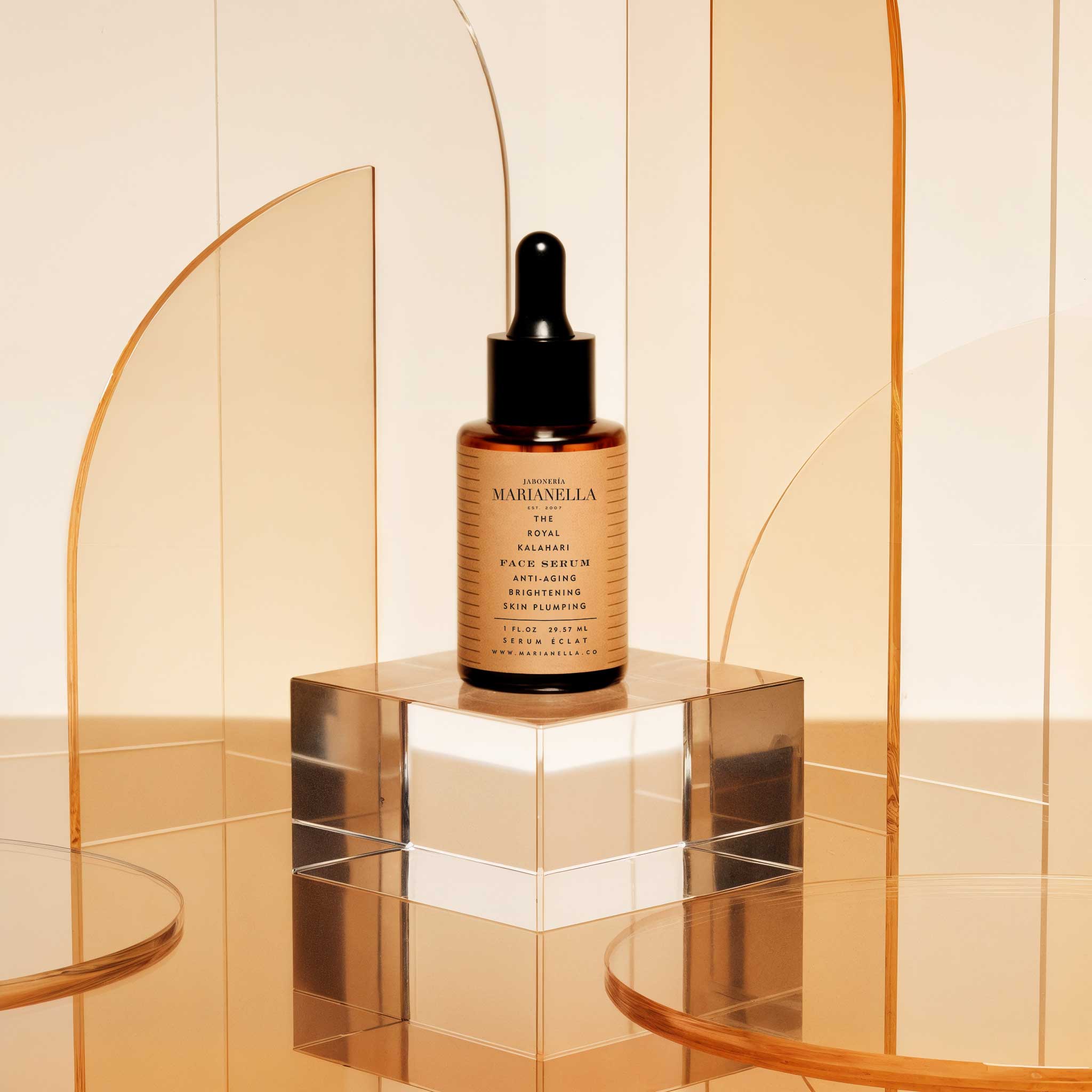
The Royal Kalahari Face Serum
One of the most refined hydration serums in the lineup. Formulated with hyaluronic acid alongside Kalahari botanicals, this serum addresses moisture retention, skin surface texture, and visible firmness with consistent use. Lightweight enough to layer, substantive enough to stand alone.
The Royal Kalahari Face Serum — $50
Wrinkle Reducing Ultra Peptide Intensive Face Serum
The most targeted anti-aging serum in the Marianella collection. Hyaluronic acid provides the deep hydration scaffold while peptide complexes address the structural side of visible aging. The combination reflects exactly what the clinical literature recommends: HA working alongside complementary actives, not in isolation.
Wrinkle Reducing Ultra Peptide Intensive Face Serum — $84
Vitamin C Collagen Boosting Face Serum with Niacinamide
A multi-active serum where hyaluronic acid anchors the hydration layer while vitamin C and niacinamide address radiance, uneven tone, and collagen support. The formulation logic is sound: when the overall HA content in the skin increases, it creates an ideal environment for collagen to thrive. Vitamin C amplifies that process from a different biological angle.
Vitamin C Collagen Boosting Face Serum with Niacinamide — $50
The Royal Kalahari Under Eye and Lip Serum Roller Oil
The under-eye and lip area depletes HA faster than the rest of the face due to thinner skin and greater movement. This roller oil delivers hyaluronic acid directly to where volume loss and fine lines appear first, with a cooling applicator that reduces puffiness on contact. Precise, targeted, and portable.
The Royal Kalahari Under Eye and Lip Serum Roller Oil — $32
How to Layer Hyaluronic Acid Correctly
Application order determines outcome. Hyaluronic acid serums go on cleansed, still-damp skin before heavier moisturizers or oils. The humectant needs available moisture in the environment or on the skin surface to function at full capacity. Apply, press gently into skin, and follow immediately with a moisturizer or facial oil to seal the hydration in place. This is especially critical in low-humidity climates or heated indoor environments.
For the under-eye area, the Royal Kalahari Roller applies comfortably before or after your main serum step, depending on preference.
Who Benefits Most From Hyaluronic Acid for Skin
Every skin type benefits, but the priority varies by concern:
- Dehydrated skin of any age: Immediate, measurable improvement in plumpness and surface smoothness within days.
- Skin showing early signs of aging (mid-20s onward): HA loss starts at 25 years old, making preventive topical application relevant earlier than most people start.
- Mature skin: Mature skin, facing visible wrinkles and loss of firmness, benefits from products featuring low molecular weight hyaluronic acid that can work at the dermal level.
- Sensitive or reactive skin: HA is one of the few actives with a near-universal tolerance profile. HA tends not to cause allergic reactions since our bodies also make it.
The Bottom Line
Hyaluronic acid is the most biologically logical hydration ingredient in skincare. It is already present in your skin, already essential to your skin's architecture, and measurably effective when delivered in a well-formulated topical product. The research from 2024 through 2026 continues to refine rather than revise that conclusion.
What separates a good HA product from a great one is formulation. Molecular weight diversity, complementary actives, and delivery context all determine whether the molecule performs at the surface or works deeper where aging begins.
Marianella's hyaluronic acid serums are formulated with that precision. Browse the full collection and find the right entry point for your skin's current needs.
```


Leave a comment
This site is protected by hCaptcha and the hCaptcha Privacy Policy and Terms of Service apply.