


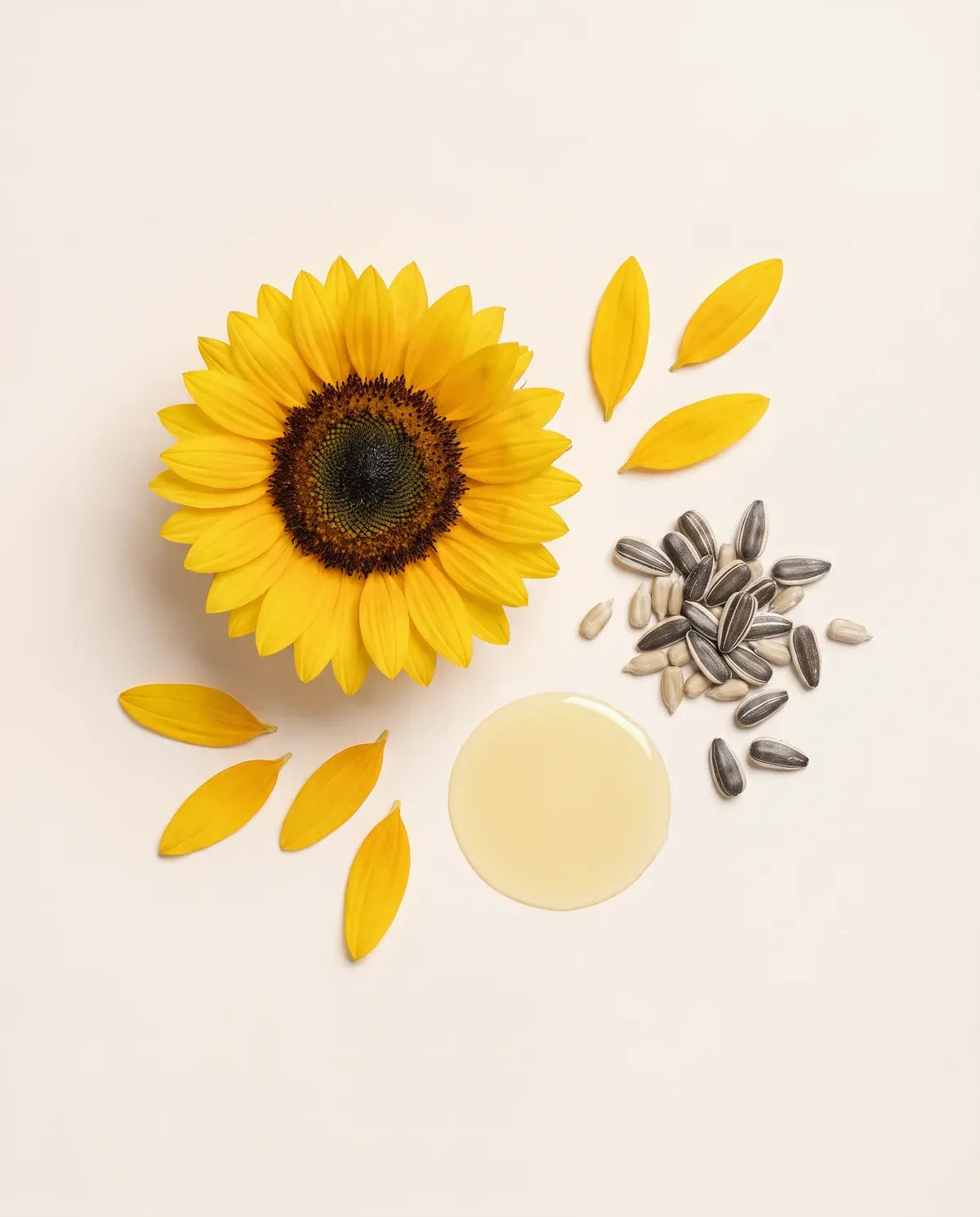
Sunflower seed oil is a light, golden oil pressed from the seeds of Helianthus annuus, and the research on skin points to one thing above all: it is rich in linoleic acid, a fatty acid the skin uses to build its own protective lipids. Applied to skin, it softens, helps limit moisture loss and, in a frequently cited comparison, kept skin better hydrated than olive oil did. It is a dependable supporting oil rather than a miracle, and that is exactly why formulators like it.
A seed oil built mostly of linoleic acid
Sunflower oil is about 15 percent saturated fat and 85 percent unsaturated. Within the unsaturated part, the balance between two fatty acids decides how the oil behaves. Linoleic acid, an omega-6, makes up anywhere from 44 to 75 percent depending on the variety. Oleic acid, an omega-9, makes up most of the rest.
The high-linoleic type, the one preferred for skin care, typically contains at least 69 percent linoleic acid. Other varieties have been bred to be high in oleic acid for cooking, so two bottles labeled sunflower oil can be quite different. On a cosmetic label you will see it as Helianthus Annuus (Sunflower) Seed Oil.
Why linoleic acid matters to skin
Linoleic acid is the most abundant fatty acid in the outer layer of the skin, and the body cannot make it on its own. Skin uses it to build ceramides, the waxy lipids that sit between skin cells like mortar between bricks and help keep water in. When the outer layer has enough of these lipids, skin feels smoother, more supple and less tight.
A topical oil does not rebuild skin by itself, but supplying a fatty acid the skin already uses is a sensible, gentle way to support that outer layer. It is also why sunflower oil feels comfortable on most skin types rather than heavy.
The olive oil comparison
The study most people quote is a small one with 19 adult volunteers, who applied olive oil to one forearm and sunflower seed oil to the other for four weeks. The sunflower side kept its barrier intact and showed better hydration, without redness. The olive oil side came out worse: the barrier measured weaker and the skin looked slightly redder.
Researchers put the difference down to fatty acid balance. Olive oil is high in oleic acid; sunflower oil carries a much higher share of linoleic acid, and there is clinical data suggesting that oils richer in linoleic acid than oleic acid are the better choice for the skin's barrier. The study was small, but its finding has held up well enough that it is now a standard reference when people compare plant oils.
Vitamin E and keeping the oil fresh
Sunflower oil is naturally high in alpha-tocopherol, the most active form of vitamin E, at roughly 60 milligrams per 100 grams. Vitamin E is a fat-soluble antioxidant. In the bottle, it slows the oil's own oxidation, which matters because linoleic-rich oils are delicate. On skin, it adds a measure of antioxidant care against everyday sun and city air.
Even so, sunflower oil should be kept cool and capped. An oil this rich in unsaturated fat will turn stale if it sits in heat and light for long.
Cold-pressed, refined and everything between
How the oil is made changes what reaches your skin. Cold-pressed oil, made at low temperature, keeps more of its vitamin E and other minor compounds. Heat-refined oil is paler and more neutral in scent, and loses some of those extras along the way. Neither is wrong for a cosmetic, but it explains why the same name can cover oils of different quality.
For allergies, the Ingredient Library notes that reactions are rare and usually linked to the daisy family. If you react to ragweed, chamomile or daisies, patch test any product containing sunflower seed oil before using it widely.
Where it appears in our formulas
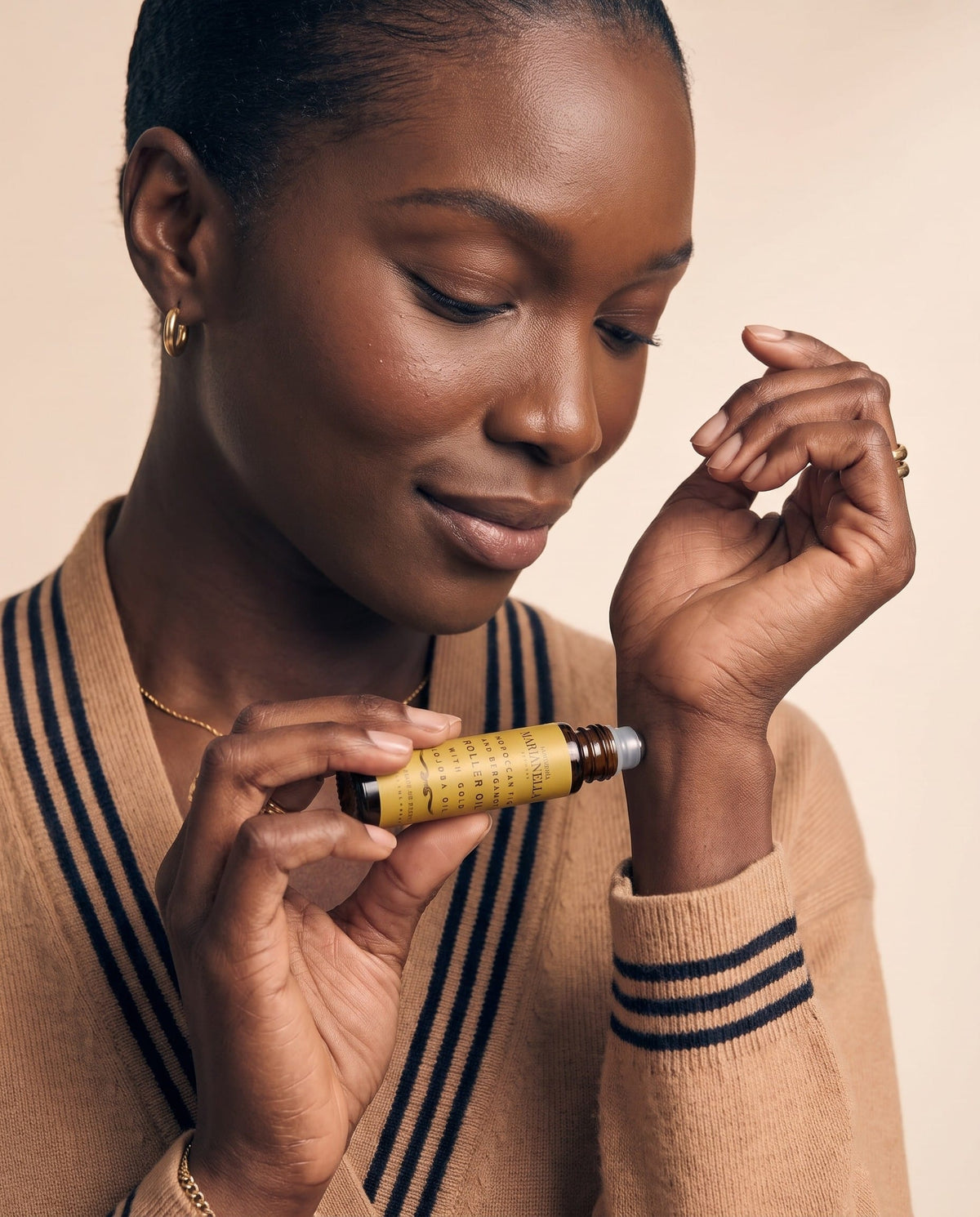
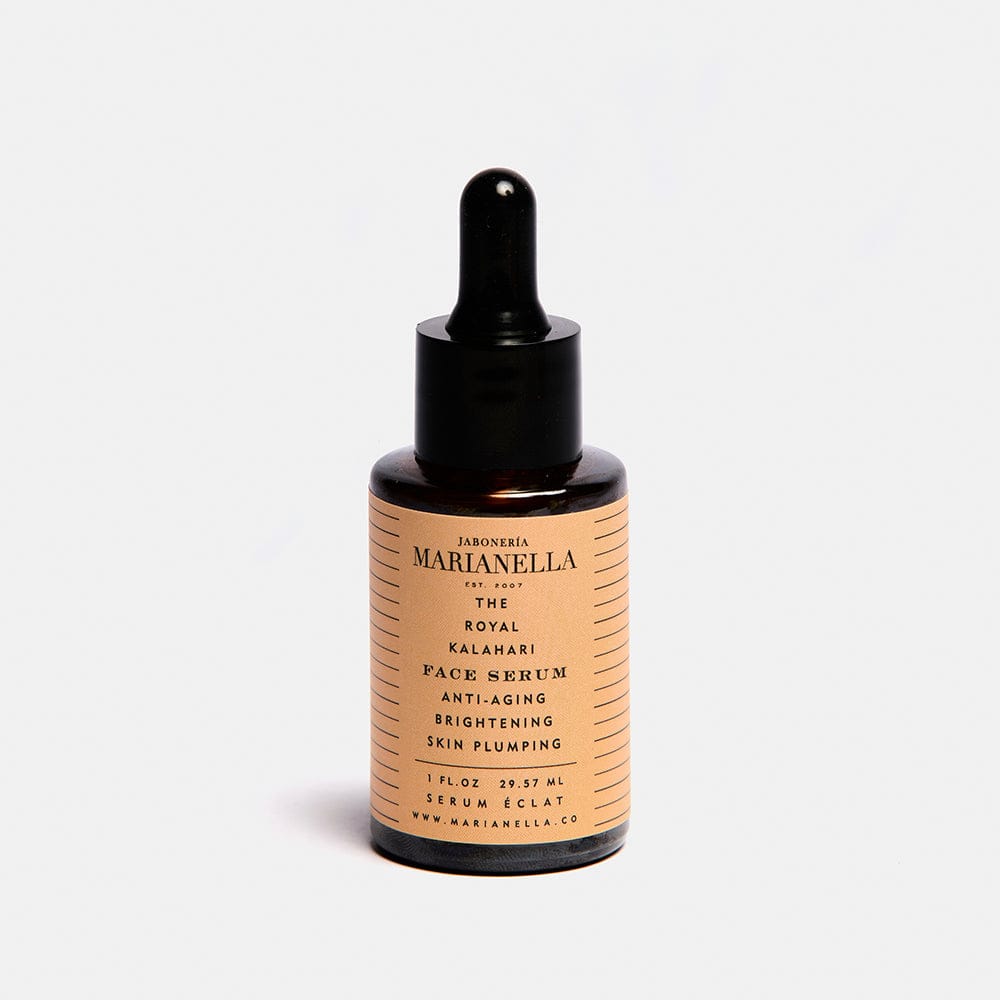
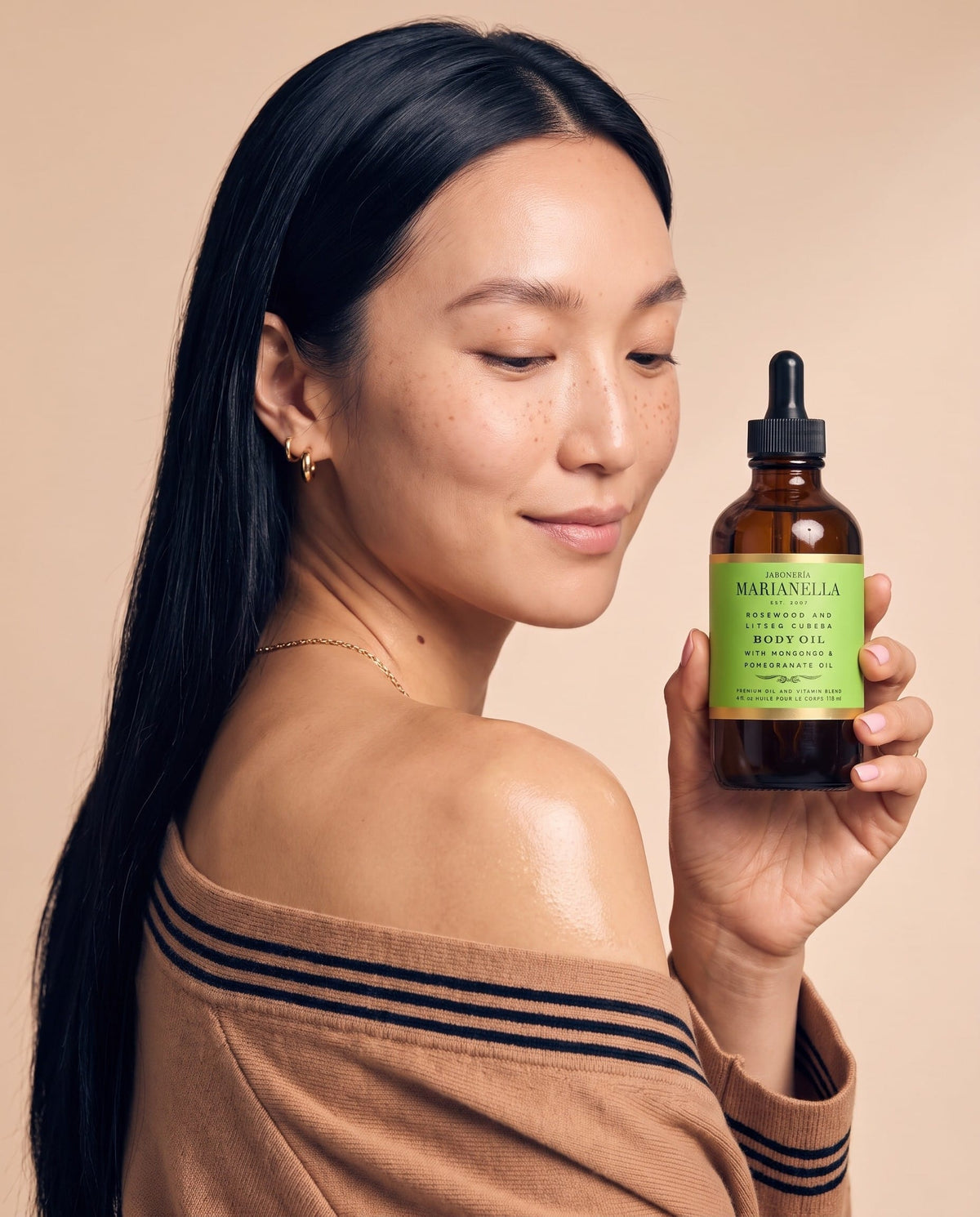
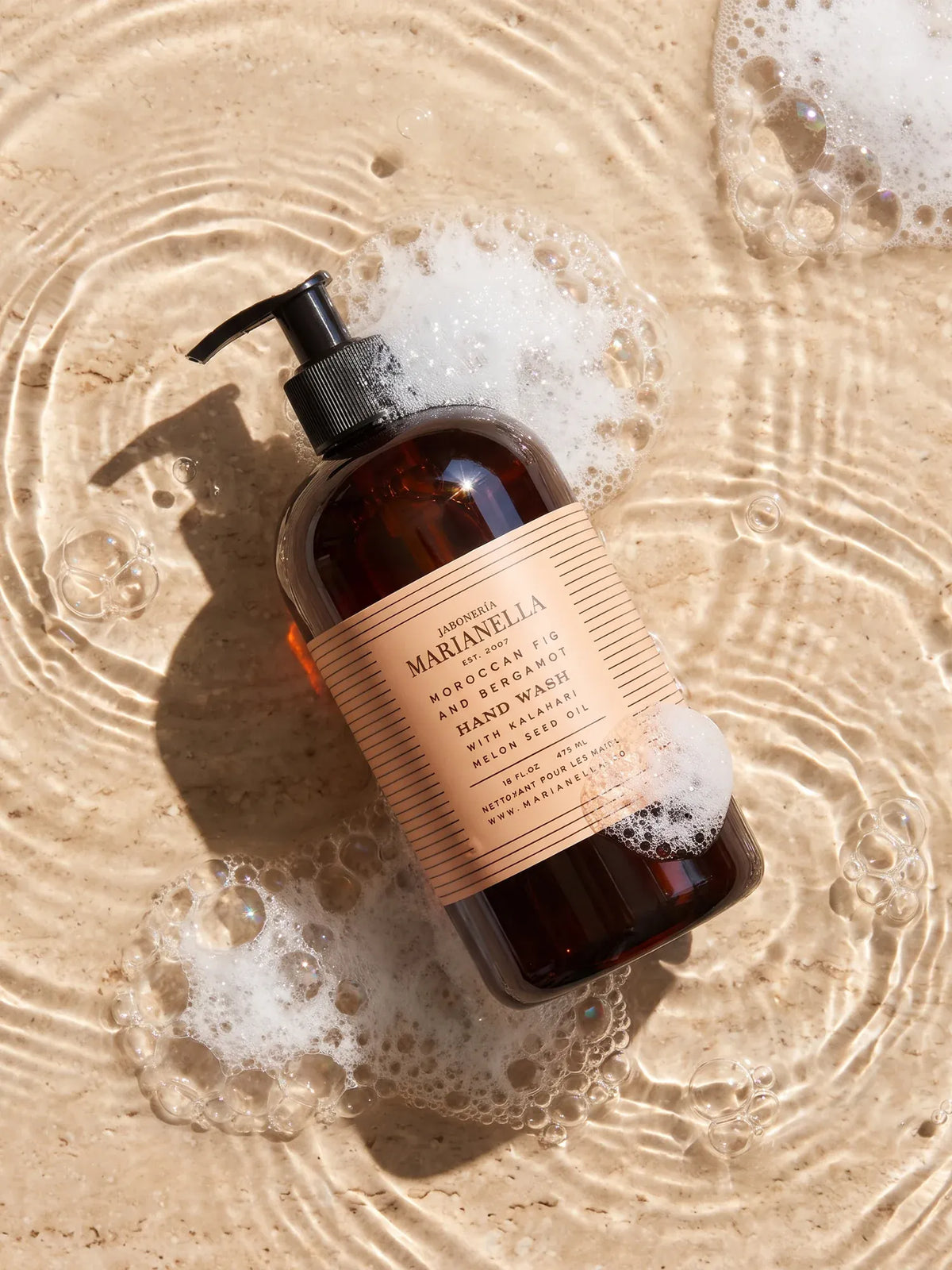
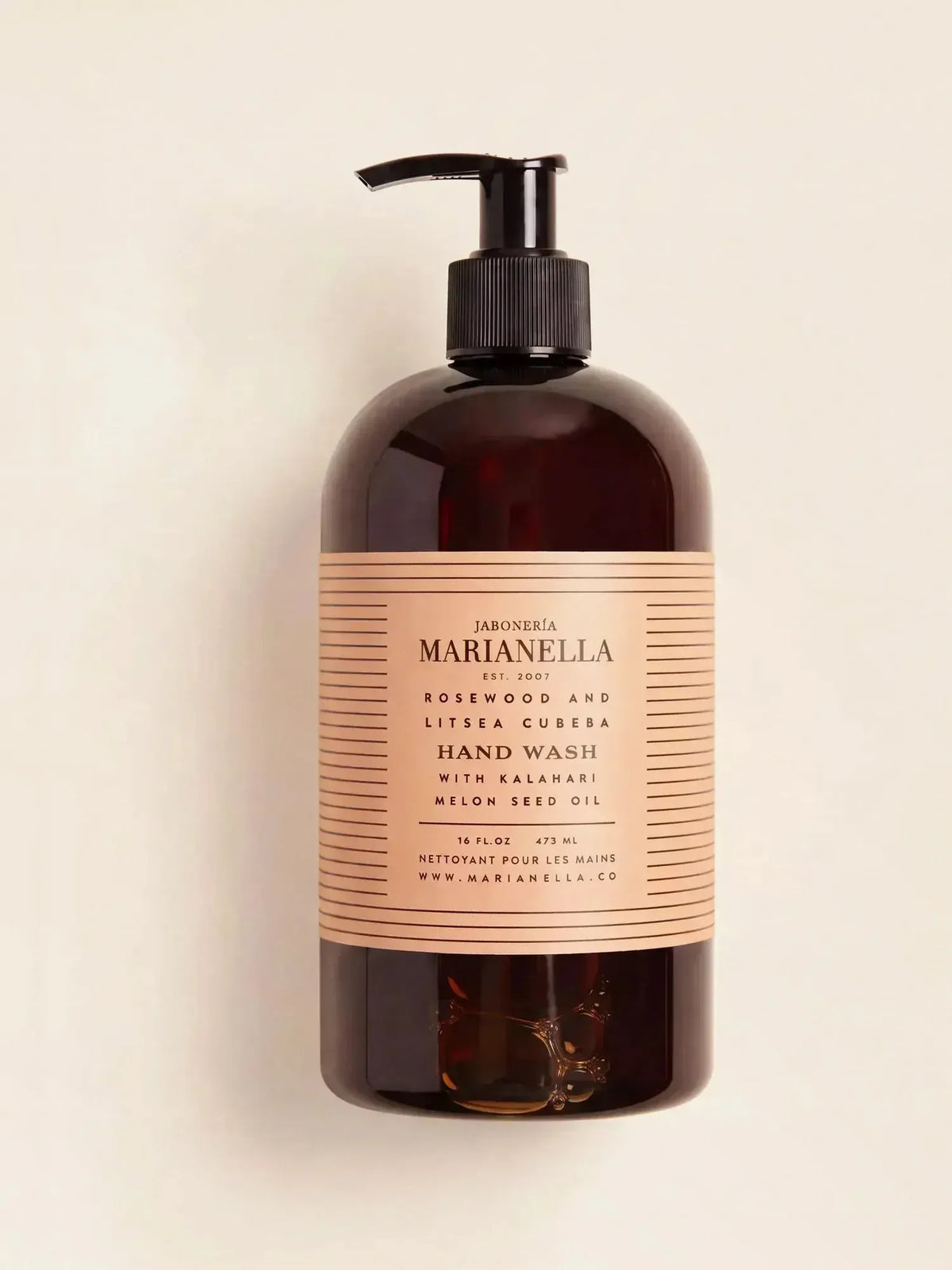
At Marianella, sunflower seed oil is a supporting oil in our body and hand care. It cushions dry skin in our Rejuvenating Body Cream and Hydrating Hand Cream, sits among the oils of our Lava Body Caviar, and is the light carrier for our Fragrance Roller Oils. In each case it shares the work with Kalahari melon seed oil, the light, linoleic-rich oil our brand is built on, or with fragrance from our own perfumery.
Questions about the research on sunflower seed oil
Is skin care sunflower oil the same as the oil in my kitchen?
Not always. Many cooking oils come from high-oleic varieties, while skin care favors high-linoleic oil. Processing differs too, so a kitchen bottle is not a reliable stand-in.
Why does linoleic acid matter more than oleic acid for skin?
Linoleic acid is the fatty acid skin uses to build its own moisture-holding lipids. Oils high in oleic acid can feel lovely on dry skin, but in the olive oil comparison the oleic-rich oil left the barrier weaker, not stronger.
Does sunflower seed oil go rancid?
It can. Its unsaturated fats oxidize with heat, light and air, although its natural vitamin E slows that down. Keep products capped and away from sunny windowsills.





















Leave a comment
This site is protected by hCaptcha and the hCaptcha Privacy Policy and Terms of Service apply.