


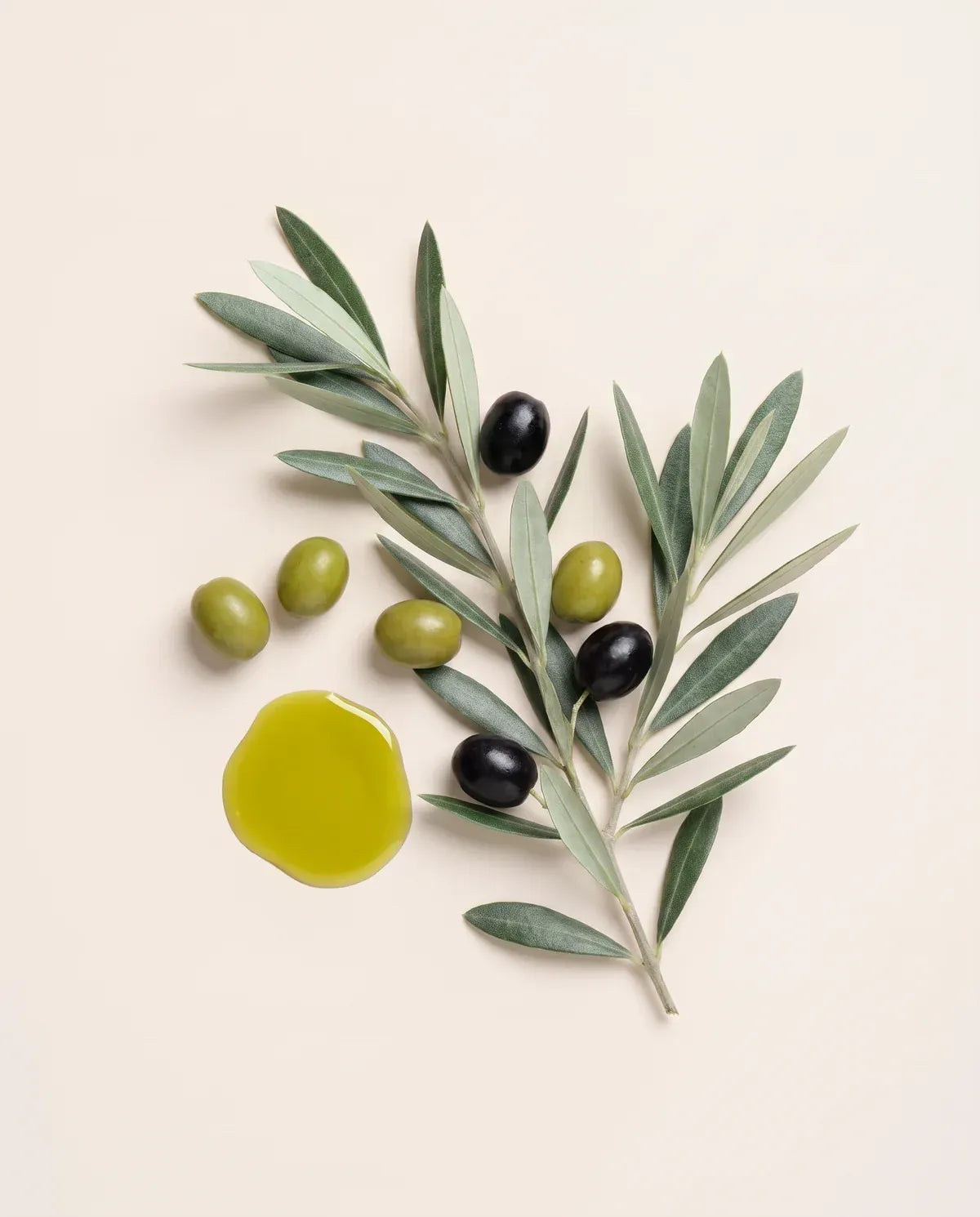
Olive oil is roughly 98 percent fatty acids, mostly oleic acid, and about 2 percent a mix of minor compounds: squalene, vitamin E, sterols and polyphenols. On skin, the fatty acids make it a rich, softening emollient that helps skin hold the moisture it has; the minor compounds add antioxidants and squalene, a lipid skin also makes for itself. Knowing what each part does explains why olive oil feels the way it does, why quality varies so much from bottle to bottle, and where it suits skin best.
The fatty acids: mostly oleic
Oleic acid makes up somewhere between 55 and 83 percent of olive oil, depending on the olives and where they grew. It is a monounsaturated fatty acid, meaning its chain has a single double bond. That single bond is why olive oil is liquid at room temperature yet fairly resistant to going stale: oils with more double bonds, such as linoleic-rich seed oils, oxidize faster.
On skin, oleic acid feels rich, cushioning and slow. It softens dry, rough patches well and lingers for a while before it settles. Olive oil also carries smaller amounts of linoleic and palmitic acids, but the oleic acid sets the tone.
Squalene: the lipid skin already knows
Squalene is one of the lipids in human sebum, the oil skin makes to keep itself supple, and our own production of it slows as we age. Among plant oils, olive oil has some of the highest squalene levels, although it still makes up only a small fraction of the oil.
Squalene itself is not very stable, which is why skin care usually uses squalane instead, a hydrogenated, saturated version that keeps far better. Our Squalane Face Oil is plant squalane from olives. Without olive oil's fatty acids around it, it behaves completely differently: clear, silky and almost weightless, leaving skin soft rather than shiny.
Polyphenols: the antioxidant fraction
More than 30 phenolic compounds have been found in olive oil. The ones you will hear about most are:
- Hydroxytyrosol, the main phenolic compound in extra virgin olive oil, and a strong antioxidant.
- Tyrosol, a close relative and another of the most abundant.
- Oleocanthal, the compound behind the peppery catch at the back of your throat when you taste a good oil.
- Oleuropein, the bitter compound found throughout the olive fruit and leaf.
How much of these an oil contains varies widely, from around 150 to 700 milligrams per liter, depending on the olive variety, how ripe the fruit was, the soil and climate, and how the oil was harvested, pressed and stored. Their most dependable job is protecting the oil itself from going stale. Studies of what they do on skin are mostly lab work on cells, or trials of concentrated extracts in formulated serums, rather than plain oil.
Vitamin E
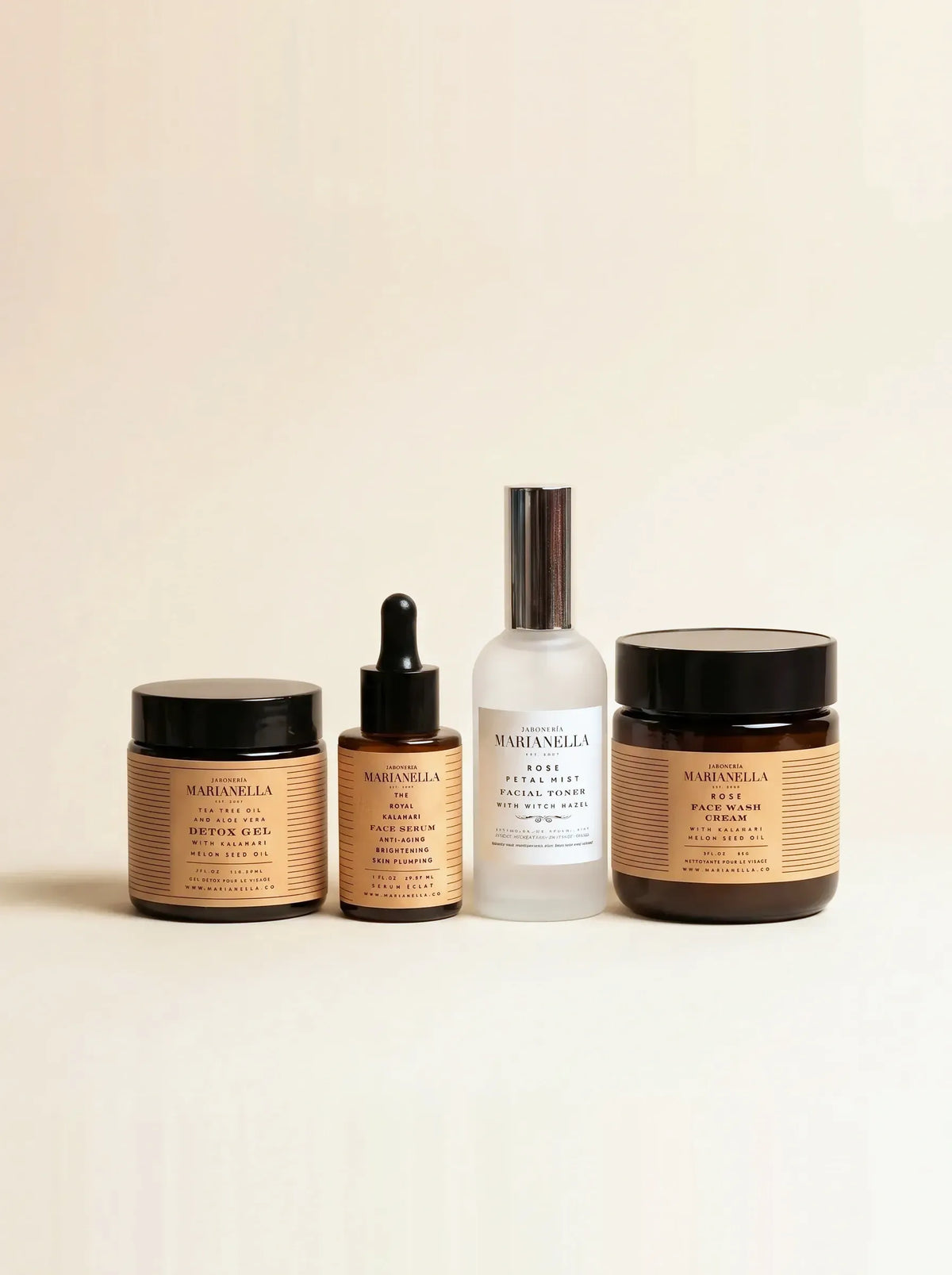
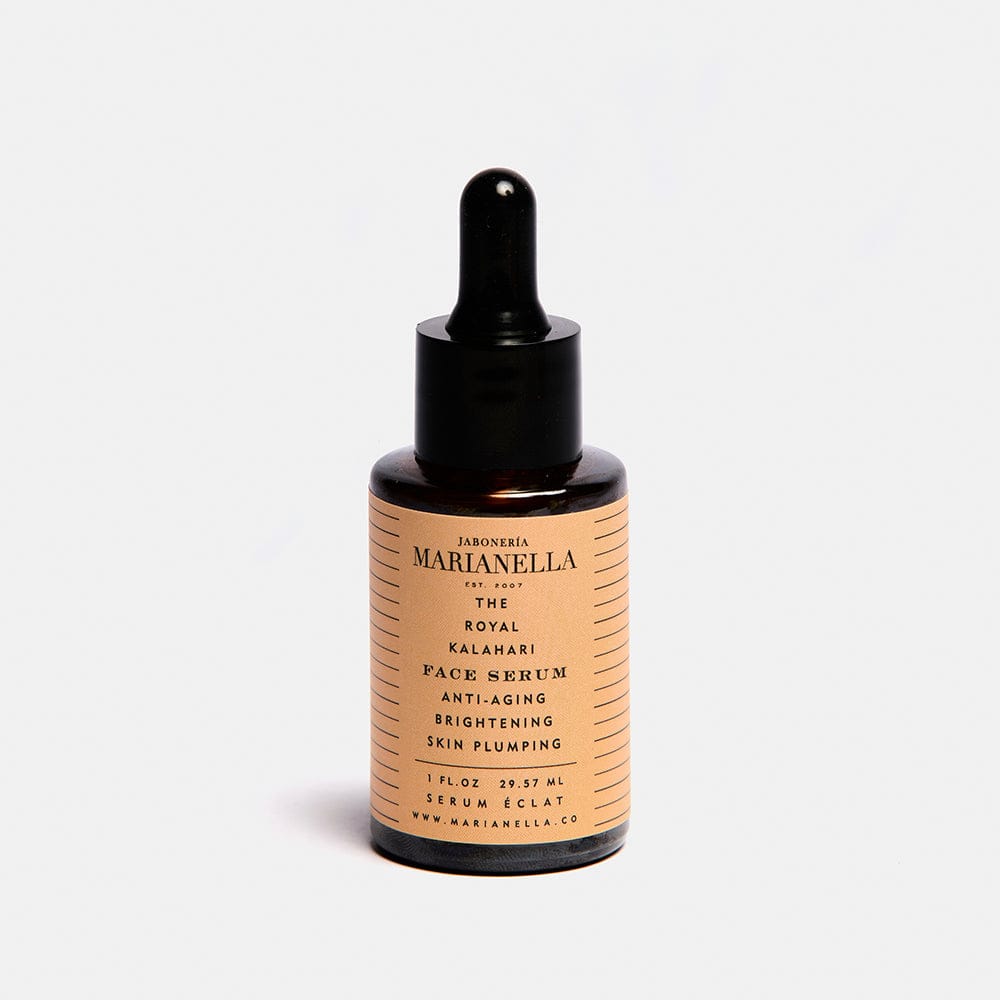
Olive oil carries vitamin E as alpha-tocopherol, a fat-soluble antioxidant that, like the polyphenols, helps keep the oil fresh. Vitamin E also appears in many skin care formulas for the same reason. In our own range it is part of the Royal Kalahari Face Serum, the Imperial Jade Body Oil and our hand and body creams, and plum and marula oils carry it naturally.
Extra virgin and refined
The grade on the label tells you how much of that minor fraction survived. Extra virgin olive oil is pressed without heat or chemical refining, so it keeps the most polyphenols, squalene and vitamin E, along with its color and flavor. Refined olive oil is processed after pressing to remove flavor and defects, which strips out much of the antioxidant content. For skin, extra virgin keeps the most of what makes olive oil interesting, and its antioxidants help it last longer once opened.
What all this means on skin
Put together, the chemistry explains the experience:
- It softens. The fatty acids and squalene act as emollients, smoothing rough, dry skin.
- It helps skin hold moisture. A layer of oil slows the evaporation of water from the surface. Apply it to damp skin for the best effect.
- It feels heavy on some faces. All that oleic acid sinks in slowly, and olive oil is usually rated as moderately likely to clog pores. Oily and blemish-prone skin often does better with a lighter oil.
- It varies. Two bottles of olive oil can differ widely in their antioxidant content, so results from one study, or one bottle, do not always carry over to the next.
A lighter alternative for the face
If you like the idea of an oleic oil but not the weight, our Plum Face Oil carries both oleic and linoleic acids and natural tocopherols, the vitamin E family, in a silky oil that glides on like a serum and settles in at a gentle pace. It is 100% pure plum seed oil with no added fragrance. Press four to six drops into clean skin as your last step.
Questions about what is in olive oil
How much of olive oil is oleic acid?
Between about 55 and 83 percent, depending on the olives. It is the main reason olive oil feels rich and slow on skin.
What is hydroxytyrosol?
It is the main phenolic antioxidant in extra virgin olive oil. Its clearest job is keeping the oil itself from going stale.
What is the difference between squalene and squalane?
Squalene is the natural lipid found in skin and in olive oil. Squalane is its hydrogenated form, which is far more stable and is what skin care products, including our Squalane Face Oil, use.
Does olive oil go off?
Yes, eventually. Its oleic acid and antioxidants make it fairly stable, but keep it cool, dark and capped, and replace it if it smells stale or sour.





















Leave a comment
This site is protected by hCaptcha and the hCaptcha Privacy Policy and Terms of Service apply.