

Sunflower seed oil skincare benefits go far deeper than the ingredient's humble, familiar name suggests. This cold-pressed botanical oil, derived from Helianthus annuus seeds, is one of the most rigorously studied plant oils in dermatology. It repairs the skin's lipid barrier, delivers antioxidant protection, and absorbs without leaving a greasy finish. It is the kind of ingredient that earns its place in a formula through chemistry, not marketing. At Marianella, 18 years of formulation expertise and three generations of Venezuelan botanical knowledge inform every choice, and sunflower seed oil is one that earns its place repeatedly.
What Is Sunflower Seed Oil?
Sunflower seed oil is a light, golden oil pressed from the seeds of the Helianthus annuus plant. It is primarily composed of linoleic acid, a polyunsaturated fat, and oleic acid, a monounsaturated fat. The oil contains a large amount of vitamin E. Its INCI name on cosmetic labels is Helianthus Annuus (Sunflower) Seed Oil, and it appears in formulations ranging from body scrubs to serums because of its versatile, skin-compatible fatty acid profile.
Sunflower oil contains approximately 15% saturated and 85% unsaturated fatty acids, consisting of 14–43% oleic and 44–75% linoleic acids in its unsaturated fatty acid content. The high-linoleic variety, the type preferred for skincare, typically has at least 69% linoleic acid. That concentration is significant. It is not a trace amount. It is the structural foundation of what makes this oil effective on skin.
The Science Behind Sunflower Seed Oil for Skin
Linoleic Acid and the Skin Barrier
Rich in unsaturated fatty acids, particularly linoleic acid and oleic acid, sunflower seed oil supports skin health by restoring lipid bilayer organization, modulating ceramide synthesis, and activating peroxisome proliferator-activated receptor-alpha (PPAR-α). This is not superficial hydration. This is cellular-level barrier repair.

Sunflower seed oil has a good amount of linoleic acid, which is known to boost production of natural ceramides, which maintain the skin barrier, improving hydration and elasticity. High linoleic acid content helps restore barrier function and reduce transepidermal water loss in adult skin. Transepidermal water loss (TEWL) is the dermatological measure of how much moisture escapes through the skin. Lower TEWL means a stronger, better-sealed barrier.
Sunflower seed oil activates PPAR-alpha, which has numerous benefits in the epidermis, including increased lipid production and lamellar body formation, and differentiation of keratinocytes, that help to rebuild natural barrier function. This mechanism is why dermatologists consider it a clinically relevant ingredient, not merely a cosmetic one.
Clinical Evidence: Sunflower Seed Oil vs. Other Plant Oils
One of the most cited comparisons in skincare research pits sunflower seed oil directly against olive oil. The results are clear. Sunflower seed oil did not cause erythema and preserved skin barrier function while actually improving hydration. Sunflower seed oil significantly improved skin barrier function recovery, with an effect that was sustained 5 hours after application. The study involved 19 adult volunteers, and the findings have been referenced extensively in subsequent dermatology literature.
Sunflower seed oil is rich in linoleic acid and has been used topically in the treatment of essential fatty-acid deficiency, rapidly reversing the disease with its excellent transcutaneous absorption. These essential fatty acids can help maintain the skin barrier and decrease transepidermal water loss, both important features in thinking about skin problems such as atopic dermatitis.
Anti-Inflammatory Properties
The anti-inflammatory properties of sunflower oil, attributed to both vitamin E and linoleic acid, make it an excellent ingredient for calming redness and soothing irritated skin. The mechanism goes to the molecular level: this unsaturated fatty acid induces the inhibition of the NF-κB pathway involved in the inflammation process, thereby reducing the production of pro-inflammatory cytokines such as TNF-α.
A study of 86 children with moderate atopic dermatitis, randomized to corticosteroids with or without a sunflower-oil-containing cream, found a significant impact on lichenification and excoriation, decreased corticosteroid use, and improved quality of life compared to the control group. For anyone managing reactive, sensitive, or condition-prone skin in 2026, that clinical context matters.
Antioxidant Protection: The Role of Vitamin E
Vitamin E, a potent fat-soluble antioxidant present in sunflower seed oil, combats oxidative stress by neutralizing free radicals, which are unstable molecules that can damage skin cells and accelerate aging. This antioxidant power helps to protect the skin from environmental stressors such as UV radiation and pollution.
The vitamin E content in the oil, about 60 mg per 100 g, allows sunflower oil to have good stability against oxidation. This matters in formulation. An oil that oxidizes quickly can generate free radicals of its own. Sunflower seed oil's tocopherol content helps it stay stable and active in a finished product.
Sunflower Seed Oil for Skin: Who It Works For
All Skin Types, Including Acne-Prone
High linoleic sunflower oil has a comedogenic rating of 0, meaning it is unlikely to clog pores, making it suitable for all skin types, including acne-prone skin. Easily absorbed and suitable for all skin types, from dry to oily to acne-prone, it is one of the most versatile and reliable oils in natural skincare.
Research shows that people with acne have low levels of linoleic acid in their skin's surface lipids. Topical application of linoleic-acid-rich sunflower seed oil directly addresses that deficit without the pore-clogging risk associated with heavier botanical oils.
Sensitive and Reactive Skin
Sunflower seed oil is gentle and well tolerated by most skin types, including sensitive skin, due to its soothing fatty acids and vitamin E content. Sunflower oil exhibits a good rate of penetration: its rich composition of polyunsaturated fatty acids such as linoleic acid allows it to easily penetrate the skin barrier. Thanks to its numerous double bonds, linoleic acid is flexible, which facilitates the oil's penetration. Moreover, linoleic acid is a natural component of the stratum corneum, which further enhances penetration.
That last point is key. The skin already recognizes linoleic acid as part of its own structure. Sunflower seed oil is not a foreign input. It is, biochemically, a replenishment.
Dry and Textured Skin
High linoleic acid and vitamin E content help soften rough patches, smooth texture, and reduce feelings of tightness caused by dryness. It hydrates the skin and prevents water loss without clogging pores. For body skin especially, where the barrier is often more compromised due to environmental exposure and less consistent care, sunflower seed oil works efficiently and without heaviness.
How Marianella Uses Sunflower Seed Oil
Marianella was founded in Brooklyn in 2007 by a Venezuelan entrepreneur who brought three generations of botanical beauty knowledge to a line now spanning 82 products across face, body, and home. The brand has been recognized by Vogue, Oprah, Forbes, Allure, and WWD, and named a People Magazine Star Beauty Award winner. Every formulation is handcrafted in small batches, and every ingredient is chosen for function first.
Sunflower seed oil's barrier-supporting, non-comedogenic, and antioxidant-rich profile makes it a fitting carrier in body formulations that need to deliver active ingredients efficiently without heaviness or irritation.
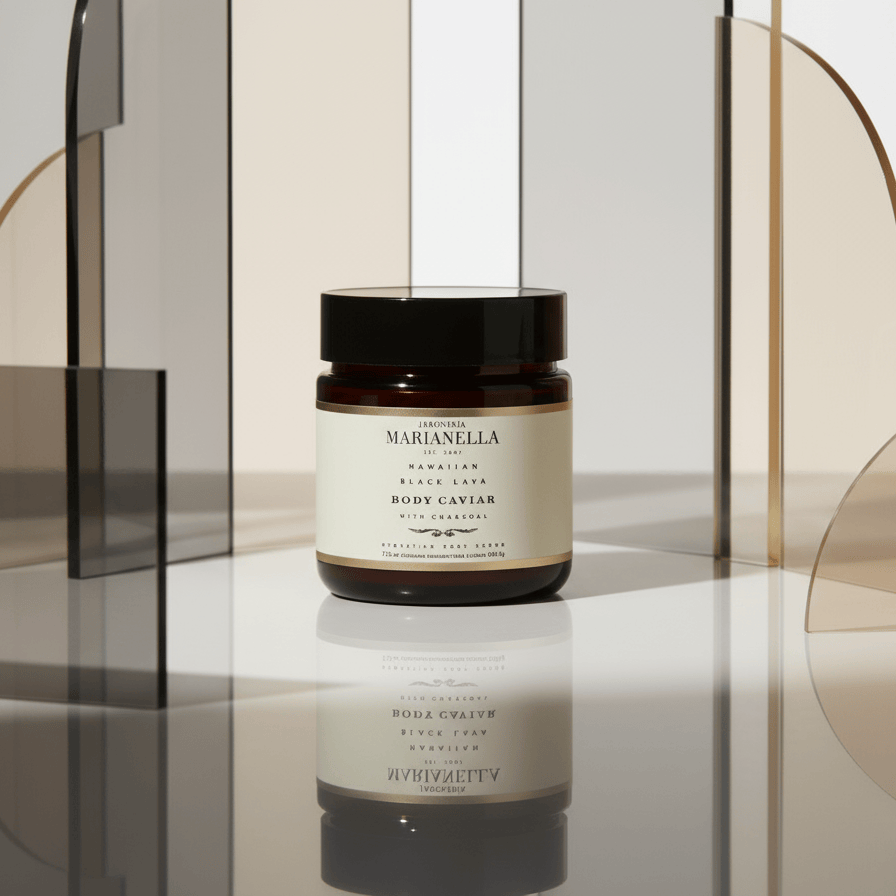
Hawaiian Black Lava Body Caviar Body Scrub with Charcoal
The Hawaiian Black Lava Body Caviar Body Scrub with Charcoal is where volcanic mineral exfoliation meets a nourishing oil base. Activated charcoal draws out impurities while the formulation's emollient carriers, including sunflower seed oil, ensure the exfoliation process conditions rather than strips. Unlike mineral oils that sit on the surface, sunflower seed oil penetrates into the epidermis, improving overall skin texture and providing long-lasting softness. In a scrub format, that penetration means the skin is being nourished mid-exfoliation, not just abraded. The result is the soft, smooth finish that distinguishes a well-formulated scrub from a harsh one. $34.
Formulation Matters: What to Look for in Sunflower Seed Oil Products
Not all sunflower seed oils perform identically in skincare. The extraction method plays a crucial role in preserving beneficial compounds. Low-temperature or cold-pressed extraction methods are preferred as they retain the integrity of the delicate fatty acid and vitamin E content. Refined versions processed with heat may lose the tocopherols and polyphenols that drive the ingredient's clinical results.
Sunflower seed oil contains oleosomes if cold-processed and not refined. Oleosomes are specialized plant organelles that protect the oil. These structures preserve potency from pressing through application, which is why sourcing and processing decisions made at the formulation level have real consequences for what a product actually does on skin.
Marianella's 18 years of handcrafted formulation in Brooklyn reflect exactly this kind of considered sourcing. Small-batch production is not an aesthetic choice. It is a quality control decision that allows each batch to maintain ingredient integrity in a way large-scale manufacturing cannot replicate.
Sunflower Seed Oil Skincare Benefits: A Summary
The research on sunflower seed oil for skin in 2026 is consistent. It repairs the lipid bilayer. It delivers linoleic acid, an essential fatty acid the skin cannot produce, directly to the stratum corneum. It provides vitamin E antioxidant protection against UV and pollution-induced oxidative stress. It absorbs without a greasy finish. It carries a comedogenic rating of 0 for the high-linoleic type. And it has been validated in peer-reviewed trials, not just ingredient marketing sheets.
For body skincare especially, where coverage area is large and daily use is the goal, a non-comedogenic, barrier-supporting, fast-absorbing oil is not a luxury detail. It is a formulation requirement. Sunflower seed oil meets it.
Explore the Hawaiian Black Lava Body Caviar Body Scrub with Charcoal and the full Marianella body collection at marianella.co, and at Bloomingdale's BEAUTYSPACE.
```


Leave a comment
This site is protected by hCaptcha and the hCaptcha Privacy Policy and Terms of Service apply.