


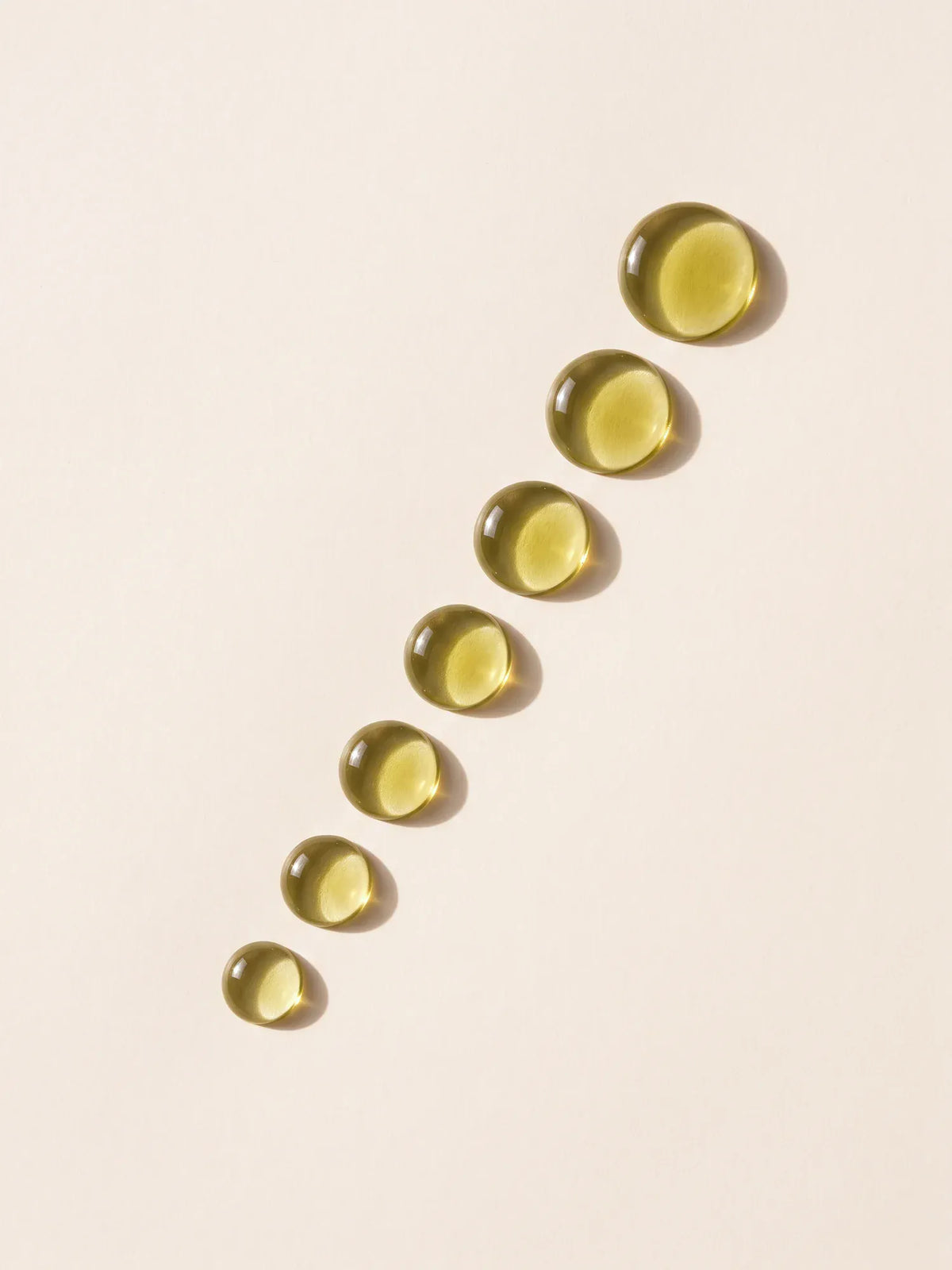
Kalahari melon seed oil is a light, clear golden oil cold-pressed from the seeds of a wild melon, Citrullus lanatus, that grows in the Kalahari of southern Africa. On skin it absorbs quickly, leaves little residue and helps skin hold moisture. That makes it one of the easiest oils to wear: hydrating enough for dry skin, light enough for oily skin, and quick enough to use in the morning under sunscreen.
It belongs in a routine for a simple reason. Most people want what an oil does for skin, softness and moisture that lasts, without the heavy, shiny feel that puts them off oils in the first place. This oil gives the first without the second. Here is where it comes from, what is in it and what it does.
Where it comes from
The Kalahari melon is a wild ancestor of the modern watermelon, native to the Kalahari Desert across Namibia, Botswana and South Africa. It grows through extreme heat and drought and stores water, which is why it has long served as a source of water in the dry season, when surface water disappears. The name Kalahari is often traced to the Tswana word Kgala, "the great thirst."
The melons are split, and the seeds are collected, dried and cold-pressed. Cold pressing uses no added heat, which keeps the oil close to its natural state. What comes out is a pale, golden oil with almost no scent of its own. The seeds also have a long history on skin: ground into a paste, they were traditionally rubbed onto skin to protect it from the dry desert air.
What is in the oil
Mostly linoleic acid
Plant oils are made of fatty acids, and each oil has its own mix. In Kalahari melon seed oil, linoleic acid leads, followed by oleic acid, with smaller amounts of palmitic and stearic acids. Linoleic acid is an omega-6 fatty acid that skin cannot make on its own. Skin uses it to build ceramides, the lipids that hold the outer layer of skin together and help keep water in.
Linoleic acid is also lighter and thinner than oleic acid. Oils high in it, like this one, feel dry to the touch and sink in quickly. Oils high in oleic acid, like olive or marula, feel richer and slower.
Vitamin E and plant sterols
The oil is naturally rich in vitamin E, in the form of tocopherols, and in plant sterols. Vitamin E is an antioxidant, and one of its most useful jobs here is keeping the oil itself fresh. Oils high in linoleic acid can turn quickly, and this one holds up well because of its natural tocopherols.
What it does on skin
It helps skin hold moisture
This is the main thing. A layer of Kalahari melon seed oil helps slow the water skin loses to the air, so skin stays softer and more comfortable for longer. That is why we pair it with water-based layers, like a gel or a mist, underneath: the oil helps keep that hydration in.
It feels light and dry
It absorbs quickly and leaves no greasy or sticky film. That makes it unusually versatile. In the morning it sits well under sunscreen and makeup, and at night it leaves nothing on the pillow.
It suits most skin types
Dry skin gets softness and lasting moisture. Oily and combination skin get the benefits of an oil without the weight, because the oil is so light. Sensitive skin tends to get along with it, since it is gentle and has almost no scent of its own.
It plays well with other oils
Because it is light, it makes a good base for richer oils and for other ingredients. In a blend, it helps the whole formula feel lighter than it would on its own.
How to add it to your routine
Use it after cleansing and after any water-based steps, such as a toner, a mist or a gel, and before anything heavier, like a night cream, or sunscreen in the daytime. A few drops are enough for the face. Press them in rather than rubbing.
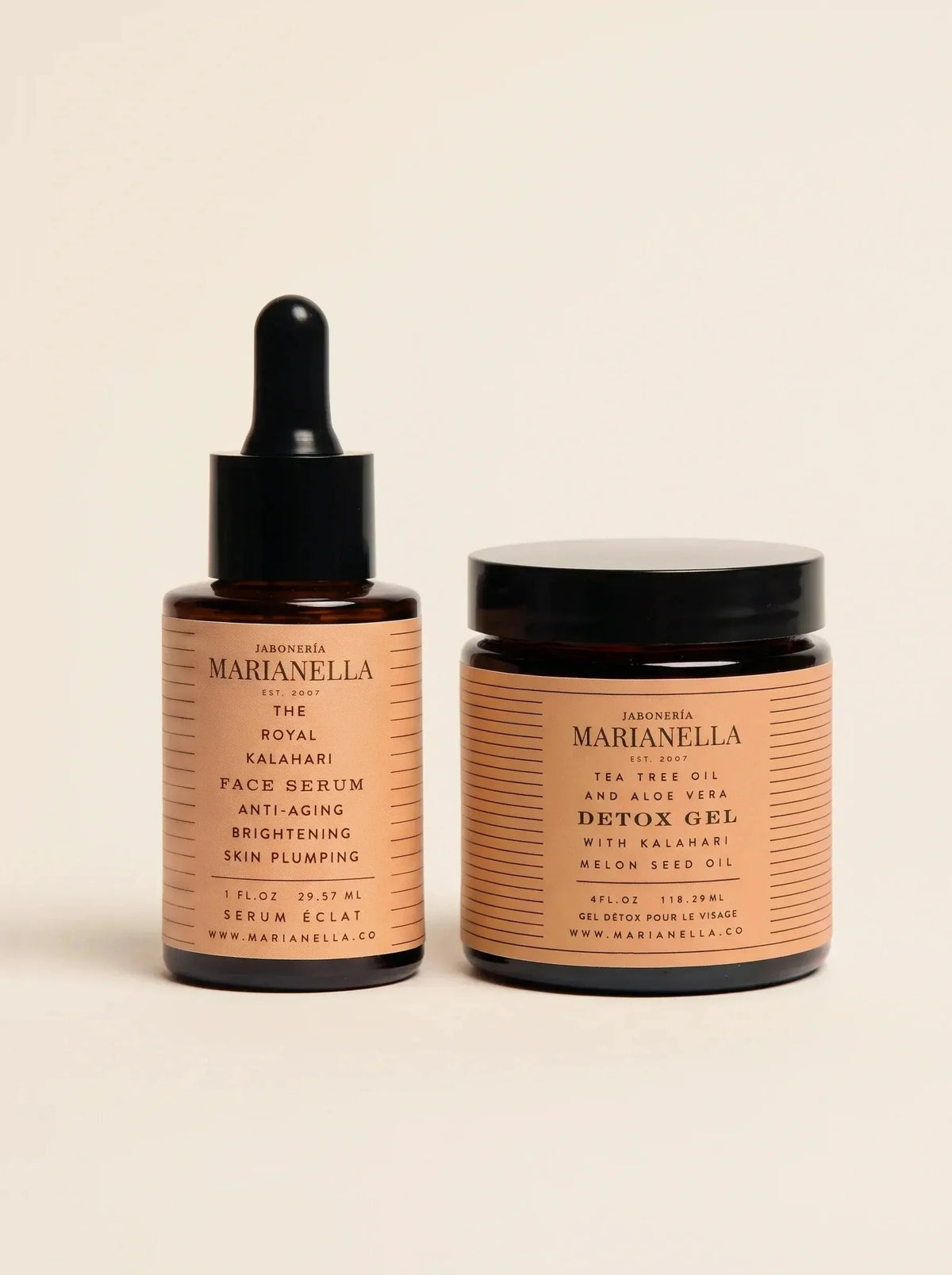
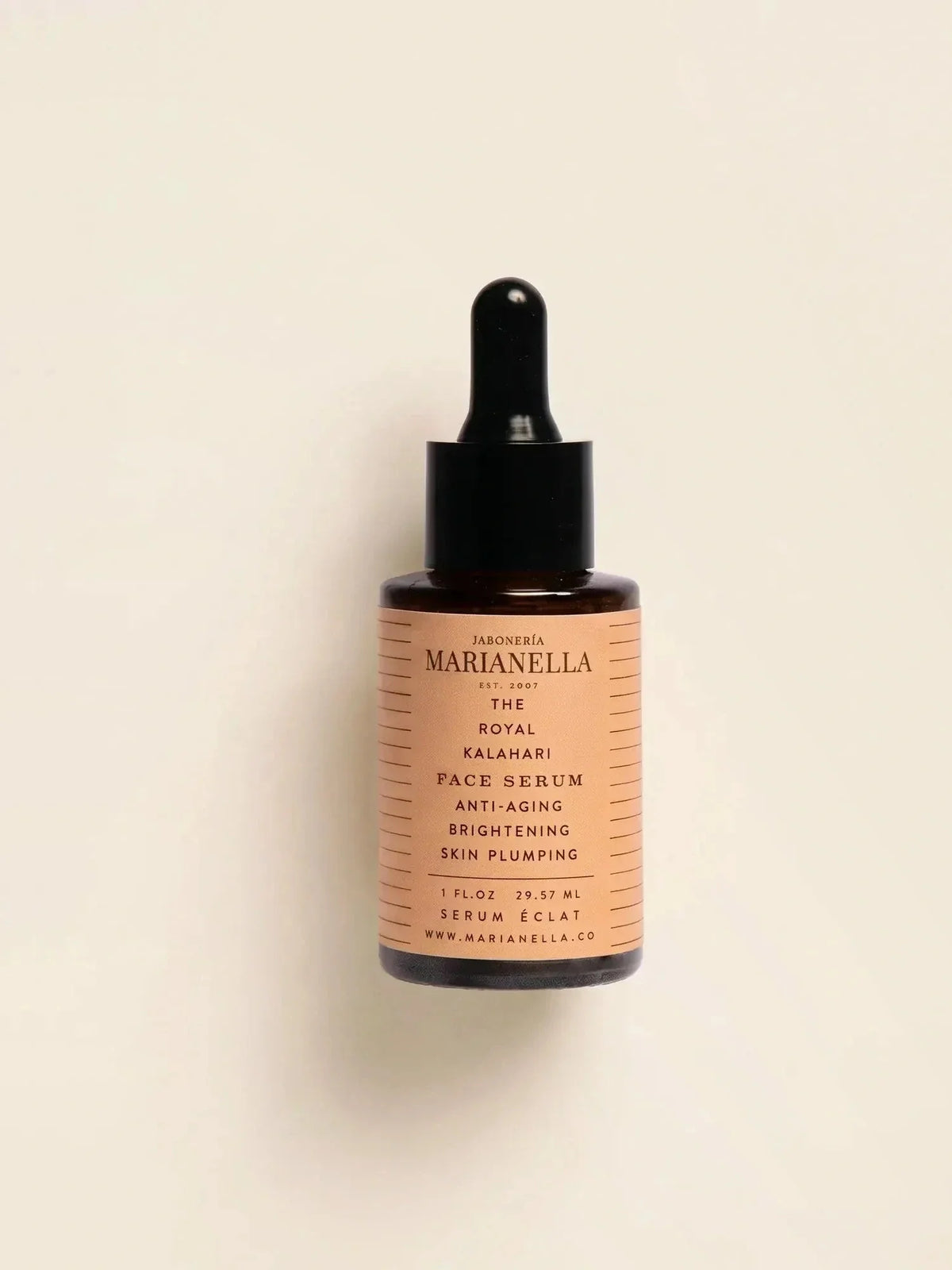
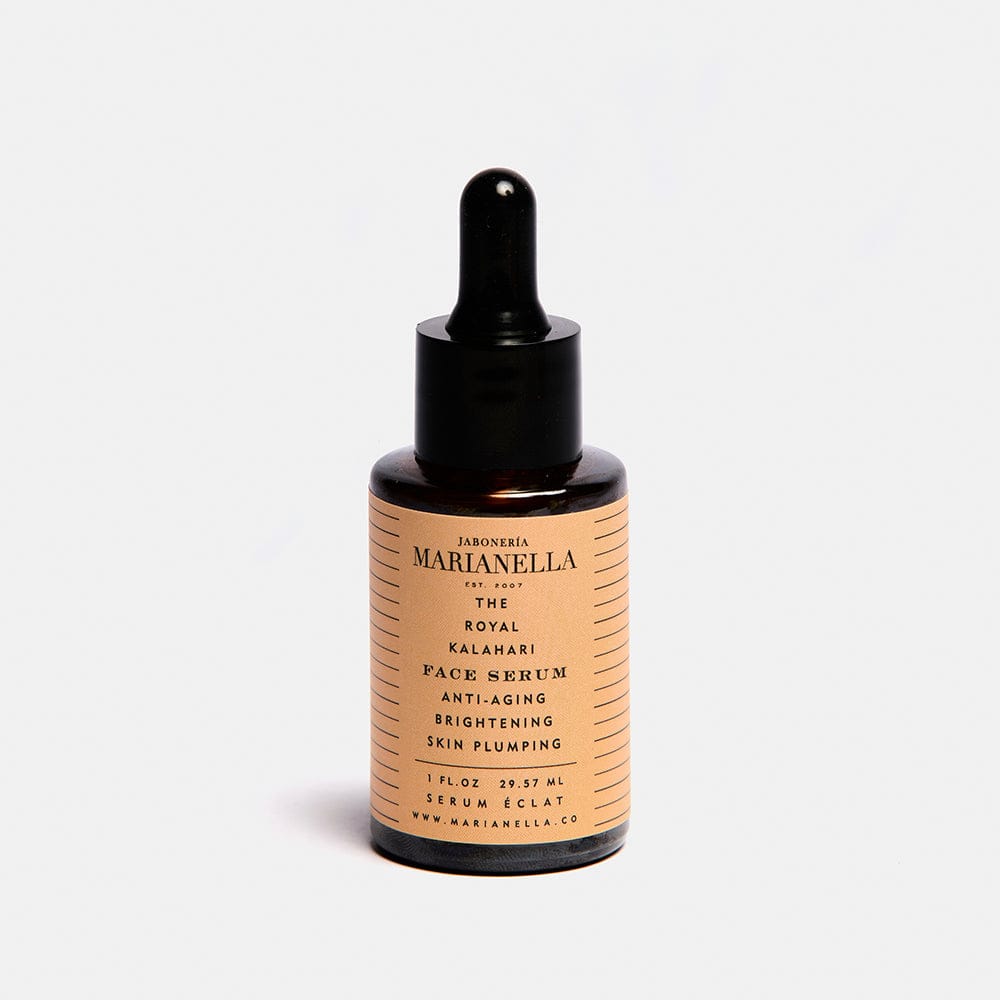
The easiest way to start is with our Royal Kalahari Face Serum, which leads with Kalahari melon seed oil and adds baobab, camellia, passion fruit seed and tamanu oils. Warm four to six drops between your fingertips and press them into face and neck, morning and night. For the body, our Imperial Jade Body Oil uses it with mongongo, marula, grapeseed and argan, smoothed over damp skin straight out of the shower. Our Ingredient Library lists every product that contains it.
Questions about Kalahari melon seed oil
Is Kalahari melon seed oil the same as watermelon seed oil?
They come from closely related plants. Kalahari melon is a wild melon, often described as an ancestor of the modern watermelon, and the oil is pressed from its seeds.
Will a face oil make oily skin oilier?
Not this one, in our experience. Kalahari melon seed oil is high in light linoleic acid, absorbs quickly and leaves no greasy film, so it suits oily and combination skin. Start with a few drops.
Can I use it in the morning?
Yes. It sinks in quickly, so it sits well under sunscreen and makeup.
Does Kalahari melon seed oil have a scent?
Almost none. On its own it is close to neutral, which is one reason it suits sensitive skin.


















Leave a comment
This site is protected by hCaptcha and the hCaptcha Privacy Policy and Terms of Service apply.