


Grapeseed oil skincare benefits are backed by a growing body of peer-reviewed science, and in 2026 it remains one of the most versatile, evidence-supported botanical oils in prestige formulation. Lightweight, fast-absorbing, and non-comedogenic, it works across every skin type, from oily and acne-prone to dry and mature. At Marianella, grapeseed oil is a formulation cornerstone, woven through face serums, facial oils, and eye treatments that carry 18 years of Brooklyn-handcrafted botanical expertise.
What Is Grapeseed Oil? A Formulator's Definition
Grapeseed oil, known in cosmetic chemistry as Vitis vinifera seed oil, is a lightweight oil extracted from the seeds of grapes. It is, in fact, a byproduct of winemaking: once grapes are pressed for wine, the leftover seeds are cold-pressed to release their nourishing oil. What results is a light yellowish-green oil that is silky-smooth to the touch. Because cold-pressing uses no heat, it preserves the oil's naturally occurring antioxidants and essential fatty acids, making it a nutrient-rich ingredient from the first drop.
Grapeseed oil is rich in phenolic compounds, fatty acids, and vitamins, with recognized importance to the pharmaceutical, cosmetic, and food industries. Its beneficial effects have been linked to specific constituents: tocopherol, linolenic acid, resveratrol, quercetin, procyanidins, carotenoids, and phytosterols.
The Science Behind Grapeseed Oil for Skin
Linoleic Acid: The Skin Barrier Architect
Linoleic acid is the most abundant fatty acid in cold-pressed grapeseed oils, contributing between 66% and 75.3% of total fatty acid content. Grapeseed oil has a high overall PUFA content, in the range of 85% to 90%. That number matters. Linoleic acid is an essential fatty acid, meaning the body cannot produce it on its own. In skincare, it plays a vital role in maintaining the skin's natural barrier. It is a precursor to ceramides, the lipids that form a protective layer on the skin's surface. That barrier is critical for preventing water loss and protecting skin from external irritants and pathogens. The presence of linoleic acid in grapeseed oil helps reinforce this barrier, leading to well-hydrated, resilient skin.

|
$50 |

|
$32 |

|
$32 |

|
$50 |
Linoleic acid is critical for maintaining the acid mantle and the skin's barrier function. It contributes to the formation of ceramides on the skin's surface, which are important for preventing transepidermal water loss. Linoleic acid is also needed for the synthesis of gamma-linolenic acid, which provides relief from inflammatory skin conditions like eczema, psoriasis, and acne.
Antioxidant Load: OPCs, Vitamin E, and Polyphenols
The antioxidants in grapeseed oil include vitamins C, D, E, beta-carotene, polyphenols, and proanthocyanidin. These antioxidants neutralize free radicals to protect skin from damage. The highest antioxidant capacity among grape and its by-products, measured by oxygen radical absorbance capacity assay, was found in grape seeds at 42.18 mmol of Trolox equivalent per gram. This high antioxidant capacity is related to the high content of gallic acid, catechin, epicatechin, procyanidins, and proanthocyanidins.
OPCs (oligomeric proanthocyanidins) are bioflavonoid complexes with antioxidant properties 50 times more potent than vitamins C and E. They perform as free radical scavengers in the body. OPCs make grapeseed oil excellent for minimizing and delaying skin aging caused by free radicals.
Clinical Research: What Studies Actually Show
In a split-face, blinded, placebo-controlled clinical study, measurements of melanin, erythema, sebum production, pore size, moisture, and elasticity were taken weekly for 12 weeks. Compared to placebo, the grapeseed oil formulation continuously and significantly reduced skin melanin, erythema, sebum production, and both fine and large pores. It also continuously and significantly increased skin moisture and elasticity.
A 2025 study published in Cosmetics noted a positive impact on fine lines around the eyes when using grape seed extract formulations. Notable improvements in skin erythema, hydration, and transepidermal water loss underscored the benefits of incorporating polyphenols into skincare. The reduction in erythema reflects anti-inflammatory effects, while significant increases in hydration and decreases in TEWL demonstrate enhanced skin moisture and barrier function.
Grape seed extract and oils have also been found to enhance collagen production, which can help boost skin suppleness and firmness. This collagen-supporting effect places grapeseed oil squarely in the anti-aging category, not just the hydration one.
Grapeseed Oil Skincare Benefits: A Skin-Type Breakdown
Oily and Acne-Prone Skin
Studies have found that people with acne often have naturally lower levels of linoleic acid in their skin's sebum compared to those with clear skin. This deficiency is thought to contribute to acne, so introducing it through grapeseed oil may reduce outbreaks. When skin lacks sufficient linoleic acid, the sebum becomes thicker and stickier, making it more likely to clog pores. Applying grapeseed oil introduces more linoleic acid to the skin, helping keep pores clear.
Grapeseed oil has a comedogenic rating of just 1 , meaning it sits among the least pore-clogging oils in cosmetic formulation. Its non-greasy and lightweight texture means it won't sit heavy on skin and will absorb easily. It is non-comedogenic, meaning it won't clog pores.
Dry and Dehydrated Skin
The fatty acids found in grapeseed oil, such as linoleic acid, build up the skin's natural barrier to reduce water loss. The oil also contains vitamin E to restore lost lipids in the skin. Research highlights that topical application of vitamin E can improve skin elasticity and moisture retention, contributing to a more youthful complexion.
Sensitive and Mature Skin
Research suggests that grapeseed oil may help support skin health and improve skin elasticity, suppleness, and strength by supporting skin barrier structure and effectiveness. Its anti-inflammatory properties help reduce breakouts and skin inflammations such as dry skin, eczema, and psoriasis. Grapeseed oil is high in linoleic acid, which helps strengthen the skin's barrier, reducing redness and inflammation. For sensitive skin that cannot tolerate aggressive actives, this makes it a considered, science-backed alternative.
Hyperpigmentation and Uneven Tone
Grapeseed oil contains the powerful antioxidant proanthocyanidin, which may improve skin tone when used consistently. It can also reduce the appearance of dark spots and hyperpigmentation when used regularly. The skin-brightening properties of linoleic acid also help in fading the scars and dark spots that acne leaves behind.
Grapeseed Oil in Marianella's Formulations
Three generations of Venezuelan botanical knowledge inform how Marianella selects and combines ingredients. Since 2007, the brand has been handcrafting in Brooklyn, building an 82-product range that has earned press in Vogue, Forbes, Oprah, and People Magazine, where it won the Star Beauty Award. Grapeseed oil appears across several of the brand's most recognized formulations, each pairing it with complementary botanical actives for compounded effect.
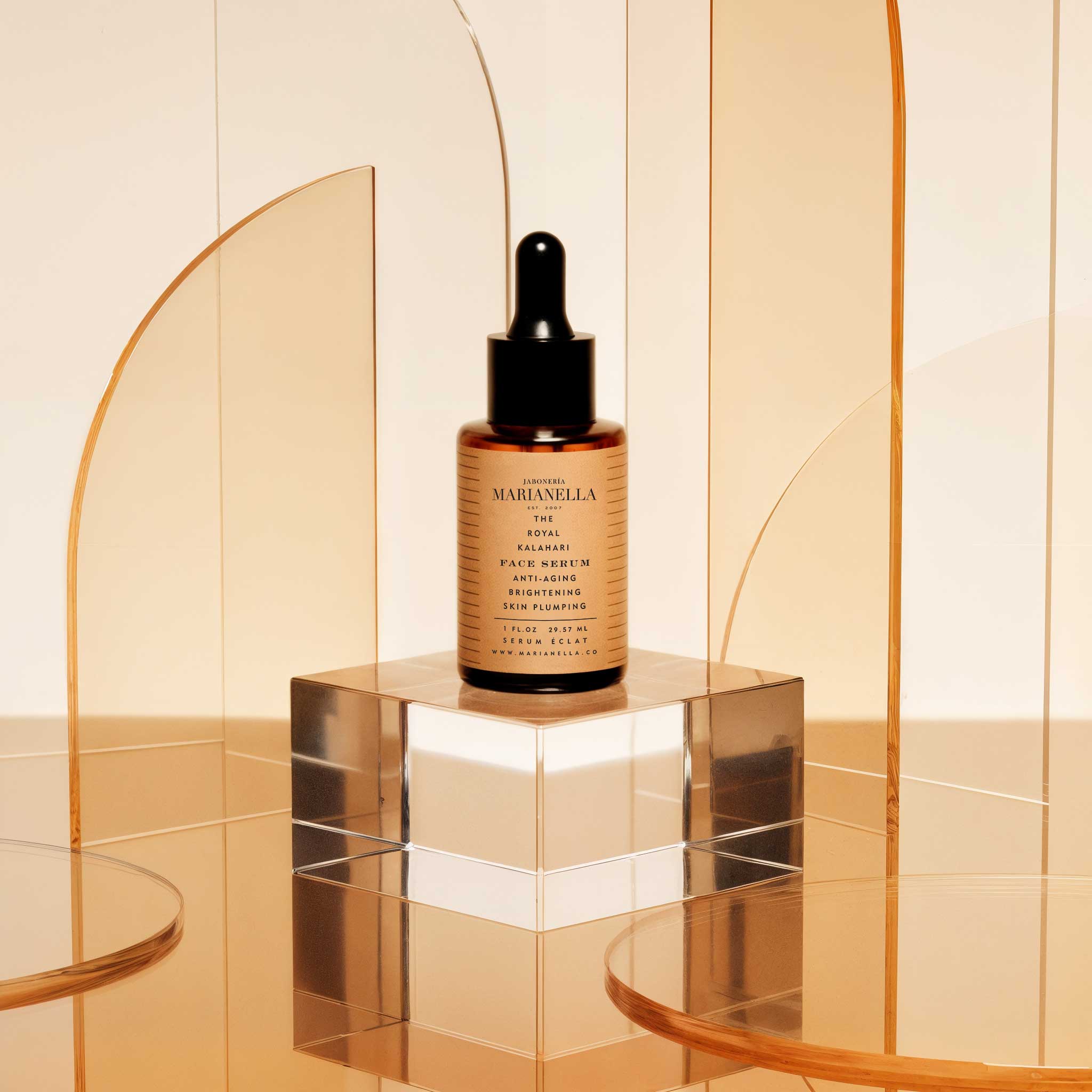
The Royal Kalahari Face Serum
Grapeseed oil's high PUFA content and fast absorption profile make it an ideal carrier in a face serum, where delivery speed and skin compatibility are paramount. In The Royal Kalahari Face Serum, it works alongside Kalahari-sourced botanicals to support moisture retention and skin resilience. $50.
The Royal Kalahari Under Eye and Lip Serum Roller Oil
The under-eye zone is the most visible site of transepidermal water loss and fine line formation. Research confirms a positive impact on fine lines around the eyes from grape seed formulations. The Royal Kalahari Under Eye and Lip Serum Roller Oil puts that research to practical use in a precise roller format. $32.
Plum Face Oil
In a multi-oil blend, fatty acid synergy is the goal. Blended formulations offer a strategic advantage: multiple fatty acid profiles working together, with high-linoleic oils for barrier care, moderate-oleic oils for moisture, and specialty oils for texture. The Plum Face Oil layers grapeseed oil's linoleic-rich barrier support with the complementary properties of plum kernel oil. The result is a face oil with both immediate skin-feel and longer-term barrier benefit. $32.
The Midnight Youth Potion
Nighttime is when skin repair is most active, and the skin barrier is most receptive to topical fatty acids. Proponents of grapeseed oil often use it as a serum on the face, applying it before bed , and for good reason. The Midnight Youth Potion harnesses grapeseed oil's antioxidant profile, delivering OPCs, vitamin E, and linoleic acid during the hours when skin can use them most. $50.
How to Use Grapeseed Oil for Skin: What the Research Supports
Some studies suggest that applying grapeseed oil to skin twice a day for only two weeks could produce noticeable results. Consistency is the variable most research emphasizes. Grapeseed oil performs best as part of a layered routine, applied after water-based serums and before heavier moisturizers, or as a standalone facial oil on cleansed skin.
For those new to face oils, grapeseed oil's low comedogenic rating and lightweight texture make it a practical entry point. Non-comedogenic and gentle enough for all skin types, from sensitive to acne-prone, it rarely requires a trial period before seeing initial results.
Thanks to its polyunsaturated fats, which help fight inflammation and provide hydration, as well as its antioxidant vitamin E content, applying grapeseed oil topically may have effects such as reducing acne, hyperpigmentation, and more.
What to Look for in Grapeseed Oil Products in 2026
Not all grapeseed oil is formulated equally. Cold-pressed extraction preserves the oil's full fatty acid profile and antioxidant load. The seeds are cold-pressed to squeeze out the oil, and since this process doesn't use heat, it helps preserve the oil's naturally occurring antioxidants and essential fatty acids. Look for products that list Vitis vinifera seed oil clearly in the ingredient deck, and pair it with complementary actives rather than using it in isolation.
Formulation context matters. Grapeseed oil's strength is amplified when it works alongside other botanicals with compatible fatty acid profiles. That is the approach Marianella has applied across its handcrafted range, combining Venezuelan botanical heritage with 18 years of small-batch formulation expertise developed in Brooklyn.
The best grapeseed oil products in 2026 are those built around evidence, not trends. Browse Marianella's full facial oil and serum range, now available at Bloomingdale's BEAUTYSPACE, at marianella.co.
```

Leave a comment
This site is protected by hCaptcha and the hCaptcha Privacy Policy and Terms of Service apply.