

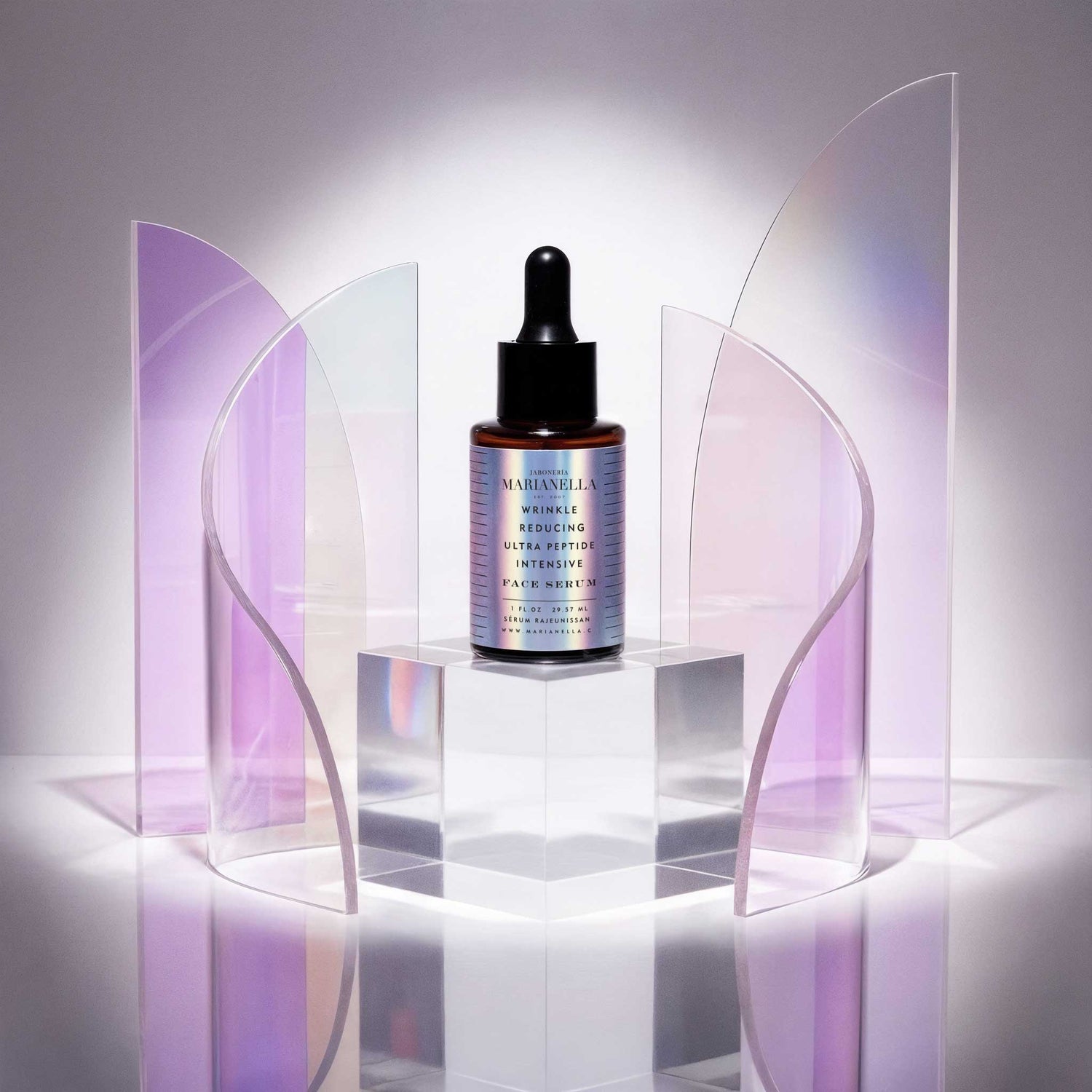
Peptides skincare benefits are no longer a subject of debate among cosmetic scientists. Short chains of amino acids that signal your skin to produce collagen, repair tissue, and regulate inflammation, peptides are among the most rigorously researched actives in dermatology today. In 2026, they sit at the center of serious anti-aging formulation, and the clinical evidence behind them has only grown stronger. Marianella's Wrinkle Reducing Ultra Peptide collection is built on that science, and on 18 years of formulation expertise developed since 2007 in Brooklyn.
What Are Peptides in Skincare?
Peptides are molecules composed of two or more amino acids linked by peptide bonds, and they play essential biological roles. In the context of skincare, they function as biological messengers. Peptides for skin are short amino acid chains that signal your skin to produce more collagen, repair damaged tissue, and regulate inflammation.
Peptides are novel active ingredients that improve collagen synthesis, enhance skin cell proliferation, or decrease inflammation. Based on their mechanism of action, they can be classified into signal peptides, carrier peptides, neurotransmitter inhibitor peptides, and enzyme inhibitor peptides.
The science is not new, but the applications have become far more precise. Peptides first entered the pharmaceutical scene over a century ago. Insulin, discovered in 1921, marked one of the first major therapeutic peptide breakthroughs. Later, peptide drugs like octreotide and GLP-1 analogues followed. In the 1960s, the invention of solid-phase peptide synthesis made it easier to produce peptides in large quantities. By the 1990s, these pharmaceutical tools began showing up in skincare.
The Four Types of Cosmetic Peptides and What They Do
Cosmetic peptides reduce existing wrinkles and prevent new ones from forming through a variety of mechanisms of action, which can act synergistically for enhanced results. Signal peptides stimulate fibroblast cells to increase collagen production and improve skin elasticity; neurotransmitter inhibitor peptides relax facial muscles, minimizing expression wrinkles; carrier peptides deliver essential trace elements to support skin repair; and enzyme inhibitor peptides reduce collagen breakdown, preserving the integrity of the skin.

|
$84 |

|
$112 |
Signal Peptides: The Collagen Architects
Signal peptides are the most studied category. Matrixyl (palmitoyl pentapeptide-4) is a signal peptide that directly stimulates fibroblast activity. It mimics the collagen fragment sequences that the body produces during natural tissue remodelling, signalling skin cells to increase production of collagen types I and III, fibronectin, and glycosaminoglycans.
The clinical data is specific. After 56 days of use, Matrixyl 3000 decreased roughness by 14%, reduced deep wrinkle area by 44%, and their density by 37%, providing improvement of skin tone by 15%, as well as elasticity. In a separate 12-week clinical trial, signal peptides signal fibroblasts to synthesize collagen I, collagen III, and fibronectin, with the trial showing a 27% reduction in wrinkle depth with twice-daily topical application.
Neurotransmitter Inhibitor Peptides: Expression Line Specialists
These peptides work like a mild, topical version of botulinum toxin. They interfere with the SNARE complex, the molecular machinery that releases acetylcholine at the neuromuscular junction. Less acetylcholine means weaker muscle contraction. Weaker contraction means shallower expression lines. Argireline (acetyl hexapeptide-3) is the best-known example. A clinical study showed a 30% reduction in wrinkle depth around the eyes after 28 days of twice-daily application at 10% concentration.
Carrier Peptides: Precision Delivery
Carrier peptides stabilize and deliver trace elements, most notably copper, directly to the site of tissue repair. GHK-Cu, Matrixyl, and Argireline have the strongest clinical evidence. GHK-Cu is the most biologically versatile, covering collagen synthesis, wound healing, and anti-inflammatory effects.
Enzyme Inhibitor Peptides: Protecting What You Build
The skin continuously produces matrix metalloproteinases (MMPs), enzymes that break down collagen. Enzyme inhibitor peptides interrupt this degradation process. Collagen peptides tested in studies increased the expression of the relevant COL1A1, ELN, and VCAN genes in human dermal fibroblasts (p < 0.005). Furthermore, confocal microscopy showed increased collagen expression in the dermal fibroblast culture. These data provide cell-based evidence for the beneficial effects of exposure to collagen peptides on the skin's collagen content and on the molecules that provide firmness and elasticity.
How Peptides for Skin Actually Penetrate the Barrier
A fair question about any topical active is whether it actually reaches the dermis. Scientific research shows that 500 Daltons is the threshold where molecules can easily pass through the skin barrier. Molecules larger than 500 Daltons sit on the skin's surface and take longer to absorb, contrasted with ingredients smaller than 500 Daltons which easily penetrate the skin's surface layers and absorb more efficiently.
Each amino acid typically weighs between 80 and 110 Daltons, meaning peptides made up of 5 to 6 amino acids are small enough to penetrate the skin's outermost layer, the stratum corneum. This ability to penetrate is governed by the 500 Dalton Rule, which states that molecules smaller than 500 Daltons can pass through the skin barrier and interact with deeper layers. For larger peptides, penetration depends not just on size but also on solubility, formulation, and skin condition. Larger peptides may require delivery systems like liposomes or carriers to enhance absorption. Formulation expertise, not just ingredient selection, determines how much of a peptide actually reaches the dermis.
This is exactly where 18 years of small-batch formulation work, handcrafted in Brooklyn since 2007, creates a meaningful difference. Getting peptides into the skin at efficacious concentrations requires precision at every step of the manufacturing process.
The Peptide Skincare Benefits Backed by Clinical Research
Wrinkle Reduction
Studies show that peptides, especially topical formulations, can promote collagen synthesis and skin repair. The timeline for visible results aligns with biological reality. Peptides for skin work on a biological timeline, not a marketing one. Most clinical studies on signal peptides run 8 to 12 weeks for measurable collagen changes. Argireline can show effects on expression line depth in 2 to 4 weeks since it works on muscle activity rather than structural remodeling.
Collagen and Elastin Synthesis
Collagen peptides may stimulate cell proliferation and glycosaminoglycan production in cultured human dermal fibroblasts and may enhance the formation of stable dermal fibroblast-derived extracellular matrices. The downstream effect is firmer, more resilient skin. Collagen peptide supplementation significantly (p < 0.05) reduced eye wrinkle volume and improved skin elasticity and hydration within 4 weeks. After 8 weeks of treatment, the positive effects were even more pronounced for all clinical parameters measured.
Hydration and Skin Density
A clinical trial showed that the test group experienced a significant increase in skin hydration, elasticity, and density, along with a decrease in transepidermal water loss compared to baseline. Improved barrier integrity is a consequence of better extracellular matrix health, not just surface-level moisture.
Anti-Inflammatory Action
The combination of certain peptides produces a synergistic effect, enhancing collagen production, inhibiting neurotransmitter release, and providing antioxidation. For skin prone to redness or sensitivity, this anti-inflammatory dimension makes peptides one of the more compatible actives available.
Why Peptide Formulation Matters as Much as Peptide Selection
The peptide market is growing fast. The cosmetic peptide manufacturing market alone is projected to grow at a compound annual growth rate of 10.3% through 2034, with its value expected to increase from USD 3,770 million in 2024 to USD 8,259 million by 2032. With that growth comes a lot of noise. Labels feature peptide names without disclosing concentration, delivery system, or formulation pH, all of which determine whether a peptide performs or simply decorates an ingredient list.
Marianella's approach is grounded in Venezuelan botanical heritage, three generations of plant-based formulation knowledge, and nearly two decades of clinical focus. Each product is made in small batches in Brooklyn, allowing for the quality control that peptide formulation demands. The brand has been recognized by People Magazine with a Star Beauty Award, and has been featured by Vogue, Oprah, Forbes, and Allure. It is now carried at Bloomingdale's BEAUTYSPACE.
The Best Peptide Products for 2026: Marianella's Ultra Peptide Collection
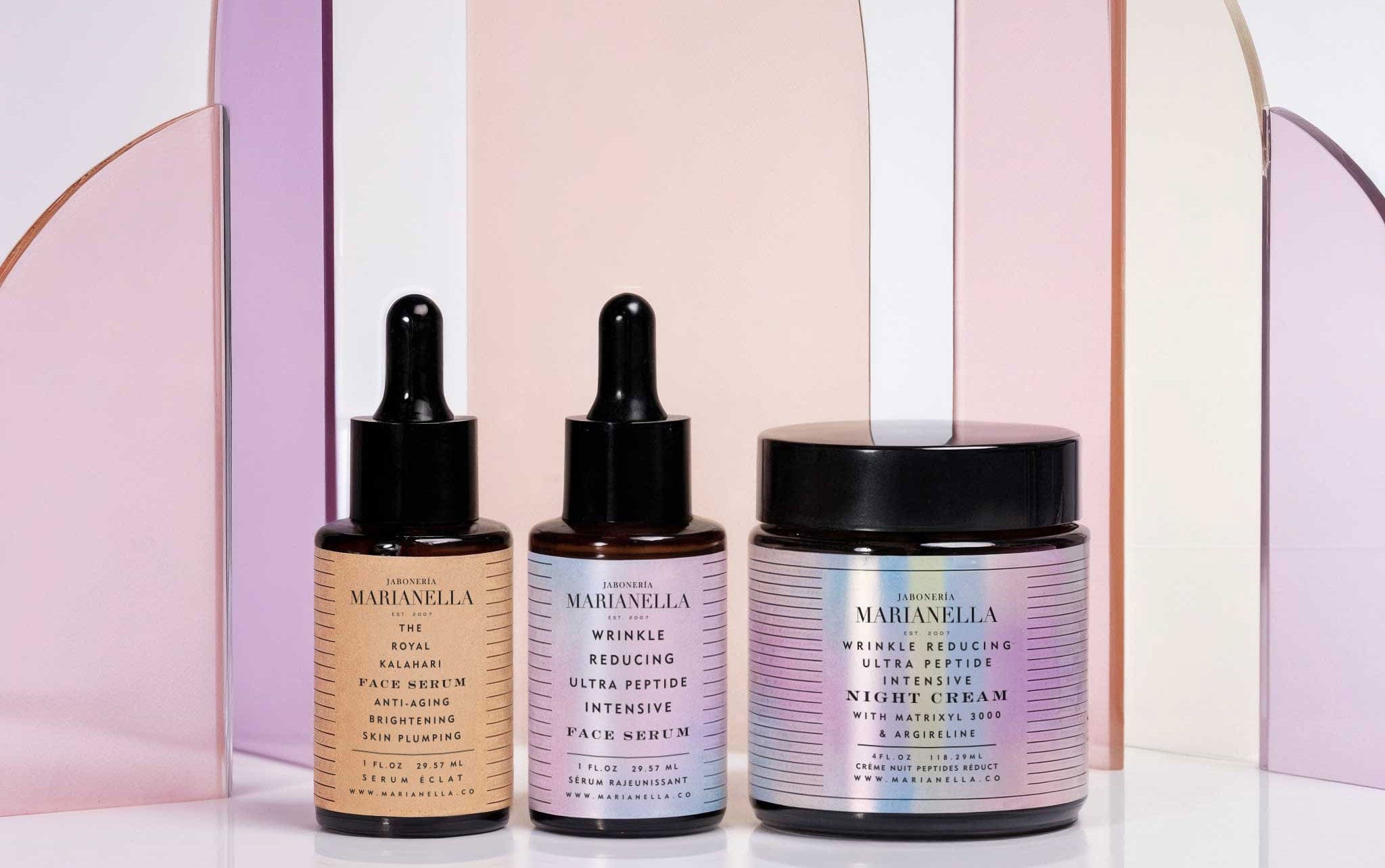
Across Marianella's 82 products, the Wrinkle Reducing Ultra Peptide line represents the brand's most concentrated commitment to peptide science. Both products are formulated with multi-peptide actives designed to work across the collagen-synthesis and muscle-relaxation pathways simultaneously.
Wrinkle Reducing Ultra Peptide Intensive Face Serum
A serum format delivers peptides at higher concentration with a thinner film, optimizing contact time and absorption. The Wrinkle Reducing Ultra Peptide Intensive Face Serum is the entry point to the collection, designed for morning and evening use and compatible with additional actives. $84.
Wrinkle Reducing Ultra Peptide Intensive Night Cream
Nighttime is when the skin's repair processes peak. A richer base allows for extended peptide contact while the barrier is in recovery mode. The Wrinkle Reducing Ultra Peptide Intensive Night Cream is formulated for that window, pairing peptide activity with overnight hydration support. $112.
Used together, the serum and night cream cover the two most evidence-supported delivery windows for topical peptides. For those approaching their first dedicated peptide routine, the serum is the logical starting point. For those already working with a peptide serum, adding the night cream extends the active hours from two applications to a continuous overnight phase.
Peptides vs. Retinol: Are They Compatible?
One of the more common questions in 2026 skincare concerns whether peptides and retinol can coexist in a routine. The answer is generally yes, with attention to layering order and product pH. Retinol accelerates cell turnover, creating new fibroblasts that are then primed to respond to peptide signals. The two actives work at different stages of the collagen production cycle and tend to reinforce rather than compete with each other. If sensitivity is a concern, alternating nights is a practical approach.
What to Expect from a Peptide Skincare Routine
Set realistic expectations based on the clinical literature. Expression lines may respond within two to four weeks. Structural collagen changes, measurable as wrinkle depth reduction and improved skin density, require consistent use over eight to twelve weeks. The results are cumulative. Peptides do not deliver single-use visible changes, but the data across multiple controlled trials confirms that the cumulative effect on collagen architecture is measurable and durable.
The market for peptide skincare will continue to grow. Future studies should focus on enhancing peptide stability, developing synergistic formulations, and conducting large-scale clinical trials to validate long-term efficacy. With continuous innovation, peptides are poised to redefine the cosmetic industry, bridging the gap between pharmaceuticals and skincare for safer and more effective solutions.
Marianella's Ultra Peptide collection is available now at marianella.co and at Bloomingdale's BEAUTYSPACE. For a complete look at the full range of 82 products across face, body, and home, explore the full Marianella collection.
```

Leave a comment
This site is protected by hCaptcha and the hCaptcha Privacy Policy and Terms of Service apply.