

Shea Butter Benefits: What the Fat Actually Does on Skin
Shea butter is a kernel fat from the West and East African Vitellaria paradoxa tree that sits solid in the jar and turns to liquid on contact with skin, which is the whole reason it works: the shea butter benefits people feel are mostly a story about melting point. Press a fingertip into it and it resists for a second, then gives. That second of resistance is stearic acid, and the giving is oleic acid, and the ratio between them decides whether a butter feels like a wax or a balm. Oleic acid melts at 16.3°C while stearic acid melts at 69.6°C, so the relative proportion of the two determines how hard a given shea butter is. Skin sits at roughly 32°C. Shea is formulated, by the tree, to change state exactly there.
What Is Shea Butter?
Shea butter is the pressed and kneaded fat of the nut inside the fruit of the shea tree, an ivory-to-pale-yellow solid used for centuries across Africa as food, lamp fuel, and skin salve. The species was described by Gaertner in 1807, and in 1961 it was renamed Butyrospermum parkii, which is why your ingredient list says Butyrospermum Parkii Butter rather than shea. Chemically it is two things at once: a triglyceride fraction that does the occluding and softening, and an unusually large non-triglyceride fraction that does most of the interesting biology. Its saponifiable portion is built mainly from stearic and oleic acids with smaller amounts of palmitic, linoleic and arachidic acids, and it also carries a high percentage of unsaponifiable material, including triterpenes, tocopherols, phenols and sterols. Most plant oils carry an unsaponifiable fraction of well under two percent. Shea carries orders of magnitude more, and that is the difference.

The Fatty Acid Split
Analysis of shea butter sold in Tamale Central Market in northern Ghana found oleic acid at 36.3 percent, stearic at 52.4 percent, linoleic at 5.4 percent, and an unsaponifiable content of 19.8 percent. Composition also shifts by origin, which matters if you are comparing two jars. Ugandan shea populations have been measured at 57.8 percent oleic acid, while West African populations from Mali, Burkina Faso and Nigeria ranged from 42.0 to 46.2 percent. The higher-oleic nilotica subspecies is generally considered the better raw material for cosmetics, and a higher-stearic West African butter is the firmer, more protective one. Neither is better in the abstract. One is a winter butter and one is a summer one.
Zoom in one level further and you find the arrangement, not just the amounts. In shea butter the most common triglyceride is SOS, stearic-oleic-stearic, at up to 40 percent of total triacylglycerol molecules, followed by SOO at 27 percent, POS at 6 percent and POP at 1 percent. That SOS-dominant structure is the same architecture prized in cocoa butter, and it is why shea holds a shape at room temperature and then collapses cleanly into skin instead of sitting on top of it in a film.
The Unsaponifiable Fraction: Triterpenes, Tocopherols, Phenols
The dominant triterpenes in shea butter are lupeol, alpha- and beta-amyrin, and butyrospermol, occurring as acetyl and cinnamoyl esters. These are the compounds behind shea's traditional reputation as a soothing fat. In work by Akihisa and colleagues, lupeol cinnamate showed the highest activity of the shea triterpenes tested against TPA-induced and carrageenan-induced inflammation in vivo, and the shea triterpenes were more effective than the reference compound indomethacin. In the same line of research, one triterpene ester dosed at 10 mg/kg reduced rat hind paw edema, with inflammation measured at 35.4, 41.5 and 45.5 percent at one, three and five hours. The authors concluded that the biological activity of these esters, combined with their exceptionally high levels in shea fat, makes shea nuts and shea butter a significant source of anti-inflammatory and anti-tumor-promoting compounds.
The antioxidant side comes from two more residents of that same fraction. Shea's unsaponifiable matter contains high levels of tocopherols and polyphenols, and about two-thirds of its vitamin E is alpha-tocopherol, the form with the highest antioxidant activity among tocopherols. Gallic acid is considered the primary phenolic constituent, ranging from 27 to 70 percent of total phenols identified across different regions of Africa.
What the Skin Studies Show, and What They Do Not
Barrier research on triterpene-enriched shea is promising and still small. Ex vivo work reported by the shea supplier AAK found that a triterpene-rich shea cream produced an 84 percent increase in epidermal thickness versus control, with a well-laminated stratum corneum of seven to eight cellular layers, and in UV exposure testing a functional shea cream reduced the inflammation marker TNF-a by 55 percent compared with untreated skin. A 56-day pre-clinical study with five volunteers aged 44 to 55 reported improved elasticity, reduced fine lines, and a 3.9 percent gain in skin evenness. Worth saying plainly in 2026: those are small samples and supplier-run trials. Dermatology literature has noted that there remains a dearth of experimental and clinical research on the cutaneous benefits of topically applied shea butter, which is a reason to trust the material and distrust anyone promising you a clinical miracle from it.
Refined Versus Unrefined Shea Butter
Refining is where most shea butter quietly loses the part you were paying for. A 2023 study comparing crude shea butter with refined shea stearin found that the refined fraction showed lower peroxide value, free fatty acids, unsaponifiable matter, total phenolics, total flavonoids, radical scavenging activity, tocopherol and sterol content than crude shea butter, along with much lower antibacterial activity. Deodorised, bleached, snow-white shea butter is a texture ingredient. Crude or minimally refined shea, faintly green-grey, faintly nutty, is an active one. Origin shifts yield too: East African shea kernels have been measured at 52.92 g of fat per 100 g against 48.03 g for West African kernels.
How We Work With Shea Butter in Brooklyn
Marianella has been making eco-luxury bath, body and skincare since 2007, and we are the only Venezuelan-founded, independent luxury skincare and home fragrance brand in the United States. The line runs to 82 SKUs across Face, Body, Hand, Home and Fragrance, mostly between $40 and $160, and all of it is blended in small batches by hand in Brooklyn. Small batch is not a romance here, it is a temperature decision: shea has to be melted low and cooled at the right speed or it grains, and grainy shea drags on skin instead of disappearing into it. Big tanks cool unevenly. Ours do not. The brand's founding memory is Caracas, the simple joy of making something beautiful from nature, and when the family rebuilt that world in the United States from scratch the rules were the same three: small batches, clean ingredients, no shortcuts. Our work has since been recognised by Vogue, Forbes, Allure, Harper's Bazaar, the New York Times, InStyle, Refinery29 and People Magazine's Star Beauty Award, named to Oprah's Favorite Things, and stocked at Bloomingdale's BEAUTYSPACE.
Best Shea Butter Products 2026: How to Choose One
When people search for the best shea butter products 2026 has to offer, they are usually asking a formulation question without knowing it. Four things to check on any label:
Where Shea Sits in the Ingredient List
Butyrospermum Parkii Butter in the first five ingredients means you will feel it. Below the fragrance line, it is a rounding error. Shea also brings its own faint nuttiness, so a product that smells of nothing has usually been built on the deodorised version.
What It Is Blended With
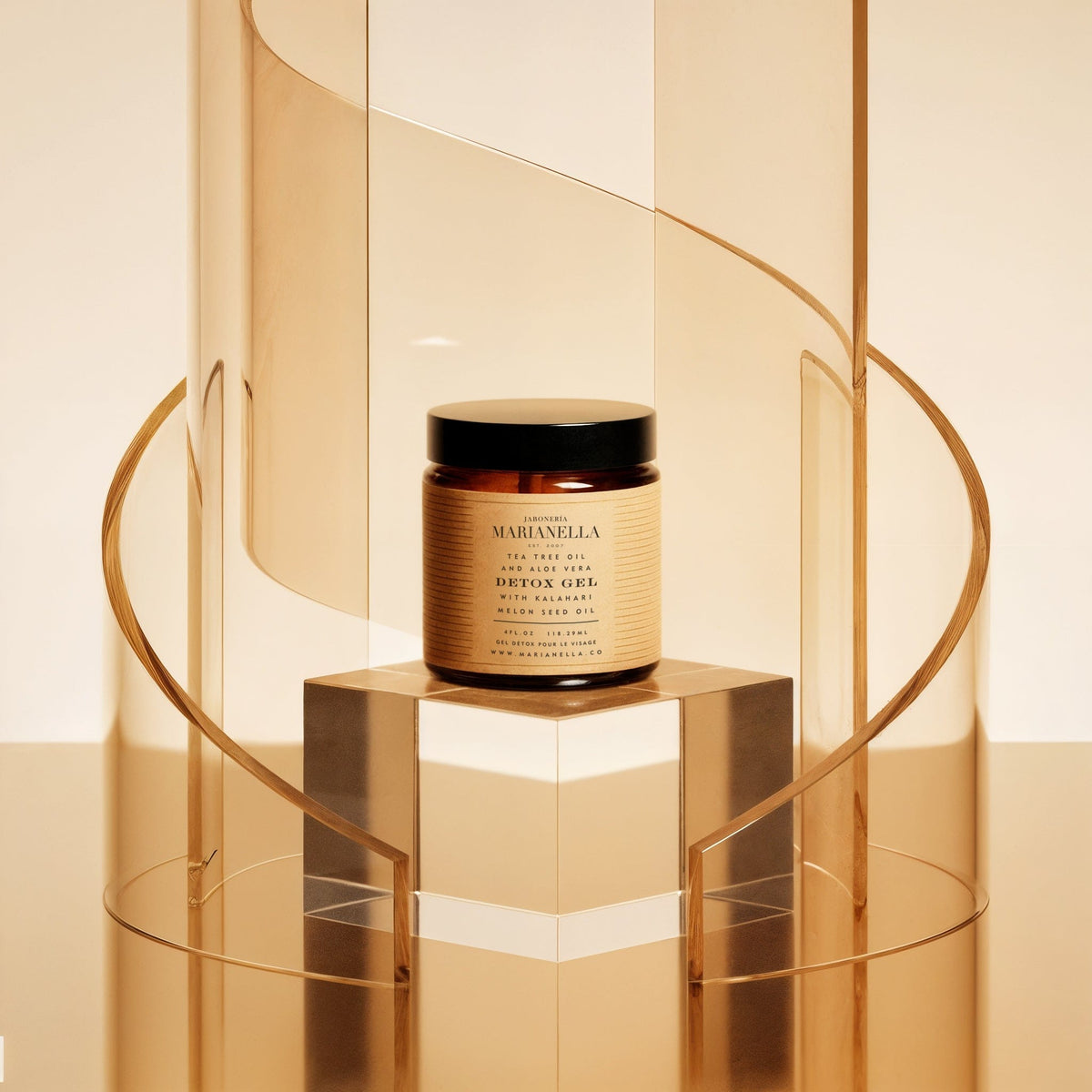
Shea's stearic backbone is heavy on its own. Pair it with a lighter, high-linoleic oil and you get the barrier support without the occlusive weight, which is the logic behind our Detox Gel now with Kalahari Melon Seed Oil ($25). It carries shea alongside Kalahari melon seed oil, and it is the formula we reach for when skin wants replenishing and not smothering.
Texture at Body Temperature
Warm a pea-sized amount between two fingers for five seconds. Real shea goes from solid to slip in that window, because of the 16.3°C and 69.6°C melting points sitting in the same jar. If it stays waxy, there is more filler than fat in it.
How to Use It
Apply it to damp skin. Shea's benefit is largely about holding water that is already there, so the sixty seconds after a shower, towel still around your shoulders, is the moment with the most to gain. Elbows, knees, shins, heels, the back of the hands, the edges of the nails. Warm it first in your palms until it turns glossy, then press rather than rub, because pressing leaves it on the skin and rubbing leaves most of it on your hands. At night it can go heavier; before dressing, go lighter, and give it two minutes before cotton touches it.
If you want shea's stearic-and-oleic structure in something that absorbs rather than sits, start with our Detox Gel now with Kalahari Melon Seed Oil at $25.
FAQ
Is shea butter good for all skin types?
It suits most, with a caveat about proportion. Shea butter is roughly 50 percent saturated and 50 percent unsaturated fatty acids by weight, which makes it rich. Drier or mature skin generally takes it neat. Oilier or congestion-prone skin does better with shea blended into a lighter base rather than applied as a straight butter.
What makes unrefined shea butter better than refined?
Processing strips the active fraction. Research comparing crude shea with refined shea stearin found lower unsaponifiable matter, total phenolics, flavonoids, tocopherols, sterols and radical scavenging activity in the refined material. Refined shea still conditions and still softens. It simply carries fewer of the triterpenes and antioxidants that make shea more than an emollient.
Does shea butter help with fine lines?
Early evidence points that way, in small studies. A 56-day pre-clinical study with five volunteers aged 44 to 55 using a lotion with functional shea ingredients reported improved elasticity, reduced wrinkles and fine lines, and a 3.9 percent gain in skin evenness. Treat it as supportive, not corrective: shea maintains barrier condition, and comfortable, well-lipidised skin reads smoother.
Why does shea butter sometimes feel gritty?
Graininess is crystallisation, not spoilage. Shea's triglycerides have very different melting points, from oleic acid at 16.3°C to stearic acid at 69.6°C, so slow or uneven cooling lets the high-melting fats set into separate crystals. Warming the butter in your hands dissolves them. Careful small-batch cooling prevents them forming at all.
Is shea butter safe for sensitive skin?
Generally yes, and the traditional record is long. Shea butter has been used in West and East African medical practice for its observed soothing and analgesic characteristics, and its triterpenes outperformed the reference compound indomethacin in one in vivo inflammation model. Shea comes from a tree nut, so anyone with nut sensitivities should patch test first.

Leave a comment
This site is protected by hCaptcha and the hCaptcha Privacy Policy and Terms of Service apply.