


The research on goji berry seed oil is early. What is well established is its makeup: the oil is mostly linoleic acid, with vitamin E and the carotenoid zeaxanthin, and in laboratory tests it shows clear antioxidant activity. One animal study found it eased signs of UV stress in skin. There is not yet a published human trial that measures what goji seed oil does for hydration, texture or lines, so many of the claims you will read about it run ahead of the science. We do not use goji in our formulas; this is a plain reading of what the studies show.
What is well established: the fatty acids
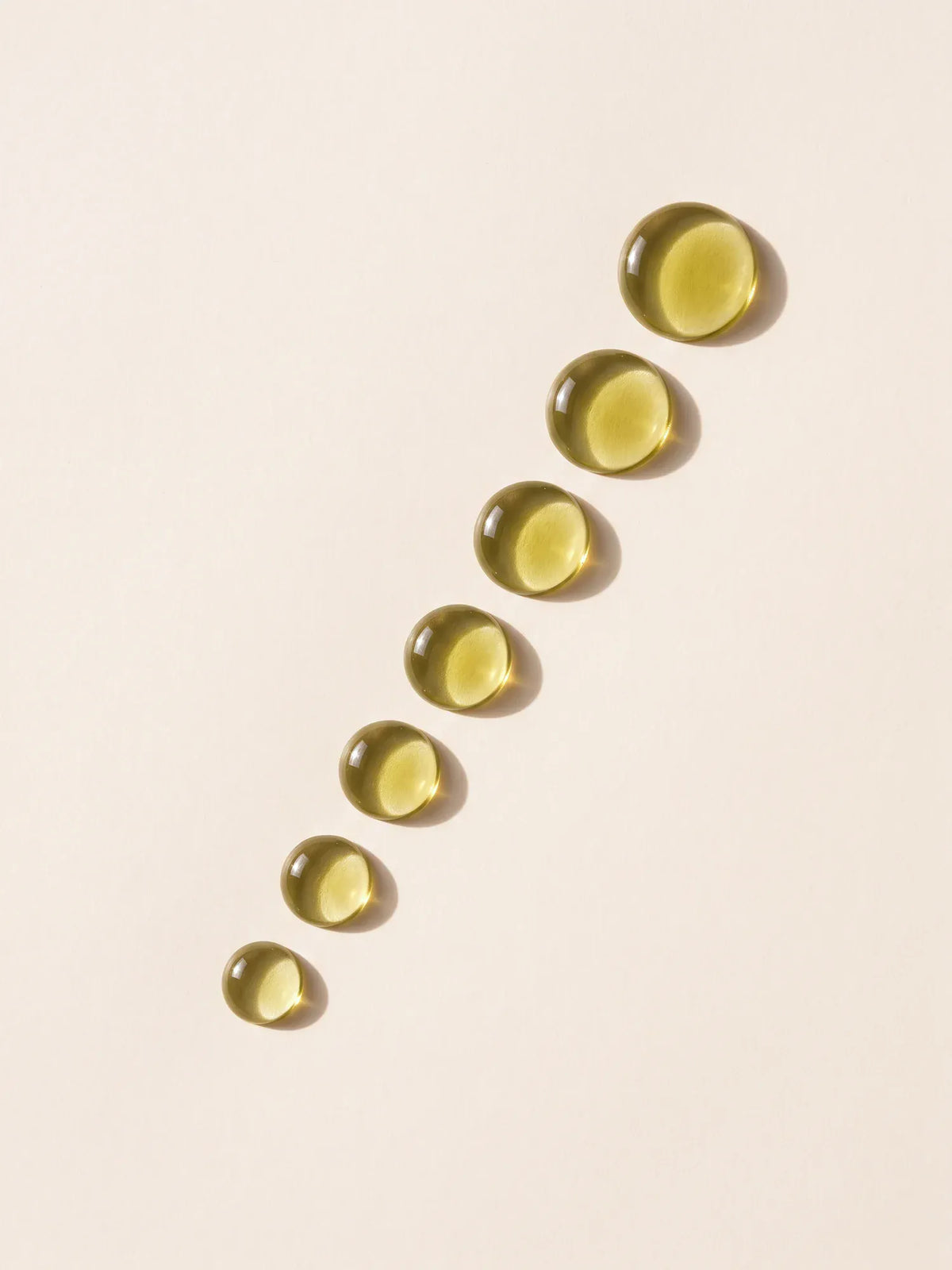
Goji berry seed oil is pressed from the seeds of Lycium barbarum, a shrub grown mainly in China. Almost all of the oil is unsaturated fat, with linoleic acid, an omega-6, as the largest share. One analysis of oil from dried goji seed found 60.77 percent linoleic acid, 21.69 percent oleic acid and 8.23 percent palmitic acid. Other studies land close to that, describing goji as 78 to 86 percent unsaturated fatty acids. Alpha-linolenic acid, an omega-3, makes up a smaller part, between 1.1 and 7.3 percent depending on the sample.
Linoleic acid matters to skin because it is one of the building blocks of the skin barrier. A dermatology review suggests that linoleic-rich seed oils may help the barrier and reduce water loss by interacting with the lipids in the skin's outer layer. That is a sound theory, and it applies to linoleic oils as a group, not to goji alone.
What is promising: antioxidant results in the lab
Beyond its fats, the oil carries smaller compounds: vitamin E (tocopherols), zeaxanthin, and plant sterols. In laboratory tests, goji seed oil performed well in two standard antioxidant assays, DPPH radical scavenging and the beta-carotene bleaching test. A 2025 review credited its tocopherols and phytosterols with neutralizing free radicals and reducing oxidative stress.
Those results are encouraging, and they explain why formulators are interested in the oil. They are still measurements made in a test tube, not on skin wearing the oil, and an antioxidant score in the lab does not tell you how much protection reaches your face.
What is preliminary: the UV study in mice
One study tested goji seed oil on skin directly, in mice. Oil from goji grown in the Qaidam Basin of China reduced visible UV damage to the animals' skin under the microscope, raised the skin's own antioxidant enzymes, and lowered MMP-1 and MMP-3, two enzymes that break down collagen. In the same study, the goji oil did slightly less well than vitamin E, the comparison.
That is a reasonable first result. It also has clear limits: these were mice, not people, and an oil applied to skin is not a sunscreen. Wear sunscreen in the daytime whatever oil you use.
Claims that run ahead of the evidence
Goji's reputation as a superfood has carried a lot of skincare claims with it. Several are worth questioning:
- "Speeds cell turnover and fades age spots." No study has shown this for the seed oil on human skin.
- "Firms and plumps with trace minerals." The selenium, zinc and other minerals in the berry are a nutrition story. Their levels in a pressed oil, and any effect on skin, have not been measured.
- "Contains all eight essential amino acids that even skin tone." That describes the dried berry, not the oil, and amino acids are not what makes a seed oil useful.
- "Won't clog pores." You will often see a low pore-clogging rating attached to goji. Those ratings are not based on studies of goji oil on human skin.
- "Boosts DNA synthesis in skin cells." That finding came from goji berry extract in cell studies, a different ingredient from the seed oil.
In the words of one review, there are only a few peer-reviewed studies that describe skin benefits of Lycium barbarum at all. The fair summary is a well-described oil with consistent lab results and one encouraging animal study.
How to read a goji label
"Goji" on a label can mean the seed oil or a fruit extract, and they are different ingredients: the oil is mostly fatty acids, while the extract carries the fruit's water-soluble compounds. Check which one you are buying, and where it sits on the ingredient list. An oil this unsaturated also oxidizes faster than steadier oils, so it should smell fresh and be kept capped and out of the sun.
If you want what goji promises
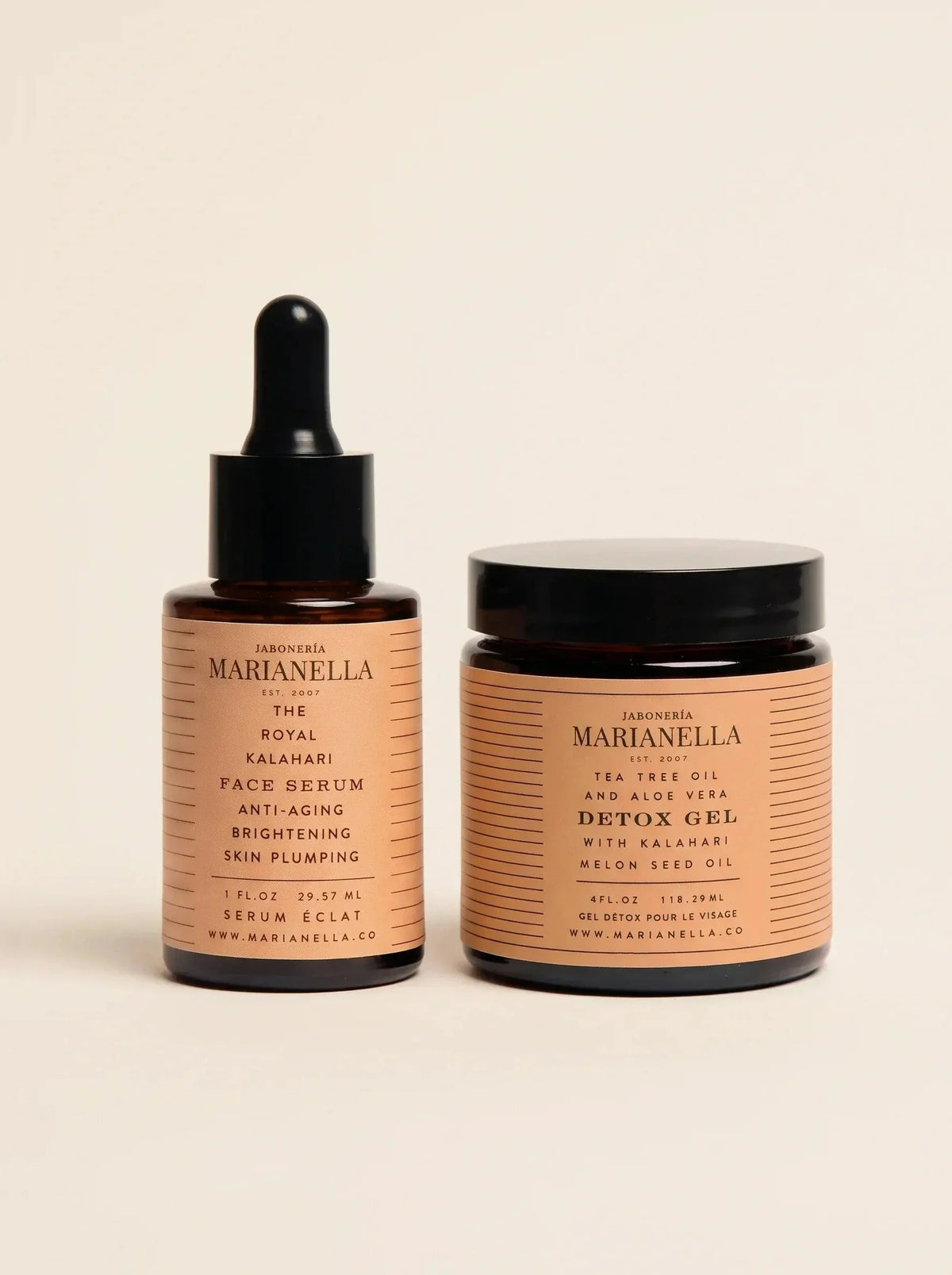
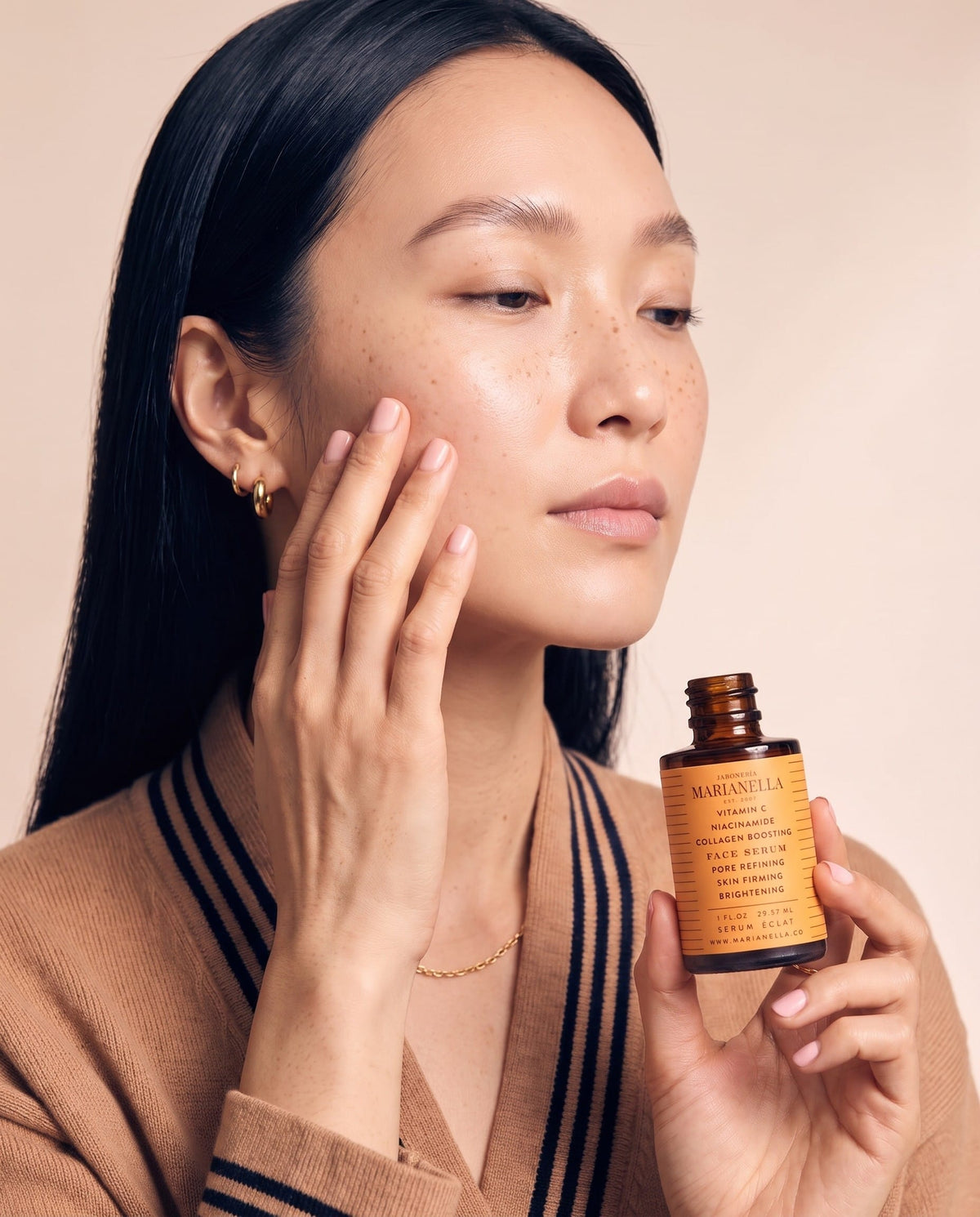
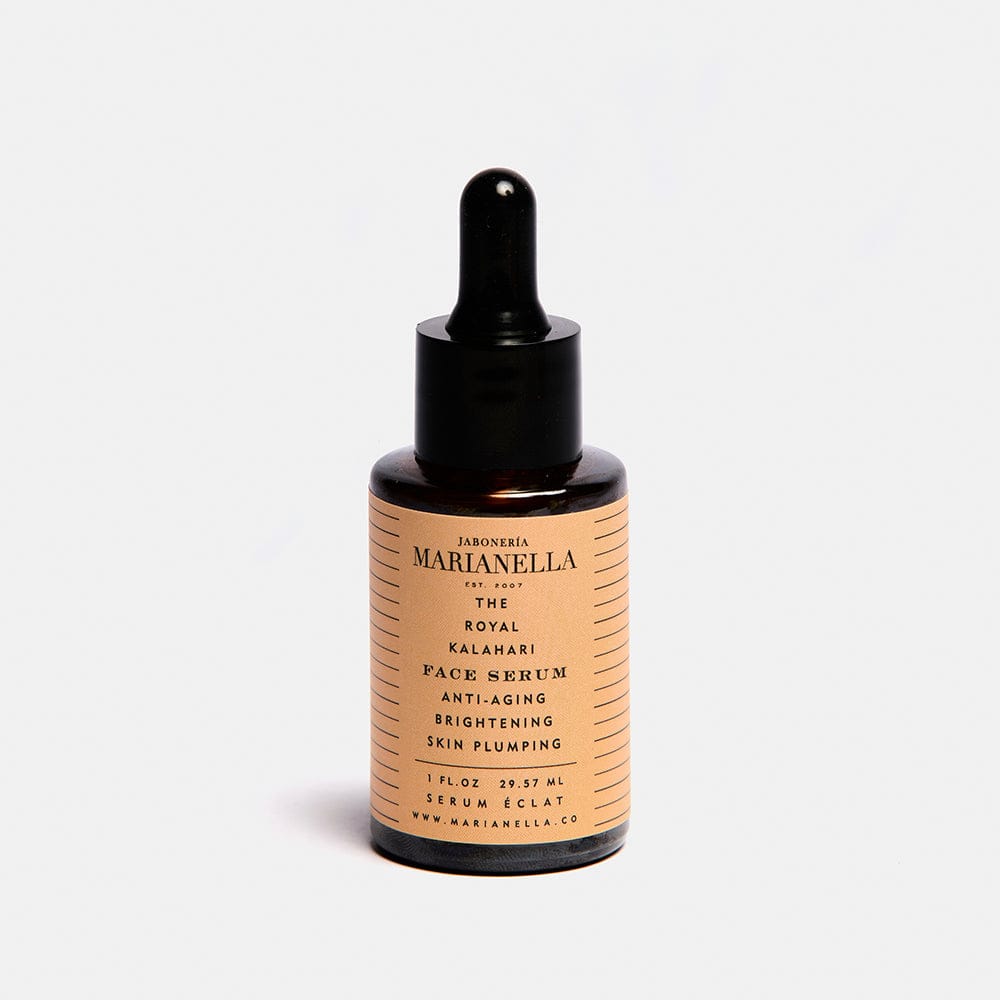
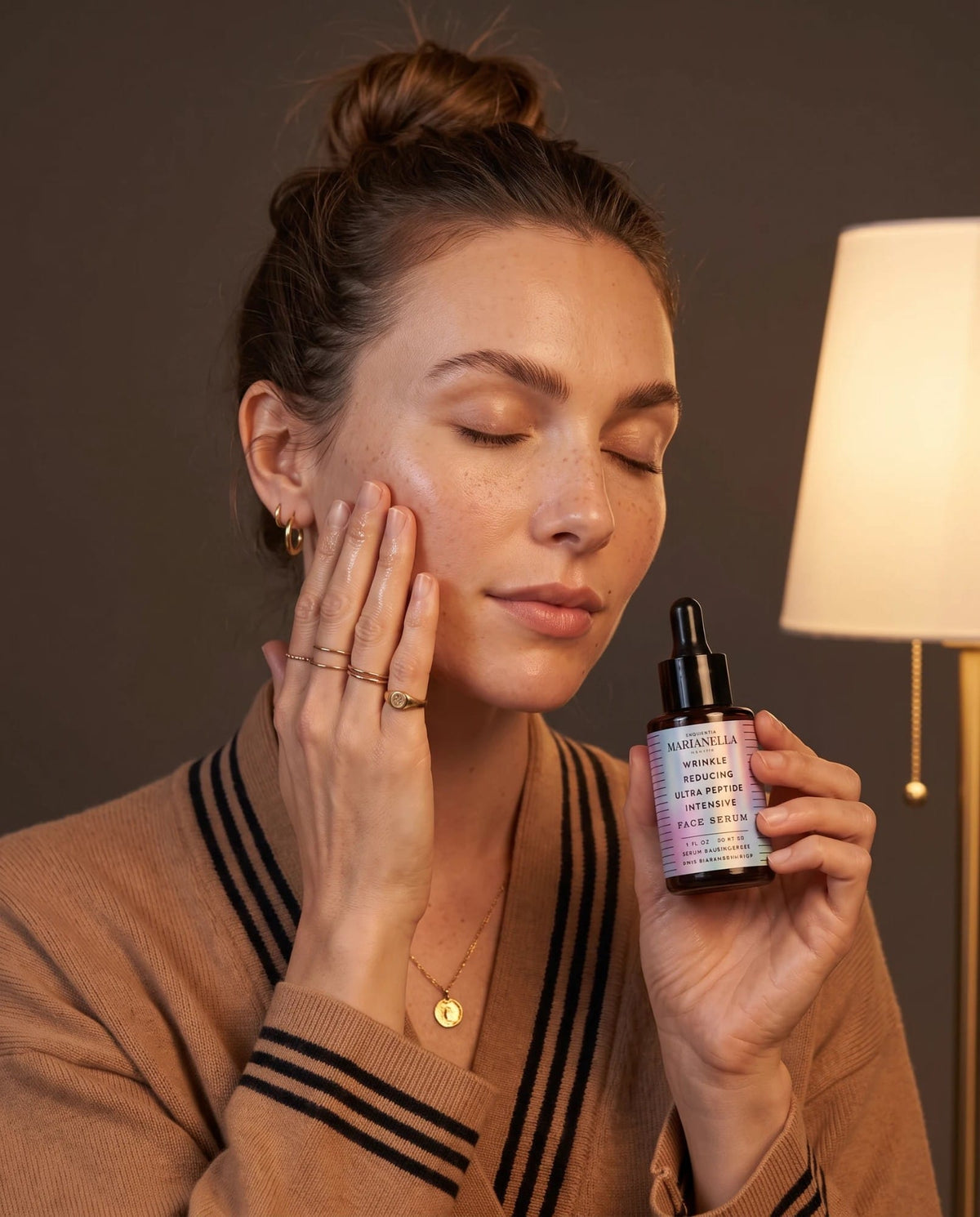
The useful parts of goji, a light linoleic-rich oil with natural antioxidants, are available in oils with a longer record. Our Royal Kalahari Face Serum is led by Kalahari melon seed oil, a light, fast-absorbing oil rich in linoleic acid that helps skin hold moisture, joined by baobab, camellia, passion fruit seed and tamanu oils with vitamins C and E. Four to six drops, morning and night, leave skin softer at once and, with daily use, looking smoother and more even.
If it is goji's carotenoids that interest you, our Sea Buckthorn Face Oil is deep orange with them, along with omega fatty acids. You can read about each oil we use in our Ingredient Library.
Questions about the goji research
Has goji berry seed oil been tested on human skin?
Not in a published trial with measured results. The evidence so far is its chemical makeup, antioxidant tests in the lab and one study in mice.
Can goji berry seed oil replace sunscreen?
No. The UV study was done on mice and did not test the oil as sun protection. Wear sunscreen during the day.
Is goji berry seed oil good for oily or blemish-prone skin?
Its high linoleic acid content makes it a light oil, and linoleic-rich oils are often chosen for oily skin. No study has tested goji oil on blemish-prone skin specifically.
Does Marianella use goji berry seed oil?
No. For a light, linoleic-rich face oil, we suggest The Royal Kalahari Face Serum, built on Kalahari melon seed oil.





















Leave a comment
This site is protected by hCaptcha and the hCaptcha Privacy Policy and Terms of Service apply.