

Hyaluronic acid skincare benefits are well-documented, clinically studied, and genuinely significant. If you are researching what hyaluronic acid actually does for skin, the answer is this: it is a moisture-binding molecule your body already produces, it holds up to 1,000 times its weight in water, and it is one of the most important structural components in healthy, hydrated skin. At Marianella, it is a cornerstone ingredient across several of our serums, formulated with 18 years of precision and care from our Brooklyn studio.
What Is Hyaluronic Acid?
Hyaluronic acid is a naturally occurring glycosaminoglycan, a long chain of repeated sugar units (D-glucuronic acid and N-acetyl-D-glucosamine) that is a key component of the extracellular matrix, which supports collagen and elastin. It is found throughout the body in joints, eyes, and connective tissue. About 50% of all the hyaluronic acid in your body sits in the skin, where it acts as a moisture reservoir, binding water to keep tissue hydrated, plump, and structurally stable.
HA can retain up to 1,000 times its weight in water, making it extremely effective in hydrating tissues. That number is not marketing language. It is chemistry. In skincare products, it is used as a humectant, meaning it attracts and holds water on and within the skin's surface to deliver visible smoothing and plumping effects.
Why Hyaluronic Acid Declines With Age
The skin's hyaluronic acid content starts to decrease in as early as twenty years of age and is reduced to half by the age of fifty. Clinical manifestations of this reduction include a diminished endogenous skin moisturizing capacity and the appearance of fine lines and wrinkles.

|
$43 |

|
$72 |

|
$43 |

|
$28 |
Levels of hyaluronic acid in the skin slowly decrease with age. Someone at 75 years of age has only a quarter of the hyaluronic acid in their skin as someone who is 19. The decline is not sudden. The hyaluronic acid level decreases by about 6% every 10 years. By the age of 50, the level of hyaluronic acid naturally present in the body has dropped by half, contributing to skin dryness. This is why consistent topical replenishment matters, especially from the late 20s onward.
As we age, the natural production of HA in the skin decreases, leading to a decline in skin elasticity and the development of wrinkles and sagging. This is not cosmetic theory. It is measurable biology.
Hyaluronic Acid for Skin: What the Science Actually Shows
In 2026, the evidence base for topical hyaluronic acid is stronger and more nuanced than it has ever been. Concentration is not everything.
A 2011 study with 76 volunteers found that applying a cream with just 0.1% hyaluronic acid twice daily increased skin hydration by about 10%, improved elasticity by roughly 20%, and reduced wrinkle depth by around 10%. Research suggests that products containing 0.1% to 0.4% can be just as effective as those with 3%. Higher concentrations do not necessarily deliver better results.
HA's molecular weight plays a critical role in its bioactivity. High molecular weight HA offers surface-level hydration and anti-inflammatory effects, while low molecular weight HA penetrates deeper to promote collagen synthesis and tissue regeneration.
High molecular weight HA forms a protective film on the skin's surface, providing intense hydration and reducing transepidermal water loss. Low molecular weight HA can penetrate deeper into the skin, delivering hydration to the underlying layers and stimulating collagen production.
The Molecular Weight Distinction Matters
HA can be low molecular weight (20–300 kDa) and high molecular weight (1,000–1,400 kDa). Low molecular weight HA has better skin permeability and can pass through the stratum corneum.
A study evaluating multiple HA molecular weights found that 130 kDa was especially effective, boosting skin elasticity by 20%, while both 50 and 130 kDa significantly improved wrinkle depth and roughness after 60 days.
Dermatologists generally recommend serums that blend multiple molecular weights so you get both surface hydration and deeper penetration. This multi-weight philosophy shapes how the best hyaluronic acid products are formulated today.
How to Apply It Correctly
In low-humidity conditions, a humectant such as HA may draw water from wherever it is available, including deeper skin layers, if there is little moisture in the surrounding air and no occlusive layer to seal it. Applying HA to damp skin and sealing with a moisturiser reduces this possibility. Apply your serum immediately after cleansing, while skin is still slightly damp. Follow with a moisturizer to lock hydration in place.
Hyaluronic Acid and Anti-Aging: A Deeper Role
Hydration is the entry point. But the anti-aging story goes further.
HA signals fibroblasts to synthesize new collagen and elastin. It does not just sit there holding water. It signals fibroblasts to synthesize new collagen and elastin, the proteins that give skin its structural integrity. This places hyaluronic acid firmly in the anti-aging category, not simply the hydration category.
Hyaluronic acid content in the skin progressively decreases with age, and its supplementation through topical, oral, and subcutaneous approaches represents a first-line intervention to address skin aging signs. Topical application is the most accessible and most consistently used method.
Best Hyaluronic Acid Products 2026: What Marianella Formulates
Marianella has been handcrafting in Brooklyn since 2007. Every serum is produced in small batches. The Venezuelan botanical heritage behind the brand, three generations of plant-based beauty knowledge, informs how ingredients like hyaluronic acid are selected and combined. These are not filler formulations. Each product below carries HA as part of a layered, intentional ingredient strategy recognized by Vogue, Oprah, Forbes, and Allure, and now available at Bloomingdale's BEAUTYSPACE.
The Royal Kalahari Face Serum
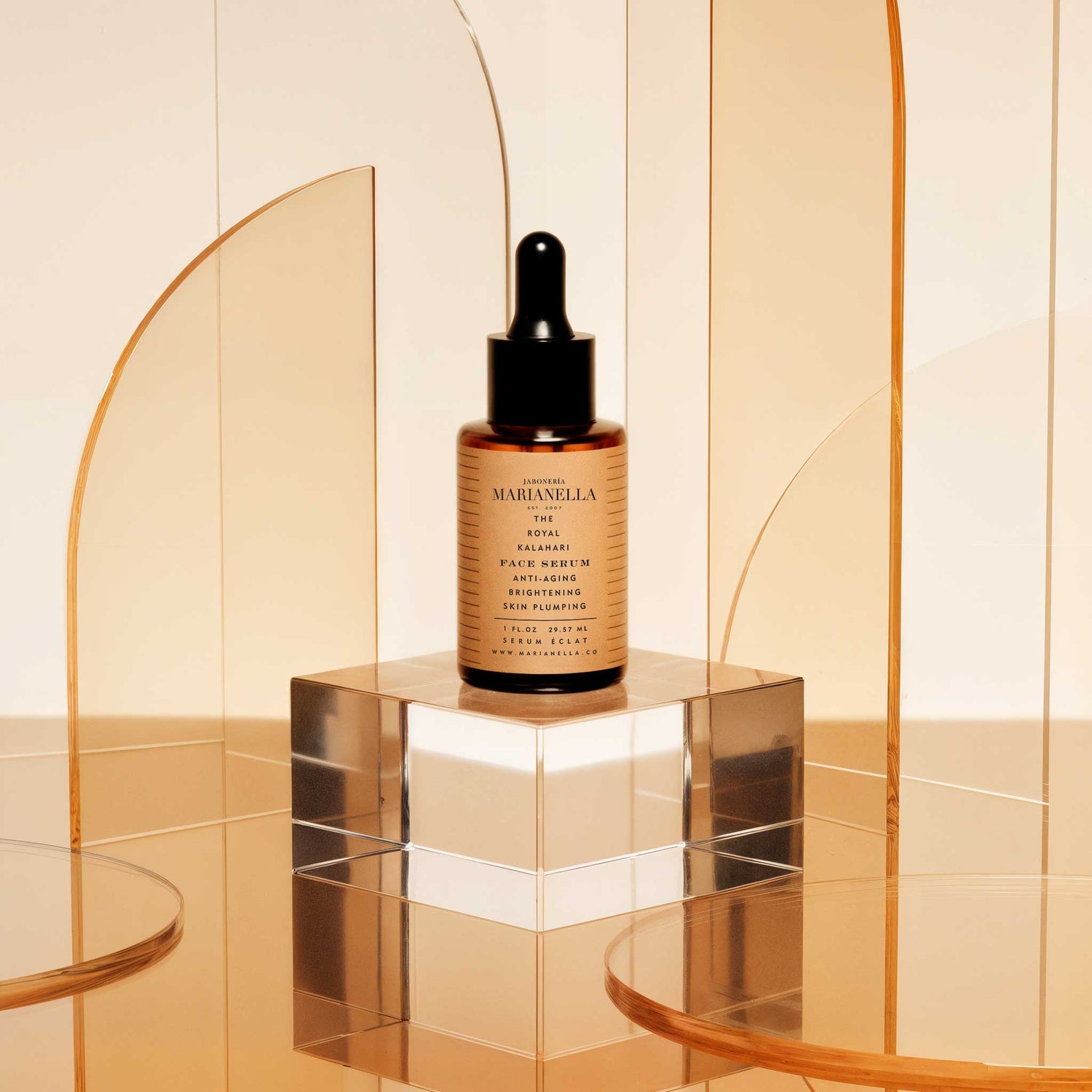
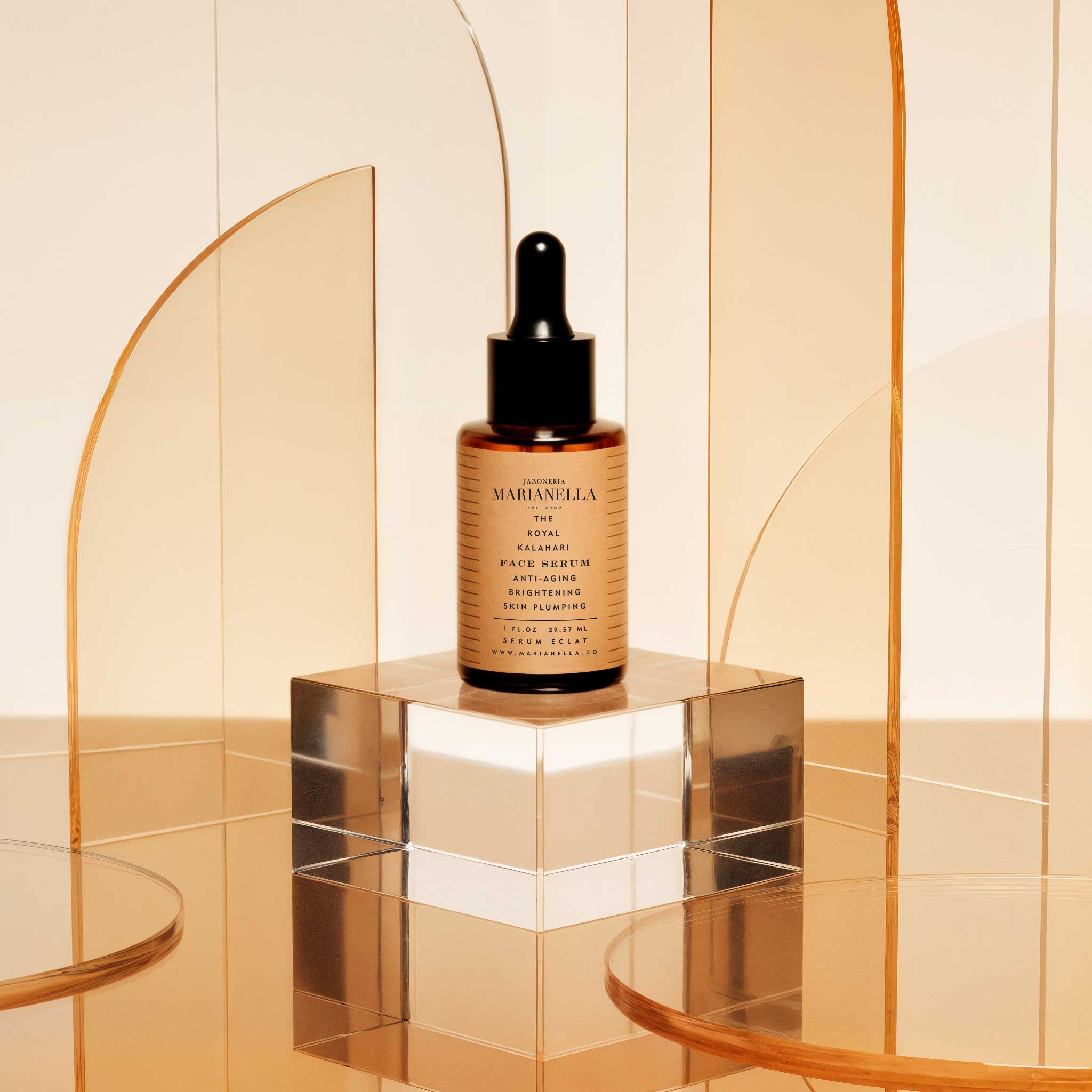
One of Marianella's most recognized formulas, The Royal Kalahari Face Serum pairs hyaluronic acid with Kalahari melon seed oil for a serum that delivers deep hydration without heaviness. It is suited to all skin types, including oily and combination, and works as an everyday hydration foundation. $43.
Wrinkle Reducing Ultra Peptide Intensive Face Serum
This is Marianella's most targeted anti-aging formula. The Wrinkle Reducing Ultra Peptide Intensive Face Serum combines hyaluronic acid with peptide technology to address the two key drivers of visible aging: moisture loss and collagen decline. The HA component provides immediate surface smoothing while supporting the deeper structural work peptides are designed to do. $72.
Vitamin C Collagen Boosting Face Serum with Niacinamide
Hyaluronic acid serves as the hydration base in the Vitamin C Collagen Boosting Face Serum with Niacinamide. Alongside vitamin C and niacinamide, it creates a serum architecture designed for brightness, barrier support, and plumpness simultaneously. This is a strong morning serum option, pairing well under SPF. $43.
The Royal Kalahari Under Eye and Lip Serum Roller Oil
The delicate skin around the eyes and lips is among the first to show dehydration. The Royal Kalahari Under Eye and Lip Serum Roller Oil brings hyaluronic acid directly to this zone in a cooling roller format, making application precise and the results visible. $28.
How to Layer Hyaluronic Acid Into a Complete Routine
The order of application is not incidental. Hyaluronic acid serums are water-based and thin in texture. They belong after cleansing and toning, before oils or creams. Applying to damp skin is the single most practical step you can take to maximize HA performance.
For those using multiple actives, HA is one of the most compatible ingredients in skincare. It does not conflict with vitamin C, niacinamide, retinol, or peptides. In fact, it is often used in those formulations specifically to counterbalance the potential dryness or sensitivity those actives can introduce.
Sodium hyaluronate, a salt form of HA, is often preferred in skincare formulations due to its smaller molecular size and greater stability. Serums and creams typically contain a blend of different molecular weights to provide both surface and deep hydration. When you see sodium hyaluronate on an ingredient label, it is the same family of molecule, often with slightly better stability and penetration characteristics.
Who Should Use Hyaluronic Acid
The short answer: almost everyone. HA is one of the rare skincare ingredients with essentially no contraindications for healthy skin. It is non-comedogenic, suitable for sensitive skin, and works across all Fitzpatrick skin types.
It is particularly valuable for skin that is dehydrated (lacking water, even if not dry), for skin navigating environmental stress like dry airplane air or cold climates, and for skin in the 30-plus age range where the natural HA decline has begun. It pairs naturally with actives that target texture, tone, and firmness because hydration is the foundation every other skincare result is built on.
The Marianella Standard
Across 82 products and 18 years of formulation, hyaluronic acid has remained a constant in Marianella's most effective serums. The People Magazine Star Beauty Award-winning lineup is built on precision, not trend cycles. HA is not new to these formulas. It is structural.
If you are building a routine around real hydration science in 2026, start with the serum. Explore the full collection at marianella.co, or find Marianella at Bloomingdale's BEAUTYSPACE.
```

Dejar un comentario
Este sitio está protegido por hCaptcha y se aplican la Política de privacidad de hCaptcha y los Términos del servicio.