

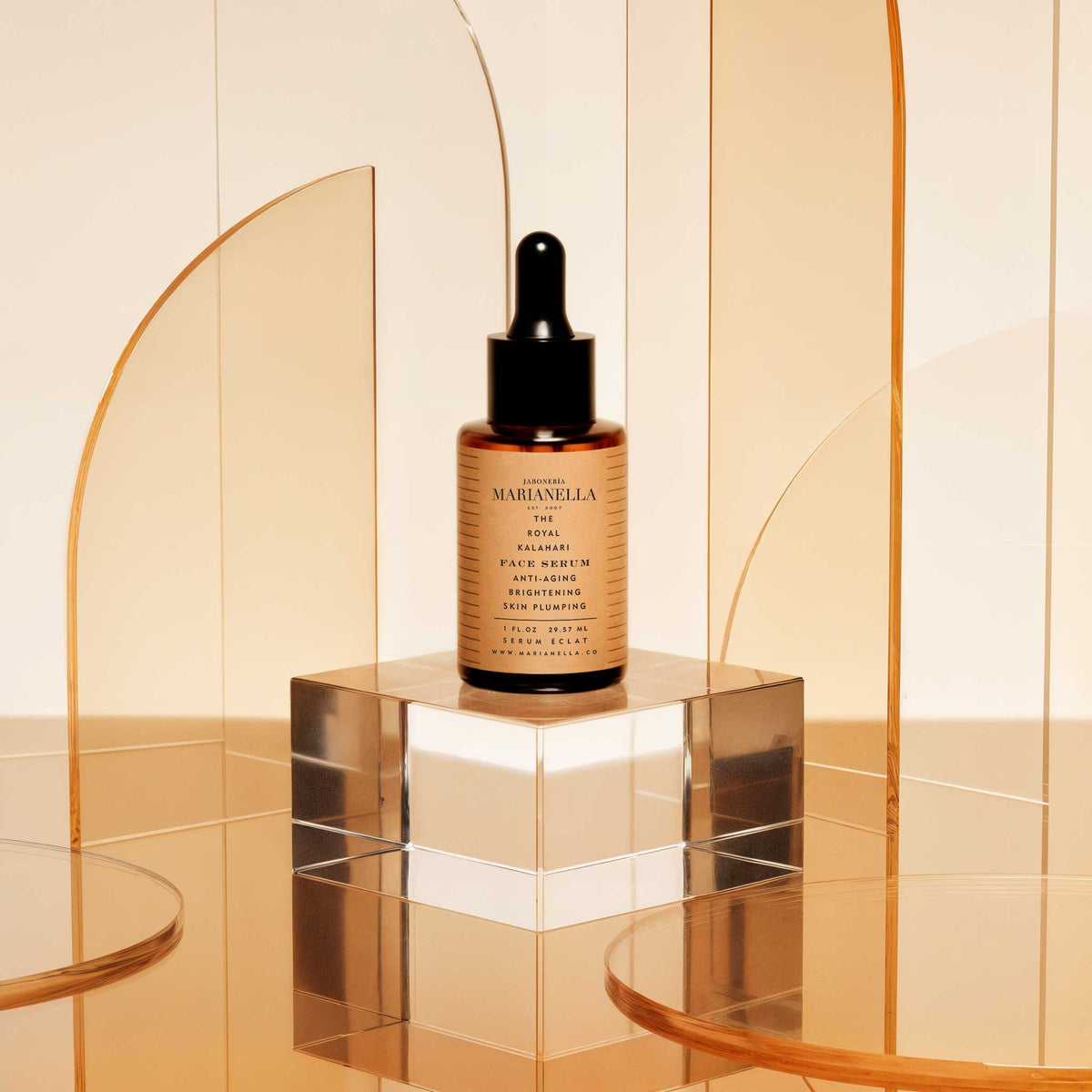
Mongongo oil is a cold-pressed nut oil from the Kalahari that does something almost no other facial oil does: it stays fresh. The short answer to why mongongo oil benefits skin so reliably is chemistry. One Namibian characterization study found total tocopherol content between 144 and 206 mg per 100 g of oil, with gamma-tocopherol dominant, alongside 24 to 36 percent alpha-eleostearic acid and 31 to 32 percent linoleic acid. That combination means a barrier-feeding omega-6 oil arrives on the skin already protected against its own oxidation. In 2026, as more people build routines around fewer, better products, that stability is the reason this rare botanical anchors two Marianella formulas made by hand in Brooklyn.
There is a particular week in September when the apartment changes. The window that was open all August gets closed around nine at night. The first radiator clank arrives. Skin notices before anyone else does: a tightness across the cheekbones after the shower, a faint sheen of flake at the outside corner of the eye that concealer catches on by Thursday. Nothing has gone wrong. The air simply took the water back. This is the moment an oil is for, and it is the moment mongongo was doing this job in long before it reached a Brooklyn workbench.
What is mongongo oil?
Mongongo oil, listed on ingredient panels by its INCI name Schinziophyton rautanenii kernel oil, is a nutrient-dense oil pressed from the nut inside the fruit of the mongongo tree, also called manketti. Schinziophyton rautanenii is a large spreading tree, typically 15 to 20 metres tall, growing wild across Angola, Botswana, Namibia, South Africa and Zambia, where it has long been an important food source. The fruit holds a thin layer of edible flesh around a hard stone, and inside that stone sits the nut, cold pressed to yield a bright yellow oil. The seed kernel generally contains between 41 and 53 percent oil, and one study measured oil yield from the nut at 42.6 percent. In skincare it is valued as an emollient that is unusually high in linoleic acid, vitamin E and a conjugated fatty acid found in very few plants.
It is also old. The mongongo nut has been eaten by the San for more than 7,000 years, and the oil has been used for food and for skin care, as a natural sunscreen and hair ointment, for millennia by local people. Very few cosmetic ingredients carry that length of human record.
The mongongo oil benefits that actually matter for skin
Linoleic acid and the barrier
Mongongo oil is composed of between 36 and 49 percent linoleic acid, a polyunsaturated omega-6 fatty acid; other analyses put the range at 30 to 54 percent depending on source and press. This matters because linoleic acid cannot be synthesized by the body and must come from outside it, and a deficiency in essential fatty acids leads to a decline in skin barrier function. The compound plays a role in preserving skin integrity and supporting barrier function by aiding water regulation and the stability of skin cells. Translated to the bathroom mirror: this is the fatty acid profile that addresses tightness rather than covering it.

|
$43 |

|
$28 |
Alpha-eleostearic acid, the rare one
The ingredient's signature is a conjugated triene. Mongongo oil distinguishes itself from other oils by its high levels of alpha-eleostearic acid, a unique conjugated fatty acid, and one 2025 paper in RSC Sustainability cites 23.8 percent alpha-eleostearic acid in the oil. Researchers note that eleostearic acid reacts rapidly with UV light, producing polymerization, which is the mechanism behind the traditional claim that the oil forms a light protective film on skin and hair. Marianella's position on this is that the presence of eleostearic acid makes mongongo a strong shield against environmental pollutants. To be plain about it: this is not a sunscreen, and neither of our serums is an SPF product. Use your sunscreen.
Feel, finish and the polyunsaturated difference
Texture is where the polyunsaturated profile shows up in a way anyone can judge without a lab. Mongongo is 40 to 50 percent polyunsaturated fatty acids, unlike shea and coconut oil, which are largely saturated, or mango, olive, avocado, jojoba and almond oils, which are mainly monounsaturated. A 2025 analysis reported the oil's fatty acid composition at 73 percent unsaturated fatty acids. Those larger polyunsaturated molecules tend to remain adsorbed on the surface rather than diving into the interior of a hair strand, forming a protective, emollient film that keeps moisture from escaping. On skin, that surface behaviour reads as slip that settles, not slick that sits. The oil's iodine value of 120 to 131 g per 100 g is the number behind that lightness.
The minerals and sterols nobody mentions
Beyond vitamin E, the oil contains significant amounts of calcium, magnesium, zinc, copper and iron. It is also a rich source of gamma-tocopherol and beta-sitosterol, the latter being a plant sterol formulators reach for when they want an oil to feel soothing rather than merely occlusive.
Why mongongo oil does not go rancid
Here is the fact that changed how we think about this ingredient. Manketti nut oil is reported to be highly stable to oxidation with a long shelf life, and one researcher documented that dried kernels stored under proper conditions for about six years remained edible and palatable. The high gamma-tocopherol content is credited for that stability, keeping the oil from turning rancid in African heat. Measured peroxide values of 1.80 to 3.98 meqO2/kg confirm it in the numbers rather than the folklore.
Think about what that means for a bottle on a shelf in a humid Brooklyn summer, opened and closed twice a day for four months. Most high-linoleic oils are fragile; they are the ones that smell like crayons by October. Mongongo arrives with its own antioxidant escort. The tree earned this trait the hard way, growing in the deep sands of the Kalahari, where it survives years of drought and enormous swings in temperature. An oil built to keep a nut alive through six years of that is an oil built to survive your medicine cabinet.
Where the Kalahari meets Caracas
Marianella has been small-batch since 2007, and the whole brand began with a simple habit: making something beautiful out of what grows. Those early Caracas memories became the foundation, and when life brought the family to the United States, they rebuilt that world from scratch in Brooklyn. Clean ingredients, small batches, no shortcuts. We remain the only Venezuelan-founded, independent, luxury skincare and home fragrance brand in the United States, with 82 SKUs across Face, Body, Hand, Home and Fragrance, stocked at Bloomingdale's BEAUTYSPACE and covered by Vogue, Forbes, Allure, the New York Times, Harper's Bazaar and People Magazine, which gave us a Star Beauty Award.
An ingredient this stable suits how we work. We do not press thousands of units and warehouse them for a year. Eighteen years of formulation expertise guided the decision to anchor our Royal Kalahari Face Serum in this ingredient, and the name is not a coincidence.
Best mongongo oil products 2026: how to use it
If you are comparing the best mongongo oil products 2026 has to offer, the question worth asking is not whether mongongo is on the label but where it sits on the label and what the formula asks it to do. Two of ours are built around it.
For the whole face, morning and night
The Royal Kalahari Face Serum ($43) is the flagship expression of the ingredient, handcrafted in small batches in Brooklyn. Three to four drops pressed into damp skin after cleansing, warmed between the palms first. On the September nights when the radiator wins, layer it last, over whatever water-based step you already trust.
For the corners that go first
The skin at the outer eye and the edge of the lip is the earliest to register a change in humidity. The Royal Kalahari Under Eye and Lip Serum Roller Oil ($28) puts the same oil on a rollerball, which means it travels in a coat pocket and can be applied on a train platform without a mirror. One pass under each eye, one across the lips, cool metal on tired skin.
Both are available now at marianella.co, and the two together are the simplest way to carry mongongo through a full day and into the dry months ahead.
FAQ
Is mongongo oil good for all skin types?
Mongongo is a high-linoleic, polyunsaturated oil, which generally makes it a comfortable choice across skin types, including skin that finds heavier saturated butters too rich. It is 40 to 50 percent polyunsaturated fatty acids, unlike shea and coconut, which are largely saturated. As with any nut-derived oil, patch test first, and speak to a dermatologist if you have a tree nut allergy.
What does mongongo oil smell like?
Unrefined manketti oil is described as a light yellow oil with a typical nutty smell, and cold pressing the nut yields a bright yellow oil. In a finished serum the character is faint and warm rather than perfumed. Because of the oil's oxidative stability, it does not develop the sharp, paint-like note that fragile omega-6 oils acquire as they age in the bottle.
Does mongongo oil protect against sun damage?
No, and no mongongo product should be used as sunscreen. Researchers have documented that eleostearic acid reacts rapidly with UV light, producing polymerization, and traditional use in southern Africa included skin and hair care for millennia. That is interesting chemistry, not a measured SPF. Wear a broad-spectrum sunscreen and use mongongo oil for barrier support and environmental defense.
How is mongongo oil different from marula or baobab oil?
The difference is one fatty acid. Mongongo distinguishes itself from other oils through its high levels of alpha-eleostearic acid, a conjugated fatty acid, present at 24 to 36 percent in one Namibian study. Marula and baobab are prized mainly for oleic and linoleic content. Mongongo brings a conjugated triene plus 144 to 206 mg of tocopherol per 100 g.
Which Marianella product has the most mongongo oil?
The Royal Kalahari Face Serum ($43) is the formula built around the ingredient, named for the desert the tree grows in. The Royal Kalahari Under Eye and Lip Serum Roller Oil ($28) delivers the same oil to the eye and lip area in a rollerball format. Both are handcrafted in small batches in Brooklyn.

Dejar un comentario
Este sitio está protegido por hCaptcha y se aplican la Política de privacidad de hCaptcha y los Términos del servicio.