


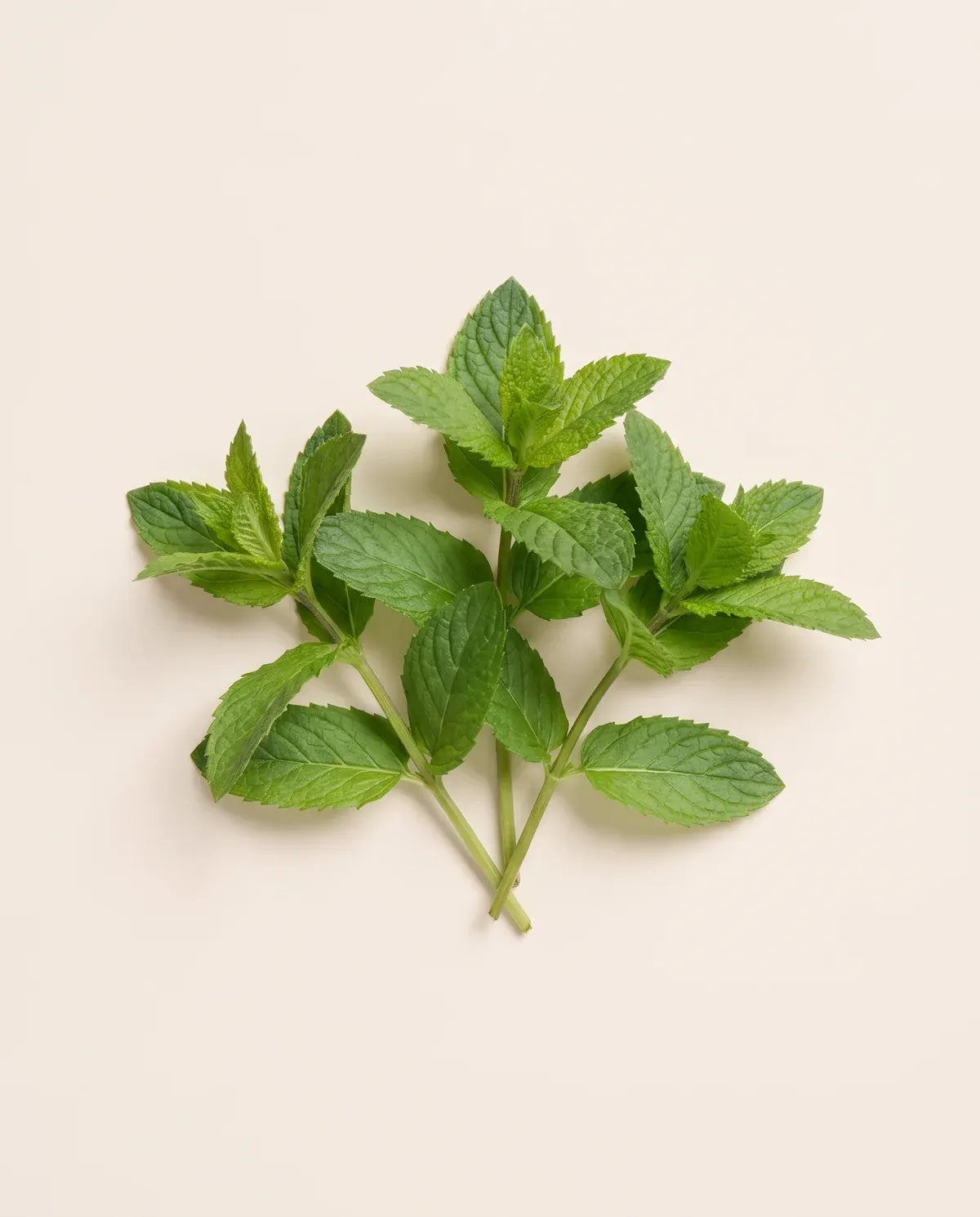
Peppermint oil is an essential oil distilled from the peppermint plant, and on skin it does one thing very well: it feels cold. Its main compound, menthol, switches on the skin's cold sensors, so a well-diluted drop brings a fresh, tingling chill and a clean, bright scent. It belongs in a routine as a small part of a blend, in a product you use for how it feels, and never straight from the bottle.
Where peppermint oil comes from
Peppermint, Mentha piperita, is a natural hybrid of spearmint and water mint. The oil is taken from the leaves and flowering tops, most often by steam distillation, which carries the plant's volatile, fragrant compounds out with the steam and leaves the rest behind. What collects is a thin, clear oil with a sharp, sweet scent that most people know from toothpaste and tea.
It is an essential oil, not a carrier oil. A carrier oil such as jojoba or Kalahari melon seed oil is a fatty oil you can spread across skin to soften it. An essential oil is a concentrate of aromatic compounds, used in drops and always diluted in something else.
Menthol, menthone and the rest
Most of what peppermint oil does comes from two molecules. Menthol usually makes up somewhere between a third and a half of the oil, depending on where the plant grew, when it was cut and how it was distilled. Menthone is the next largest part. Smaller amounts of menthyl acetate, neomenthol, limonene and cineole round out the scent.
Because the proportions shift from harvest to harvest, two bottles labeled "peppermint oil" can smell and feel a little different. That is one reason careful makers buy from suppliers they trust and smell every delivery before it goes near a batch.
Why it feels cold on skin
Your skin has a sensor for cold called TRPM8. It sits in nerve endings near the surface and normally fires when the air or water around you drops below a comfortable temperature. Menthol binds to that sensor and opens it, so the nerves send the same message they would on a cold morning. The skin itself does not get colder in any meaningful way. It simply feels as if it has.
That chill is the main reason people reach for peppermint. It makes skin feel awake and fresh, it pairs well with herbal and woody scents, and it lingers for a while after the oil goes on. In a leave-on oil it builds slowly as you work the product in. In something you rinse away, it arrives in the shower and leaves with the water.
What peppermint oil can and cannot do
The cooling feel and the scent are well understood, and they are what peppermint is good for in skin care. You will also read claims that it clears blemishes, controls oil or regrows hair. Those claims lean on lab work and animal studies rather than trials in people, and we do not make them. If a product promises that peppermint will change your skin, be wary of it; if it promises a cool, fresh feel, it can keep that promise.
There is one more claim worth knowing about. Menthol can loosen the outer layer of skin slightly, which helps other ingredients pass through. That cuts both ways. In a gentle blend it is harmless; mixed with harsh ingredients, it can make them sting more.
Who should go easy on peppermint
Peppermint suits skin that likes a cool, brisk feel. It is less kind to skin that is sensitive, already feels irritated or tends to sting. A few simple habits keep it comfortable:
- Never use it undiluted. Pure essential oil on bare skin is a different thing from a drop blended into a base oil.
- Go lighter on the face. One guideline for sensitive and mature facial skin puts peppermint at 0.2 to 0.5 percent of a blend, roughly one to three drops in 30 ml of carrier oil.
- Keep it away from the eyes and from thin skin in folds, where the cold can turn into a burn.
- Patch test first on the inside of the arm if your skin reacts easily.
How we use peppermint at Marianella
We use peppermint oil in one product, and it is a good example of the right home for it. GRR Oil Beard Oil is a conditioning beard oil built on jojoba, Kalahari melon seed, avocado, coconut and castor oils. Tea tree, peppermint, rosemary, green tea and hibiscus oils sit on top of that base and give it a cool, herbal note. The base oils do the softening; the peppermint is there for the fresh feel on the skin under the beard.
A few drops, warmed between the palms and worked through to the skin, leave a beard softer and easier to comb and the skin beneath it moisturized. The scent comes from our in-house perfumery and stays subtle. It is handcrafted in Brooklyn, one small batch at a time, so the oil in the bottle has not been sitting for a year.
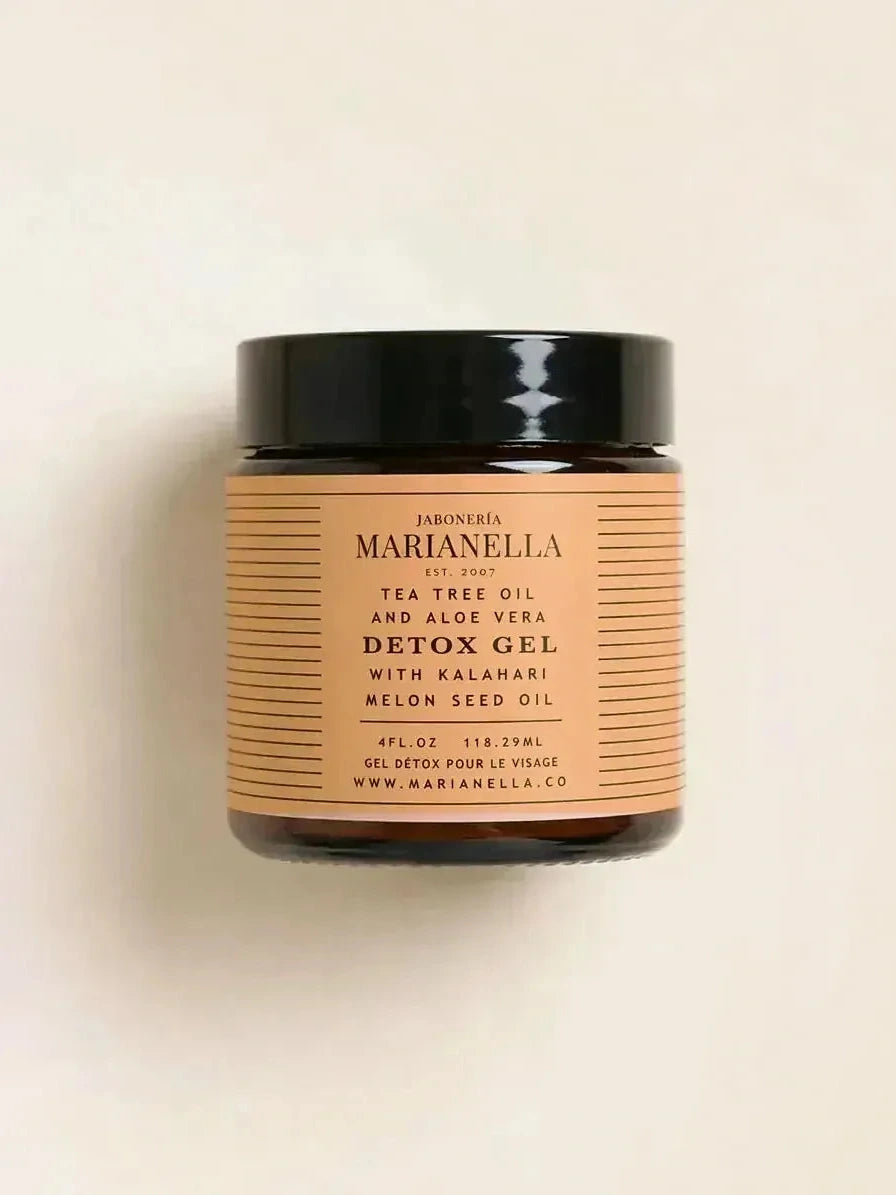
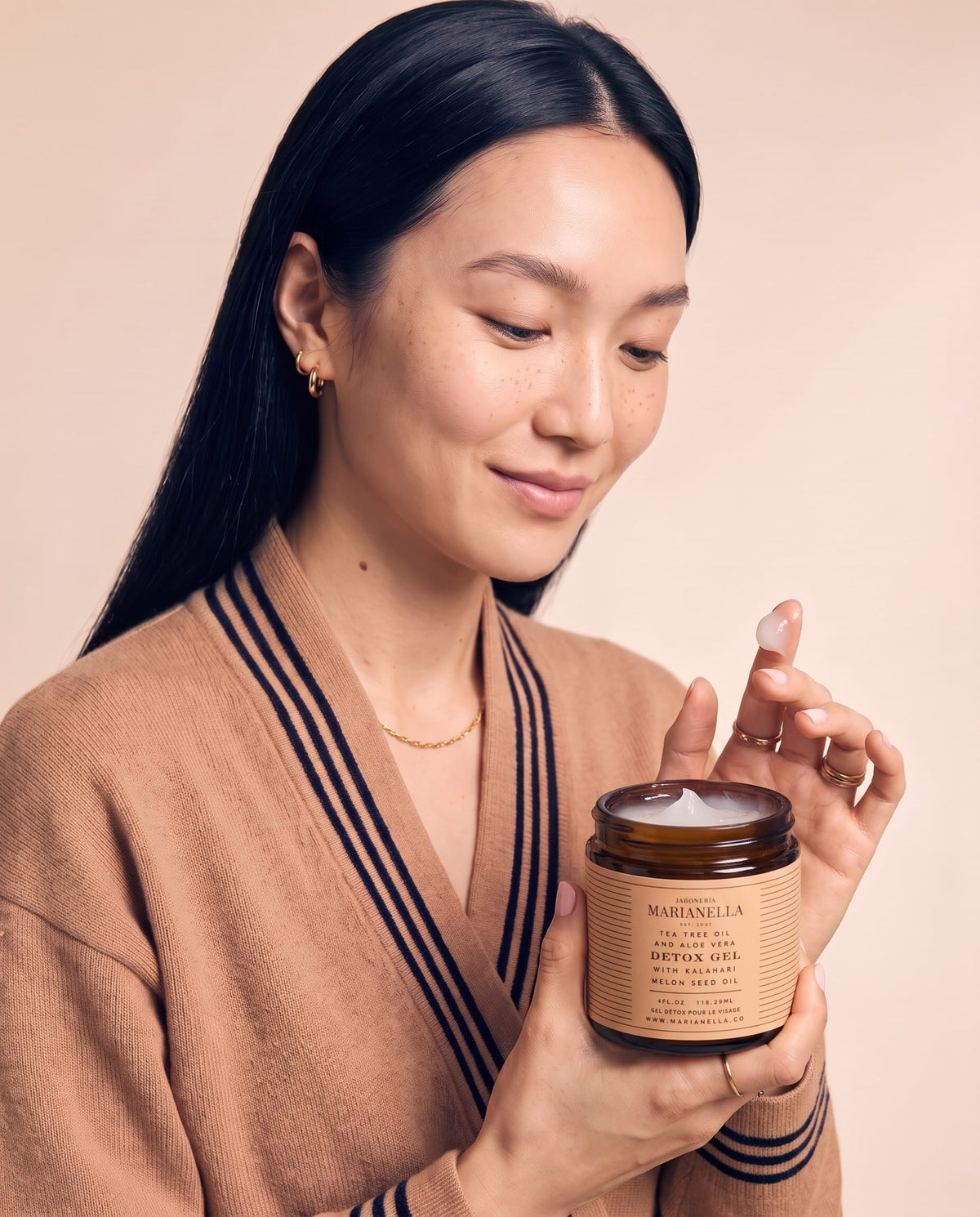
For the face, we prefer a different kind of cool. Our Detox Gel is a clear aloe gel whose first touch is cool, with shea for a little cushion and tea tree for a crisp herbal scent. It gives that fresh feeling without peppermint on the more delicate skin of the face.
Questions we hear about peppermint oil
Is peppermint oil the same as mint extract?
No. Peppermint oil is a distilled essential oil, concentrated and used in drops. Mint extracts and flavorings are made for food and are not meant for skin care.
Why does my skin tingle after using a peppermint product?
The menthol is triggering your skin's cold sensors. A mild tingle is normal; if it turns into burning or the skin looks red, rinse it off and use a gentler product.
Which Marianella product has peppermint oil in it?
GRR Oil Beard Oil. Peppermint joins tea tree, rosemary, green tea and hibiscus oils over a base of jojoba, Kalahari melon seed, avocado, coconut and castor oils.
Can I add a drop of peppermint oil to my face cream?
We would not. It is easy to add far more than a face can take, and essential oils need even mixing to stay comfortable. A finished product made with a measured amount is the safer choice.


















Leave a comment
This site is protected by hCaptcha and the hCaptcha Privacy Policy and Terms of Service apply.