


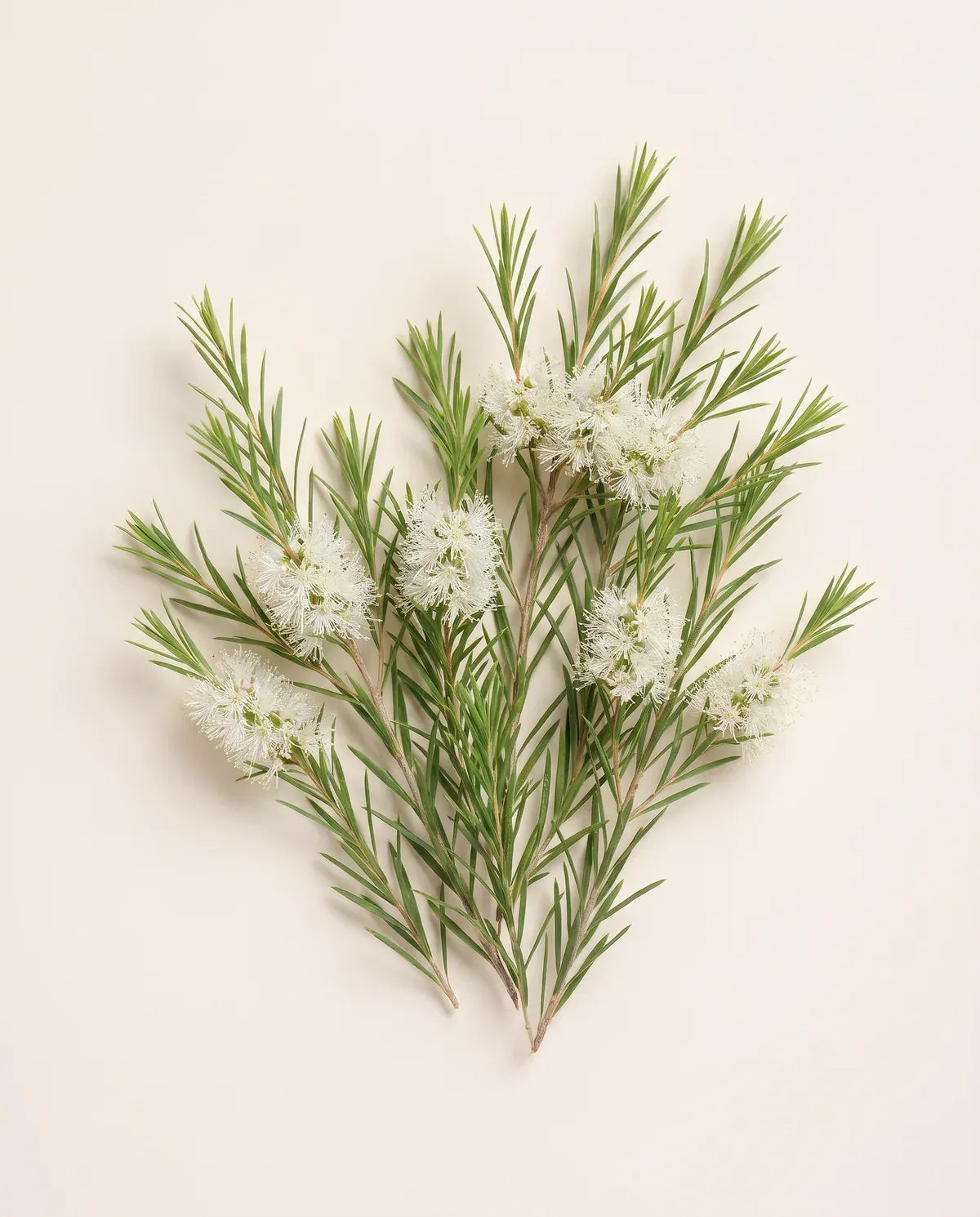
Tea tree oil is an essential oil steam-distilled from the leaves of the Australian tree Melaleuca alternifolia. On skin, at low strength in a finished product, it gives a fresh, clean, herbal feel and scent, and it is best known as an ingredient for blemish-prone and oily skin. It is strong, though: undiluted or old oil can upset skin, so it belongs in small amounts inside a well-made formula.
From leaf to bottle
The tea tree is native to New South Wales, and Australia still produces most of the world's supply. The oil sits mainly in the leaves rather than the branches, and it is drawn out by steam distillation: steam passes through the leaves and small twigs, carries the volatile oil with it, and the oil separates from the water as it cools.
What comes out is a thin, pale yellow to nearly colorless liquid with a fresh, camphor-like smell. It is sold as Melaleuca Alternifolia Leaf Oil on ingredient lists, and sometimes simply as melaleuca oil. Despite the name, it has nothing to do with the tea you drink.
What is in it
Tea tree oil contains around 100 different compounds, but eight of them typically make up as much as 90 percent of the oil. The most important is terpinen-4-ol, which is the compound most of the research focuses on. Others include gamma-terpinene, alpha-terpinene and 1,8-cineole.
Because natural oil varies from batch to batch, there is an international standard, ISO 4730, for oil sold as tea tree oil. It requires the oil to be steam-distilled from the foliage and branchlets of Melaleuca alternifolia, sets terpinen-4-ol at 30 to 48 percent, and caps 1,8-cineole at 15 percent. That standard is how a buyer can tell genuine tea tree oil from a bottle that only smells like it.
What it feels and smells like on skin
On its own, tea tree oil is sharp. It evaporates quickly and leaves a cool, clean sensation and a medicinal, herbal scent. In a finished product, that sharpness softens into something fresher: a crisp, green brightness that makes a gel or oil feel clean on skin. This is the side of tea tree oil most people experience day to day, and it is the role it plays in our formulas.
Why it is popular for blemish-prone skin
Tea tree oil has a long reputation as an ingredient for oily and blemish-prone skin, and it has been studied more than most essential oils for that reason. The studies people cite usually test specific gels or lotions at around 5 percent tea tree oil, used as directed over several weeks. Their results describe those particular products, not every formula with tea tree somewhere on the label.
Two points from that research are useful to anyone. First, gentle is the point: the formulas studied were low in strength, and higher is not better. Second, tea tree oil works best as one step in a sensible routine, with gentle cleansing and good moisture, rather than as the whole answer. We do not make blemish claims for our own products; we use tea tree for its scent and fresh feel.
How it is used in finished products
Tea tree oil turns up in cleansers, gels, toners, hair and scalp care, and beard oils. In each, it is diluted into a base that does the rest of the work. A rinse-off cleanser gives the scent and freshness a brief moment on skin. A leave-on gel or oil keeps them with you longer, so those formulas tend to use smaller amounts.
If you buy pure tea tree oil, never use it neat on skin. Dilute it well in a carrier oil and patch test first.
Tea tree in our formulas
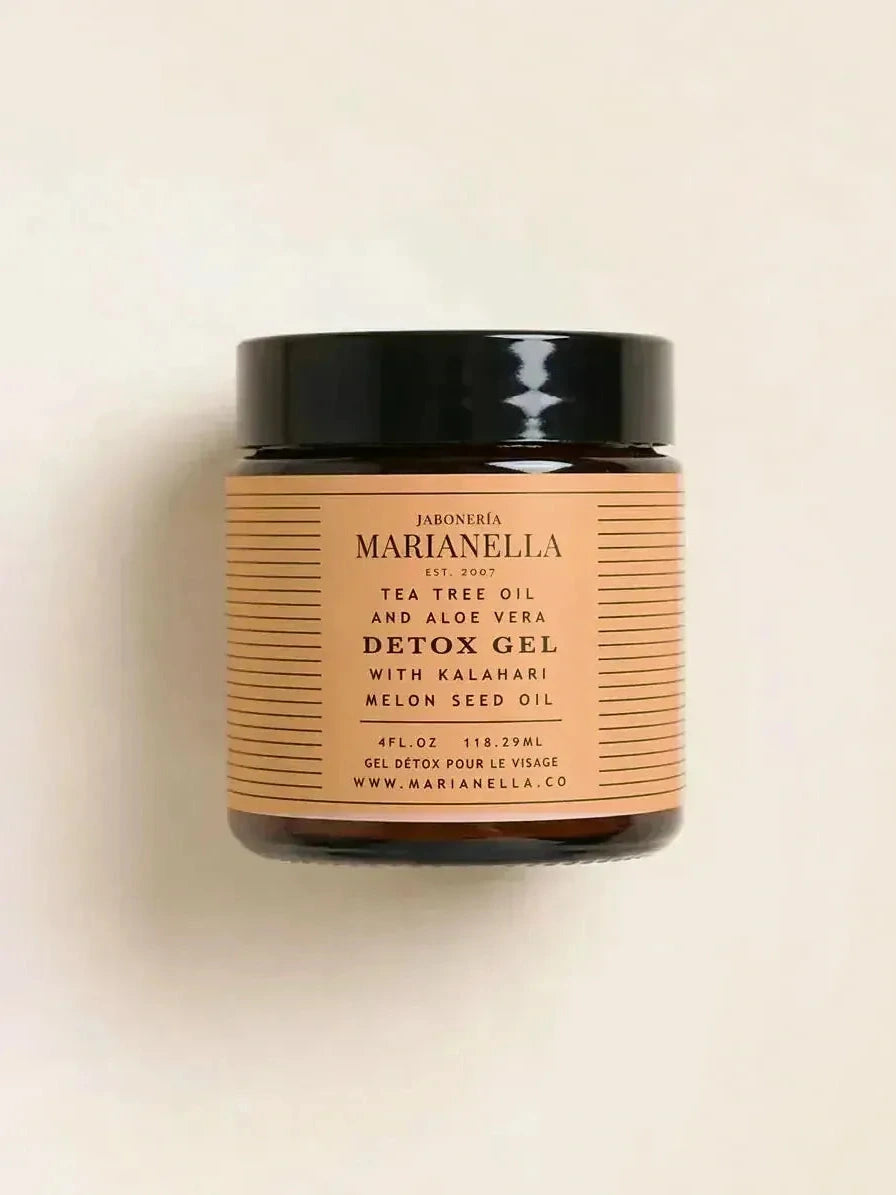
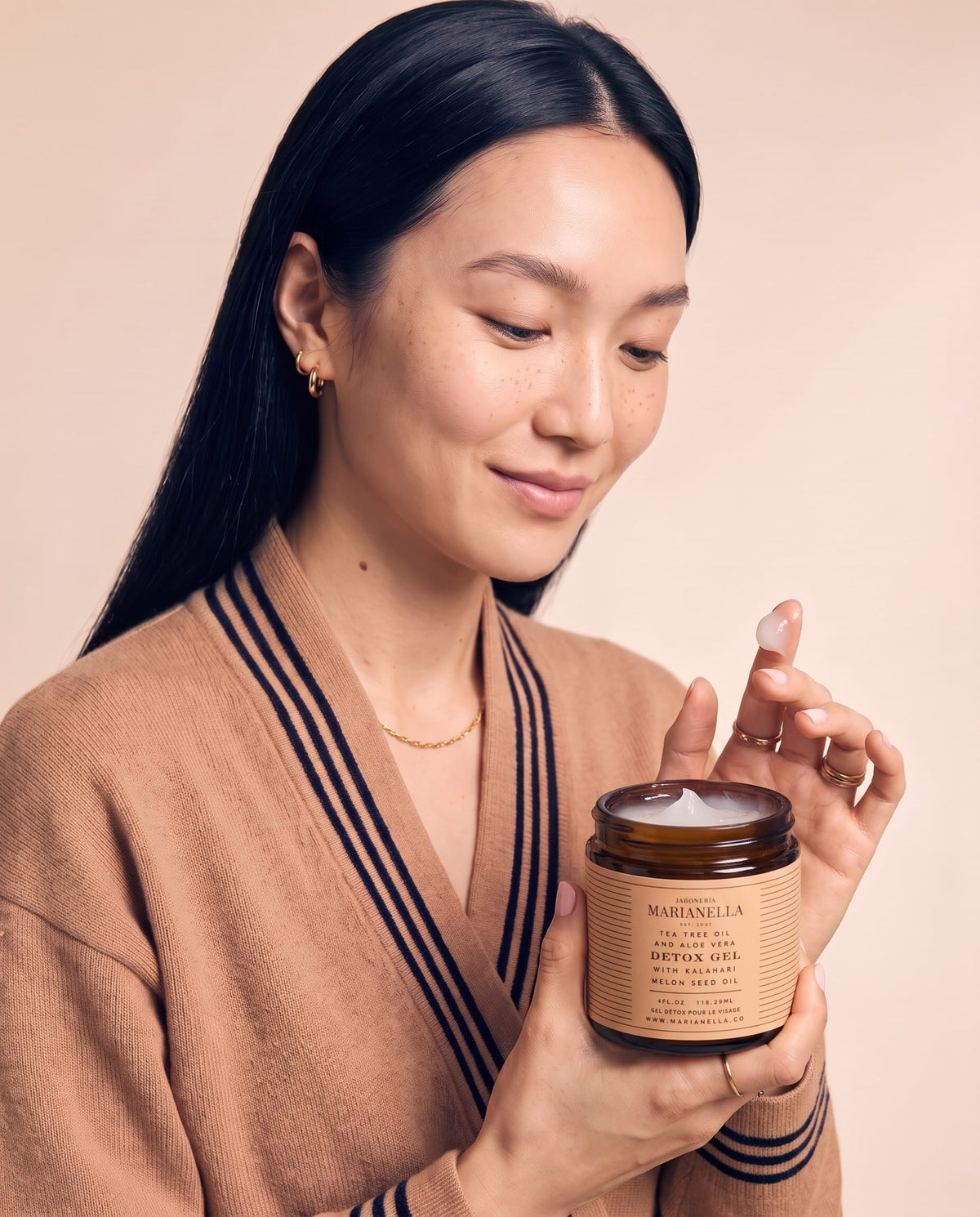
Our Ingredient Library lists tea tree oil in two products. Our Detox Gel with Kalahari Melon Seed Oil is a light, clear aloe gel with a touch of shea, and tea tree gives it a crisp, herbal, clean scent. Our GRR Oil Beard Oil blends tea tree with peppermint, rosemary, green tea and hibiscus oils in a base of jojoba, Kalahari melon seed, avocado, coconut and castor oils, for a softer beard and moisturized skin beneath it.
Questions about what tea tree oil is
Is tea tree oil made from the tea plant?
No. Tea tree oil comes from the leaves of Melaleuca alternifolia, an Australian tree. Drinking tea comes from a different plant entirely.
What is terpinen-4-ol?
It is the main compound in tea tree oil and the one most research focuses on. The international standard requires genuine tea tree oil to contain 30 to 48 percent of it.
Is tea tree oil safe around pets?
Keep it away from them. Our Ingredient Library advises keeping tea tree oil away from pets, so store products with it out of reach and do not apply it to animals.





















Leave a comment
This site is protected by hCaptcha and the hCaptcha Privacy Policy and Terms of Service apply.