


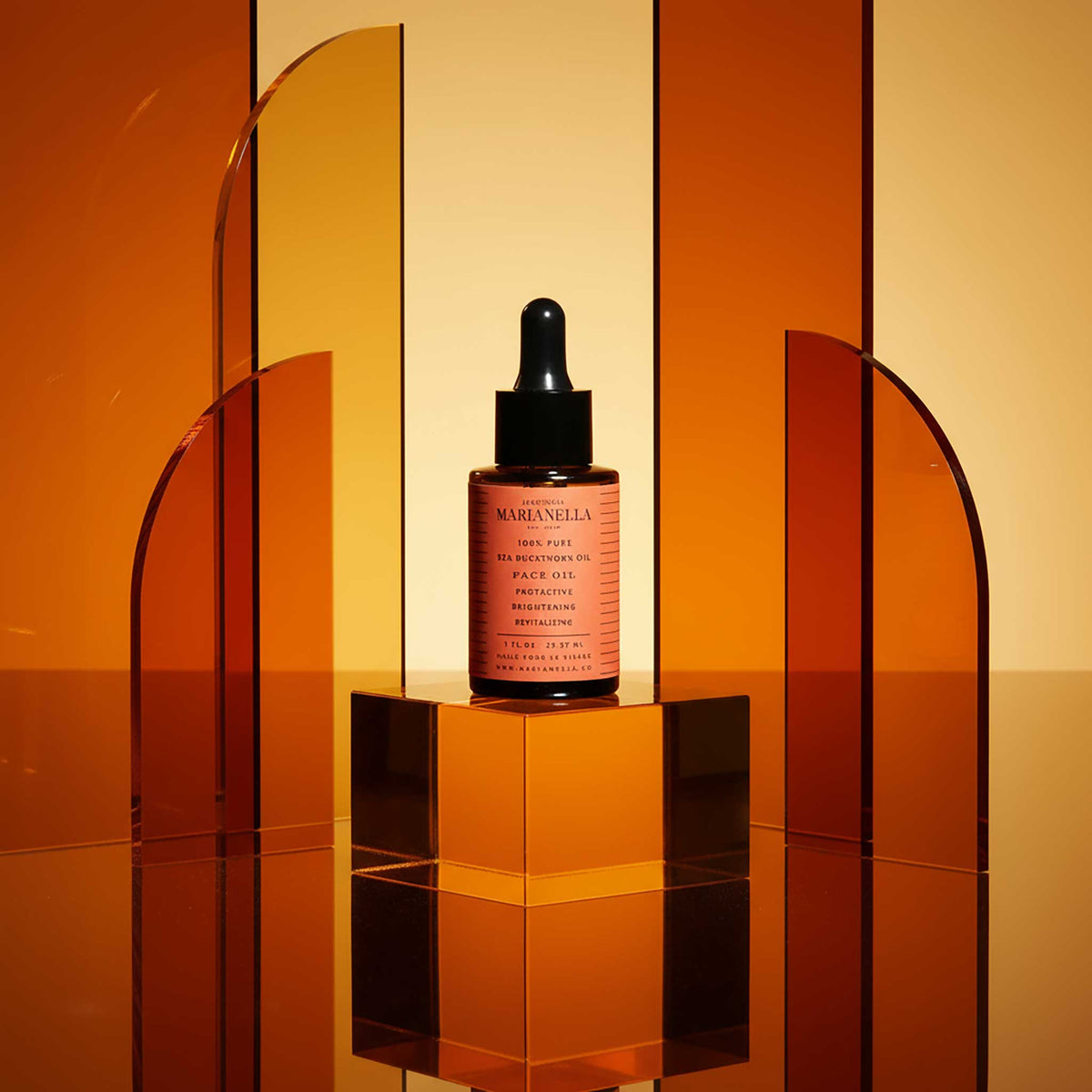
The truth about sea buckthorn oil is that it is a genuinely unusual plant oil, rich in omega-7 fatty acids and in the carotenoids that turn it deep orange, and it is very good at leaving dry or dull skin feeling nourished and looking more luminous. Much of what gets said beyond that rests on animal studies, lab cells or capsules people swallowed, not on oil pressed into a face. Below we sort the claims into what is well established, what is reasonable, and what is stretched, so you know what a bottle can and cannot do.
What is well established: the chemistry
Sea buckthorn oil comes from the berries of Hippophae rhamnoides, a thorny shrub that fruits in cold, hard places. The berry gives two different oils, and they are close to opposites.
- Seed oil is rich in linoleic acid (omega-6) and alpha-linolenic acid (omega-3). In one analysis of Canadian-grown berries, each made up roughly a third of the seed oil. It is lighter and paler.
- Fruit or pulp oil is rich in palmitoleic acid, the omega-7 the plant is known for. The same analysis measured 32 to 42 percent palmitoleic acid in the pulp oil and almost none in the seed oil.
So "sea buckthorn oil" is a category, not one ingredient. Depending on the subspecies, palmitoleic acid ranges from about 15 to 54 percent of the berry oil, and a product made only from seed can carry hardly any at all.
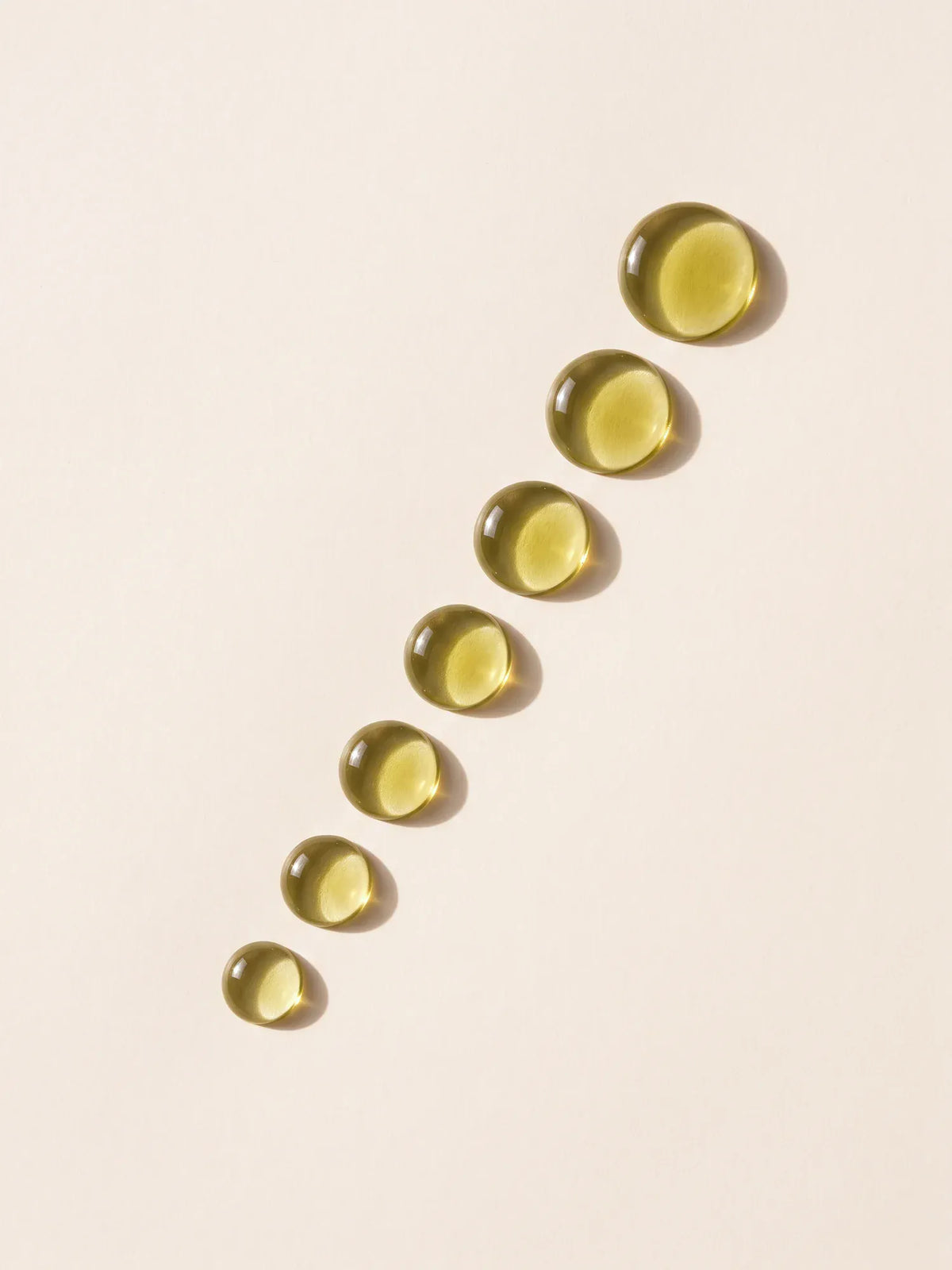
The color is chemistry too. The orange comes from carotenoids, mainly beta-carotene, zeaxanthin and lycopene, and the oil also carries vitamin E (tocopherols and tocotrienols) and plant sterols such as beta-sitosterol. Those are antioxidants, and they help protect the oil itself from going stale as well as the skin it sits on.
What is reasonable: how it behaves on skin
Palmitoleic acid is not foreign to your face. It occurs naturally in sebum, the oil skin makes for itself, and sebum production falls as we age. That is the reasoning behind putting an omega-7-rich oil back on the surface. It is a sensible idea and it matches how the oil feels: rich, silky and slow to sink in, leaving skin soft, comfortable and better able to hold its moisture.
Reviews of the research also report that skin becomes more moist, more elastic and softer with sea buckthorn. That is encouraging, with one important catch, which brings us to the next section.
What is stretched: four claims to read carefully
Studies on mice and lab cells
The most quoted sea buckthorn studies were done on animals or on skin cells in a dish, often looking at medical problems and burns. That work tells you the oil is biologically busy. It does not tell you what a face oil does on healthy skin, and it is not a reason to think of a cosmetic as medicine. We do not make medical claims for our oil, and you should be wary of anyone who does.
Capsules are not face oil
Several of the human results for moisture, elasticity and softness come from people taking sea buckthorn by mouth. Those findings are real, but they describe a supplement. They are not evidence that the same oil, applied to the face, will do the same thing to the same degree.
"Replacing lost sebum" is a theory
The idea that a topical omega-7 oil tops up what skin stops making with age is plausible. It is still an argument rather than a settled fact. The honest version is simpler: the oil leaves dry skin feeling nourished, and that is reason enough to use it.
Darker orange is not automatically better
How the oil is extracted changes what ends up in the bottle. One study that compared four extraction methods on the same fruit found carotenoid levels varied by roughly a factor of four between them. Heat, solvent, time and pressure all leave a mark, so two oils can both say "sea buckthorn" and be measurably different.
Four questions to ask before you buy
- Seed, fruit or both? If you want omega-7 and carotenoids, look for fruit or whole-berry oil, not seed oil alone.
- Is the extraction method disclosed? It is one of the biggest influences on the finished oil.
- How is it packaged? Carotenoids and vitamin E are the first things light and air wear down, so a bottle that keeps light out and a cap you close every time both matter.
- How much is in the formula? In a blend, sea buckthorn may sit near the bottom of the list. In a pure oil, it is the whole bottle.
Our Sea Buckthorn Face Oil answers the last question plainly: it is 100% pure sea buckthorn oil with no added fragrance and nothing else in it. You can see its carotenoids at a glance, and our label names omega-7 alongside its omega fatty acids and antioxidants. It is made by hand in our Williamsburg workshop in small batches, so the bottle you open was made recently.

Getting what the oil can actually give
Realistic expectations are easier to meet when the oil is used well. Press four to six drops into clean skin as the last step, after anything water-based. If you are new to it, start with two. It suits the evening best: it warms to a faint golden tint, then melts into a dewy finish while you sleep.
The color is natural, so a drop can mark fabric. Let it sink in before your face touches a pillow, and keep white towels away. Softness and comfort usually show within days. Judge how skin looks overall after a few weeks of steady use, not after one night.
If you want to compare it with other pure oils, our Face Oil Collection puts sea buckthorn beside squalane, marula, rosehip and plum, so you can feel the difference between them for yourself.
Questions we hear about sea buckthorn claims
Does sea buckthorn oil really contain omega-7?
Yes, but it depends on which part of the berry it comes from. Fruit or pulp oil is rich in palmitoleic acid (omega-7), while seed oil contains almost none and is richer in omega-3 and omega-6.
Is taking sea buckthorn capsules the same as using the oil on my face?
No. Some of the human research on skin moisture and elasticity was done with oral supplements. A face oil works on the surface, where it leaves skin feeling nourished and soft.
Will sea buckthorn oil turn my skin orange?
On skin it warms to a faint golden tint and then sinks in. The pigment can mark fabric, though, so start with two drops, let it absorb before bed and keep white towels away.
Do the medical studies apply to a face oil?
Not directly, and we do not make medical claims. Those studies were mostly done on animals or lab cells. Our oil is a cosmetic that leaves dry, dull skin feeling nourished and looking more luminous.


















Leave a comment
This site is protected by hCaptcha and the hCaptcha Privacy Policy and Terms of Service apply.