


The truth about niacinamide is that most of its good reputation holds up. Controlled studies support what it does for the skin barrier, for the look of uneven tone, for visible oil and pores, and, more modestly, for fine lines. Where the claims go wrong is in the extremes: that it repairs your DNA, that a higher percentage always works better, that it does the job of a medicine, or that it cannot be used with vitamin C. Here is how the claims stack up, from best supported to least.
Well supported: a stronger barrier
This is niacinamide's most consistent result. Studies have shown that 2 percent niacinamide raises the skin's production of ceramides, free fatty acids and cholesterol, the fats that hold the outer layer together, and reduces the water lost through the surface. It also supports the proteins that form the skin's outermost envelope. On the face, that looks and feels like better-hydrated skin that is less dry, less tight and less easily bothered by weather or new products.
Well supported: a more even-looking tone
Niacinamide works on tone differently from most brightening ingredients. It does not stop pigment being made. It slows the transfer of pigment granules to the surface cells that show it. In controlled studies with a 5 percent niacinamide moisturizer, dark patches looked lighter than with the same moisturizer without niacinamide after four weeks. The studies were small, and results build over weeks rather than days, but the finding has been repeated and the mechanism is clear.
Supported, more modestly: fine lines and texture
A 12-week study of 5 percent niacinamide applied twice a day found improvements in the look of fine lines, wrinkles and elasticity, along with a clearer, more radiant tone. Niacinamide also appears to help protect collagen from glycation, a process in which sugars bind to collagen and elastin and make them stiff. These results are real but moderate. Niacinamide is a good supporting player for aging skin, not a replacement for a retinoid or a peptide formula.
Supported, still being explained: oil and pores
Several studies report that 2 to 5 percent niacinamide reduces visible oil on the skin, and smaller-looking pores tend to follow, since excess oil makes pores look larger. How it does this is still being worked out. A related form of vitamin B3, niacin, acts on oil production through a receptor that niacinamide does not appear to bind directly. It is fine to say the effect is seen while the explanation is still open.
Overstated: what you will often read
"It fuels DNA repair inside your cells." Niacinamide is a building block for coenzymes involved in cell energy, and those coenzymes decline with age. That much is true. Leaping from there to "repairs your DNA" takes a lab finding and turns it into a promise a serum cannot make.
"Higher is always better." Most studies showing barrier and tone benefits used 2 to 5 percent. Higher strengths can help with tone and the look of pores, but they also raise the chance of irritation, and a moderate amount used every day beats a high amount used now and then.
"It works like medicine for breakouts." Some studies have compared niacinamide gels with medicines for breakouts. That is a medical question for a doctor, not a claim a skincare brand should make, and we do not make it. What we can say is that niacinamide helps blemish-prone skin look less shiny and more even.
"Never use it with vitamin C." This old rule is wrong for everyday formulas. The reaction it worried about needs extreme heat, not the conditions in a serum or on skin.
Specific percentages you cannot trace. Claims like "87 percent saw better texture" are common, and many cannot be traced to a study. We leave those out.
Where we use it
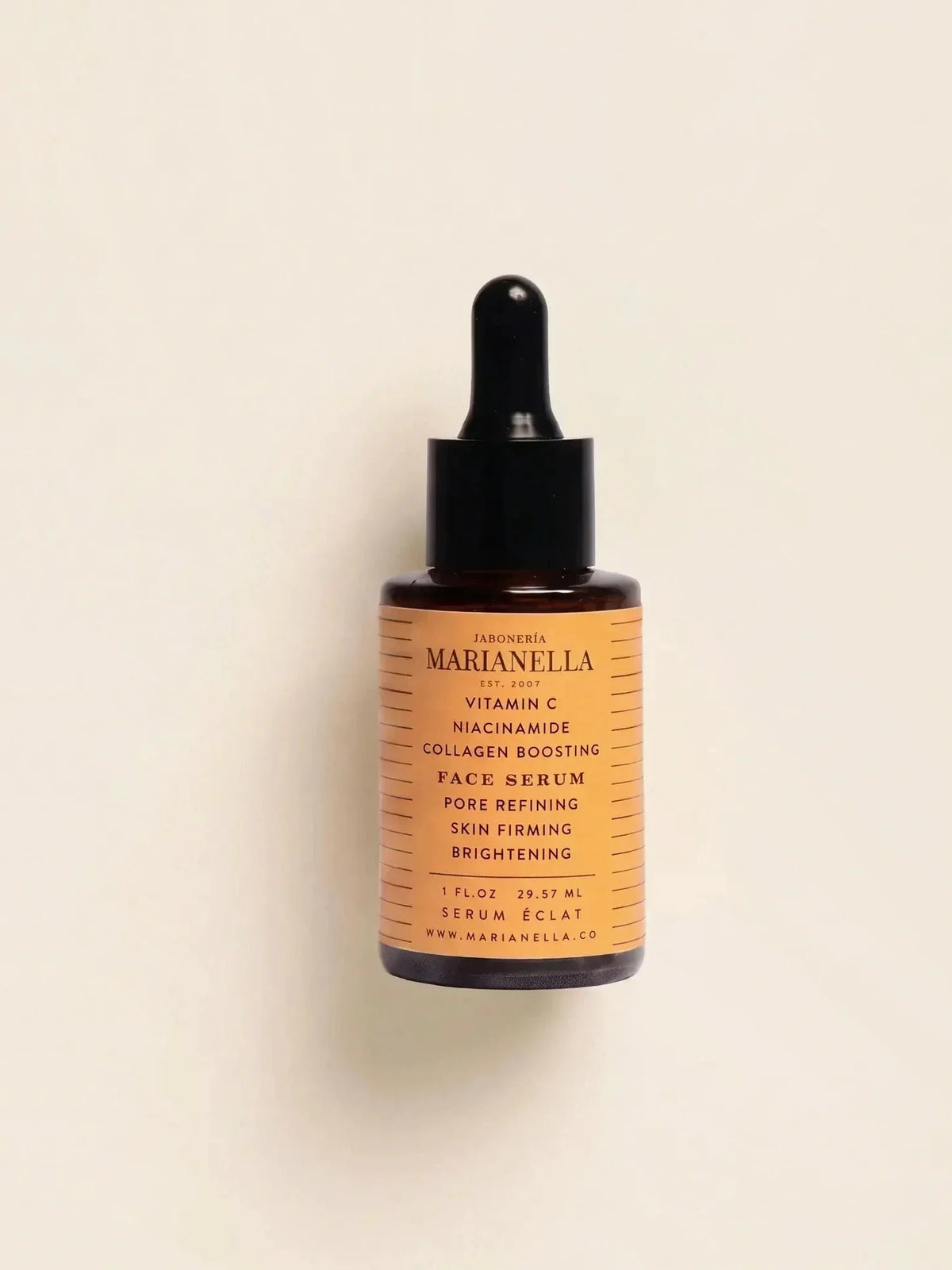
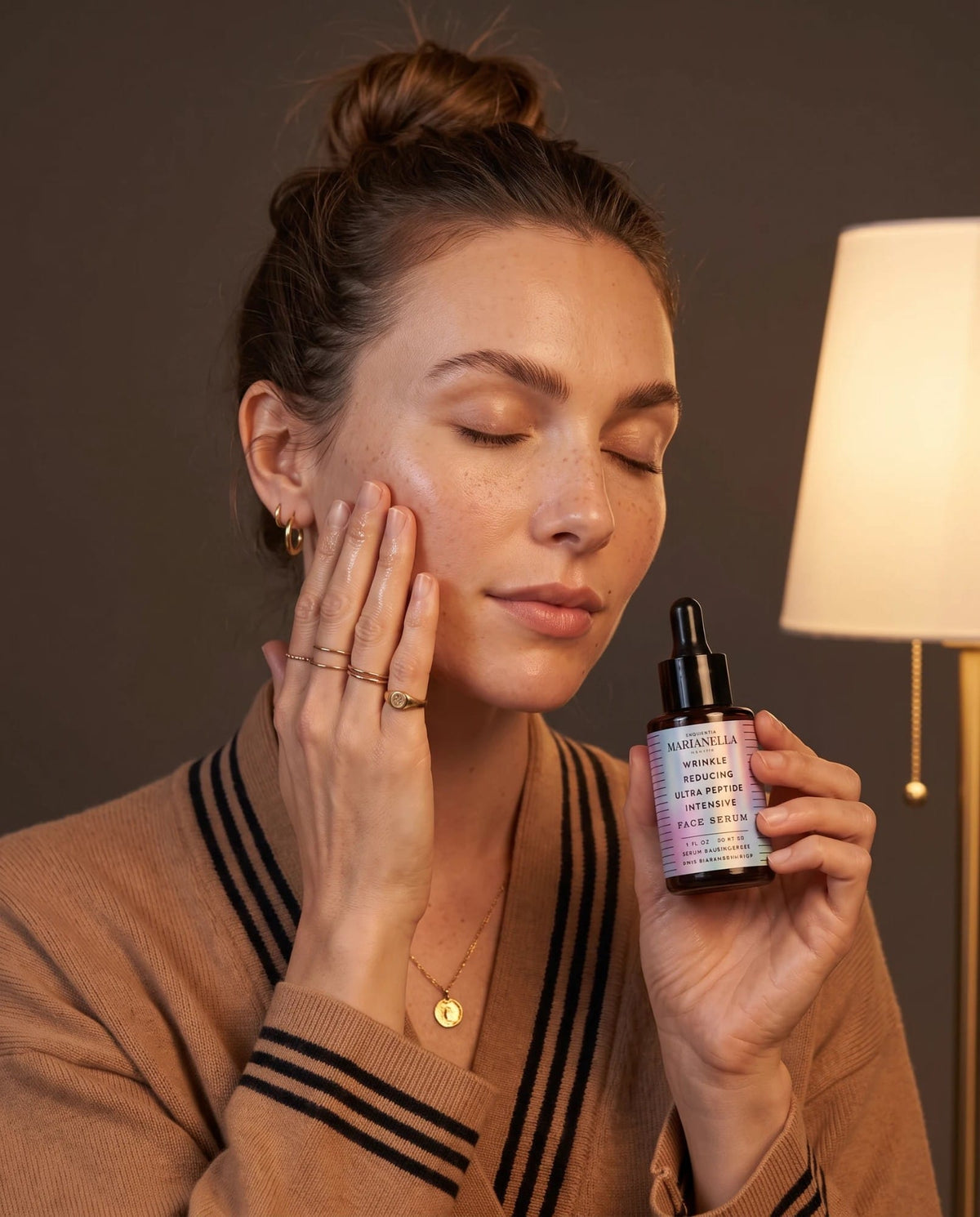
We use niacinamide in two face serums, both made by hand in our Williamsburg workshop. Our Vitamin C Face Serum with Niacinamide pairs it with ethyl ascorbic acid, a stabilized vitamin C, in a light serum for the morning, so the two approach an even tone from different directions. The Midnight Youth Potion carries niacinamide, sodium hyaluronate and a vitamin C ester in thirteen botanical oils for the last step at night. We describe what they do on skin: brighter, more even, better hydrated. We do not go further.
Questions we hear about niacinamide claims
Does niacinamide really shrink pores?
Pores do not change size, but niacinamide can make them look smaller by reducing visible oil. Studies at 2 to 5 percent support that effect.
Is 10 percent niacinamide better than 5 percent?
Not for most people. The best-supported barrier and tone results used 2 to 5 percent, and higher strengths are more likely to irritate.
Can niacinamide irritate skin?
It is one of the gentler well-studied ingredients and, unlike niacin, it does not cause flushing. Very high strengths can still bother sensitive skin, so start moderate.
How much of the niacinamide hype is true?
Most of the core: barrier, tone, visible oil and, modestly, fine lines. The overreach is in DNA repair stories, medical comparisons and untraceable percentages.






















Leave a comment
This site is protected by hCaptcha and the hCaptcha Privacy Policy and Terms of Service apply.