


Mongongo oil skincare benefits have earned serious attention from formulators and dermatologists alike, and for good reason. Pressed from the nuts of Schinziophyton rautanenii, a tree native to the Kalahari and sub-Saharan Africa, this oil carries a fatty acid profile unlike almost anything else in the botanical world. In 2026, it is moving from niche into the formulation vocabulary of serious skincare, and Marianella's Royal Kalahari Face Serum is one of the products leading that shift.
What Is Mongongo Oil?
Mongongo oil, also known by its INCI name Schinziophyton rautanenii kernel oil, is a nutrient-rich oil extracted from the nuts of the Mongongo tree, prized in skincare for its high content of linoleic acid, vitamin E, and protective fatty acids. Originating from the dry expanse of the Kalahari, the nuts are meticulously collected and cold-pressed to yield the nourishing oil. The mongongo nut has been a staple food for the area and has been consumed by the San bushmen for more than 7,000 years. That kind of deep, multi-generational use is not coincidence. It is evidence.
Mongongo oil is unlike other botanical oils because of its unique composition of polyunsaturated fatty acids, antioxidants, minerals, and proteins. It is very rich in vitamin E, but also contains considerable amounts of calcium, magnesium, zinc, copper, and iron. That mineral density is rare in a topical oil, and it is a significant part of what separates mongongo from the botanical oils that have already saturated the market.
The Fatty Acid Science Behind Mongongo Oil for Skin
The performance of any oil in skincare is largely determined by its fatty acid composition. Mongongo's profile is genuinely distinctive.

Linoleic Acid: The Barrier Builder
Mongongo oil is composed of between 36% to 49% linoleic acid, a polyunsaturated omega-6 fatty acid. Linoleic acid cannot be synthesized in the body, and a deficiency in essential fatty acids leads to a decline in the skin barrier function. Applied topically, it directly addresses that deficit. For the skin, it promotes elasticity, hastens healing, boosts collagen levels, and helps to reverse the signs of aging.
Mongongo oil is high in polyunsaturated fatty acids, which are known to remain on the skin longer than saturated fatty acids like coconut oil or monounsaturated oils like jojoba and almond. These fatty acids deliver a protective, emollient layer on the surface of the skin and act as a barrier to prevent moisture from escaping through the pores. That sustained surface presence is what makes it particularly effective in a serum format.
Alpha-Eleostearic Acid: The Differentiator
No other compound in mongongo's profile generates as much scientific interest as alpha-eleostearic acid. This conjugated fatty acid makes up around 25% of mongongo oil's fat profile. It distinguished itself from other oils by its high levels of α-eleostearic acid, a unique conjugated fatty acid used for cellular repair.
Eleostearic acid functions as a sun protectant. Traditionally, mongongo oil has been used topically as a natural sunscreen; the oil polymerizes when exposed to UV light, which provides a protective shield for the skin and hair. This mechanism is not folklore. The mongongo oil fatty acid composition was reported to have 73% unsaturated fatty acids, with ethyl α-eleostearic acid reported at approximately 23.8% of the oil. That concentration of conjugated, UV-responsive fatty acids is part of what gives mongongo its protective character.
Oleic Acid: The Penetration Driver
Oleic acid makes up 15% of the oil. It is a penetration enhancer, increasing the ability of the skin to absorb moisture and nutrients. As an emollient, oleic acid has a deeply hydrating effect on the skin. In a blended formula, oleic acid functions as a carrier, helping other actives move past the stratum corneum and into the deeper layers where they can do meaningful work.
Mongongo Oil Skincare Benefits: What the Research Shows
Deep Hydration Without Occlusion
Mongongo oil is comprised of between 40-50% polyunsaturated fatty acids, as compared to shea and coconut oil, which are comprised largely of saturated fatty acids, and mango, olive, avocado, jojoba, and almond oils, which are comprised mainly of monounsaturated oils. That distinction matters. Polyunsaturated-dominant oils hydrate without the heavy, pore-blocking feel that saturated oils can produce. Its gentle, lightweight texture is well-suited for topical applications.
Antioxidant Defense and Tone Evenness
When topically applied, vitamin E not only exhibits photoprotective properties but also has a depigmenting effect. Alpha-tocopherol has the potential to inhibit tyrosinase, a key enzyme aiding in the production of melanin. When tyrosinase goes into overdrive, it can lead to the development of dark spots or sunspots. Vitamin E's role as a tyrosinase inhibitor means it may have the ability to lighten these troublesome spots.
Inflammation and Sensitivity Support
Mongongo oil, rich in linoleic acid, vitamin E, and antioxidants, is highly effective for moisturizing, soothing, and protecting the skin barrier. Its anti-inflammatory and emollient properties help improve skin hydration, reduce redness, and defend against environmental stressors. Mongongo oil is generally considered safe for skincare, being well-tolerated by most skin types, including sensitive skin.
Environmental Protection
It may serve as an effective shield against environmental aggressors, making it a strong choice for protecting and nourishing the skin. This is not coincidental given its origin. A tree that survives the extreme aridity of the Kalahari produces an oil adapted to that stress. The mongongo tree has the ability to survive in the extreme conditions of Sub-Saharan Africa, and mongongo oil itself has a history of being used in skincare routines due to its emollient and protectant properties.
Where Marianella Uses Mongongo Oil: The Royal Kalahari Face Serum
Marianella has been handcrafting in Brooklyn since 2007. Eighteen years of formulation expertise, rooted in three generations of Venezuelan botanical knowledge, shapes every decision about what goes into a formula and why. The Royal Kalahari Face Serum is the brand's direct expression of what Kalahari botanicals can do at their most concentrated.
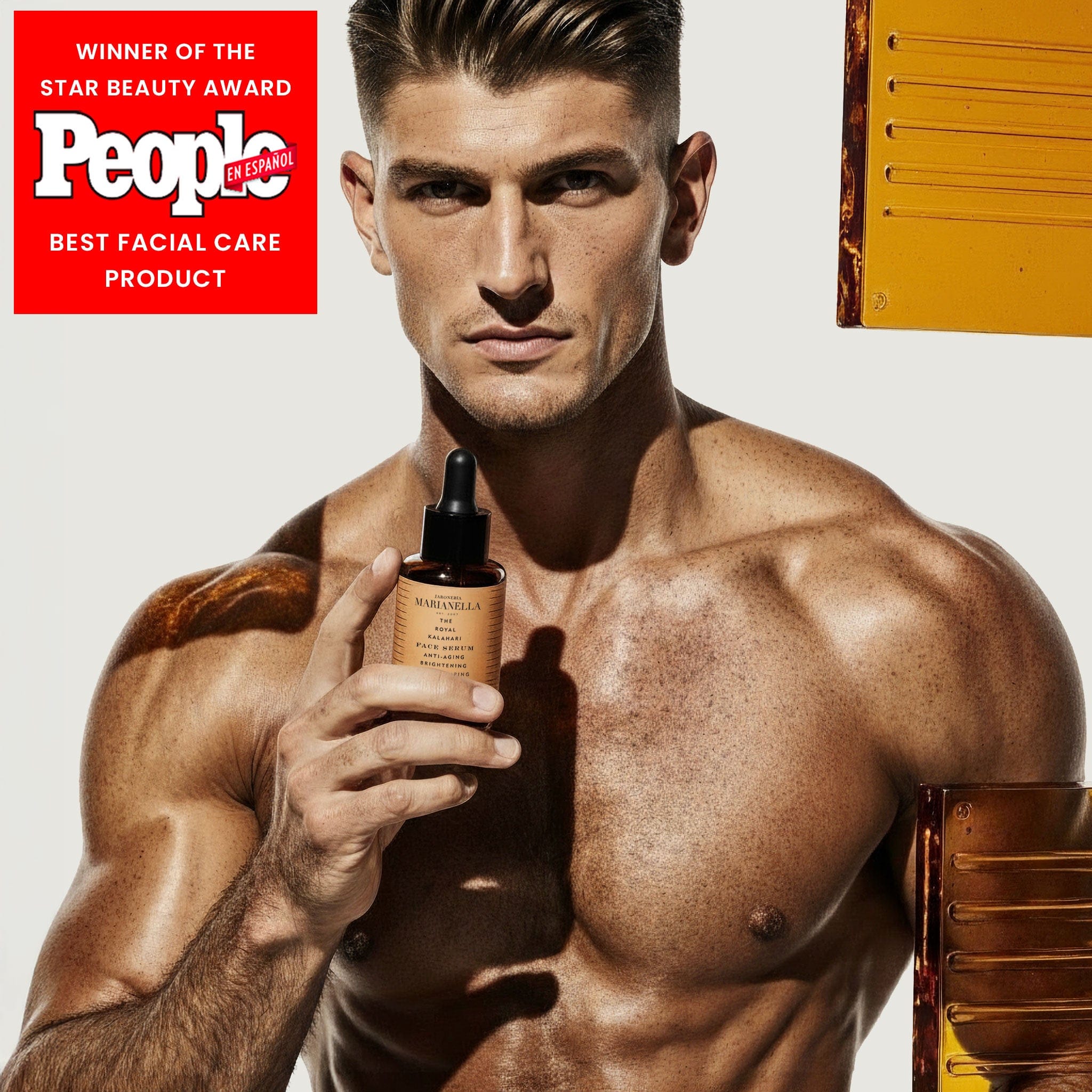
The serum takes mongongo oil's established profile, specifically its linoleic-rich barrier support, its eleostearic acid UV response, and its oleic acid delivery mechanism, and builds around them in a small-batch format that preserves the integrity of each ingredient. No shortcuts. No filler. Exactly the kind of formulation approach that earned Marianella a People Magazine Star Beauty Award and placement in Vogue, Forbes, Oprah, and Allure.
The Royal Kalahari Face Serum is $50. For a serum anchored in an ingredient with this level of scientific documentation and traditional pedigree, that positions it within reach without compromising what it is.
How to Use Mongongo Oil in Your Skincare Routine
Mongongo oil absorbs well and layers cleanly, which makes it versatile across routine structures. In a serum, it performs best applied to slightly damp skin after cleansing and before moisturizer. That sequencing takes advantage of the oleic acid's penetration-enhancing function while locking in existing hydration rather than working against a dry surface.
Due to its excellent moisturizing properties, mongongo oil may be particularly beneficial when used daily. Consistency is the point. The barrier-supporting, inflammation-calming, and antioxidant properties of the oil compound with regular use, not with sporadic application.
Mongongo oil has a comedogenic rating of 2, meaning it has a slight chance of clogging pores for blemish-prone and sensitive skin. For most skin types, that rating is not a concern. For those who trend acne-prone, patch testing first is simply good practice with any new oil-bearing formula.
Why Mongongo Oil Belongs in Serious Skincare in 2026
The ingredient conversation in 2026 has matured. Consumers are reading INCI lists. Dermatologists are citing fatty acid research. Editors are moving away from blanket claims toward mechanism-specific benefits. Mongongo oil meets that moment.
It has a documented fatty acid composition. It has a specific UV-response mechanism in alpha-eleostearic acid. It has a linoleic acid concentration that directly addresses barrier deficiency. It has a mineral profile, including zinc, calcium, and copper, that adds a dimension most face oils simply cannot match. African women have been using mongongo oil for body care for centuries, and its positive properties are passed on from generation to generation. That is not a marketing origin story. It is the kind of long-use validation that precedes formal study.
Marianella's approach, built on that same generational transmission of botanical knowledge, takes mongongo from the Kalahari and reformulates it for a face that needs more than a surface treatment. Available now at Bloomingdale's BEAUTYSPACE and at marianella.co, across 82 products designed for face, body, and home.
The Royal Kalahari Face Serum is the starting point. $50.
```

Leave a comment
This site is protected by hCaptcha and the hCaptcha Privacy Policy and Terms of Service apply.