


Hyaluronic acid does one thing very well: it holds water at the surface of the skin, which makes skin feel softer, look smoother and lose less moisture through the day. That part is well supported. Some of the bigger promises made for it are not: it does not hold a thousand times its weight in water in any measurable way, a higher percentage is not better, and on its own it does not rebuild skin. Here is how the common claims stand up, one at a time.
Holds up: it hydrates the surface of the skin
Hyaluronic acid is a sugar molecule that skin already makes, and about half of the body's supply sits in the skin. Applied in a serum or cream, it works as a humectant, attracting water and holding it on and just within the outer layer. Larger molecules also form a thin film on the surface that slows the loss of water from skin, which researchers measure as lower transepidermal water loss.
This is the best-documented effect, and it is the one you feel: softer skin, a smoother surface, less of the tight feeling after washing. If a product delivers that, it is doing what hyaluronic acid is good for.
Mostly holds up: fine lines look softer with regular use
Hydrated skin looks smoother, so it makes sense that fine lines look softer when skin holds more water. Small controlled studies back this up. In one, 40 women with mild to moderate signs of aging used topical hyaluronic acid in six different molecular weights for 30 days, and every 0.1% formula improved skin hydration and elasticity compared with a placebo. The smaller molecules also made wrinkles measurably less deep. In a related comparison, a 130 kDa form raised skin elasticity by about 20% after one month, and both the 50 and 130 kDa forms made skin less rough and lines less deep after 60 days.
Those are real results, and modest ones. They come from small groups over a month or two. Read them as "skin looks smoother and more supple with steady use", not as a lift or a reset.
Overstated: "holds 1,000 times its weight in water"
This is the line on almost every hyaluronic acid label, and it does not hold up. One laboratory analysis found that high molecular weight hyaluronic acid saturated at roughly 30 times its weight in water, and low molecular weight at roughly 20 times. The researcher also pointed out that there is no standard method for measuring how much water hyaluronic acid absorbs, so the thousand-fold figure has no clear source at all.
None of this makes hyaluronic acid less useful. Twenty or thirty times its own weight is still a great deal of water for a molecule to hold. It simply means the benefit is real hydration, not a miracle number.
Overstated: more hyaluronic acid works better
In cosmetics, hyaluronic acid usually makes up somewhere between 0.2% and 1% of a formula, and studies have shown benefits at 0.1%. Higher concentrations do not bring better results, and very high levels can make a product feel tacky or sit uncomfortably on skin. When you compare products, the percentage on the front of the box tells you less than the rest of the formula: what the hyaluronic acid sits beside, and whether there is an oil or cream to hold the water in.
Depends on the formula: molecular weight
Size matters here, but not in the way marketing often suggests. High molecular weight hyaluronic acid, around 1,000 to 1,400 kDa, barely passes into skin at all; it stays on the surface and forms the moisture-holding film. Low molecular weight forms, around 20 to 300 kDa, can pass through the outermost layer. In penetration tests, the smallest forms crossed in larger proportions than the big ones, though most of every size stayed at the surface.
That is why some formulas blend several sizes. It is a reasonable approach, but a label that says "multi-weight" without saying more is not proof of anything. Our own labels list sodium hyaluronate, the stable salt form of hyaluronic acid, and we do not claim a particular molecular weight for it.
Overstated: it works on its own at a "cellular level"
Hyaluronic acid works at the surface of the skin. It is not a substitute for sunscreen, it does not replace a moisturizer, and it does its best work in good company. Most cosmetic formulas pair it with other ingredients, such as peptides, vitamins and plant extracts, and that is how we use it too.
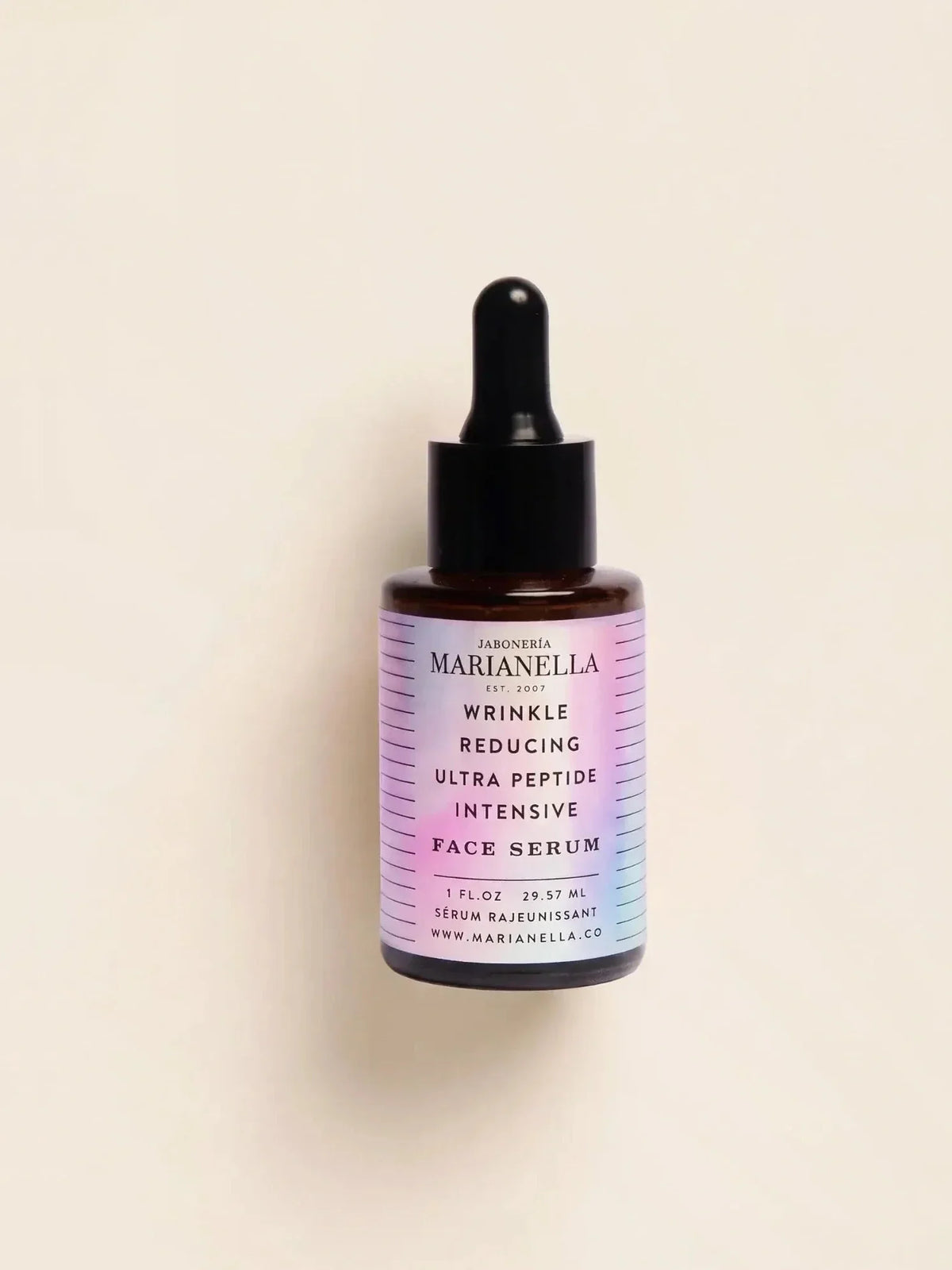
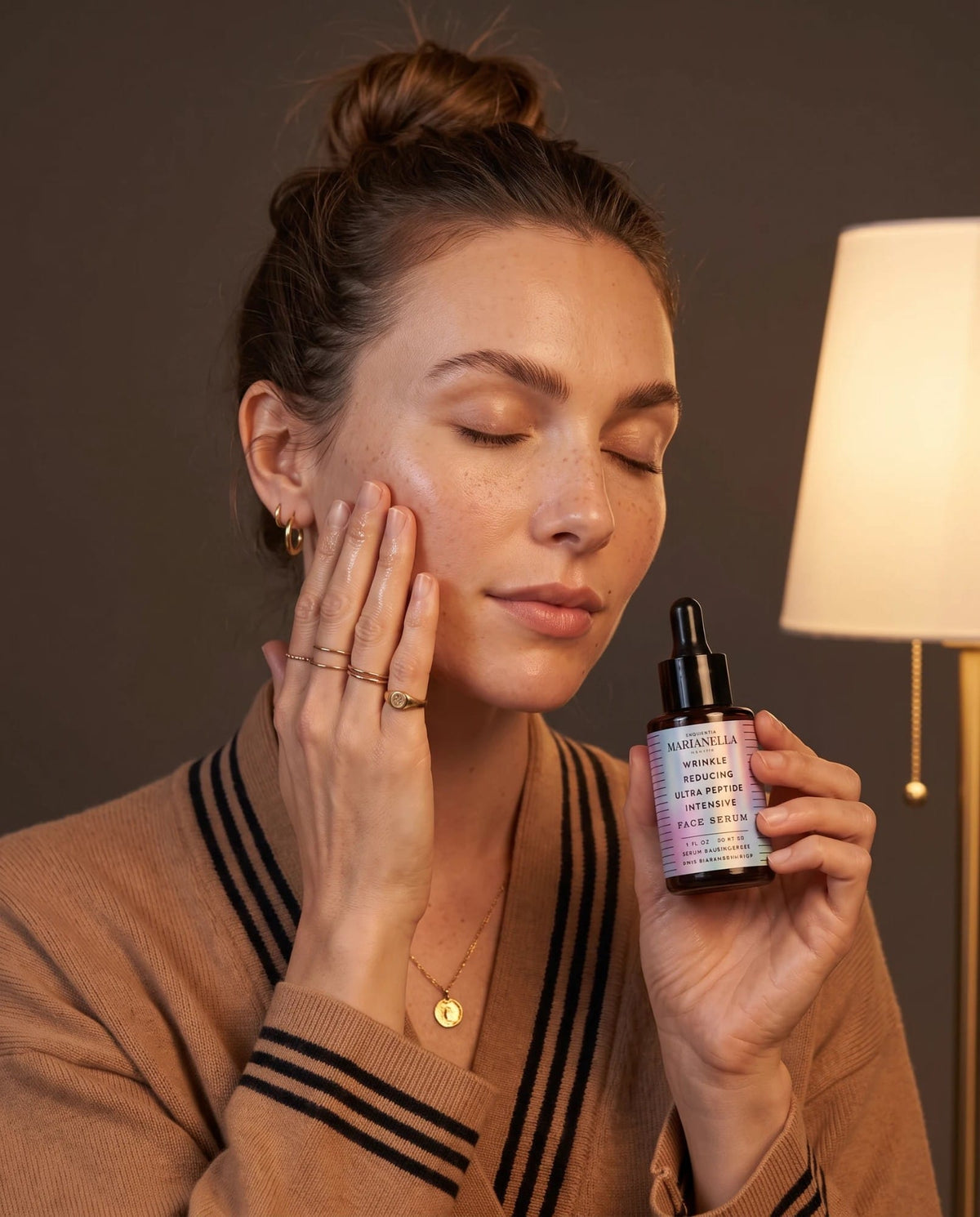
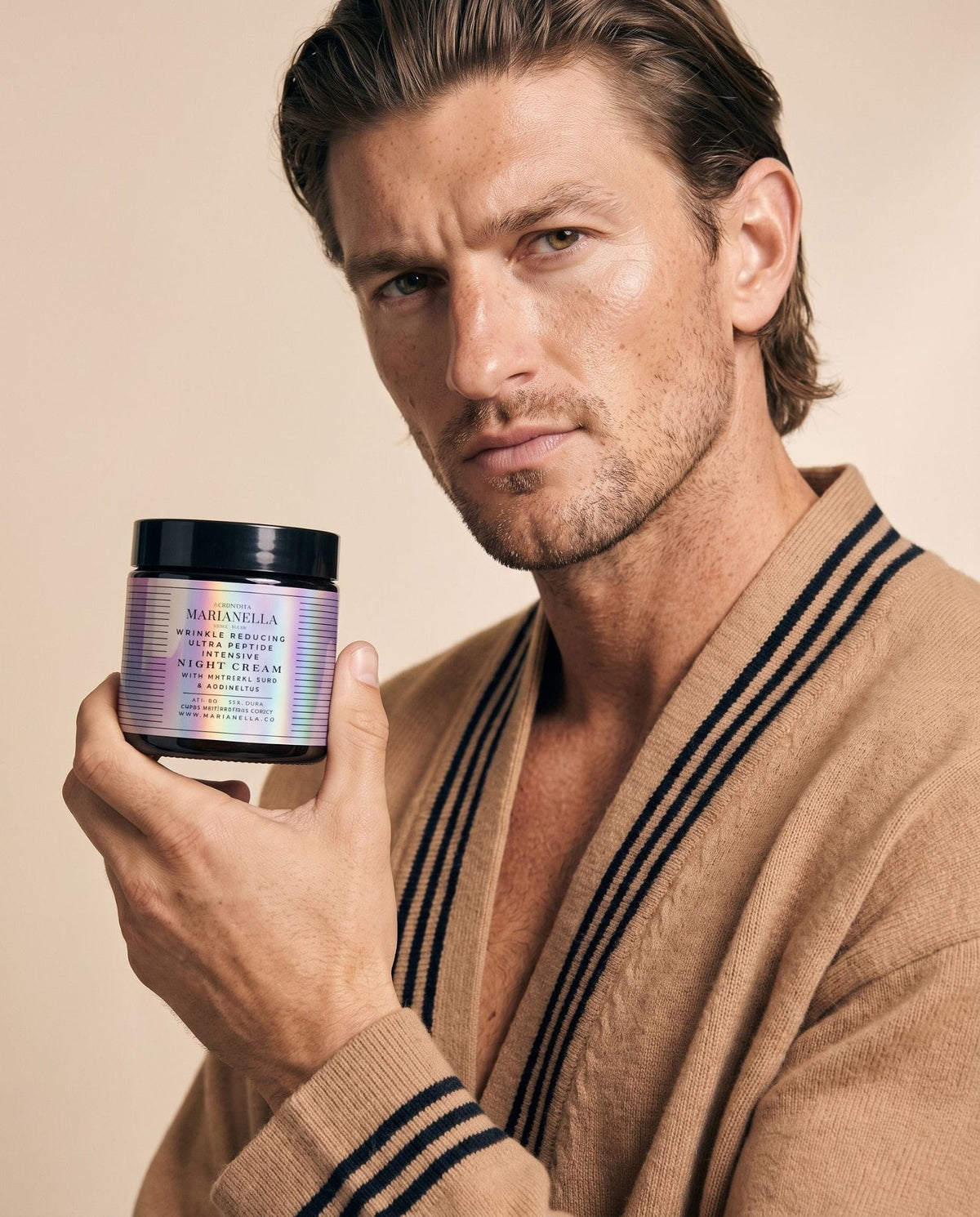
In our Wrinkle Reducing Ultra Peptide Intensive Face Serum, sodium hyaluronate sits beside three peptides, Argireline, Matrixyl 3000 and Snap-8, in a rosehip seed oil base. In the Wrinkle Reducing Ultra Peptide Intensive Night Cream, it joins rosehip seed oil and sorbitol for lasting overnight moisture. In our Vitamin C Collagen Boosting Face Serum with Niacinamide, it works with aloe and cucumber around vitamin C and niacinamide. The hyaluronic acid keeps skin hydrated; the other ingredients do the rest.
What to take from all this
Buy hyaluronic acid for hydration, and judge it on hydration. Put it on damp skin, follow it with a cream or oil, and expect softer, smoother, more comfortable skin, with fine lines that look gentler over weeks of steady use. Skip the products that lean on the thousand-fold number or a big percentage, and look at what else is in the bottle.
Questions about hyaluronic acid claims
Does hyaluronic acid really hold 1,000 times its weight in water?
Not by any measurement we have seen. One lab analysis put it at roughly 20 to 30 times its weight, and there is no standard way to measure it. It is still an excellent water-binder.
Is low molecular weight hyaluronic acid better?
It passes further into the outer layers of skin, and in one study small forms made lines less deep. Large forms do something different and useful: they sit on the surface and slow water loss. Neither size is simply "better".
Does a higher percentage of hyaluronic acid give better results?
No. Benefits have been shown at 0.1%, most cosmetics use 0.2% to 1%, and very high levels can feel tacky without adding anything.
Will hyaluronic acid replace my moisturizer?
No. It draws water into the skin; a cream or oil keeps that water from escaping. Use both, serum first.






















Leave a comment
This site is protected by hCaptcha and the hCaptcha Privacy Policy and Terms of Service apply.