


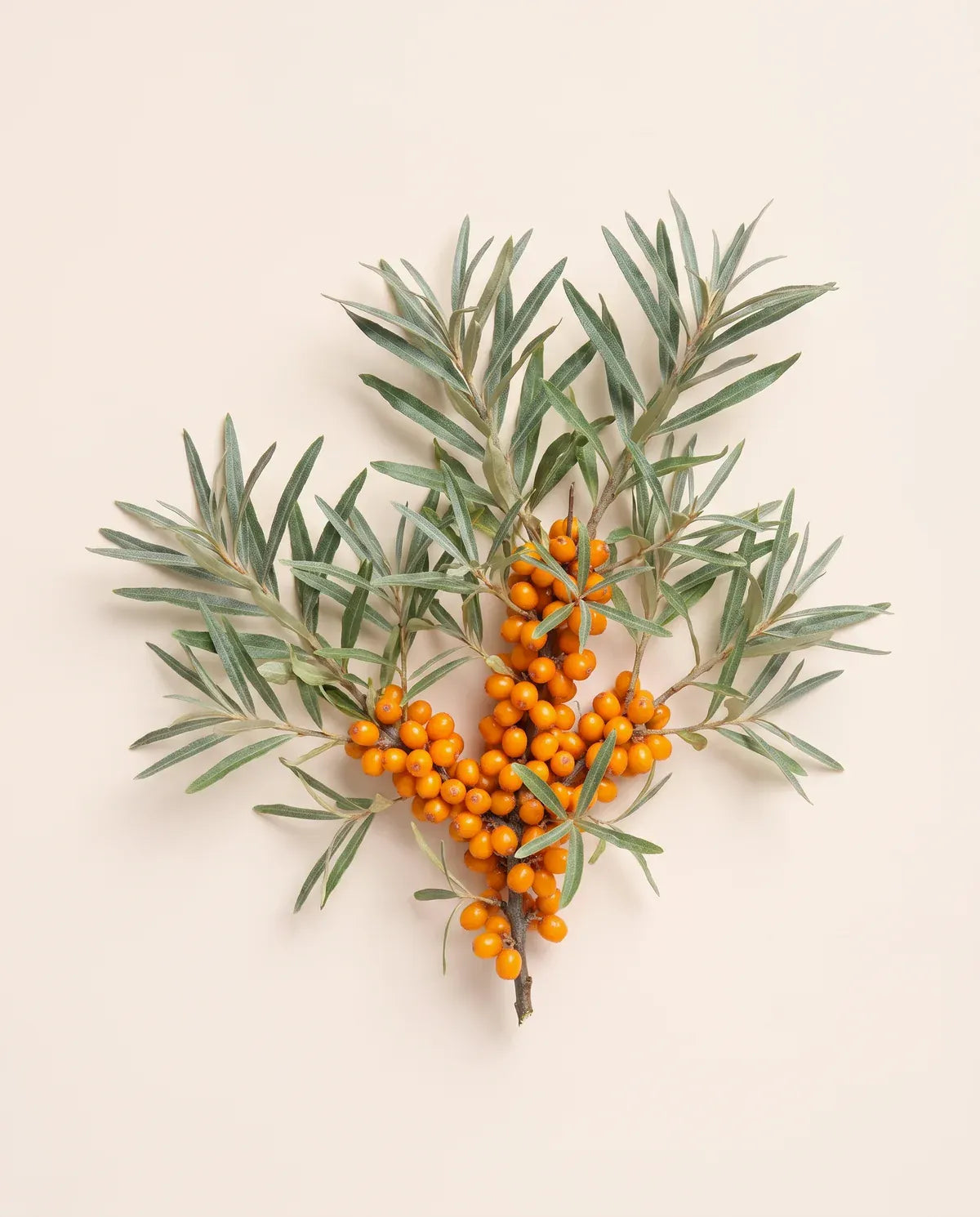
Sea buckthorn oil is pressed from the bright orange berries of a hardy shrub, and research on it keeps returning to two things: a fatty acid profile few plant oils share, including omega-7, and a heavy load of carotenoid antioxidants. On skin, that adds up to an oil that leaves dry, dull or tired skin feeling nourished and soft, helps it hold moisture and gives it a luminous finish. Use four to six drops on clean skin, ideally at night, as the last step of your routine.
Where sea buckthorn comes from
Sea buckthorn (Hippophae rhamnoides) is a small, thorny shrub that grows in harsh, high places, including the northwest Himalaya, and it has been used for a very long time across Asia and Europe. Its Latin name is usually traced to the Greek words for "horse" and "shining", from the old story that horses fed on it grew glossy coats. Tibetan and Indian texts were already listing it in hundreds of preparations more than a thousand years ago.
Its modern reputation is more specific. Researchers have cataloged well over a hundred active compounds across the plant's berries, seeds and juice, and the oil carries the fat-soluble share of them into a bottle.
A fatty acid profile few oils share
Most face oils are built mainly on omega-6 or omega-9 fatty acids. Sea buckthorn carries omega-3, omega-6, omega-7 and omega-9, and the omega-7 is what sets it apart.
Omega-7 is palmitoleic acid, and your skin already knows it: it is a natural part of sebum, the oil skin produces to keep its surface supple. Sebum output slows from around our thirties, which is why an oil that brings palmitoleic acid back to the surface makes sense for skin that has started to feel drier than it used to. In the fruit pulp of the berry, palmitoleic acid can make up as much as 40 percent of the oil. Macadamia is one of the very few other plant oils with a meaningful amount, and usually less.
The berry's seed oil is a different material, richer in omega-3 and omega-6 and lighter in color and feel. Fruit oil is the one with the omega-7 and the deep orange.
What sea buckthorn does on skin
Moisture and softness
The most consistent finding for skin is about moisture. Small human studies have reported less water lost through the skin's surface and skin that feels softer and more elastic with regular use of sea buckthorn. Some of that work used oral supplements rather than a face oil, so read the size of the effect with some caution, but the direction matches what you feel: skin that stays comfortable for longer after the oil goes on.
Antioxidants you can see
The orange is a readout of carotenoids, chiefly beta-carotene, lycopene and zeaxanthin. Alongside them sit vitamin E in the form of tocopherols and tocotrienols, flavonoids such as quercetin and kaempferol, and plant sterols. Antioxidants help protect the oil from going stale and help skin cope with everyday stress from sun and city air. They do not replace sunscreen.
A more even, luminous look
Researchers have also looked at sea buckthorn's effect on tyrosinase, the enzyme involved in making pigment, which is why the oil comes up in conversations about uneven tone. In practice, what most people notice first is the finish: a soft, dewy glow on skin that had looked flat.
Who it suits
- Dry, mature or tired-looking skin. This is where fruit oil shines, for its richness and its omega-7.
- Combination skin. Press it over the cheeks and wherever skin feels tight, and go lighter through the center of the face.
- Oily or blemish-prone skin. Seed oil, with its lighter omega-3 and omega-6 profile, is usually the better match. If you try a fruit oil, start with two drops in the evening.
Our Sea Buckthorn Face Oil
Our Sea Buckthorn Face Oil is 100% pure sea buckthorn oil, with no added fragrance. It is deep orange, the color of the berries, and our label names its carotenoids, omega fatty acids, antioxidants and rare omega-7. It feels rich and silky, sinks in slowly, and leaves skin feeling nourished, soft and resilient, with a luminous, dewy finish.
How to use sea buckthorn oil
Application
Warm four to six drops between your palms and press them into clean skin. If you are new to the oil, begin with two. It goes on last, after any water-based serum, because an oil seals in what is underneath it.
Timing
The evening suits it best. On skin it warms to a faint golden tint before it melts in, and overnight it has time to settle. In the morning, a light, water-based step such as our Vitamin C Collagen Boosting Face Serum with Niacinamide, followed by sunscreen, makes a good counterpart.
Care
The color is natural, so a drop can mark fabric. Let the oil absorb before bed and keep white towels and pillowcases out of the way. Keep the bottle capped and away from heat and light, which wear down the carotenoids that make it orange.
Questions we hear about sea buckthorn oil
What does sea buckthorn oil feel like on skin?
Rich and silky. It sinks in more slowly than a dry oil such as squalane and leaves a luminous, dewy finish rather than a matte one.
Can I use sea buckthorn oil in the morning?
You can, but most people prefer it at night, when its faint golden tint has time to settle. In the morning, a lighter step followed by sunscreen is the easier choice.
Can I mix sea buckthorn oil with other face oils?
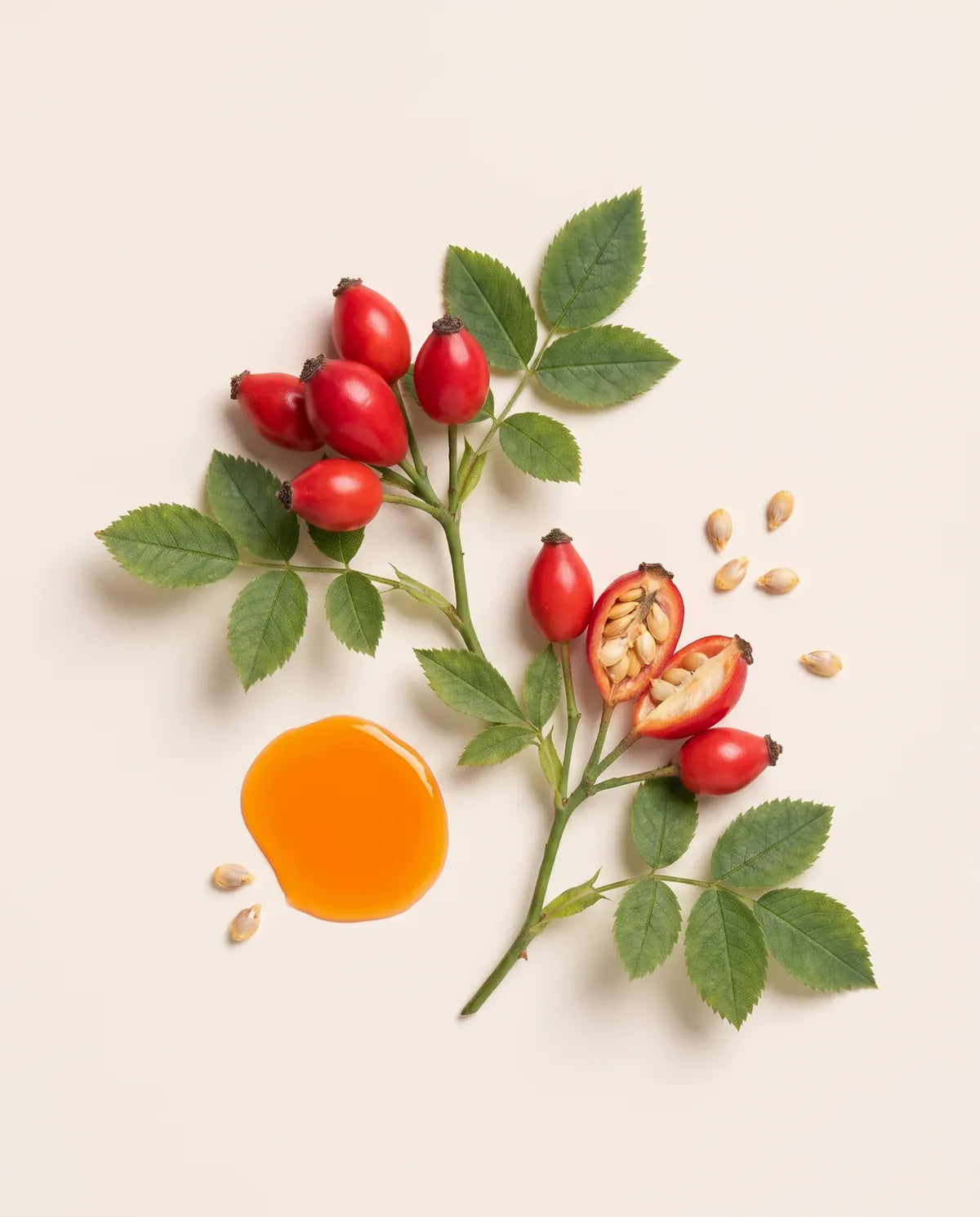
Yes. Mix a drop or two with another oil in your palm, not in the bottle. Our Face Oil Collection pairs it with squalane, marula, rosehip and plum for exactly that.
Why is sea buckthorn oil orange?
Carotenoids, the same family of pigments found in carrots. Their color carries from the berry into the oil, and it is a sign of the antioxidants inside.


















Leave a comment
This site is protected by hCaptcha and the hCaptcha Privacy Policy and Terms of Service apply.