


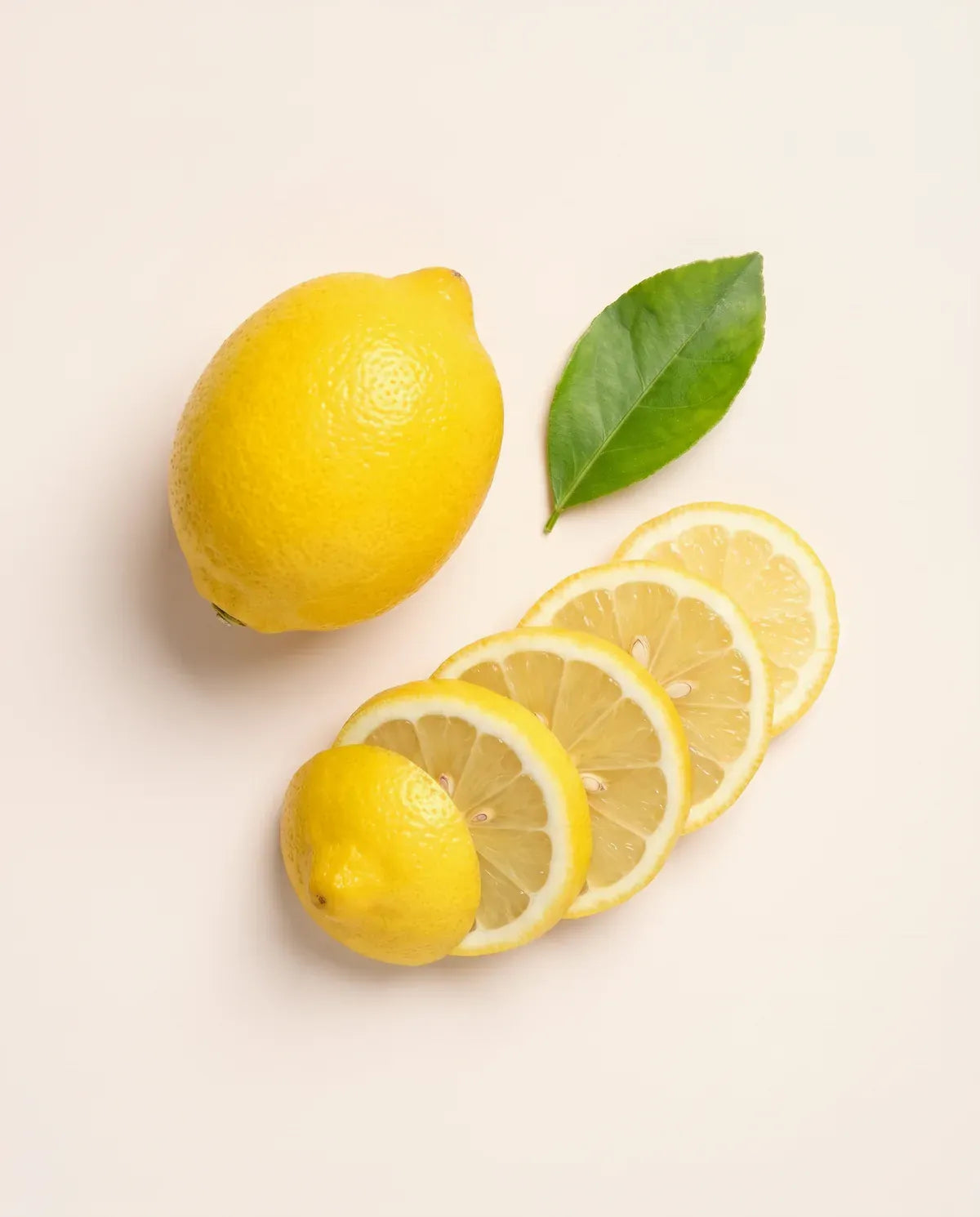
Lemon extract is a water-based extract of the lemon fruit or its peel, and researchers value it mainly for its flavonoids, eriocitrin and hesperidin, which act as antioxidants. In skincare it is a supporting ingredient: it adds antioxidant care and a fresh feel, while ingredients such as vitamin C and niacinamide lead the work on brightness and tone. That is how we use it in our Vitamin C Collagen Boosting Face Serum with Niacinamide.
What lemon extract is made from
On a label, lemon extract appears as Citrus Limon Fruit Extract or Citrus Limon Peel Extract. The fruit extract is drawn from the pulp and juice; the peel extract from the rind. Both carry water-soluble parts of the lemon: flavonoids, phenolic acids, a little citric acid, natural sugars and traces of vitamins.
It is not the same as squeezing a lemon. Raw juice is strongly acidic and unpredictable on skin, and lemon essential oil is a separate material made mostly of limonene. A cosmetic extract is prepared and measured so that it can sit in a formula at a steady level.
What researchers have measured
Flavonoids in real quantity
When researchers analyzed lemon peel extract, the two most abundant polyphenols were eriocitrin and hesperidin, and they were present in large amounts rather than traces. Eriocitrin is the more distinctive of the two. Among citrus fruits it is concentrated mainly in lemon, which is one reason lemon extract behaves differently from orange or grapefruit extract on an ingredient list.
Antioxidant activity
Flavonoids like eriocitrin and hesperidin are water-soluble antioxidants. They help neutralize the free radicals that daylight and city air create at the skin's surface, which over time contribute to a dull, tired look. Because they dissolve in water, they complement the oil-soluble antioxidants, such as vitamin E, found in many face oils.
A brighter, more even look
Lab studies report that lemon compounds slow tyrosinase, the enzyme involved in making pigment. That is promising, but it is laboratory work. Vitamin C is far better studied for brightness, and it is the reason lemon extract is most useful beside it rather than on its own.
Citric acid, in small amounts
Citric acid is an alpha hydroxy acid, the same family as glycolic and lactic acids. In a lemon extract used at cosmetic levels, it contributes at most a gentle smoothing feel. It is not a peel, and a serum with lemon extract is not an exfoliating product.
Lemon extract and your skin type
- Oily and combination skin. A water-based extract adds no oil, so it suits light serums worn under a moisturizer.
- Dull or uneven-looking skin. Paired with vitamin C and niacinamide, its antioxidants support a fresher, brighter look over weeks of use.
- Sensitive skin. A measured extract in a finished formula is very different from juice on skin. If you know you react to fragrance or citrus, patch test on the inside of your arm first.
Where lemon shows up in our products
Lemon appears in two of our products, doing two quite different jobs.
In our Vitamin C Collagen Boosting Face Serum with Niacinamide, lemon extract is one of five plant extracts, with bilberry, sugar cane, maple and orange, that give the serum a fresh, soft feel. Around them sit the main ingredients: ethyl ascorbic acid, a stabilized form of vitamin C that helps skin look brighter and more even, and niacinamide, a form of vitamin B3 that helps tone look balanced and texture refined. Aloe and cucumber add cool, light hydration, and sodium hyaluronate helps skin hold moisture. The serum looks like water and sinks in without stickiness.
In our Hydrating Hand Sanitizer Gel, lemon is part of the scent. The travel-size gel is scented with essential oils of lavender, lemon peel, marjoram, hemlock spruce and rosalina, and our Ingredient Library also lists lemon fruit extract in it. Aloe leaf juice and glycerin sit alongside so hands feel less tight once it dries.
How to use the serum in your routine
- Cleanse and pat your face dry.
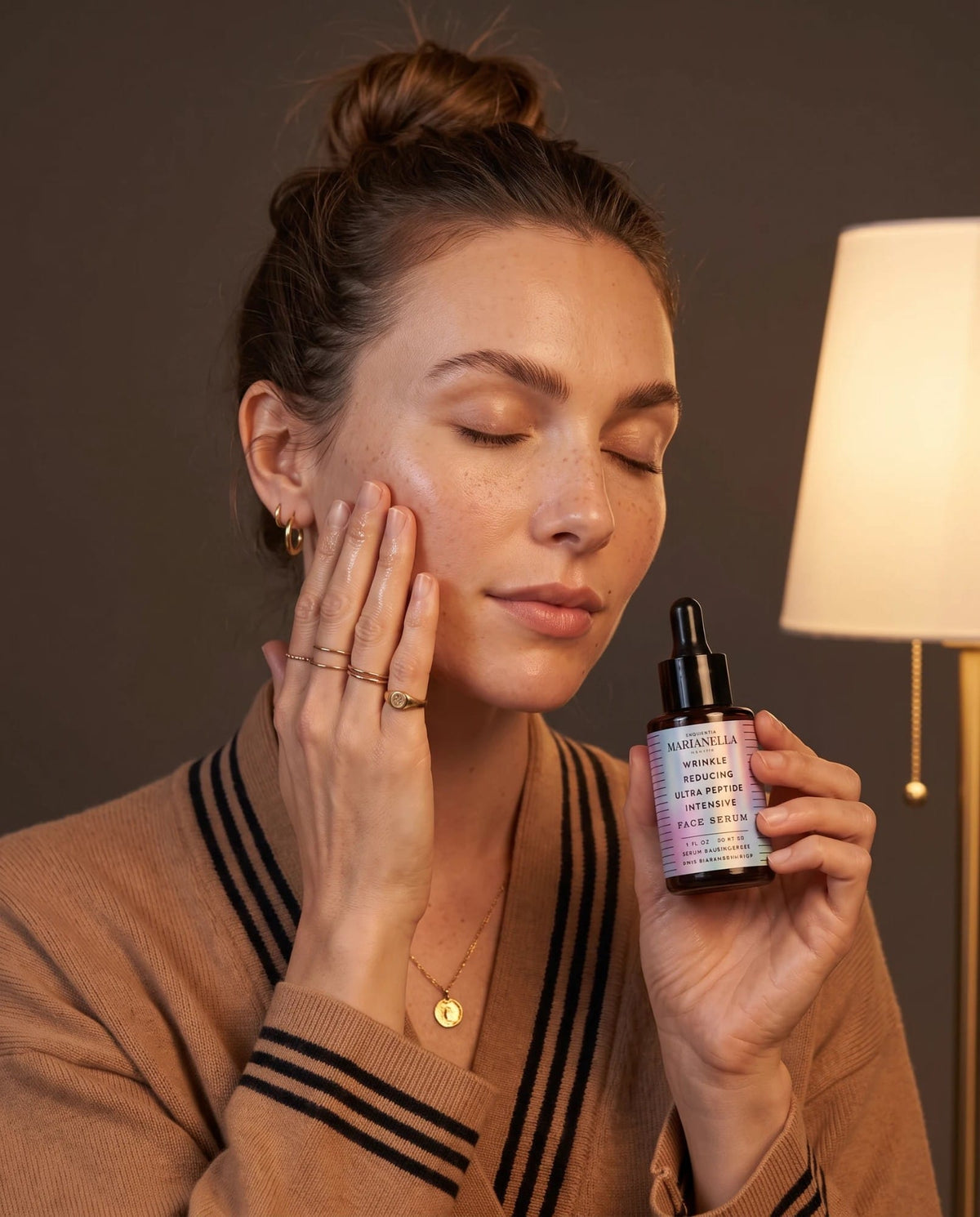
- Press three or four drops of the Vitamin C serum into clean skin and wait a moment for it to sink in.
- Follow with moisturizer or a face oil.
- In the morning, finish with sunscreen. You can also use the serum in the evening instead.
The serum suits normal, combination and sensitive skin. Keep it away from retinol and benzoyl peroxide in the same routine; if you use either, wear the vitamin C serum at the other end of the day. Results from antioxidants and brightening ingredients build over weeks of steady use, not days. Full ingredient details are in our Ingredient Library.
Questions about lemon extract and our serum
What is lemon extract made from?
It is drawn from the lemon fruit or its peel. It carries the water-soluble parts of the lemon, mainly flavonoids such as eriocitrin and hesperidin, along with a little citric acid and natural sugars.
Which Marianella products contain lemon?
Our Vitamin C Collagen Boosting Face Serum with Niacinamide contains lemon extract, and our travel-size Hydrating Hand Sanitizer Gel lists lemon fruit extract and is scented in part with lemon peel essential oil.
Can I use the Vitamin C serum with retinol?
Not in the same routine. Keep the vitamin C serum away from retinol and benzoyl peroxide, and use it at the other end of the day instead.
Is lemon extract the main brightening ingredient in the serum?
No. Ethyl ascorbic acid and niacinamide lead the brightening. Lemon extract is one of five plant extracts in the serum, there for antioxidant support and a fresh, soft feel.


















Leave a comment
This site is protected by hCaptcha and the hCaptcha Privacy Policy and Terms of Service apply.