

What Is Jojoba Oil?
Jojoba oil is a liquid wax ester, not a true oil, drawn from the seeds of a desert shrub and prized in skincare for a molecular structure that behaves almost identically to the skin's own protective barrier. Jojoba oil comes from the seeds of the jojoba plant, Simmondsia chinensis, a hardy shrub native to the deserts of Arizona, California, and Mexico, and its unique chemical composition sets it apart from other plant oils. The jojoba oil beauty benefits people search for in 2026 nearly all trace back to this single structural fact: it is chemically closer to sebum than to sunflower or olive oil. That distinction is the reason jojoba oil benefits show up across every skin type, from the driest complexion to the most breakout-prone.
The composition of jojoba oil includes primarily waxes, which account for almost 98% of its composition, comprising wax esters accompanied by minor quantities of free fatty acids, alcohols, hydrocarbons, sterols, and vitamins. Most botanical oils are triglycerides, three fatty acids bound to a glycerol backbone. Jojoba is not. That difference is small on paper and significant on skin, which is why formulators keep reaching for it decade after decade.
The Science Behind Jojoba Oil's Beauty Benefits
A Molecular Match for Human Sebum
Human sebum is a genuinely complex mixture, and jojoba oil overlaps with more of it than any other single plant ingredient. Sebum contains cholesterol esters at 2%, cholesterol at 4%, squalene at 10%, wax esters at 25%, free fatty acids at 28%, and triglycerides at 33%. Jojoba's wax esters sit in that same family, which is why the oil integrates into the skin's lipid matrix instead of simply coating it. This is not a marketing metaphor. It is the specific reason jojoba oil benefits extend to oily and combination skin as readily as to dry skin, since the ingredient is recognized by the skin rather than resisted by it.
Anti-Inflammatory and Collagen-Related Research
A 2024 study published in Frontiers in Pharmacology examined jojoba wax on human skin tissue using an ex-vivo organ culture model, the kind of research that carries more weight than a marketing claim because it measures actual tissue response. The results demonstrated that topically applied jojoba wax can reduce LPS-induced secretion of IL-6, IL-8, and TNFα by approximately 30% compared to untreated skin. The same body of research found that jojoba wax application was linked to increased synthesis of pro-collagen III and hyaluronic acid, pointing toward its relevance for skin that is losing bounce and moisture over time. These are the kinds of specifics that separate jojoba oil beauty benefits from vague botanical claims, since the data comes from measured cytokine levels, not anecdote.
Stability That Outlasts Traditional Oils
Jojoba's wax ester structure gives it something few natural ingredients can claim: near-total resistance to going rancid. Jojoba esters are very resistant to oxidation, more so than castor oil, coconut oil, macadamia oil, and even many fractions of mineral oil. For a small-batch, handcrafted brand, that stability matters. It means a formula holds its integrity in the jar, on the shelf, and on skin, without relying on synthetic preservation to do the work.
Jojoba Oil Beauty Benefits by Skin Type
The non-comedogenic reputation jojoba oil carries is well earned. The comedogenic rating of jojoba oil is zero, making it a gentler choice for acne-prone skin than heavier oils like coconut or avocado. For dry or reactive skin, jojoba's role leans occlusive and barrier-supporting. It forms a mild occlusive layer that reduces transepidermal water loss, helping skin stay hydrated longer, and it contains naturally occurring tocopherols, or vitamin E compounds, that support the skin with antioxidant activity. For skin that swings between oily and dry depending on the season, jojoba's biomimetic quality means it does not need to choose a side. It behaves the way skin already behaves.
None of this positions jojoba oil as a cure or a treatment. It is a botanical ally, one that supports the appearance and feel of skin through composition rather than intervention. That distinction matters, and it is one worth stating plainly rather than dressing up.
Best Jojoba Oil Products in 2026
The category has grown quickly, and the data reflects real formulation shift rather than trend-chasing. Launches featuring Simmondsia chinensis seed oil have risen by about 41% from 2021 to 2025, with skincare leading recent applications. The global jojoba oil market was estimated at USD 146.3 million in 2025 and is projected to reach USD 255.5 million by 2033. Searching for the best jojoba oil products in 2026 increasingly means looking past the ingredient list alone and toward how a brand sources and handles the oil, since stability and purity vary widely by extraction method.
Where Marianella Fits
Marianella has handcrafted eco-luxury skincare in Brooklyn since 2007, building each formula in small batches with clean ingredients and no shortcuts, a practice rooted in a Venezuelan family's early memory of making something beautiful from nature. That heritage, carried from Caracas to Brooklyn, shows up in the way jojoba oil is used across the line: not as a filler ingredient, but as a structural one.
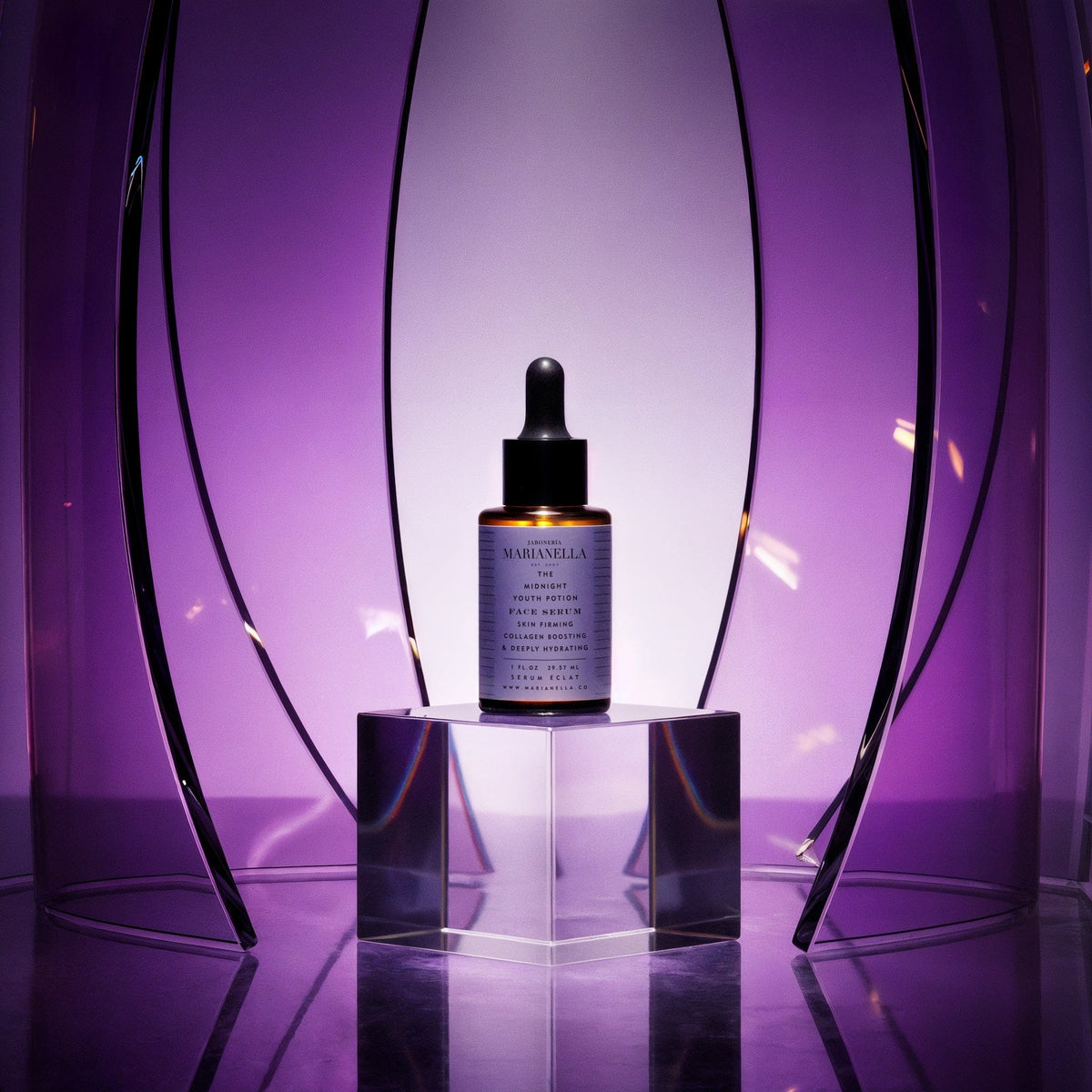
The Midnight Youth Potion ($58) is formulated with jojoba oil at its center, leaning into the ingredient's compatibility with skin's own lipid layer to support a smoother, more replenished feel overnight. It is a straightforward example of how an artisan approach and a well-studied botanical ingredient can work in the same bottle without competing for attention.
How to Choose the Right Jojoba Oil Product
Jojoba oil benefits are only as good as the formulation carrying them. Look for products where jojoba oil appears high on the ingredient list rather than at the bottom, and consider whether the brand discloses sourcing and batch practices. A handcrafted, small-batch approach tends to preserve the oil's natural stability rather than diluting it across fillers. This is one area where reading the label carefully pays off, since jojoba's benefits are concentration-dependent.
Marianella's collection, sold in Brooklyn and carried at Bloomingdale's BEAUTYSPACE, treats jojoba oil as one ingredient among a considered short list rather than a marketing headline. Explore The Midnight Youth Potion to see how jojoba oil is used within a fuller formula built around nighttime skin recovery.
FAQ
Is jojoba oil good for sensitive skin?
Yes. Jojoba oil's wax ester structure closely resembles the skin's own sebum, which tends to make it well tolerated even on reactive or compromised skin. Its non-comedogenic rating and resistance to oxidation also mean fewer irritation triggers compared to oils that turn rancid or clog pores over time.

Does jojoba oil clog pores?
No. Jojoba oil carries a comedogenic rating of zero, which places it well below oils like coconut or wheat germ. Its wax ester molecules are structurally different from the triglycerides more likely to sit inside a pore, which is part of why it is favored for oily and acne-prone skin types.
What makes jojoba oil different from other facial oils?
Most facial oils are triglycerides. Jojoba oil is a liquid wax ester, a structure shared with human sebum, which allows it to integrate into skin's lipid layer rather than simply sit on top of it. It is also notably resistant to rancidity compared with most plant-derived oils.
Can jojoba oil help with visible signs of aging?
Research using human skin tissue has linked topical jojoba wax to increased pro-collagen III and hyaluronic acid synthesis, both relevant to skin's firmness and hydration over time. It is not a treatment, but its barrier-supportive and antioxidant properties make it a reasonable addition to a nightly routine focused on skin's appearance.
How is jojoba oil used in Marianella formulas?
Marianella incorporates jojoba oil into small-batch, handcrafted formulas made in Brooklyn, including The Midnight Youth Potion ($58), where it works alongside other botanicals to support the feel and appearance of skin overnight, consistent with the brand's clean-ingredient, no-shortcuts approach dating back to 2007.


Leave a comment
This site is protected by hCaptcha and the hCaptcha Privacy Policy and Terms of Service apply.