


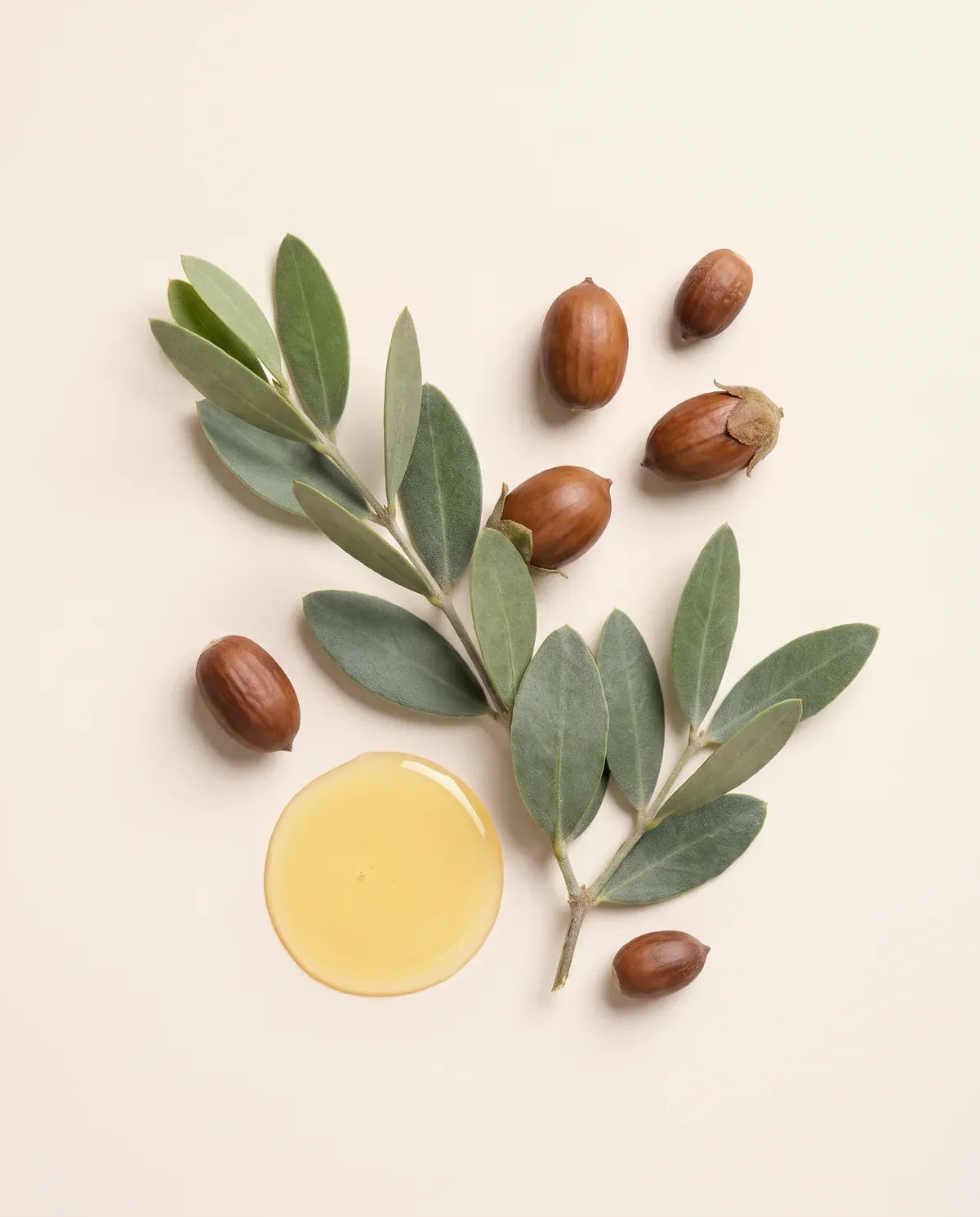
Jojoba is a liquid wax pressed from the seeds of a Sonoran Desert shrub, and the research on it points to two practical strengths: it helps skin hold on to moisture, and it stays fresh far longer than most plant oils. Those two traits are why it turns up in so many of our formulas, from the washes in the shower to the oil-serum on the nightstand: our Replenishing Body Wash and Hydrating Hand Wash, our Hydrating Hand Cream and Rejuvenating Body Cream, The Midnight Youth Potion and GRR Oil Beard Oil.
A wax that pours like an oil
Jojoba, Simmondsia chinensis, grows wild in the deserts of the south-western United States and northern Mexico. About half the weight of its seed is a clear, golden liquid that is technically a wax. Most plant oils are triglycerides; jojoba is almost entirely long-chain wax esters, each typically around 42 carbons long, made from a fatty acid joined to a fatty alcohol. The most abundant of its fatty acids is gadoleic acid, which makes up roughly three quarters of the total.
Skin makes wax esters too. They are about a quarter of sebum, the oil on the skin's surface, which is one reason jojoba feels so familiar on skin: light, silky at first, then dry to the touch.
What the research says about moisture
The clearest human evidence concerns water loss through the skin, measured as transepidermal water loss. In an eight-week study, volunteers' skin was first roughened by exfoliation, which lets more water escape. Applying jojoba brought that loss down, meaning the surface was holding moisture better. The long-chain fatty acids in jojoba appear to play a part in softening the skin's outer layer.
Formulation studies add a practical detail: creams made with more jojoba moisturized better than those made with less, and in one comparison a cream with 7.5 percent jojoba outperformed lower amounts. It is a reminder that where an ingredient sits in a formula, and how much of it there is, matters as much as its name on the label.
Why stability matters to a small-batch maker
Jojoba's long, single-chain structure makes it unusually resistant to oxidation. It does not go rancid the way sesame, almond or many other plant oils can. For us that is more than a technical footnote. We make nearly everything in our Williamsburg workshop in batches of 50 to 100, and we want a hand cream to feel and smell the same at the bottom of the bottle as at the top. A stable ingredient like jojoba helps the whole blend hold up.
In our washes: soft rather than stripped
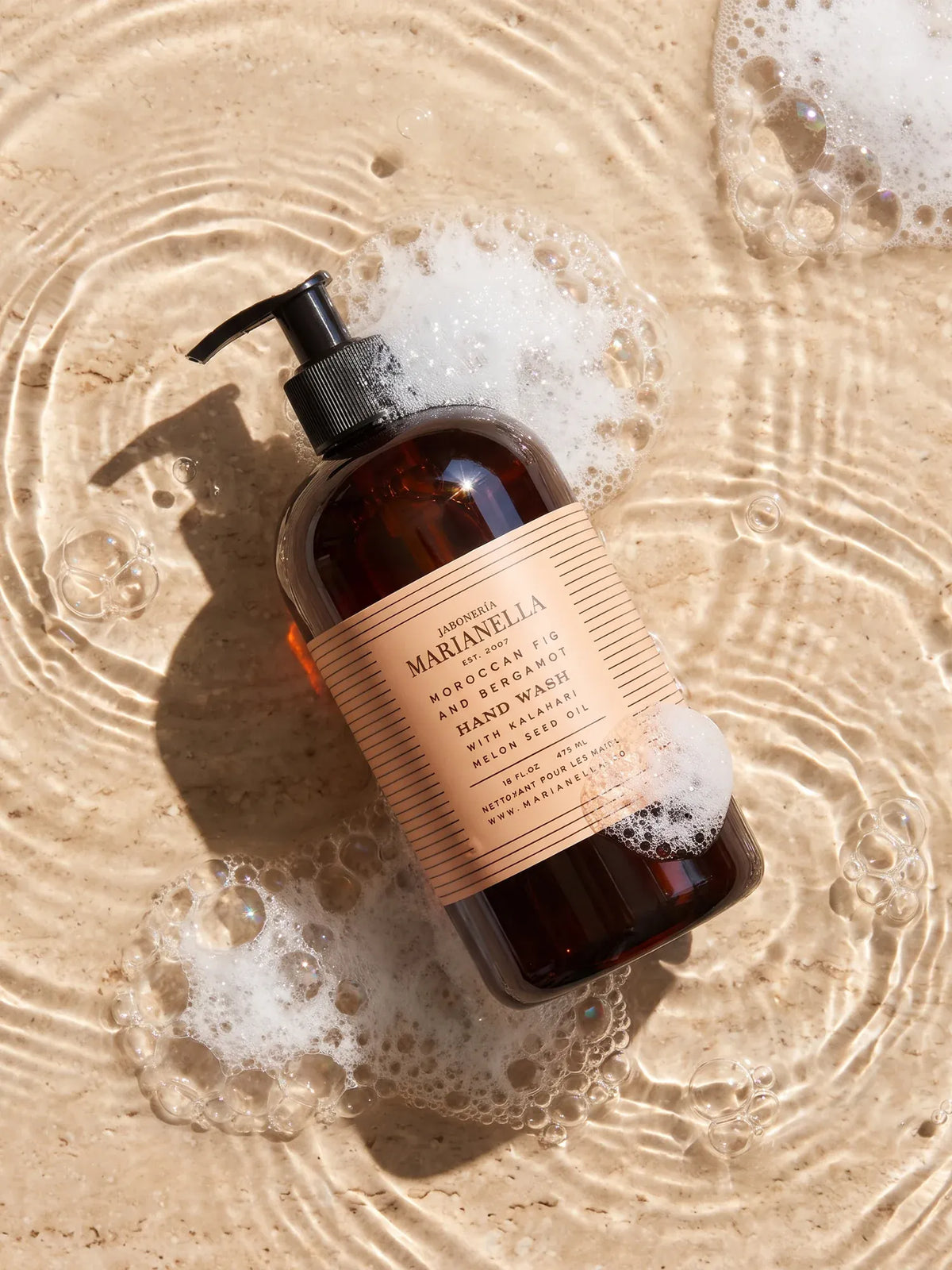
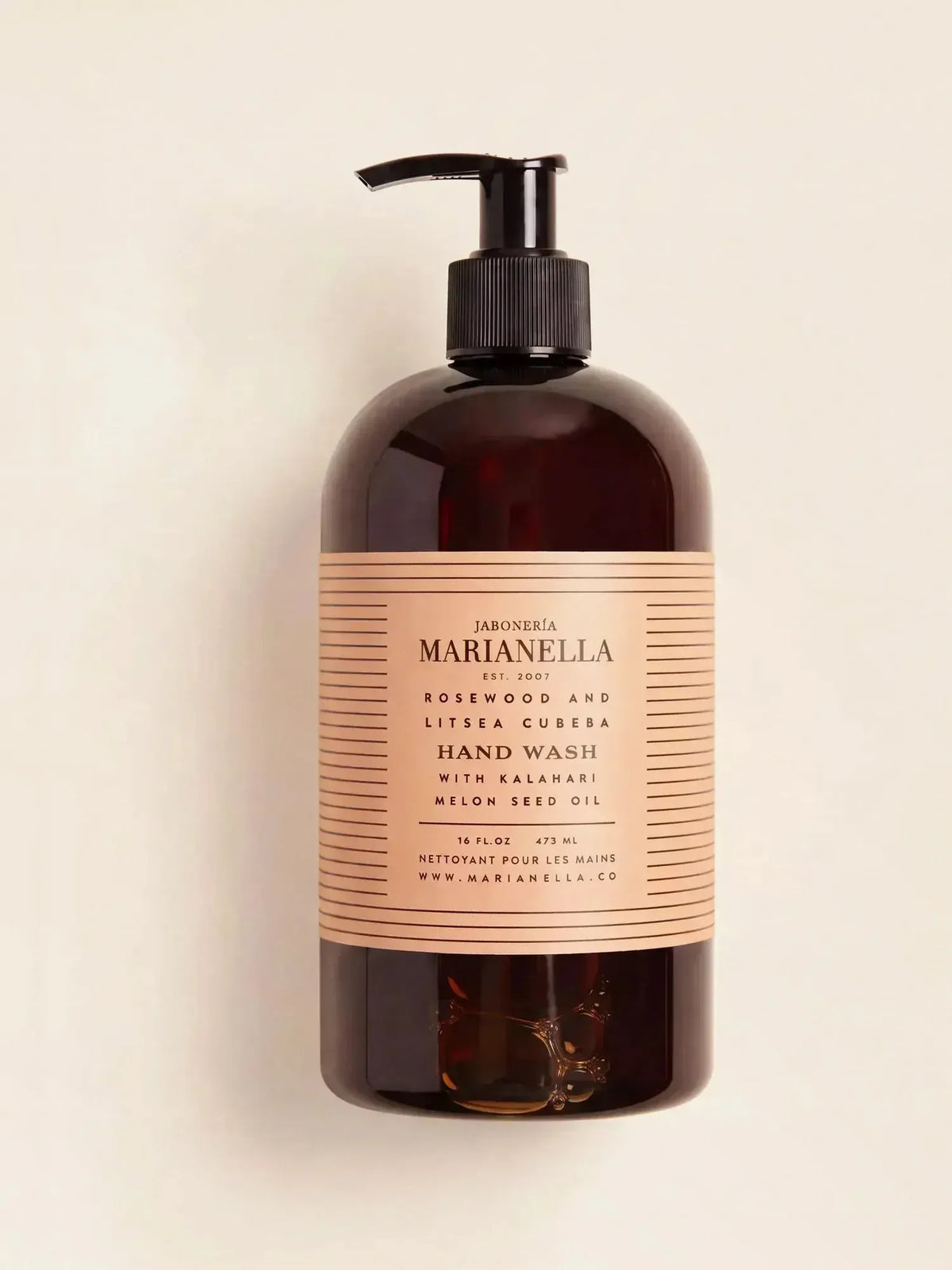
Our Replenishing Body Wash and Hydrating Hand Wash are true castile-style liquid soaps, made from organic coconut, olive and jojoba oils saponified the traditional way. Coconut oil gives the lather its lift, olive oil keeps it gentle and creamy, and jojoba helps leave skin feeling soft. Organic aloe vera and a touch of Kalahari melon seed oil, the oil our brand is built on, finish them.
A wash is on your skin for less than a minute, so jojoba's job here is about how skin feels afterward: comfortable rather than tight, even when you wash your hands twenty times a day.
In our creams: cushion without grease
In the Hydrating Hand Cream and the Rejuvenating Body Cream, jojoba works with coconut, sunflower and avocado oils to cushion dry skin, while Kalahari melon seed oil, aloe leaf juice and glycerin add light hydration and argan and borage oils add suppleness. Jojoba's dry finish is part of why the hand cream sinks in without leaving a greasy film on the next thing you touch.
In The Midnight Youth Potion: part of a thirteen-oil blend
The Midnight Youth Potion is the oil we make for evenings. Jojoba sits among thirteen botanical oils, with grape seed, avocado, babassu, flax, rosehip, marula, carrot seed, passionfruit, baobab, camellia, tamanu and Kalahari melon, blended with niacinamide, sodium hyaluronate and a vitamin C ester. Press four to six drops into clean skin as the last step of your evening routine, and skin feels deeply hydrated rather than greasy.
In GRR Oil: the base of a beard oil
Jojoba is listed first in the base of GRR Oil Beard Oil, alongside Kalahari melon seed, avocado, coconut and castor oils. A liquid wax spreads easily through hair and sinks into the skin underneath without leaving a shine, which is exactly what a beard oil needs to do.
Using jojoba-based products well
Leave-on products with jojoba work best on skin that is still slightly damp: body cream after a bath or shower, hand cream after washing, the face oil after your water-based steps. Because jojoba is light and stable, these products suit daily use, morning or night, for most skin types. You can see every ingredient we use, and where it is found, in our Ingredient Library.
Questions about jojoba in our products
Why put jojoba in a wash if it rinses off?
Because it shapes how skin feels after rinsing. Saponified with coconut and olive oils, it helps the soap leave skin comfortable rather than tight.
Does jojoba oil go rancid?
Much more slowly than most plant oils. Its wax-ester structure resists oxidation, which helps the products it is in stay fresh.
Is the jojoba in your hand cream the same as in the face oil-serum?
It is the same ingredient doing a similar job, cushioning skin and helping it hold moisture, but in very different company: water, aloe and glycerin in the cream, a blend of thirteen oils in The Midnight Youth Potion.
Is jojoba good for oily skin?
It is light, dry to the touch and rarely clogs pores, so most people with oily or combination skin find it comfortable.





















Leave a comment
This site is protected by hCaptcha and the hCaptcha Privacy Policy and Terms of Service apply.