

Coffee Bean Extract in Skincare: What the Science Actually Says in 2026
Coffee bean extract skincare benefits go far beyond the morning cup. Applied topically, compounds derived from Coffea arabica and related species have been studied for their antioxidant activity, anti-inflammatory properties, and measurable effects on skin texture, hydration, and barrier function. The science behind this ingredient is more layered than its trend appeal suggests, and in 2026 it remains one of the more research-supported botanicals in modern body and face formulations.
What Is Coffee Bean Extract?
Coffee bean extract is derived from the seeds of the Coffea plant, most commonly Coffea arabica. It exists in several forms, including extracts from green (unroasted) beans, roasted beans, and coffee byproducts such as silverskin and spent grounds. Coffee-derived materials from diverse botanical sources, including beans, leaves, fruit, and spent grounds, contain bioactive polyphenolic compounds, alkaloids, and diterpenes with potential dermatological applications. The primary actives of interest for skin are caffeine and chlorogenic acids, each working through distinct biological mechanisms at the cellular level.

Caffeine is widely used in cosmetic formulations due to its photoprotective and anti-aging properties, as well as lipolytic action in cellulite and hair regrowth. Chlorogenic acids are powerful antioxidants and exhibit anti-aging and photoprotective abilities. These two compound classes are what drive the bulk of the clinical and in vitro research on coffee in skincare.
The Dermatology Research Behind Coffee Bean Extract for Skin
The body of evidence supporting coffee bean extract for skin has grown consistently over the past decade. A comprehensive peer-reviewed review published in February 2026 in Antioxidants (MDPI) confirmed the multifunctional value of coffee-derived ingredients across several study types. In vitro studies demonstrate antioxidant, anti-aging, anti-inflammatory, photoprotective, wound-healing, and antimicrobial activities. Animal models show photoprotection and wound-healing effects. Coffee-derived materials from diverse botanical sources contain bioactive polyphenolic compounds, alkaloids, and diterpenes with potential dermatological applications.
Human clinical data, while more limited in scale, is directionally consistent. Limited human trials report modest improvements in skin hydration, elasticity, barrier function, and reductions in erythema, transepidermal water loss, and ultraviolet-induced damage, though methodological limitations constrain interpretation. That context matters. The ingredient is promising, not miraculous, and brands that formulate honestly with it let the science speak.
Antioxidant Activity and Photoprotection
Research is emerging that green, unroasted coffee beans provide numerous skin-related benefits when applied topically. Coffea arabica seed oil, extracted by cold pressing green coffee beans, has a high concentration of essential fatty acids, sterols, and vitamin E, making it a potent antioxidant that can offer protection against skin damage such as sunburn cell formation and DNA degradation.
Caffeine's antioxidant action at the cellular level is well-documented. Caffeine is an antioxidant that suppresses lipid peroxidation, protects cells from free radical damage, enhances cell oxygenation and microcirculation, and accelerates cell metabolism. Free radical damage is a primary driver of visible skin aging, including fine lines, loss of elasticity, and uneven tone. An ingredient that operates at this level is doing foundational work, not surface-level correction.
Various studies suggest that coffee extracts can protect skin cells against photoaging induced by UV irradiation. This photoprotective signal is one reason coffee bean extract has become a credible ingredient in body and face formulations designed for daily environmental defense.
Collagenase Inhibition and Anti-Aging Mechanisms
One of the more precise findings in coffee extract research involves its effect on collagen-degrading enzymes. Coffee-derived materials have demonstrated dermatological activities by modulating key molecular pathways involved in oxidative damage, inflammatory signaling, extracellular matrix degradation, and cellular repair processes. Coffee berry extract demonstrates anti-aging effects through superoxide dismutase modulation and collagenase inhibition in human dermal fibroblasts.
The collagenase inhibition data is specific. To investigate collagenase inhibition activity, bioassays were performed with MMP-1, a member of matrix metalloproteinases. Caffeine showed collagenase inhibition of 43.47%. MMP-1 is one of the enzymes most directly tied to collagen breakdown and, by extension, wrinkle formation and skin laxity. Slowing its activity is a mechanism with real structural implications for skin over time.
Caffeine also provides skin anti-aging properties, including enhanced keratinocyte cell proliferation and inhibited collagenase activity. Keratinocyte turnover is what keeps skin surface renewal active and texture even.
Skin Hydration and Barrier Function
A double-blind, placebo-controlled study involving 49 female subjects examined what coffee polyphenols do to skin measurably over 8 weeks. The ingestion of coffee polyphenols significantly lowered clinical scores for skin dryness, decreased transepidermal water loss, skin surface pH, and increased stratum corneum hydration and the responsiveness of skin blood flow during local warming. The amounts of free fatty acids and lactic acid in the stratum corneum significantly increased after ingestion. These results suggest that an 8-week intake improved skin permeability barrier function and hydration, with a concomitant improvement in microcirculatory function.
The barrier function finding is relevant for topical use as well. Topical application of caffeine can improve skin barrier function by preventing transepidermal water loss, helping the skin retain moisture much like moisturizing creams.
Microcirculation and Body Skin
For body formulations specifically, caffeine's documented effect on microcirculation is one of its most studied applications. Caffeine can reduce dark circles and bags under the eyes because it helps with microcirculation, the flow of blood through the smallest blood vessels in the circulatory system. Enhanced microcirculation occurs because caffeine removes the fats that accumulate during lipolysis.
This mechanism extends to body skin. Caffeine, herbal extracts, and related compounds are administered topically to treat cellulite by reducing adipogenesis while inducing thermogenesis, microcirculation, and collagen synthesis. Caffeine enhances the microcirculatory blood flow, thus accelerating lymph system drainage from fat cells in addition to activating lipolysis. This is why caffeine is one of the most frequently cited actives in body contouring and smoothing formulations.
Chlorogenic Acid: The Polyphenol Doing Heavy Work
Chlorogenic acid is an active polyphenol with anti-inflammatory, antioxidant, and antimicrobial effects. In terms of skin-surface chemistry, coffee is rich in chlorogenic acid, ferulic acid, and caffeic acid, which provide strong antioxidant and anti-inflammatory properties, helping to protect skin from UV damage, pollution, and oxidative stress.
One notable study on oxygen radical absorbance capacity found a striking comparison: testing by oxygen radical absorbance capacity assay of coffee berry outperforms common antioxidants such as green tea extract, pomegranate extract, vitamin C, and vitamin E. That is a meaningful benchmark for any formulator selecting actives by antioxidant potency.
On skin penetration, research is clear that caffeine and chlorogenic acid behave differently once applied. While caffeine readily penetrates the viable epidermis and dermis, polyphenols such as chlorogenic acids are limited by the stratum corneum barrier due to their larger size and hydrophilicity. This informs how formulations should be designed around these actives, including delivery systems that maximize bioavailability at the target layer.
Coffee Bean Extract in Body Scrubs: Physical Plus Biochemical
In a body scrub, coffee bean extract contributes at two levels simultaneously. The physical texture of coffee grounds provides mechanical exfoliation, lifting dead skin cells and improving surface smoothness. The biochemical compounds in the extract, caffeine and polyphenols, work on the layers beneath, supporting circulation, reducing oxidative burden, and maintaining barrier integrity.
Physical exfoliation matters. Removing the buildup of dead corneocytes allows active ingredients to penetrate more effectively and gives skin an immediate improvement in texture and luminosity. When you pair that mechanical action with an ingredient that has documented antioxidant, anti-inflammatory, and microcirculatory properties, you have a formulation that works on multiple levels in a single step.
Coffee-derived compounds have demonstrated significant anticellulite, anti-inflammatory, antioxidant, photoprotective, anti-aging, antibacterial, and moisturizing properties. For a body formulation, that is a broad and credible range of activity from a single botanical source.
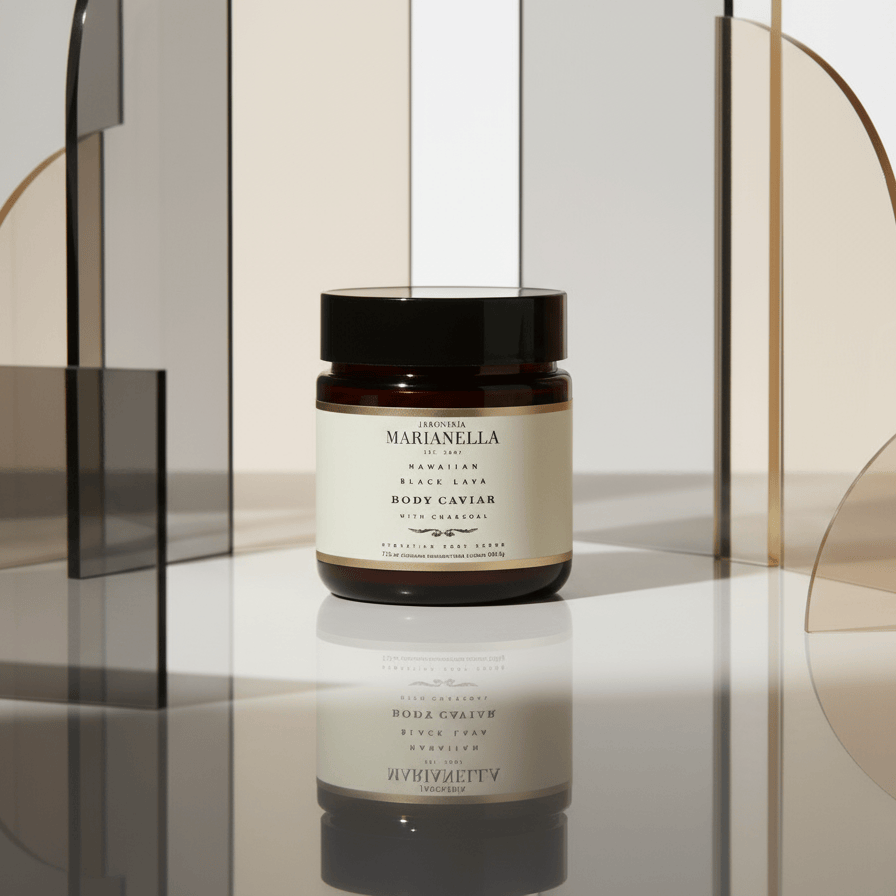
Marianella Hawaiian Black Lava Body Caviar Body Scrub with Charcoal
Marianella has been handcrafting small-batch skincare in Brooklyn since 2007. Eighteen years of formulation expertise, built on three generations of Venezuelan botanical beauty knowledge, shapes how every ingredient is selected and combined. The brand's 82 products, carried at Bloomingdale's BEAUTYSPACE and recognized by Vogue, Oprah, Forbes, Allure, and People Magazine (Star Beauty Award), reflect a standard that treats body formulations with the same rigor as face.
The Hawaiian Black Lava Body Caviar Body Scrub with Charcoal brings coffee bean extract into a multi-active body formulation alongside Hawaiian black lava salt and activated charcoal. The combination addresses three distinct concerns: physical exfoliation, detoxification, and the biochemical skin-smoothing activity that coffee extract is documented to support. $29.
It is a formulation that reflects how Marianella approaches body care: purposeful ingredients, clean structure, and results that do not require a paragraph of qualifications to describe.
How to Use Coffee Bean Extract Products for Skin
Frequency and Application
For body scrubs featuring coffee bean extract, two to three times per week on damp skin is the standard approach. Apply in circular motions to allow both the physical exfoliation and the active compounds to do their work. Rinse thoroughly and follow with a body oil or lotion to seal moisture into the newly exfoliated surface.
Consistency matters more than intensity. The microcirculatory and antioxidant effects of caffeine-based formulations are cumulative over regular use, not a one-time result.
Who Should Use It
Coffee bean extract is well-tolerated across most skin types. Its anti-inflammatory properties make it relevant for reactive skin, and its barrier-supporting activity makes it useful for dry or compromised skin. For body use specifically, anyone looking to improve surface texture, support skin smoothness, or address the appearance of uneven tone will find coffee extract formulations directly applicable.
Those with caffeine sensitivity in topical products should patch test first, though the concentration levels used in cosmetic formulations are significantly lower than anything affecting systemic caffeine response.
The Bigger Picture on Coffee Bean Extract for Skin in 2026
Coffee bean extract earns its place in serious skincare formulations. The research base, reviewed and strengthened as recently as early 2026, points to a multifunctional ingredient with real activity across antioxidant defense, anti-aging pathways, barrier function, and microcirculation. These studies highlight the multifunctional dermatological value of coffee-derived materials as ingredients for cosmetic and therapeutic formulations aimed at combating skin aging, inflammation, and barrier dysfunction.
It is not a silver bullet. No single ingredient is. But in the context of a well-constructed formulation, coffee bean extract contributes measurably, particularly in body care where circulation, texture, and surface renewal are the primary goals.
Explore the Hawaiian Black Lava Body Caviar Body Scrub with Charcoal and see how 18 years of botanical formulation expertise applies this ingredient in practice.
```

Leave a comment
This site is protected by hCaptcha and the hCaptcha Privacy Policy and Terms of Service apply.