

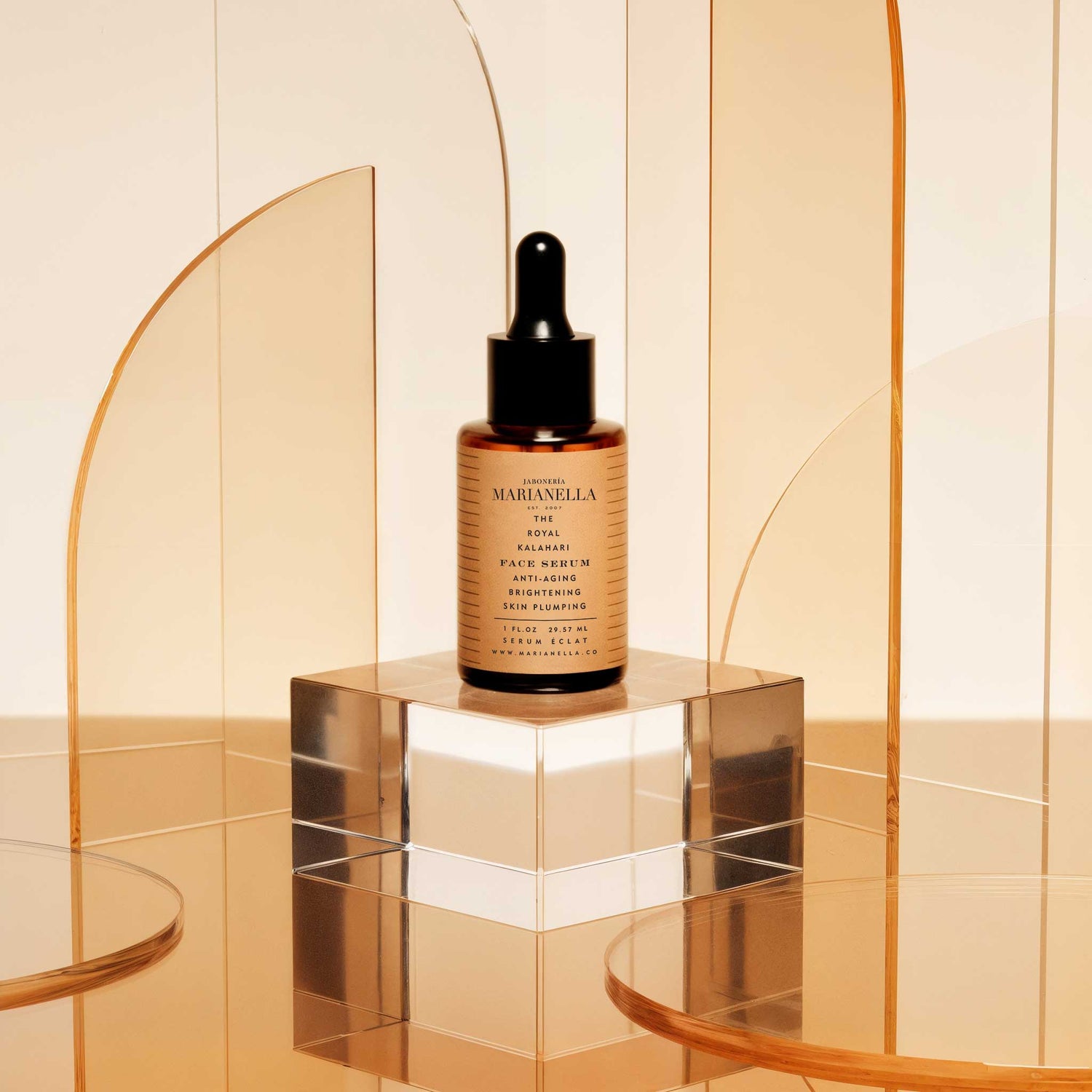
Camellia seed oil skincare benefits are earning serious attention in 2026, and not because of a trend cycle. The science is deep, the history is centuries old, and the results are visible. Cold-pressed from the seeds of Camellia japonica or Camellia oleifera plants, this oil delivers concentrated fatty acids, antioxidants, and skin-identical lipids that work with your skin's biology rather than sitting on top of it. At Marianella, we've spent 18 years selecting ingredients that meet a precise standard: botanically intelligent, backed by science, and sourced with intention rooted in three generations of Venezuelan botanical knowledge. Camellia seed oil cleared every bar.
What Is Camellia Seed Oil?
Camellia oil, also known as tsubaki oil or tsubaki seed oil, is derived from the seeds of Camellia japonica, a flowering tree native to East Asia. There are more than 100 species of camellia, but the primary types utilized for skincare products are japonica, oleifera, and sinensis. Historically a staple in Japanese beauty routines, camellia oil is known for its deeply hydrating and skin-nourishing qualities, thanks to its unique blend of fatty acids, vitamins, and antioxidants.
Camellia oleifera is primarily composed of 90% unsaturated fatty acids. Oleic acid, a monounsaturated fatty acid, makes up approximately 80% of the oil's composition. That single fact explains a great deal about why it performs so differently from heavier, more occlusive oils. Oleic acid has the effect of promoting penetration and skin absorption. The oil doesn't just coat. It communicates.
The Science Behind Camellia Seed Oil for Skin
Fatty Acid Profile: Why the Numbers Matter
Camellia oleifera contains vitamins A, B, and E, minerals including phosphorus, calcium, and magnesium, omega 3, 6, and 9, and can have over 85% oleic acid, which makes it a powerful replenishing ingredient. In peer-reviewed analysis, three major fatty acids were identified: oleic acid at 87.93%, stearic acid at 5.14%, and palmitic acid at 5.08%.


Camellia japonica seed oil is particularly rich in oleic acid, which contributes to its moisturizing and skin-penetrating properties. Oleic acid is effective at helping other ingredients absorb more efficiently into the skin. In a complex, multi-active serum, that penetration-enhancement quality is not a secondary benefit. It is a formulation strategy.
Camellia seed oil also contains compounds such as sterols, squalene, tocopherol, and fatty acids that exhibit beneficial biological activities, including antiatherosclerotic properties and antioxidant capacity.
Collagen Stimulation and Anti-Aging Activity
One of the strongest evidence points for camellia seed oil in anti-aging skincare is its relationship with collagen. Camellia japonica oil was determined to activate the human COL1A2 promoter in a concentration-dependent manner. While matrix metalloproteinase (MMP)-1 activity was inhibited by CJ oil, human type I procollagen synthesis was also induced. That is a clinically significant dual action: suppressing the enzyme that degrades collagen while simultaneously encouraging the cells that produce it.
A study conducted on human fibroblasts revealed that kaempferol, a flavonoid in camellia oil, significantly inhibited the secretion of metalloproteinases (MMP-1) induced by TNF-α. These are involved in the proteolytic degradation of collagen. By inhibiting their action, the preservation of collagen is encouraged, helping maintain the skin's suppleness and elasticity.
Synthesized by fibroblasts, collagen is the most abundant protein in the human body. It is responsible for the elasticity, flexibility, and resilience of the skin. Over the years, the synthesis of collagen slows down, promoting the appearance of wrinkles, the loss of firmness and elasticity in tissues, and the sagging of the skin. Camellia seed oil addresses this at the cellular level, not through surface-level plumping.
Skin Barrier Reinforcement and Moisture Retention
Camellia oil contains linoleic acid, a deficiency of which can lead to a weakening of the skin barrier and an increase in insensible water loss, resulting in drier skin more prone to irritation. This oil is among the richest natural oils in oleic acid, a compound naturally present in the hydrolipidic film of the skin. The application of camellia oil works to strengthen the protective barrier function of the hydrolipidic film against external aggressions, preserving hydration by limiting water loss.
Linoleic acid is naturally produced within the epidermis. This fatty acid has a critical role in supporting the structure of the skin's barrier and helps regulate water content. Numerous studies have revealed its anti-inflammatory effects. Topical application of linoleic acid may soothe irritation, increase hydration, and prevent transepidermal water loss.
Anti-Inflammatory Compounds
Camellia japonica was shown in one study to possess 29 separate anti-inflammatory compounds, including vitamin E, squalene, and lupeol. Another study demonstrated that camellia japonica oil exerts its anti-inflammatory effects by down-regulating the expression of inflammatory mediators including inducible nitric oxide synthase (iNOS) and cyclooxygenase-2 (COX-2).
Unsaturated fatty acids have demonstrated their ability to reduce levels of inflammatory cytokines, such as IL-1β and TNF-α, by disrupting the NF-κB signaling pathway. Additional studies have revealed that the polyphenols present in camellia oil can mitigate the production of pro-inflammatory cytokines and block the activation of the NF-κB signaling pathway.
Antioxidant Defense and Pollution Protection
Flavonoids are strong antioxidant compounds found in abundance in plants like Camellia japonica. These compounds help to neutralize free radicals that would otherwise cause oxidative damage to the skin, leading to signs of premature aging. Vitamin E and polyphenols help neutralize free radicals from pollution and UV exposure.
Camellia seed oil also shields skin cells from urban pollutants like cigarette smoke and heavy metals. For skin navigating daily city conditions, that is a functional distinction. The oil's antioxidant activity is not only protective. Thanks to its high concentration of antioxidants, camellia seed oil strengthens the skin's natural defenses against free radicals and environmental stress, such as UV radiation.
Non-Comedogenic and Suitable for Sensitive Skin
Unlike some other types of oils, camellia oil has a very low comedogenic rating, meaning it won't clog pores or cause breakouts. It has a molecular weight similar to sebum, which allows it to absorb easily. Saponins are natural cleansing agents with mild antimicrobial properties. They help to cleanse the skin without stripping its natural oils, making camellia oil suitable for sensitive skin types. Saponins also have anti-inflammatory properties, helping to reduce redness and soothe irritated skin.
Camellia seed oil is particularly well absorbed, meaning it can have an intensive care effect even on sensitive and irritated skin. It is particularly suitable for the care of dry, irritated skin due to its fatty acid profile. That absorptive quality also makes it a smart base oil for layering with active serums. It does not compete. It assists.
Camellia Seed Oil and Melanin Regulation
Pigmentation is one of the more complex concerns in skincare, and camellia oil addresses it through a specific mechanism. Tea seed oil exhibited inhibitory activity on melanogenesis via inhibition of tyrosinase and TRP-2 activities. Camellia japonica controls pigment formation, another by-product of aging and UV exposure, by inhibiting tyrosinase. Tyrosinase is the key enzyme in melanin synthesis. Inhibiting it is the same pathway targeted by many prescription brightening agents. Camellia seed oil works toward that outcome with a gentler, botanical mechanism.
Best Camellia Seed Oil Products in 2026: Marianella's Formulations
Marianella has been handcrafting small-batch skincare in Brooklyn since 2007. Across 18 years and 82 products, the formulation philosophy has remained consistent: select botanicals for their validated bioactivity, not their marketing appeal. Camellia seed oil is one of those botanicals. It appears in two of our most precise formulas.
The Royal Kalahari Face Serum
A serum built for visible results. The Royal Kalahari Face Serum brings together some of the most evidence-backed botanical oils in modern skincare. Camellia seed oil contributes its oleic acid penetration-enhancement, ensuring that the other actives in this formula reach where they need to go. The result is a serum that layers cleanly, absorbs without residue, and performs across skin types. Featured in Vogue and recognized by the People Magazine Star Beauty Award, this formula represents the kind of work that comes from nearly two decades of formulation experience and three generations of Venezuelan botanical knowledge. The Royal Kalahari Face Serum. $72.
The Midnight Youth Potion
Nighttime skin has a different set of needs. Cell turnover accelerates during sleep, and barrier function requires sustained support through those hours. Camellia japonica seed oil stimulates collagen production, reduces wrinkles, and improves skin elasticity. The Midnight Youth Potion uses camellia seed oil as part of a nocturnal formula designed to work with those natural repair processes. Applied before sleep, it delivers concentrated lipid support, antioxidant protection, and collagen-preserving activity precisely when the skin is most receptive. The Midnight Youth Potion. $72.
Both formulas are available now at Bloomingdale's BEAUTYSPACE and at marianella.co.
How to Use Camellia Seed Oil for Skin: Application Notes
Camellia seed oil is compatible with most skincare routines. Its oleic acid profile makes it best suited to the final steps of a routine, applied over water-based serums to seal moisture and amplify absorption of earlier layers. In the morning, it provides a smooth, non-greasy base under SPF. At night, paired with actives such as retinol or peptides, it improves delivery while cushioning potential sensitivity.
Camellia seed oil is unique due to its exceptional stability, resisting oxidation and maintaining its nutritive profile even under heat and light. That oxidative stability is relevant for product shelf life and for how the oil behaves on the skin, particularly in high-pollution urban environments.
For dry or sensitized skin types: use morning and night. For oily and combination skin: concentrate use in the evening, where the non-comedogenic profile and absorption speed work in your favor without daytime interference.
The Ingredient Standard
Marianella sources for bioactivity first. Camellia seed oil earns its place in our formulas because the research is clear, the results are measurable, and the sensory profile supports the kind of elegant, clean finish we've maintained since 2007. Three generations of Venezuelan botanical heritage inform how we read an ingredient: not just what it contains, but how it behaves in combination, on real skin, over time.
Explore both formulas at marianella.co. Find them in person at Bloomingdale's BEAUTYSPACE.
```

Leave a comment
This site is protected by hCaptcha and the hCaptcha Privacy Policy and Terms of Service apply.