

Argan Oil Beauty Benefits: What the Research Actually Shows
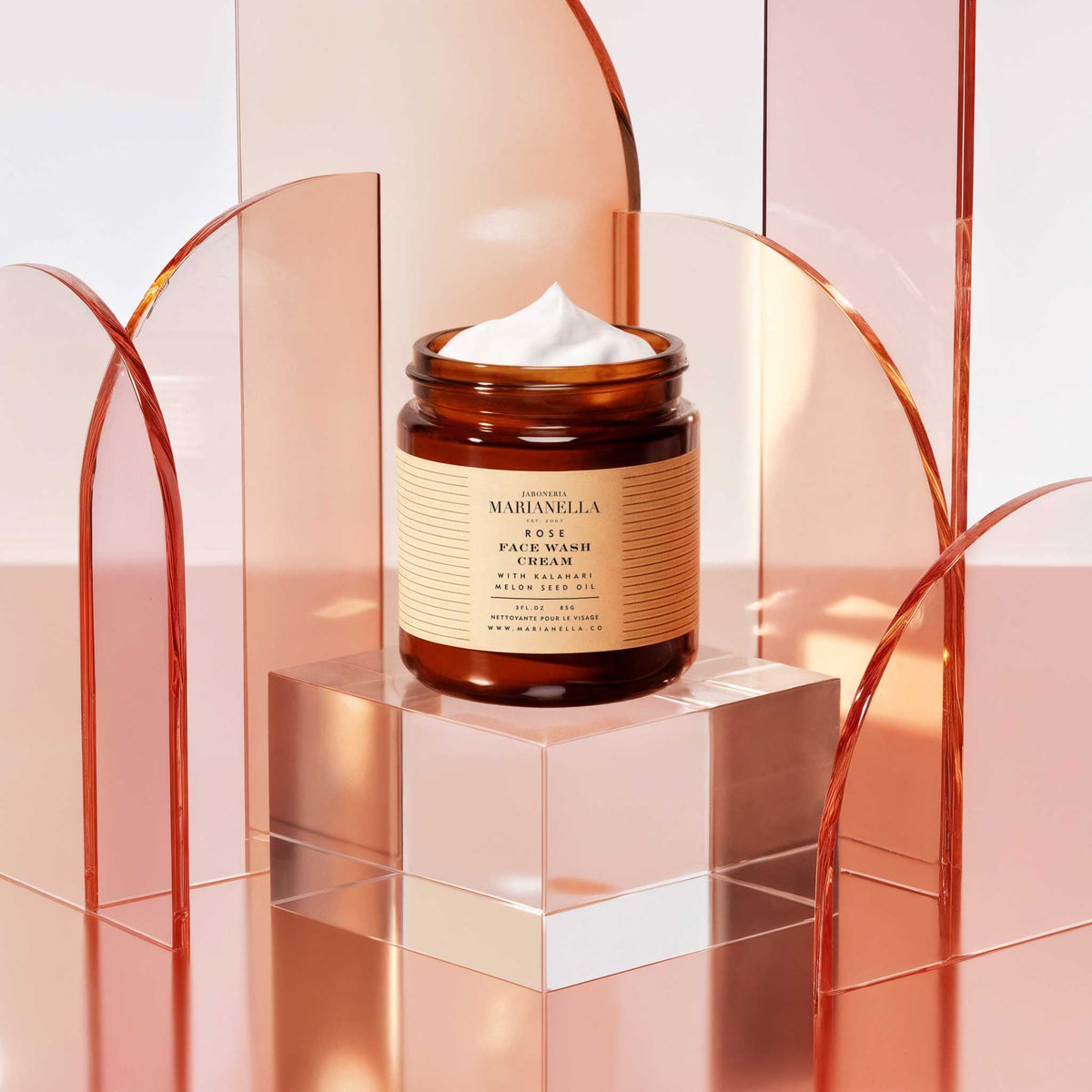
Argan oil is a botanical facial oil pressed from the kernels of the Argania spinosa tree that supports skin hydration, barrier strength, and visible antioxidant protection through a naturally high concentration of oleic acid, linoleic acid, and vitamin E. It is a triglyceride-based botanical oil cold-pressed from the kernels of the Moroccan argan tree, composed primarily of oleic acid and linoleic acid, along with high concentrations of tocopherols (vitamin E), squalene, and plant sterols. For anyone researching argan oil beauty benefits in 2026, the appeal is not folklore. It is a fatty acid and antioxidant profile that has been measured, published, and repeated across multiple independent labs. Marianella, the Venezuelan-founded, Brooklyn-handcrafted skincare house, has built its Rose Face Wash Cream around this same profile, using argan oil alongside rose to cleanse without stripping.
What Is Argan Oil?

Argan oil has been a culinary staple in Morocco for centuries, valued for its subtle, nutty flavor and its wide array of potential health benefits, and is derived from the kernels of the fruit of the argan tree. The tree itself is notable for where it grows. Argania spinosa is endemic to south-western Algeria and Morocco, originally grown in South Morocco, and widespread in arid and semi-arid regions. Extraction is slow and kernel yield is low, which is part of why genuine argan oil has always carried a premium price in global cosmetic formulation. In skincare, it functions less like a trend ingredient and more like a working lipid, absorbed into the skin's own structure rather than sitting on top of it.
The Fatty Acid Composition Behind Argan Oil Benefits
Oleic and Linoleic Acid Levels
The chemistry is where argan oil earns its reputation. Argan oil is composed of about 80% unsaturated fatty acids, with oleic acid (43 to 49 g per 100 g) and linoleic acid (29 to 37 g per 100 g) as the major unsaturated fatty acids found in the oil. That balance matters more than it sounds. This dual-fatty-acid composition makes argan oil effective across a wide range of skin types, not just dry or mature complexions. Oleic acid is an emollient that softens texture, while linoleic acid plays a structural role in the skin's own lipid barrier. Linoleic acid is a component of ceramide 1 linoleate, which is decreased in dry skin, and topical application of linoleic acid can increase ceramide 1 linoleate levels in skin, thus reducing xerosis. In plain terms, the oil is feeding the skin something it is often short on.
Vitamin E, Squalene, and Antioxidant Content
Beyond fatty acids, argan oil carries a dense antioxidant load. It supplies high concentrations of tocopherols (vitamin E) that neutralize free radicals and protect cell membrane lipids from oxidative damage. Laboratory analysis has quantified this precisely. Total tocopherols have been measured at roughly 657 to 749 mg per kg, with gamma-tocopherol as the predominant form. This positions argan oil among the strongest natural antioxidants, and it is highly sought after in anti-aging cosmetics. Squalene, a lipid the skin produces naturally in smaller amounts as it ages, is also present. The squalene content of argan oil has been measured at a mean of 313 mg per 100 g, lower than olive oil but significantly higher than sunflower oil. Together, vitamin E and squalene give argan oil its dual role as both moisturizer and antioxidant shield.
Argan Oil Beauty Benefits for the Skin Barrier
The skin barrier is the layer most skincare marketing talks around without explaining. Argan oil's relevance here is structural, not cosmetic. Argan oil delivers fatty acids, particularly linoleic acid, that integrate into the skin's lipid matrix to reinforce barrier integrity. Its tocopherols neutralize free radicals to protect against oxidative damage, while squalene, sterols, and polyphenols provide additional anti-inflammatory activity. Formulators describe the result the same way researchers do. Thanks to its essential fatty acid content of omega 6 and omega 9, argan oil helps restore the skin's hydrolipidic film, strengthening the barrier and limiting water loss. This is the difference between an oil that sits on skin and one that behaves like skin already recognizes it.
Research on Elasticity and Skin Recovery
Published research has looked specifically at how argan oil performs over time, not just in a single application. One study noted in the Journal of Ethnopharmacology examined the oil's role in wound healing and skin regeneration, and researchers found that argan oil accelerated the healing process of wounds and improved skin cell turnover, confirming its effectiveness in skin repair and recovery. Separate findings point to longer-term appearance benefits with consistent use. Results have shown that both topical application and dietary consumption of argan oil led to a noticeable reduction in wrinkle depth and increased skin firmness. None of this makes argan oil a treatment. It makes it a well-documented, well-behaved lipid that supports what skin is already trying to do.
Argan Oil Benefits Across Skin Types
A common misconception is that facial oils are only for dry skin. Argan oil's fatty acid ratio argues otherwise. Its fatty acid composition addresses oiliness without aggravating it, hydrates without heaviness, and soothes without sedating skin. That range is part of what makes it a staple in gentle cleansing formulas as well as leave-on treatments. On the skin, argan oil hydrates and balances the lipid environment, creating a favorable setting for beneficial microorganisms, while also possessing antimicrobial and anti-inflammatory properties. For someone with combination or reactive skin, that balance is often more useful than an oil chosen purely for richness.
Best Argan Oil Products 2026: What to Look For
The market for facial oils has grown crowded, which makes sourcing and formulation transparency the real differentiators for 2026. A few things separate a well-made argan oil product from a diluted one. Look for the ingredient listed high on the label, not buried after fillers. Look for the oil paired with complementary botanicals rather than synthetic fragrance masking its natural nutty scent. And look for a brand that discloses what the oil is doing structurally, not just what it smells like. Marianella's Rose Face Wash Cream ($29) was built with this in mind, pairing argan oil with rose to cleanse the face while supporting the same barrier function the research points to, rather than stripping it away like a traditional foaming wash.
Marianella and the Long View on Ingredients
Marianella has been handcrafting eco-luxury skincare since 2007, when the brand's founder rebuilt a childhood memory of Caracas, small batches, clean ingredients, no shortcuts, into a Brooklyn workshop. Nineteen years of formulation work sits behind every current SKU, from the 82 products spanning Face, Body, Hand, Home, and Fragrance to the retail presence at Bloomingdale's BEAUTYSPACE. The brand has been recognized by Vogue, Forbes, Allure, and Oprah's Favorite Things, among others, for the same principle argan oil demonstrates on a molecular level: ingredients that do quiet, structural work outlast ingredients chosen for trend cycles. The Rose Face Wash Cream reflects that approach, built to cleanse without disrupting the barrier the skin is trying to maintain.
For anyone deciding where to start, the Rose Face Wash Cream ($29) offers a straightforward entry point into how argan oil performs in a daily cleansing step rather than a leave-on treatment.
FAQ
What does argan oil do for the skin?
Argan oil supports skin hydration and barrier strength through its high concentration of oleic acid, linoleic acid, and vitamin E. The visible result is skin that helps look smoother, more comfortable, and better protected. It works as an emollient and antioxidant rather than a treatment, softening texture while helping the skin retain moisture over time.
Is argan oil good for oily or acne-prone skin?
Yes, in moderation. Both oleic and linoleic acid aid acne-prone skin, which studies show is usually deficient in linoleic acid in the sebum. Because argan oil is lightweight and absorbs quickly rather than sitting on the surface, it can complement oily and combination skin types, not just dry ones.
How is argan oil different from other facial oils?
Argan oil's balance of oleic and linoleic acid, alongside a notably high tocopherol content, sets it apart from oils that lean heavily toward one fatty acid. Its major vitamer is gamma-tocopherol, with a mean measured at 483 mg per kg, a higher concentration than found in comparable oils like olive or sunflower. This gives it a distinct antioxidant profile alongside its emollient properties.
Can argan oil help with fine lines and firmness?
Research suggests a supportive role. Argan oil's rich vitamin E and fatty acid content helps combat oxidative stress and collagen breakdown, contributing to its reputation as a strong anti-aging ingredient. Results are tied to consistent use over time rather than a single application, and the effect is on appearance and texture, not a structural change to the skin.
What should I look for in a quality argan oil product in 2026?
Prioritize formulas where argan oil is listed prominently, sourced transparently, and paired with complementary botanicals rather than synthetic filler. Small-batch, handcrafted formulations, like Marianella's Rose Face Wash Cream, tend to preserve the oil's natural fatty acid and antioxidant profile more reliably than mass-produced alternatives.

Leave a comment
This site is protected by hCaptcha and the hCaptcha Privacy Policy and Terms of Service apply.