

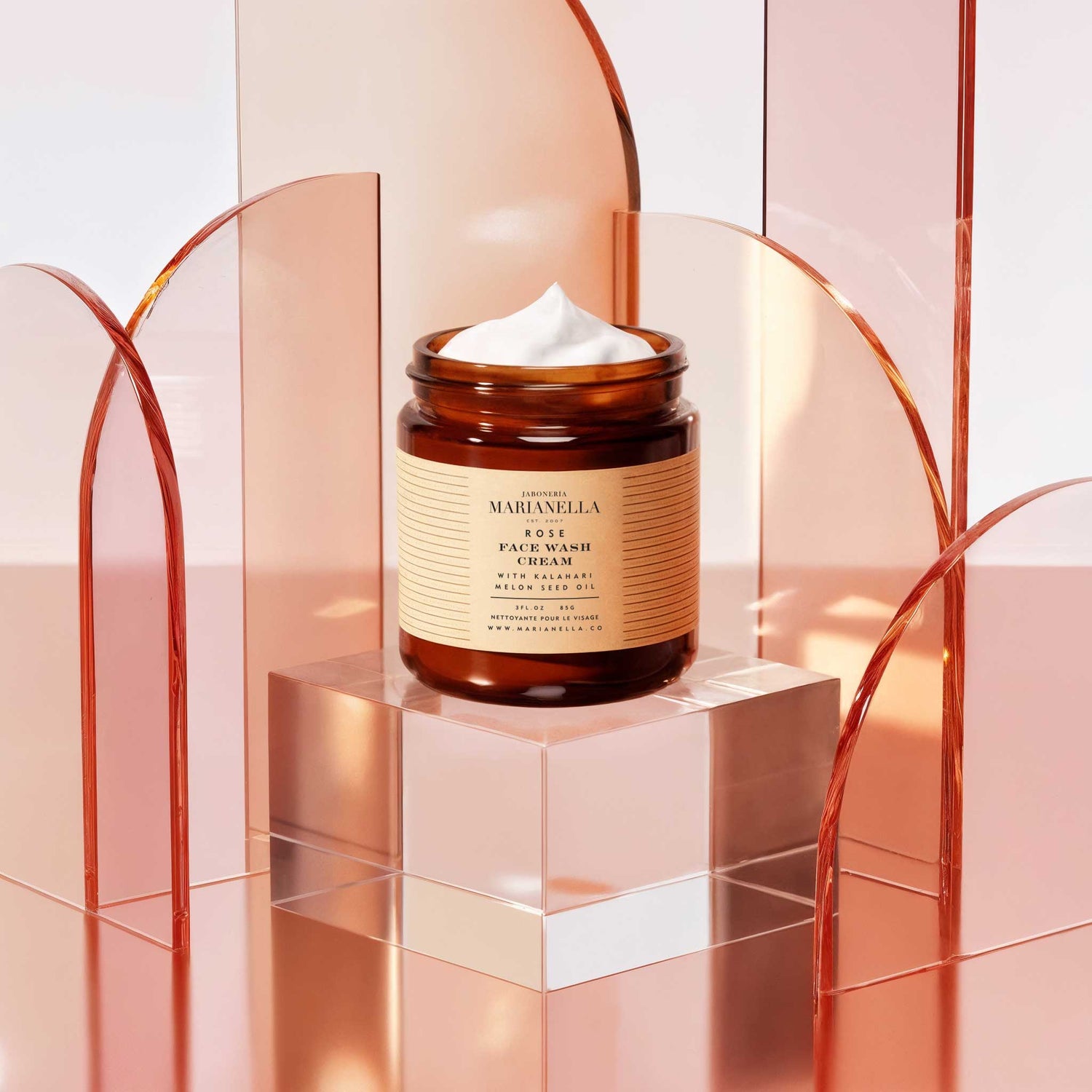
Argan oil skincare benefits are not a trend. They are documented, peer-reviewed, and rooted in centuries of botanical knowledge. In 2026, argan oil remains one of the most studied plant-based skincare ingredients on the market, with clinical evidence supporting its role in hydration, elasticity, barrier repair, and antioxidant protection. This is what the science actually says, and how Marianella puts it to work.
What Is Argan Oil?
Argan oil is obtained from the argan tree, scientifically known as Argania spinosa, a native of Morocco known for its various medicinal uses over centuries. It is extracted by cold pressing the kernels of Argania spinosa and is distinguished by its high content of monounsaturated and polyunsaturated fatty acids, notably oleic and linoleic acids, alongside tocopherols, sterols, and polyphenols.
Argan oil is mainly composed of unsaturated fatty acids (80%), primarily oleic and linoleic acid, followed by saturated fatty acids (20%), with other beneficial compounds from the unsaponifiable fraction like polyphenols and carotenoids. That unsaponifiable fraction, the part that does not convert to soap, is where much of argan oil's skin-active chemistry lives.
Argan oil is rich in unsaturated fatty acids and bioactive molecules, such as polyphenols, tocopherols, squalene, xanthophyll, CoQ10, and sterols. Few plant oils carry this range of actives in a single source. It is why formulators keep returning to it.
The Fatty Acid Profile: Why the Numbers Matter
Understanding argan oil for skin starts with its fatty acid composition. Approximately 29–36% of the fatty acid content is linoleic acid (omega-6), making argan oil a good source for this nutrient. Oleic acid comprises 43–49% of the fatty acids in argan oil. Argan oil is also rich in vitamin E, a strong antioxidant, which lends itself to healthy skin, hair, and eyes.

It is a rare oil that is high in both oleic (omega-9) and linoleic (omega-6) essential fatty acids. Both of these aid acne-prone skin, which studies show is usually deficient in linoleic acid in the sebum. This dual-fatty-acid composition makes argan oil effective across a wide range of skin types, not just dry or mature complexions.
Argan oil's essential fatty acids, such as oleic and linoleic acids, help strengthen the skin's barrier and maintain hydration. The oil is also a potent source of vitamin E (tocopherol), a powerful antioxidant that protects skin cells from free radical damage and supports skin repair.
The Tocopherol Advantage: Argan's Vitamin E Is Different
Most people know argan oil contains vitamin E. Fewer understand what makes its tocopherol profile exceptional. Argan oil is about twice as rich in tocopherol as olive oil (620 mg/kg vs. 320 mg/kg). That concentration gap matters when you are comparing label claims across products.
Argan oil contains 69% γ-tocopherol. It has been shown that γ-tocopherol is more effective than α-tocopherol in removing nitrogen-free radicals, as well as in preventing the proliferation of cancer cells. Most synthetic vitamin E supplements and lower-quality oils are primarily alpha-tocopherol. Argan's gamma-tocopherol dominance gives it a different, and in some contexts broader, antioxidant range.
Thanks to the presence of tocopherols, phenolic compounds, and carotenoids, argan oil protects the skin against the harmful effects of external factors and, above all, against free radicals. It has a soothing effect on skin that is irritated and damaged by solar radiation.
Clinical Evidence for Argan Oil Skin Benefits
Elasticity: What the Studies Actually Show
The evidence for skin benefits is strong, backed by multiple peer-reviewed clinical studies with measurable outcomes. Anti-aging claims surround every skincare product, but argan oil has something most don't: objective clinical evidence measured with dermatological instruments.
A 2015 study involved 60 menopausal women between the ages of 49 and 61. They consumed either 25 grams of argan oil or olive oil per day for 60 days while also applying 10 drops of their assigned oil to a section of their left forearm during the 60 days. Olive oil was chosen as the control because its lipid profile is broadly similar to argan oil, which meant any measurable difference could be attributed specifically to argan's unique chemistry.
Results showed that the consumption of argan oil led to a significant increase of gross-elasticity of the skin (R2) (P<0.001), net elasticity of the skin (R5) (P<0.001), biological elasticity (R7) (P<0.001), and a significant decrease of resonance running time (P=0.002). Four distinct elasticity parameters, each measured with precision instruments, all moved in the same direction.
Hydration and Barrier Function
Topical application of argan oil in postmenopausal women yielded significant reductions in transepidermal water loss and significant increases in epidermal water content, suggesting that the botanical agent ameliorates skin hydration by reviving barrier function and preserving the water-holding capacity. Reduced transepidermal water loss is the clinical standard for measuring barrier integrity. This is not a cosmetic marketing claim. It is a physiological measurement.
Topical application restores skin lipid balance, improves hydration, accelerates wound healing, and exerts antimicrobial effects in dermatological conditions.
Anti-Inflammatory and Microbiome Support
On the skin, argan oil hydrates and balances the lipid environment, creating a favorable setting for beneficial microorganisms, while also possessing antimicrobial and anti-inflammatory properties that soothe conditions like eczema and acne. This microbiome-compatible profile is increasingly relevant as skin science moves toward barrier and biome as the central pillars of skin health.
Research confirms that argan oil may support tissue regeneration, wound healing, and improved skin elasticity. Thanks to its high content of vitamin E, essential fatty acids, and polyphenols, it protects the skin barrier from oxidative stress while calming inflammatory skin conditions.
Who Should Use Argan Oil for Skin
Argan oil works across skin types. Its fatty acid composition addresses oiliness without aggravating it, hydrates without heaviness, and soothes without sedating skin. Argan oil absorbs quickly and does not leave an oily residue. That texture profile makes it functional in rinse-off formulas, not just serums and face oils, which is exactly where Marianella deploys it.
For those with reactive or sensitive skin, the anti-inflammatory activity and skin-microbiome compatibility make argan a first-choice botanical. For mature or menopausal skin, the clinical elasticity data cited above is as relevant as any single ingredient in the prestige skincare space.
Argan Oil in a Formulation Context
Raw argan oil applied straight is one thing. Argan oil calibrated within a full formulation, balanced against pH, other actives, and product texture, is another. This distinction is where 18 years of formulation work shows up. Since 2007, Marianella has been handcrafting small-batch skincare in Brooklyn, drawing on three generations of Venezuelan botanical beauty knowledge to build formulas where every ingredient earns its place.
Argan oil helps restore the skin's hydrolipidic film, strengthening the skin barrier and limiting water loss. In a cleanser, this means delivering functional lipid replenishment at the rinse-off stage, protecting barrier integrity precisely when it is most vulnerable.
Best Argan Oil Products 2026: What to Look For
The best argan oil products in 2026 share a few consistent qualities. The oil should be cold-pressed, not refined or heat-processed, to preserve its tocopherol and polyphenol content. It should appear in a formulation context where it can function, not simply as a marketing label on the front of a bottle. And it should come from a brand with enough formulation experience to know how to pair it with complementary ingredients.
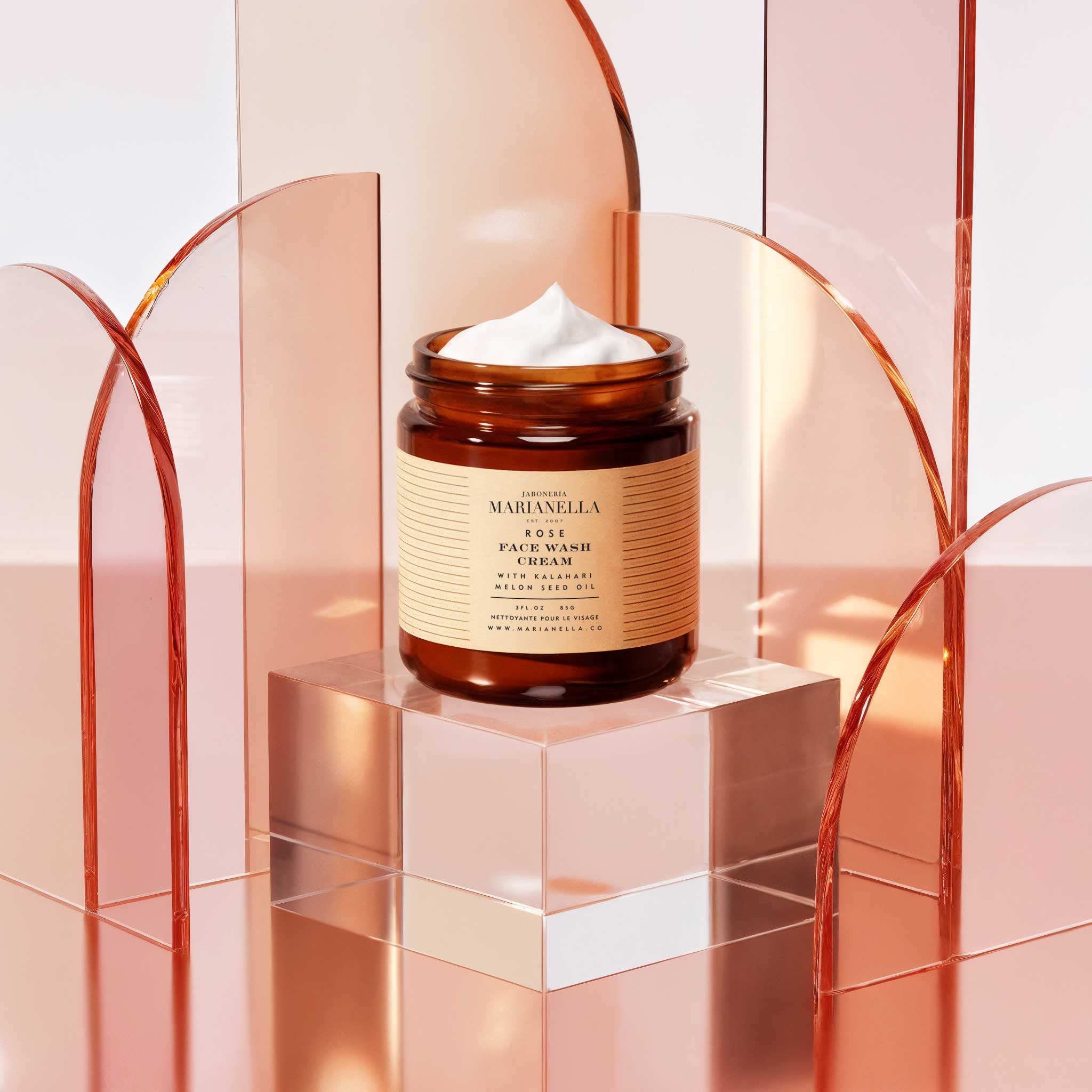
Marianella's Rose Face Wash Cream brings argan oil into a daily-use cleanser. It is the kind of formulation decision that takes 18 years to get right: a rinse-off product that leaves skin cleansed without stripping, with argan oil supporting the hydrolipidic film at the step in any routine where barrier damage most commonly begins. $22.
Marianella's 82-product line spans face, body, and home. Each formula is handcrafted in small batches in Brooklyn. Available at Bloomingdale's BEAUTYSPACE and direct at marianella.co. Recognized by People Magazine's Star Beauty Award, and covered by Vogue, Forbes, and Oprah.
The Bottom Line on Argan Oil Skincare Benefits
Argan oil is not a generalist ingredient. Its chemistry is specific, its clinical record is real, and its performance in a well-constructed formula is measurable. Argan oil has gained significant attention due to its well-balanced fatty acid profile, rich in oleic and linoleic acids, and its high levels of antioxidant compounds, including tocopherols, polyphenols, and phytosterols, particularly schottenol and spinasterol. Thanks to its unique composition, argan oil exhibits protective properties against harmful biological processes, such as oxidative stress and inflammation, both of which play a significant role in various diseases.
If you are building or refining a skincare routine in 2026, argan oil belongs in it. The question is whether the product you choose puts it to work, or just lists it on the label.
Explore the Rose Face Wash Cream and the full Marianella collection at marianella.co.
```

Leave a comment
This site is protected by hCaptcha and the hCaptcha Privacy Policy and Terms of Service apply.