


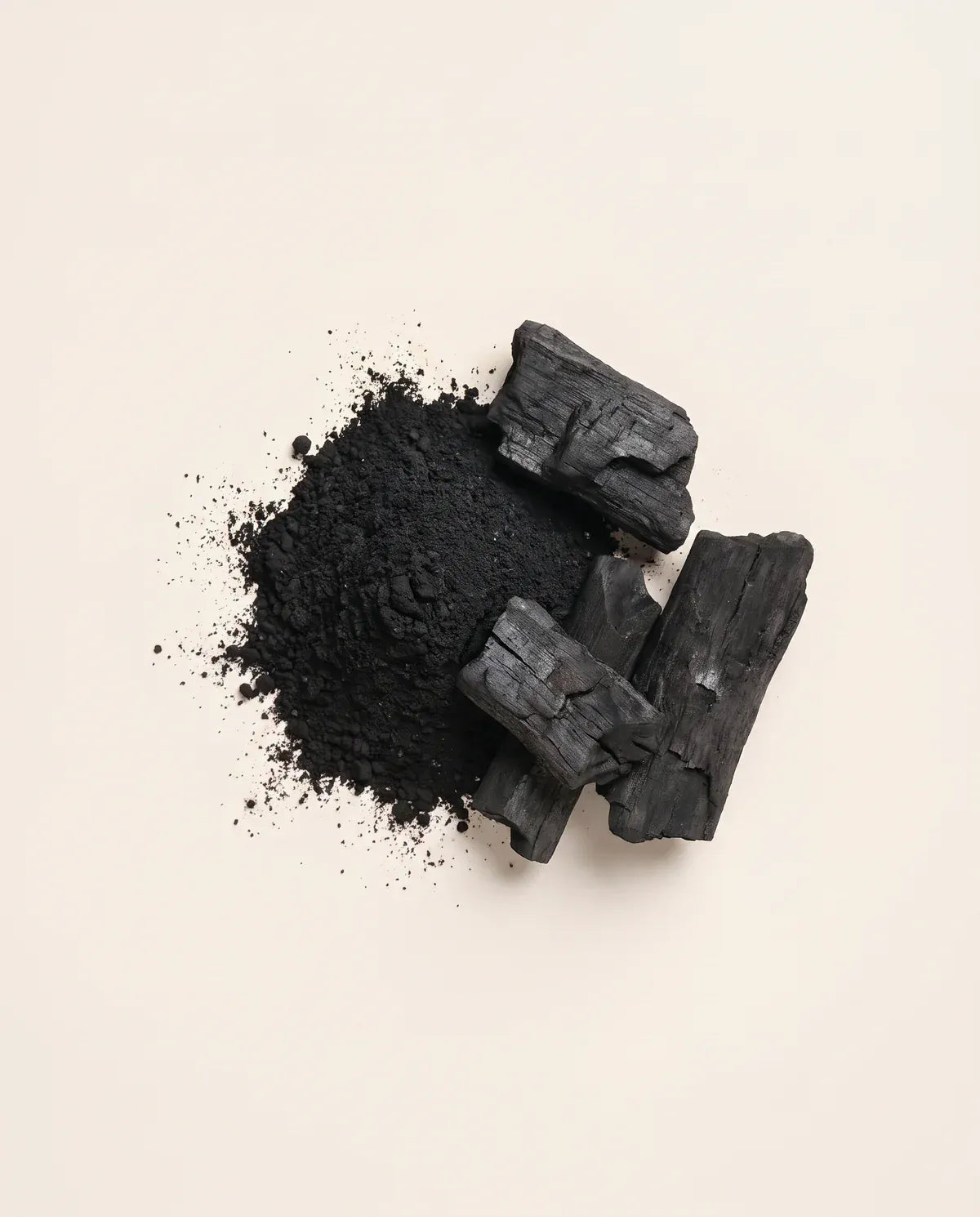
Charcoal in skincare is a cleansing ingredient. Its carbon is so porous that oil and grime cling to its surface, and when you rinse, they go down the drain with it. That is the whole of what it does on skin, and it is why charcoal works best in something you wash off. In our range it appears in one product, the Hawaiian Black Lava Body Caviar, a body scrub where the charcoal gives the scrub its deep black color and sea salt and sugar do the polishing.
This piece explains what charcoal is, what "activated" means, what it can and cannot do on skin, and how we use it.
What charcoal is
Cosmetic charcoal is carbon made by heating carbon-rich plant material, such as coconut shells, wood or bamboo, with very little oxygen. What is left is a fine, very black powder. On an ingredient label it usually appears as charcoal powder or simply as carbon.
Most of what makes charcoal interesting is invisible. Under a microscope, each grain is a sponge-like network of tiny pores, channels and crevices. That internal surface is far larger than the grain looks from the outside, and it is where the work happens.
Activated charcoal versus ordinary charcoal
Activated charcoal is charcoal that has been processed a second time, with steam or with chemical agents at high temperature, to open up far more of those pores. Activation multiplies the internal surface many times over, so a single gram of activated powder carries an enormous area for oil and grime to cling to.
The difference matters for a mask or cleanser that relies on charcoal to do the cleansing. It matters less when charcoal is there mainly for color, as it is in our scrub. Our product page lists charcoal powder, and that is how we describe it.
What charcoal does on skin
The key word is adsorption, with a "d". Absorption is one thing soaking into another, the way a towel takes up water. Adsorption is molecules sticking to a surface. Charcoal adsorbs. Oily substances on the skin, along with the dust and grime they hold, attach to the outside and inside of each porous grain.
Three things follow from that:
- It only holds what it touches. Charcoal cannot pull anything from a distance or from deep inside the skin. It works on the surface, during the minute or two it is in contact.
- It has to leave. Whatever charcoal has collected stays with the charcoal, so the rinse is the step that takes it all away.
- It does not add anything. Charcoal does not moisturize or soften. Any comfort in a charcoal product comes from the oils, butters or humectants around it.
In practice, people notice that skin feels cleaner and less shiny after a charcoal cleanser. Oily and combination skin tends to enjoy that. Dry skin can find it too much if it is used often and not followed with something rich.
Why charcoal belongs in a rinse-off scrub
Because charcoal works by holding on and then leaving, a scrub suits it well. You massage it over damp skin, the grains collect what they touch, and the water carries them off. The physical buffing, which charcoal is not known for on its own, comes from the scrub's other ingredients.
A good charcoal scrub also needs a generous supporting formula. Salt and sugar polish the surface, and nourishing oils leave something behind for the skin to keep. Without that, a charcoal product can look dramatic in the jar and still leave skin feeling tight.
Where charcoal shows up in our formulas
Of everything we make, only the Hawaiian Black Lava Body Caviar Body Scrub with Charcoal contains charcoal. Open the jar and it looks like volcanic sand: black, glistening with oil and flecked with coffee bean. Charcoal powder gives it that Hawaiian Black Lava color. Sea salt and organic sugar buff away dull surface skin, and coffee bean adds an aromatic, invigorating texture.
The oils are the part that stays. Coconut, passion fruit and Kalahari melon seed oils sit among the blend, so skin comes out of the shower feeling soft and cushioned rather than bare. Kalahari melon seed oil, light and rich in linoleic acid, is the oil our brand is built on, and it runs through most of what we make. The scent is Hawaiian Black Lava, musky and woodsy. You can see every ingredient we use in our Ingredient Library.
How to use a charcoal body scrub
- Stir the jar. The oils settle on top over time. Stir them back into the crystals until the scrub is a thick, even paste.
- Wet skin first. Take a palmful in the shower and massage it over wet skin from the neck down, in slow circles. Spend a little longer on elbows, knees and heels.
- Rinse well. Warm water takes the salt, sugar and charcoal away. Pat dry rather than rubbing.
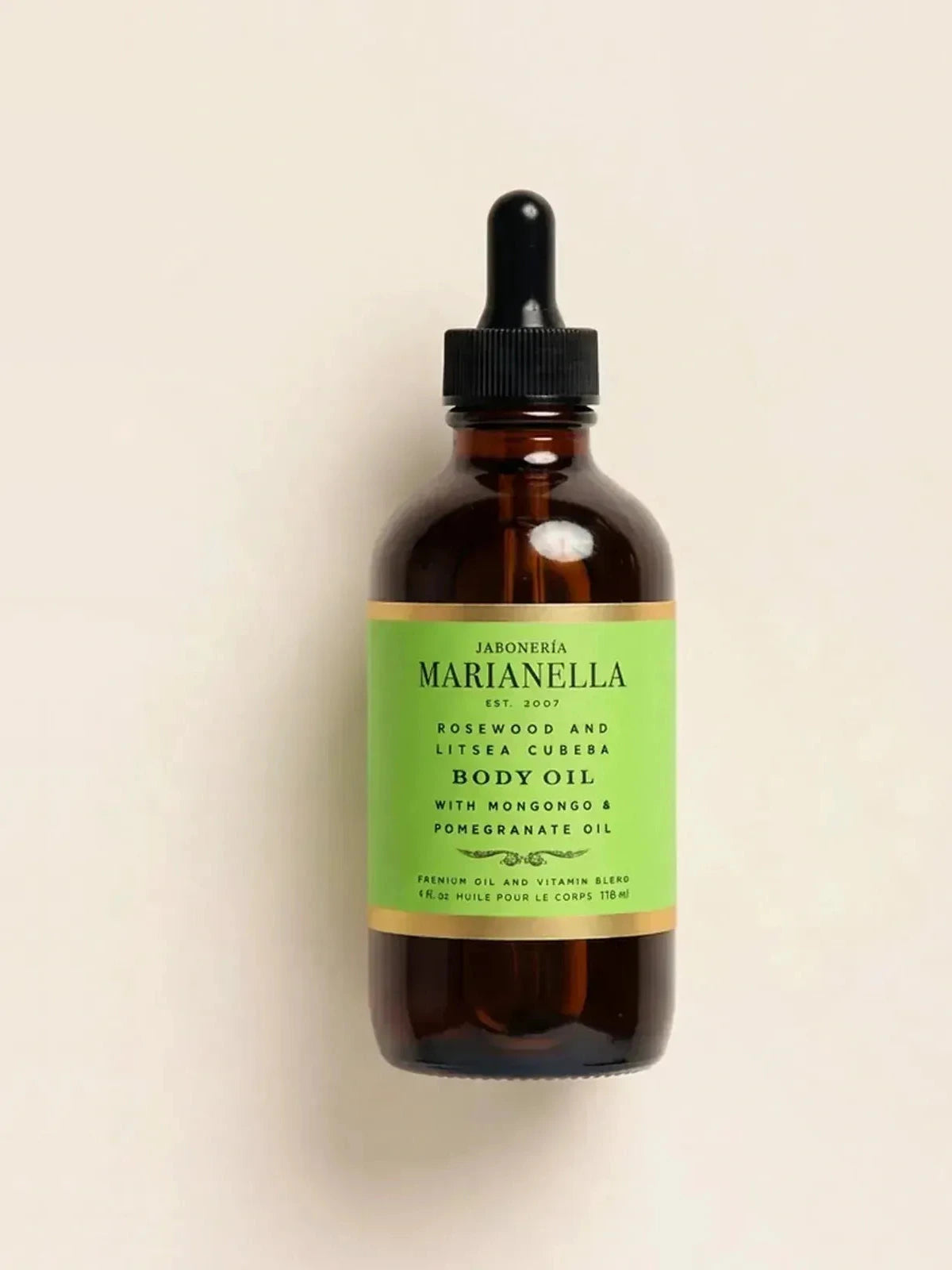
- Follow with oil or cream. Freshly polished skin takes a body oil well. We pair the scrub with Imperial Jade Body Oil, smoothed over skin while it is still damp.
Keep it for the body. The Body Caviar is not made for the face, where skin is thinner and a salt scrub is too much.
Who charcoal suits, and how often
Charcoal body care tends to suit oily and combination skin, and skin on the back, chest and shoulders that collects more oil than the rest of the body. Once or twice a week is plenty for a scrub. On dry or sensitive skin, start at once a week and always follow with a rich layer of moisture.
If you would rather have the routine already put together, the Imperial Body Glow Bundle pairs the Body Caviar with Rosewood and Litsea Cubeba Imperial Jade Body Oil: scrub in the shower, then oil on damp skin.
Questions about charcoal in skincare
What is the difference between charcoal and activated charcoal?
Activated charcoal has been processed a second time with steam or chemicals at high heat to open up far more pores. That gives it much more surface for oil and grime to cling to.
Which Marianella products contain charcoal?
Only the Hawaiian Black Lava Body Caviar Body Scrub with Charcoal, and the sets that include it, such as the Imperial Body Glow Bundle and The Indulgent Body Box. None of our face, hand or home products contain charcoal.
Why is the Body Caviar black?
Charcoal powder. It gives the scrub its Hawaiian Black Lava color, and it rinses away with the salt and sugar in the shower.
Can I use the Lava Body Caviar on my face?
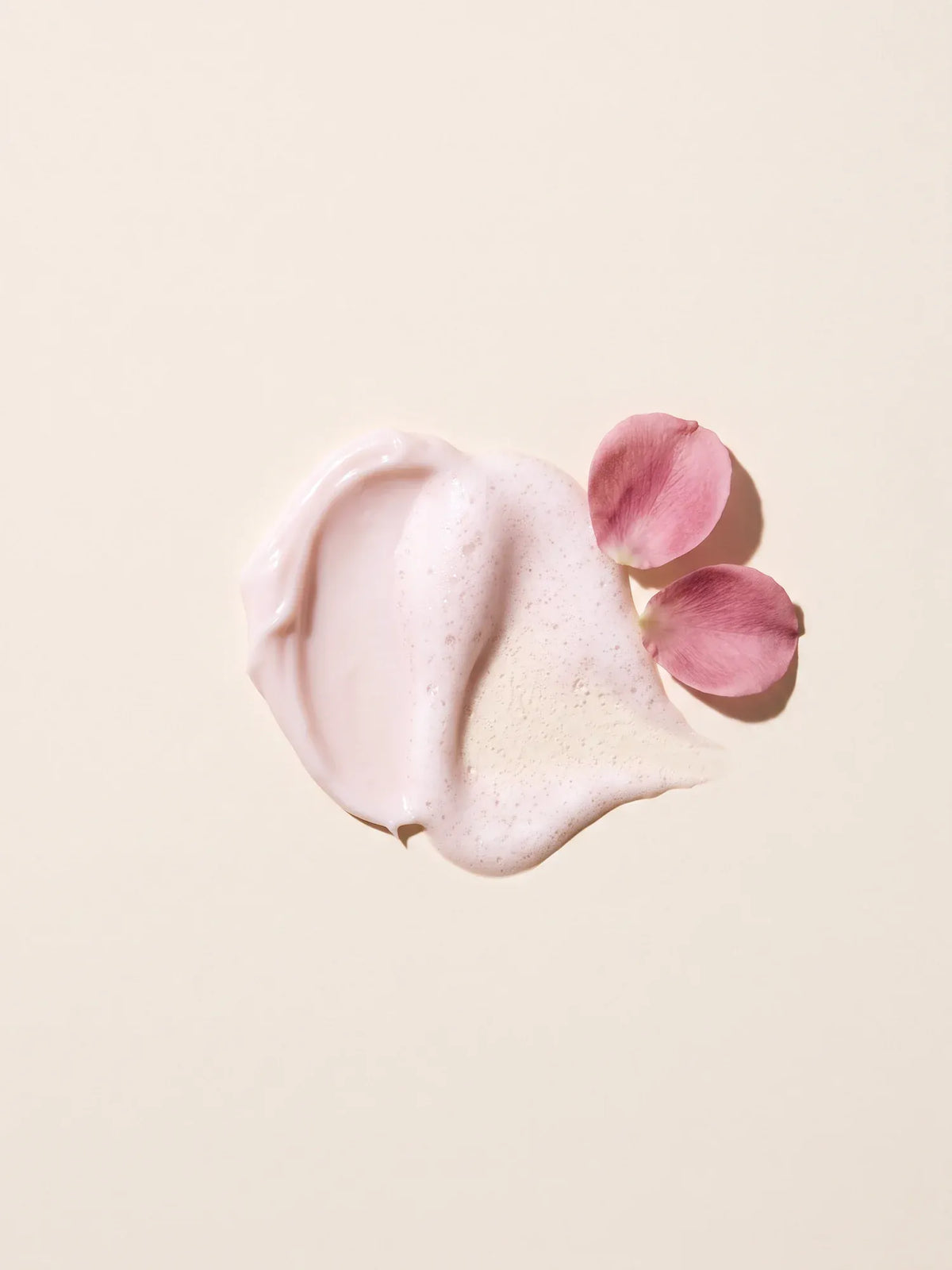
No. It is made for the body only. For the face, a gentle cleanser such as our Rose Face Wash Cream is the better choice.


















Leave a comment
This site is protected by hCaptcha and the hCaptcha Privacy Policy and Terms of Service apply.