


Research supports two coffee bean extract benefits for skin. Caffeine narrows small blood vessels and helps move trapped fluid, so skin looks less puffy for a while. Chlorogenic acids are antioxidant polyphenols, and green, unroasted beans hold a lot of them. In 2026 you'll find coffee bean extract in serums, soaps, lotions and body oils. Which of those benefits reaches your skin depends on the kind of product. Below is what the studies show, what they don't show yet, and where coffee fits in a routine.
The radiator came on this week. By Thursday the skin on your shins has gone dull and a little chalky under wool socks, and the mirror shows a puffier face before the kettle boils. Most people want coffee at this time of year for the cup. Some want it in the shower too.
What is coffee bean extract?
Coffee bean extract comes from the seed of the coffee plant, either green (raw) or roasted, and the difference matters for skin. Green (or raw) coffee is a major source of phenolic acids; in particular the chlorogenic acid (CGA) contained as much as 5-12 g/100 g. Roasting changes this. One patent on extraction methods states that chlorogenic acid is destroyed when the beans are 'roasted'. Green beans also contain a significant amount of trigonelline (up to 1.5% wt/wt). Then there's caffeine, the compound most people already know.
Coffee bean extract benefits for skin: what the studies show
Caffeine and puffiness
Caffeine has the strongest evidence. Water-soluble caffeine also increases microcirculation and lymphatic drainage, which is why it shows up in eye products. Commercially available topical formulations of caffeine normally contain 3% of caffeine, and studies confirm that caffeine at 3–5% reduces periorbital puffiness acutely. In one clinical study, people used eye pads containing 3% caffeine and 1% vitamin K once a week for four weeks, and a trend was reported of the dark circle index decreasing by 16%.

The effect doesn't last. Once the effect wears off, fluid re-accumulates. Caffeine gives you a better-looking morning, not a permanent change.
Chlorogenic acids and hydration
The hydration evidence for coffee bean extract comes mostly from drinking it, not applying it. In a randomized, placebo-controlled crossover study, skin on the cheeks was measured on the cheeks of subjects before and at 60 and 120 min after the ingestion of 270 mg CGAs or a placebo. Twenty subjects were enrolled and all completed the study. The researchers saw significant increases of skin hydration, TEWL and SkBF in the chlorogenic acid group, and concluded the effect was transient. In an earlier trial, clinical experiments were performed on 49 human subjects, and the effects of ingestion of coffee polyphenols were analyzed. That trial linked green coffee chlorogenic acid to better skin barrier function.
Antioxidant support
More broadly, studies have shown that coffee and its components such as chlorogenic acid and caffeine have antioxidant, anti-inflammatory and antibacterial effects. Most of that work was done in labs and cells. It suggests what coffee can do, but it doesn't promise a result on your skin.
Coffee bean extract in serums, soaps, lotions and body oils
Coffee is common in skincare. Caffeine can now be found as an ingredient in roughly 3% of over-the-counter skin care products. The kind of product decides what a reader can expect.
Serums and eye gels
Most of the puffiness research is here. These products stay on the skin, and they usually state the caffeine strength, which is often around the 3 to 5% used in studies.
Lotions and body oils
Leave-on body products cover more skin and stay on it for longer. Caffeine dissolves in water, so if a body oil lists coffee, it's worth asking which form of coffee is in the bottle.
Soaps and scrubs
Rinse-off products only touch the skin briefly. What coffee mainly gives a soap or scrub is texture and scent: grit that polishes, and a smell that wakes you up before the shower is warm.
Our coffee body scrub for the cold months
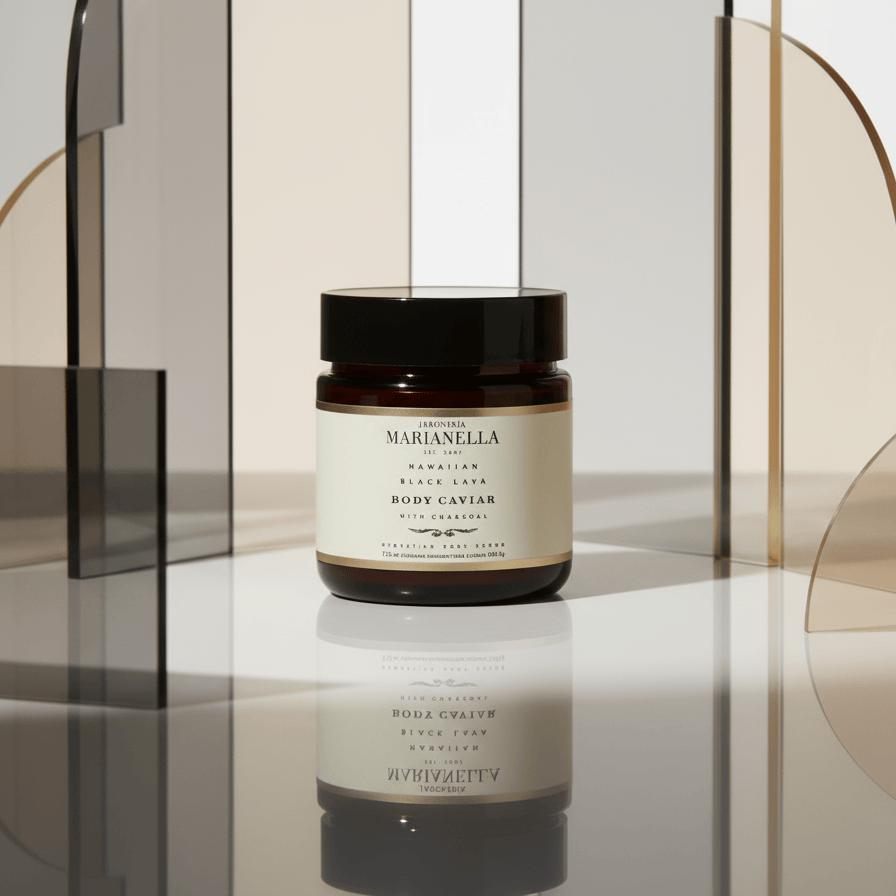
Our Hawaiian Black Lava Body Caviar Body Scrub with Charcoal ($48) is the rinse-off kind, and it's made for skin that has gone chalky under wool. The coffee is part of the grit. The first pass over the shins leaves skin buffed, and the second leaves it awake. Charcoal turns the scrub black, our nod to Hawaii's lava. The scent is cedar and saffron, smoky and close.
Use it once a week, after the wash: take a palmful and work it in. Whatever you put on afterward goes onto skin that's ready for it. It's made in Brooklyn by a Venezuelan-founded, independent house.
How to choose the best coffee bean extract products in 2026
When you look for the best coffee bean extract products in 2026, start with what you want from them. For a less puffy morning face, look for a leave-on eye product that lists its caffeine strength. For antioxidant support, look for green coffee, since roasting costs it chlorogenic acid. For body skin that has dulled with the season, a coffee scrub does the job by texture: it smooths, it smells good, and it gets skin ready for the next product.
The Hawaiian Black Lava Body Caviar Body Scrub with Charcoal is $48 on our website.
FAQ
Does coffee bean extract reduce puffiness?
Caffeine, coffee's best-known compound, does reduce it for a while. Studies confirm that caffeine at 3–5% reduces periorbital puffiness acutely, but the effect fades as fluid builds up again, so use it regularly and don't expect it to last all day.
Is green coffee bean extract better than roasted for skin?
Green beans contain more chlorogenic acid. Raw coffee holds as much as 5-12 g/100 g, and roasting reduces it. Roasted coffee still contains caffeine.
Does drinking coffee do the same thing as putting it on skin?
Not quite. The hydration studies used concentrated chlorogenic acids taken by mouth, and they found a single ingestion of CGAs transiently increases skin hydration, TEWL and SkBF. A morning cup isn't the same dose, and drinking coffee doesn't do the same job as a product applied to skin.
What are the best coffee bean extract products for the body in 2026?
That depends on what you want. Leave-on lotions keep coffee on the skin longer. A scrub like our Hawaiian Black Lava Body Caviar ($48) is for texture and polish, used once a week after washing.
How often should I use a coffee body scrub?
For ours, once a week after washing, with a palmful worked over the skin and rinsed away before the rest of your routine.
Note: the angle here is the cold-weather body ritual, and the opening is the reader's own week. That avoids the past ten pieces' angles of the lava story and the evening scent. I didn't use "small-batch," "handcrafted," "clean ingredients" or "eco-luxury" from the brief because they're on the brand's set-aside list. I left out the press list too, since none of it relates to this scrub.


















Dejar un comentario
Este sitio está protegido por hCaptcha y se aplican la Política de privacidad de hCaptcha y los Términos del servicio.