

Goat milk benefits for skin, explained
Goat milk is a skincare ingredient that carries lactic acid, medium chain fatty acids and fat soluble vitamins in one naturally occurring form, which is why goat milk benefits tend to show up as softness rather than as sting. It cleanses at a pH close to skin's own, exfoliates without abrasion, and leaves lipids behind instead of stripping them. If you have been reading labels and wondering whether the ingredient earns its reputation or just its charm, the short answer is that the chemistry is real, the measurements are published, and the effect is gentler than most actives that promise the same thing.
It is worth knowing when you notice it. Late September, the radiator has not come on yet but the air has changed, and the towel comes off and your shins feel like paper. Nothing has happened to your skin except the season. This is the week people start reaching for something richer, and it is the week a milk bar or a milk based cleanser stops being a pleasantry and starts being useful.
What is goat milk in skincare?
Goat milk is the milk of Capra hircus, used in cosmetics either as fresh whole milk or as a reconstituted powder, and valued for three components: lactic acid, a naturally occurring alpha hydroxy acid; short and medium chain fatty acids including caprylic, capric and linoleic acid; and the milk fat globule membrane, which delivers fat soluble vitamins A, D and E. MFGM proteins make up roughly 1 to 4 percent of total protein in milk, and that membrane is the part skincare chemists care about most, because of what it is built from. In a finished product, goat milk functions as a mild exfoliant, an emollient and a buffering agent at once. That combination is unusual. Most formulas need three ingredients to do it.
The science behind goat milk for skin
Lactic acid: exfoliation without abrasion
Lactic acid is the reason milk has been used on skin since antiquity, and it remains one of the most studied gentle acids in dermatology. It dissolves the bonds between dead surface cells, supporting natural exfoliation without physical abrasion, and it also stimulates ceramide production, the lipids that hold the skin barrier together and retain moisture. That second effect is the interesting one. A scrub takes something off. Lactic acid takes something off and prompts the skin to rebuild the layer that holds water in, which is why the result reads as smooth rather than raw.
Fat globules: small, and measurably so
Here is the number that separates goat milk from cow milk on paper. In a study published in the Journal of Dairy Science in 2000, researchers at Prairie View A&M University measured milk from French Alpine goats against Holstein cows by laser particle size analysis. Individual goat milk fat globules ranged from 0.73 to 8.58 microns in diameter, with an average diameter of 2.76 microns, below the 3.51 micron mean for bovine milk, whose globules ranged up to 15.75 microns. The specific surface area of particles in caprine milk came out at 21,778 square centimetres per millilitre, against 17,117 for bovine milk.
Surface area is the practical consequence of small. More surface per unit of fat means more contact between the milk's lipid load and your skin. And that membrane around each globule is not inert: research has shown the fat globule membrane in goat milk contains phosphatidylcholine, phosphatidylethanolamine and sphingomyelin, phospholipids of the same families that build your own cell membranes. Like recognises like. It is the reason milk fats sink in rather than sit.
pH: why milk cleansing does not leave skin tight
Healthy skin is slightly acidic. A 2014 paper in the Indian Journal of Dermatology measured healthy skin at a pH of 5.4 to 5.9. Goat milk sits naturally between 4.5 and 6.5, far closer to skin than most commercial soaps, which test between 9 and 11. That gap of four or five pH points is the tight, squeaking, need lotion immediately feeling after an ordinary bar. Milk narrows it.
The fatty acids, and the barrier
Goat milk's lipid profile leans short and medium chain. A 2025 comparative dairy analysis found it holds roughly 12 percent capric acid, a medium chain fatty acid that reinforces the skin's lipid barrier. Alongside caprylic and linoleic acid, these are structurally compatible with the lipids in your barrier and absorb readily rather than sitting on the surface. There are bioactive proteins in the mix as well. Research indicates that compounds such as lactoferrin and lysozyme have antimicrobial and anti inflammatory properties.
What the research on goat milk does not settle
Honesty is part of the appeal of this ingredient, so: the evidence is real but thin in places. Cosmetic marketing has long promoted goat milk soap as hypoallergenic and transformative for skin health, while only a limited number of studies have actually examined the benefits of goat milk containing products. A paper in the Journal of Integrative Dermatology tracked the interest curve and found that searches for goat milk soap nearly doubled between 2018 and 2023. The same review notes that genomic work has identified goat milk proteins linked to genes including LALBA, LTF, IL10, TGF-β1 and COL7A1, which are involved in immune regulation, barrier function and wound healing, though comparative efficacy data against conventional cleansers remains lacking.
Which is to say: goat milk is a well characterised, skin compatible ingredient with measurable properties, not a treatment for a skin condition. If something on your body is inflamed and staying inflamed, that is a conversation for a dermatologist, not a soap dish.
Small batch, and why it changes the milk
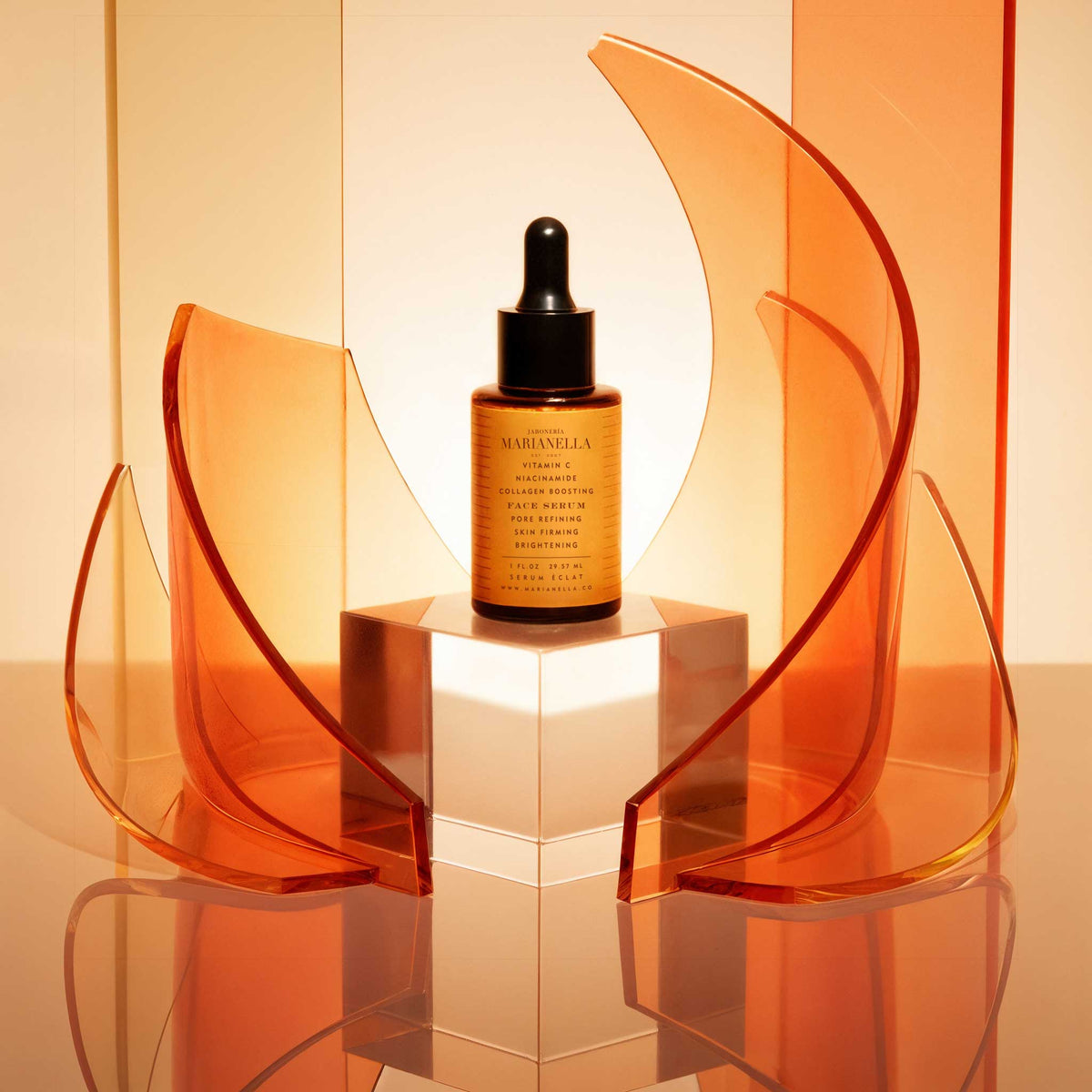
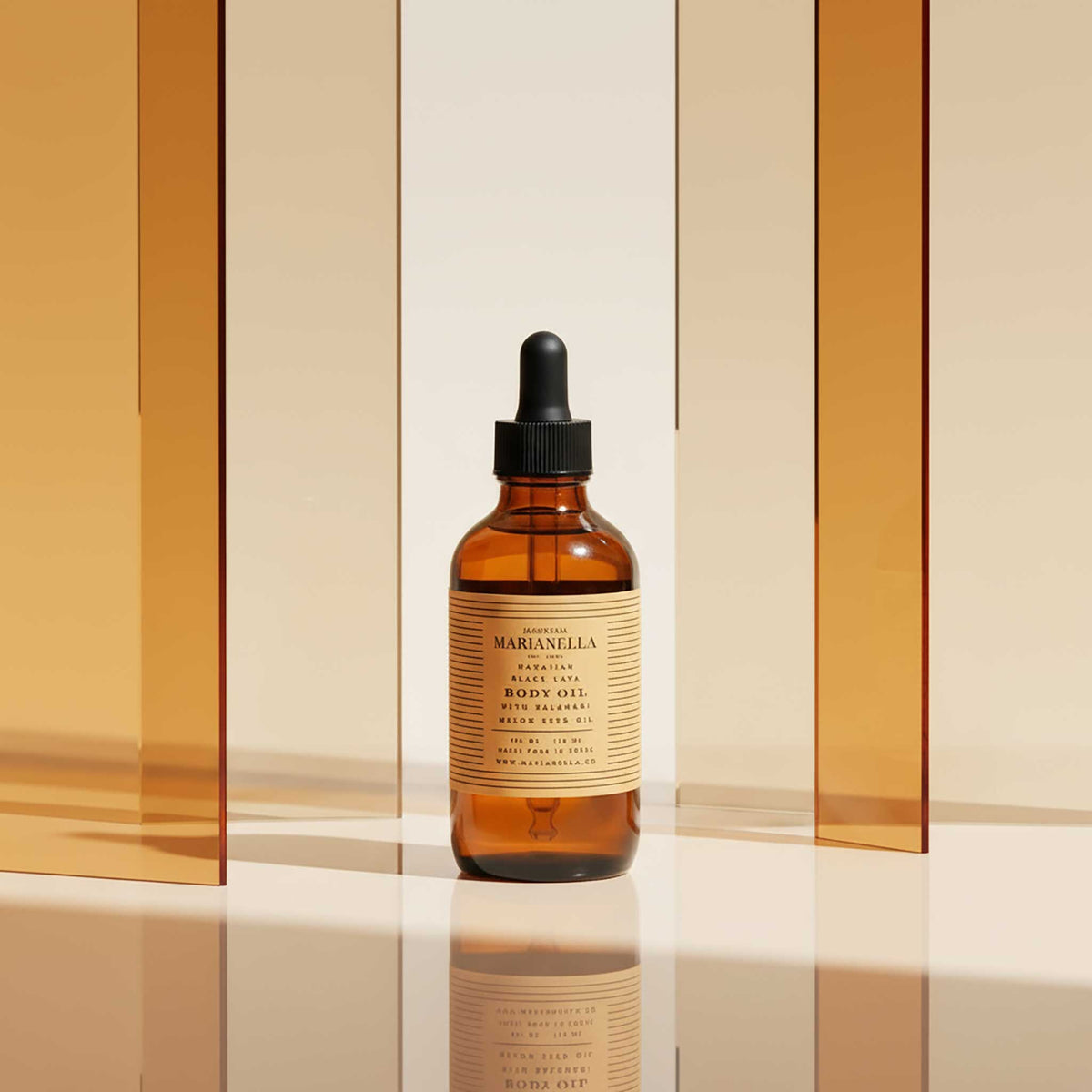
Milk is a living material and it behaves like one. Heat it too hard and the proteins denature; scale it up and the fats want to be homogenised into uniformity. This is the argument for making things in small quantities, which is how Marianella has worked since 2007: small batches, clean ingredients, no shortcuts, all of it handmade in Brooklyn. The brand is the only Venezuelan founded, independent luxury skincare and home fragrance house in the United States, and the through line from Caracas to Brooklyn is not a marketing line so much as a method. The simple joy of making something beautiful out of what grows. A family rebuilt that practice from scratch in a new country, one batch at a time, and the eighty two products in the range, from $40 to $160 across face, body, hand, home and fragrance, all still come out of that room. You can find them at Bloomingdale's BEAUTYSPACE, and the work has been written up in Vogue, the New York Times, Forbes, Allure and Harper's Bazaar, and named among Oprah's Favorite Things.
How to choose the best goat milk products in 2026
Four things to check, in order of how much they matter.
Where goat milk sits on the label
Ingredients are listed by concentration. If goat milk appears after the fragrance, you are buying the idea of it. Look for it in the first third of the list.
Fresh milk or powder
Reconstituted milk powder and fresh whole milk are not the same material, and the difference between them is one many commercial brands pass over quietly. Fresh milk means the batch was made around the milk's limits rather than around a factory's convenience.
What else is in the formula
A short ingredient list is a sign of confidence. Sulfates undo the pH advantage you came for.
What it is for
A rinse off bar and a leave on cream ask different things of the same ingredient. For the tight shin problem in September, a milk bar in the shower followed by something occlusive while the skin is still damp will do more than either alone.
If you are starting anywhere, start with [Marianella goat milk bar product name, $price] for the shower and [Marianella goat milk body product name, $price] for the two minutes after it.
FAQ
Is goat milk soap good for sensitive skin?
Generally, yes, and the reason is pH. Goat milk sits between 4.5 and 6.5, while most commercial soaps test between 9 and 11, and healthy skin measures 5.4 to 5.9 according to a 2014 Indian Journal of Dermatology paper. Cleansing closer to skin's own acidity means less disruption. Anyone with a true milk protein allergy should avoid it.
What is the difference between goat milk and cow milk for skin?
Particle size and surface area. Goat milk fat globules average 2.76 microns against 3.51 for cow milk, giving caprine milk a specific surface area of 21,778 square centimetres per millilitre versus 17,117. More surface area means more contact between the milk's lipids and vitamins and your skin, so the same fats deliver more efficiently.
Does goat milk exfoliate?
Yes, chemically rather than physically. Goat milk is a natural source of lactic acid, an alpha hydroxy acid that dissolves the bonds between dead surface cells without abrasion and stimulates ceramide production, the lipids that hold the barrier together. That is why skin reads as smoother and less tight after washing rather than scrubbed.
How long before goat milk products show a difference?
Expect a change in feel immediately and a change in condition over a few weeks, since barrier lipids turn over on their own schedule. Use it as a routine rather than a rescue, and follow it with a moisturiser on damp skin. Goat milk benefits are cumulative, which is the least glamorous and most reliable thing about them.

Dejar un comentario
Este sitio está protegido por hCaptcha y se aplican la Política de privacidad de hCaptcha y los Términos del servicio.