


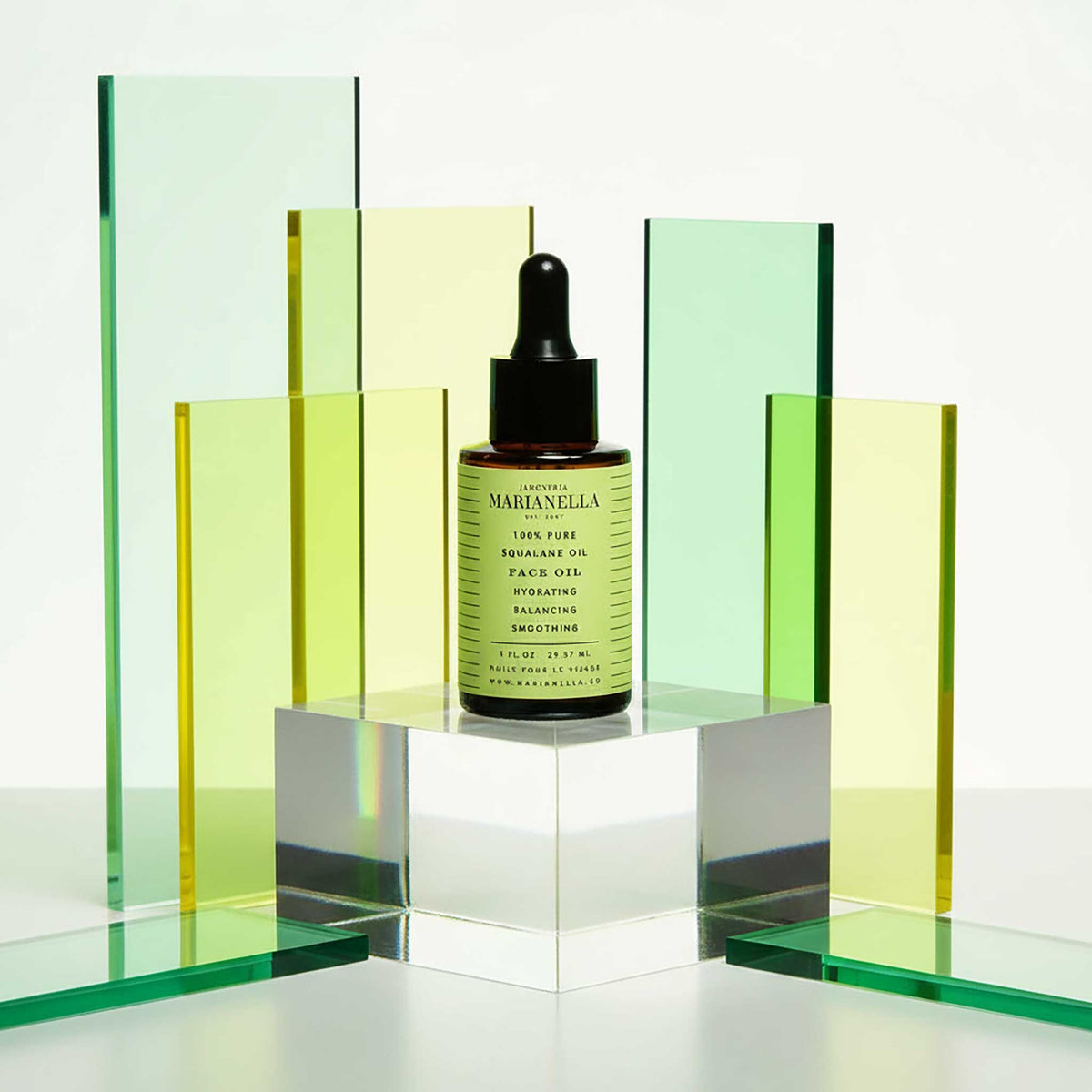
The research on squalane supports a modest set of claims well: it is a stable, lightweight emollient that softens skin, slows the loss of water from its surface and sits comfortably alongside other products. Claims that it repairs, rebuilds or reverses aging go further than the evidence on real faces. This is how we sort what holds up from what does not, and why our own Squalane Face Oil is nothing but squalane.
Well supported: it is stable
This is the oldest and firmest fact about squalane, and it starts with its parent molecule. Squalene, the version your skin makes as part of sebum, has six double bonds in its structure. Those double bonds react with oxygen, and squalene breaks down readily when it meets sunlight, UVA in particular, and air pollution. The by-products of that breakdown are not things you want sitting on your face.
Hydrogenation removes the double bonds. What is left is squalane: the same long, skin-familiar backbone, now saturated and no longer prone to spoiling. It does not go rancid in the bottle the way many plant oils eventually do, and that is a claim you can check simply by owning a bottle for a year.
Well supported: it softens and slows water loss
Squalane is an emollient. It fills the spaces between the cells at the surface of the skin, which is why skin feels smoother within a minute of applying it, and it forms a thin, breathable layer that slows the evaporation of water from the skin. Both effects are well described and easy to feel.
Two things are worth keeping in proportion. First, squalane is not a humectant: it holds water in rather than drawing water to the skin, so it does its best work over damp skin or a water-based serum. Second, every oil slows water loss to some degree. What sets squalane apart is not that it does this at all but that it does it while feeling so light, without the heavier film some oils leave behind.
Reasonable, and modest: it tops up what sebum supplies
Sebum is a recipe, not a single substance. Roughly 60% of it is triglycerides, about a quarter is wax esters, and around 12 to 15% is squalene. Sebum output tends to fall with age, and skin that makes less of it often feels tighter after cleansing and rougher to the touch.
Squalane cannot make your skin produce more sebum. What it can do is put a closely related lipid back on the surface, which is why skin tends to accept it so easily. That is the whole argument, and it is a modest one, which is exactly why it holds up.
Promising, but not proven on faces: helping other ingredients along
Some laboratory studies on skin samples suggest that squalane-based formulas can help other ingredients, such as vitamin E or plant polyphenols, stay in the upper layers of the skin for longer. These are formulation studies done on the bench, often with squalane making up most of a carefully built emulsion. They are interesting, and they fit with how easily squalane spreads, but they do not tell you what a few drops of face oil pressed over your serum will do. We would not promise that squalane makes your other products work better.
Overstated: anti-aging, collagen and repair
This is where squalane marketing tends to run ahead of itself. You will see claims that squalane builds collagen, reverses wrinkles or repairs damaged skin, often backed by studies done on cells in a dish. Cells in a dish are not a face. A few of those studies even found that higher concentrations made the cells less healthy, which is a useful reminder that more is not the goal with this ingredient.
What squalane does do for skin that looks older is plainer and still worthwhile: softer, better-moisturized skin reflects light more evenly, so fine dry lines look less obvious while the skin is well hydrated. That is a cosmetic effect, and it lasts as long as you keep using it.
The same caution applies to claims that squalane is suitable for "every skin type without exception". It is light and easy to wear, and many people with oily or blemish-prone skin get on with it well, but no ingredient suits every single face. Introduce it slowly and judge by your own skin.
Why our bottle holds only squalane
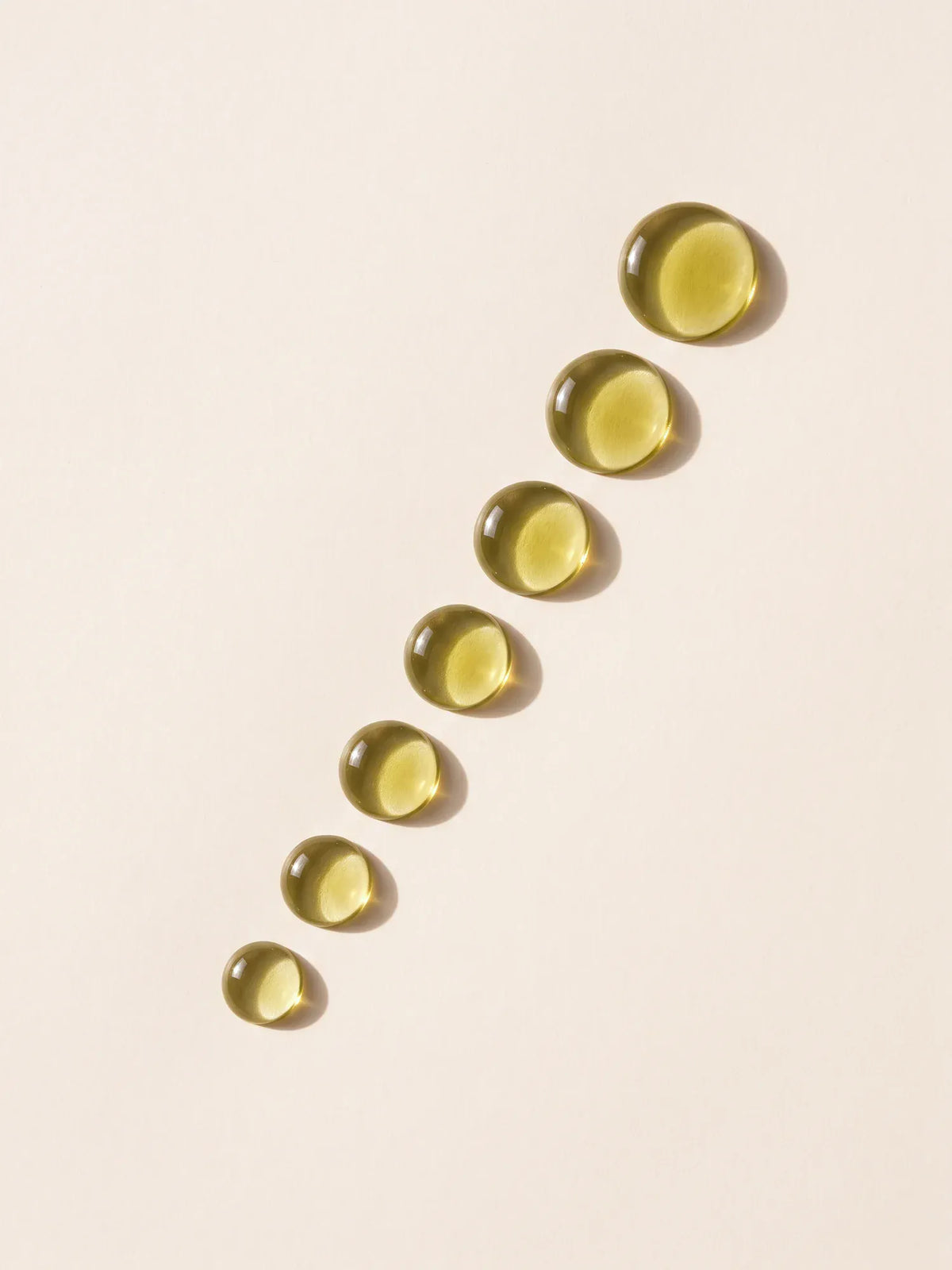
If the honest case for squalane is that it is light, stable and comfortable, the cleanest way to deliver it is on its own. Our Squalane Face Oil is 100% pure squalane from olives, never from sharks, with no added fragrance and nothing else in the bottle. It is clear and silky, and about four drops, warmed between the palms and pressed in, leave skin soft and refined rather than shiny. Our label calls it balancing, and that is how skin looks with steady use: smoother in texture and calmly even.
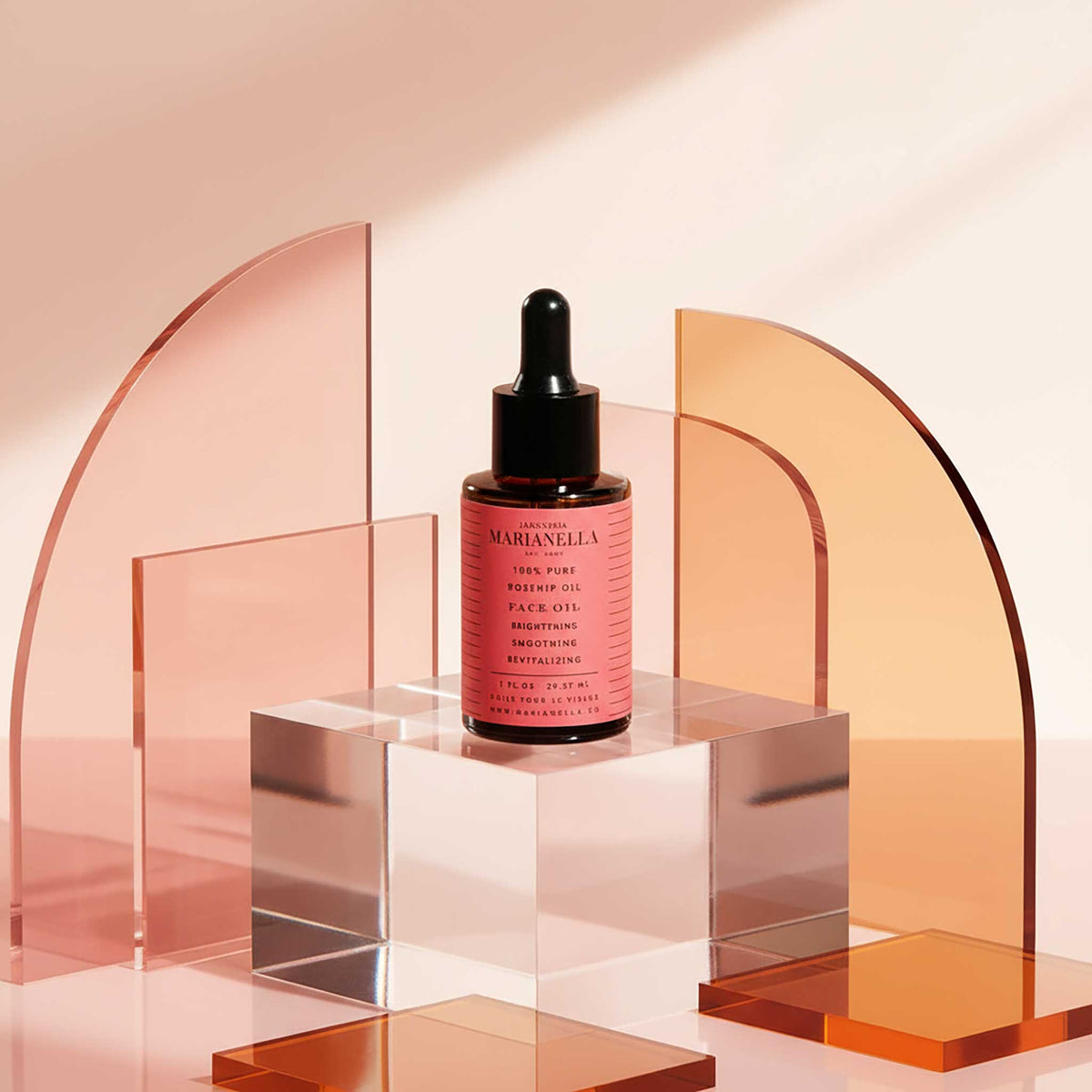
It is the lightest of the five pure oils in our Face Oil Collection, and the one we suggest for dehydrated, sensitive or combination skin.

Questions about the squalane research
Does squalane really stop moisture loss?
It slows it rather than stopping it. A thin layer of squalane reduces how quickly water evaporates from the skin, which is why it works best pressed into slightly damp skin.
Does squalane help my other products absorb?
Some lab studies on skin samples point that way, but they test specially built formulas, not a few drops of face oil. We see it as an interesting possibility, not a promise.
Is a stronger squalane product better?
Not necessarily. Squalane works by softening and slowing moisture loss, and a few drops do that. If your face looks shiny after a few minutes, you have used more than you need.
Can squalane get rid of wrinkles?
No face oil can. Well-moisturized skin makes fine dry lines look softer while you keep using it, and that is the honest version of the claim.



















Dejar un comentario
Este sitio está protegido por hCaptcha y se aplican la Política de privacidad de hCaptcha y los Términos del servicio.