

Rose water is the leftover. When rose petals are distilled for their oil, the fragrant water left behind is rose hydrosol, also known as "rose water", and for skin it may be the kinder half of the harvest. It is generally used in skin care for its hydrating and anti-inflammatory effects, and lab work has found that rose water extract has strong total antioxidant capacity. Those are the main rose water benefits, and they are real but specific. This 2026 guide covers what is in rose water, what the research shows, how it works in serums, soaps, lotions and body oils, and how to choose among the best rose water products.
What is rose water, exactly?
Rose water is a hydrosol, the water that comes out of the still alongside rose oil. Rose petals hold very little essential oil (0.03–0.04%), so oil production is limited, but distillation yields a large amount of rose hydrosol as a secondary product. To get a sense of the scale, about 242,000 rose petals are needed to make roughly 5 ml of rose oil. The water from those same petals carries the flower in a form light enough to spray on your face.
What's in rose water: the molecules behind the scent
Here is the surprising part. Chemically, rose water is often closer to a fresh rose than rose oil is. One analysis found that the main compounds in rose oil were geraniol (35.4%), citronellol (31.6%) and nerol (15.3%), while the main compound in the fresh flower and in rose water was phenylethyl alcohol (43.2% and 35.6%). In the oil, the same compound made up only 1.3%.

The balance changes from rose to rose. Rose water from the Uttarakhand Himalayas had 2-phenyl ethyl alcohol as its main component, at 77.35–89.37%, followed by α-citronellol (0.95–5.71%). In a cosmetic safety review's analysis of flower water samples, phenylethyl alcohol reached up to 39.53%, geraniol up to 24.01% and β-citronellol up to 10.26%. That is why two rose waters can smell like two different gardens.
Rose water benefits for skin: what the research shows
Hydration and a calmer surface
Picture three in the afternoon in a heated office, skin pulling tight across the cheekbones while the screen stays bright. Rose water is made for that moment. It is mostly water with a fragrance, and it is generally used in skin care for its hydrating and anti-inflammatory effects. A mist settles the surface in a second, and the scent gets to you before you've put the bottle down.
Antioxidant activity
Rose is rich in plant compounds that researchers keep returning to. One review notes that decoctions, essential oil, absolute and extracts of rose petals have shown antioxidant activity in several test systems. In a study of a cream made with rose water, the authors concluded that rose water has good potential for cosmetic product development. Most of this work was done in the lab, not on people's daily skin. It is a promising reason to use rose water, but it isn't a promise.
Where the evidence is thinner
Rose water's reputation as an antibacterial is mostly folklore. When researchers tested rose hydrosol on hands with 45 adult volunteers, it produced no meaningful reduction in skin bacteria after hand-rubbing. Use rose water for hydration and comfort. It isn't a substitute for soap.
Rose water in serums, soaps, lotions and body oils
Serums, toners and mists
This is where rose water does the most, because it stays on the skin. In a mist or toner it can be most of what's in the bottle, so you get the full scent and the full feel of it.
Soaps and body washes
In a soap or wash, rose water has a short contact time and rinses away. What stays is mostly the memory of the scent. That's a pleasure, but it isn't a treatment.
Lotions and creams
In a lotion, rose water can make up part of the water side of the formula, so it stays on the skin with the oils that hold moisture in.
Body oils
Water and oil don't mix on their own, so a body oil rarely carries rose water at all. When a body oil smells of rose, the rose usually comes from the oil or absolute. Check the label to see which you're getting.
How to choose the best rose water products in 2026
Start with the label. Look for Rosa damascena flower water, the name the damask rose's hydrosol goes by. Remember that the compounds in Rosa damascena ingredients can vary greatly depending on how they are extracted, so trust your nose as much as the marketing. If your skin is sensitive, note that geraniol, citronellol, linalool and farnesol, which are among the 26 allergens defined by the EU cosmetics directive, are present in Rosa damascena ingredients, presumably below the 0.01% threshold in cosmetic products. Patch test anything new on your inner arm first. The best rose water products in 2026 are the ones that put rose water where it stays on the skin and tell you plainly what it is.
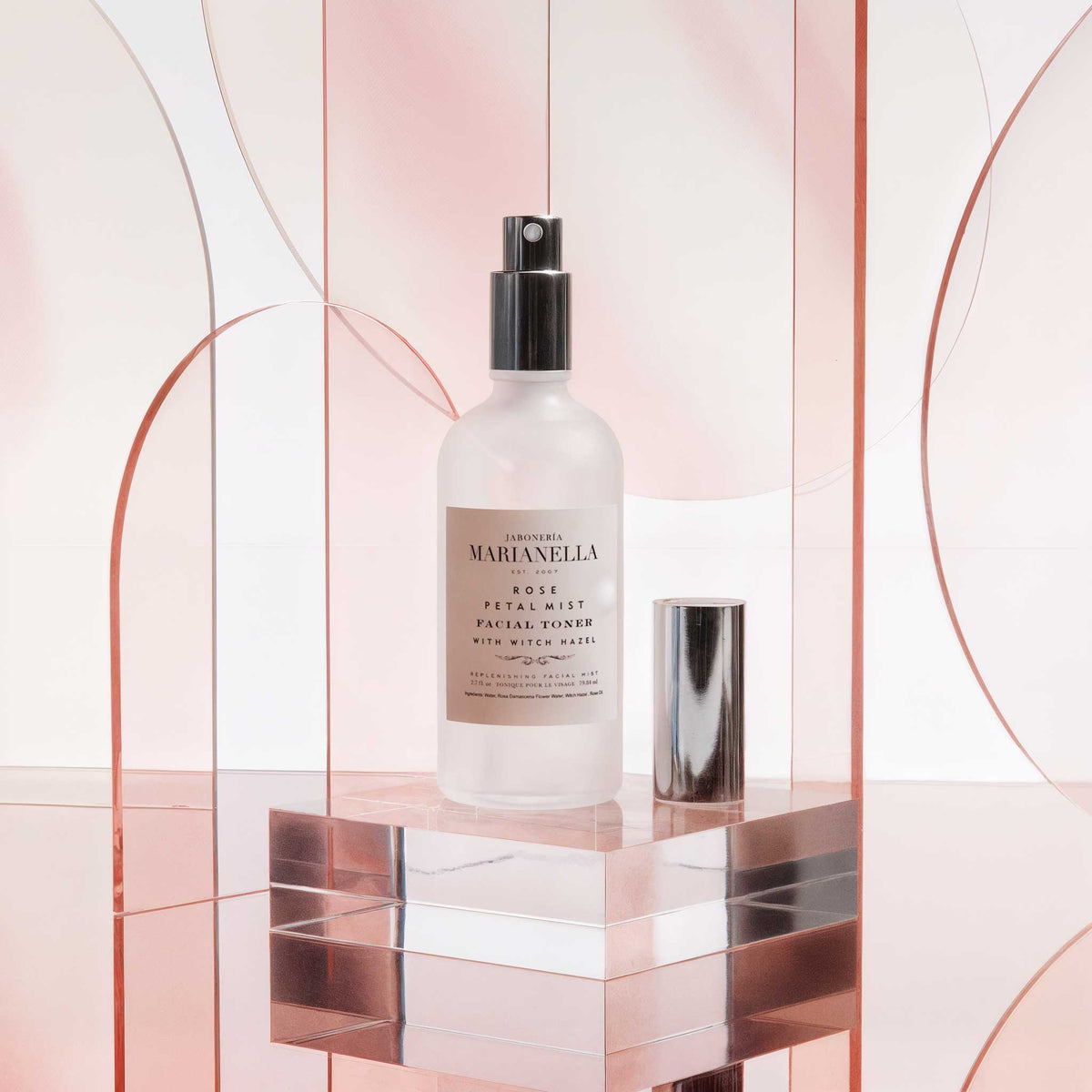
Our Rose Petal Mist Face Toner
We are Venezuelan-founded, independent since 2007, and make everything in small batches in Brooklyn. Our Rose Petal Mist Face Toner ($28) is the format where rose water does the most: a fine mist after cleansing, before your serum or cream, and again whenever the afternoon pulls your skin tight. [The rose behind our rose water and where it is distilled.]
The Rose Petal Mist Face Toner is $28 on our website.
FAQ
What is the difference between rose water and rose oil?
Both come from distilling rose petals. The oil is rich in geraniol and citronellol, while rose water is usually higher in phenylethyl alcohol, the compound that also leads in the fresh flower. In one analysis, phenylethyl alcohol made up 35.6% of rose water but only 1.3% of the oil.
Does rose water kill bacteria or treat breakouts?
Not according to the best evidence so far. In a controlled study, rose hydrosol produced no meaningful reduction in skin bacteria after hand-rubbing. Its well-supported uses are hydration and soothing.
Is rose water safe for sensitive skin?
It is one of the gentler formats, but it still contains natural fragrance compounds, including some listed as EU allergens. Patch test first, and stop if you see redness.
Why does rose water smell different from brand to brand?
Because the chemistry changes with the flower and the distillation. Even within one study of fresh flowers, levels of geraniol (0.6–32.3%), citronellol (1.2–30.9%) and phenylethyl alcohol (1.3–13.4%) depended heavily on the time of day and on air temperature, humidity, sunlight and wind.
Which works better: rose water in a serum, soap, lotion or body oil?
For rose water benefits on the skin, choose a format that stays on: a mist, toner or serum first, then a lotion. Soaps rinse it away, and body oils usually carry rose as oil rather than water.
--- I couldn't open the Rose Petal Mist Bible on this seat, so the toner section only uses its name, price and link from your brief. The one fact still missing is in square brackets, and I'll fill it in once Sage has the Bible ready.

Dejar un comentario
Este sitio está protegido por hCaptcha y se aplican la Política de privacidad de hCaptcha y los Términos del servicio.