

Grapeseed Oil Beauty Benefits: The Science-Backed Answer
Grapeseed oil is a lightweight botanical oil that delivers hydration, antioxidant defense, and skin barrier support without the heavy or greasy finish common to richer plant oils. Grapeseed oil is defined as a lightweight oil rich in linoleic acid that enhances skin health by promoting cell membrane formation, reducing inflammation, and improving wound healing. That combination, light texture paired with a dense nutrient profile, is why the oil has become a mainstay in serums, face oils, and eye treatments across the clean beauty category in 2026. At Marianella, grapeseed oil appears in three formulas, from a daily face oil to a targeted under-eye roller, each handcrafted in small batches in Brooklyn.
What Is Grapeseed Oil?
Grape seed oil, also called grapeseed oil or grape oil, is a vegetable oil pressed from the seeds of various varieties of Vitis vinifera grapes, an abundant by-product of winemaking. Rather than discarding the seeds after pressing grapes for wine, producers cold press or extract the oil from them, turning a byproduct into a skincare staple. The oil from Vitis vinifera seeds comprises 90% unsaturated fatty acids, with the major ones being linoleic fatty acid (65–75%) and oleic fatty acid (20–40%), and 10% saturated fatty acids. That fatty acid profile, heavy on linoleic acid, is the reason the oil absorbs quickly and sits close to the skin instead of lingering on the surface.

|
$37 |

|
$58 |

|
$37 |
The seeds themselves carry more than fat. Grape seeds also contain flavonoids (59.7 g/100 g), catechins (414 mg/100 g), procyanidins (2.5 g/100 g), phenolic compounds, and tannins, giving the oil measurable antioxidant activity. These phytochemicals travel into the pressed oil in smaller concentrations than in a water-based grape seed extract, but they remain part of what makes the oil functional rather than purely cosmetic.
Grapeseed Oil Benefits for Skin
Lightweight Hydration Without Residue
One of the most cited grapeseed oil benefits is texture. Grapeseed oil is highly favored in anti-aging skincare formulations because it is a true "dry oil," non-comedogenic (rating 1 on a scale of 0-5), thin in viscosity, and fast-absorbing, leaving the skin feeling soft and smooth without any heavy, greasy residue. That low comedogenic rating is why formulators reach for it in face oils meant for daily use, including on combination or breakout-prone skin, rather than reserving it for dry skin alone.
Barrier Support From Linoleic Acid
Linoleic acid is not decorative. The standout ingredient in grapeseed oil is linoleic acid, an omega-6 fatty acid that the human body cannot produce on its own, making it a building block for the skin's lipid barrier. The lipid barrier is the outer layer of the skin that keeps moisture in and irritants out, which is part of why grapeseed oil is often layered into routines meant to address dryness, dullness, and the look of fine lines without disrupting the skin's own balance.
Antioxidant Protection From Proanthocyanidins and Vitamin E
Grapeseed oil also carries measurable antioxidant weight. Grapeseed oil contains high levels of Vitamin E, a fat-soluble antioxidant known for its ability to protect cell membranes from the oxidative stress that occurs when environmental factors like pollution or sunlight create unstable molecules in the skin. The proanthocyanidins associated with grape seeds are frequently discussed alongside this vitamin E content. According to a report from the Food Research Center in Canada, proanthocyanidins in grape seed extract contain 20 times the antioxidant power of vitamin E and 50 times the antioxidant power of vitamin C. Formulators combine the oil with other botanicals precisely because that antioxidant density compounds well alongside additional plant actives.
Supporting Skin Repair and Tissue Health
Beyond daily hydration, research has looked at grapeseed compounds and skin repair. In vivo studies have shown that grape seed proanthocyanidin treatment accelerated wound healing, granulation tissue formation, collagen deposition, and angiogenesis in mice. This is animal research on concentrated extract rather than a claim about the finished oil in a jar, but it explains why grapeseed oil is a recurring ingredient in formulas built around the language of repair, renewal, and resilience rather than simple moisture.
Best Grapeseed Oil Products in 2026
Marianella has been handcrafting eco-luxury skincare since 2007, moving from a family kitchen in Caracas to small batches made by hand in Brooklyn today. Grapeseed oil shows up across the face collection, chosen for the same lightweight, fast-absorbing quality the research points to. Below are three current formulas built around it.
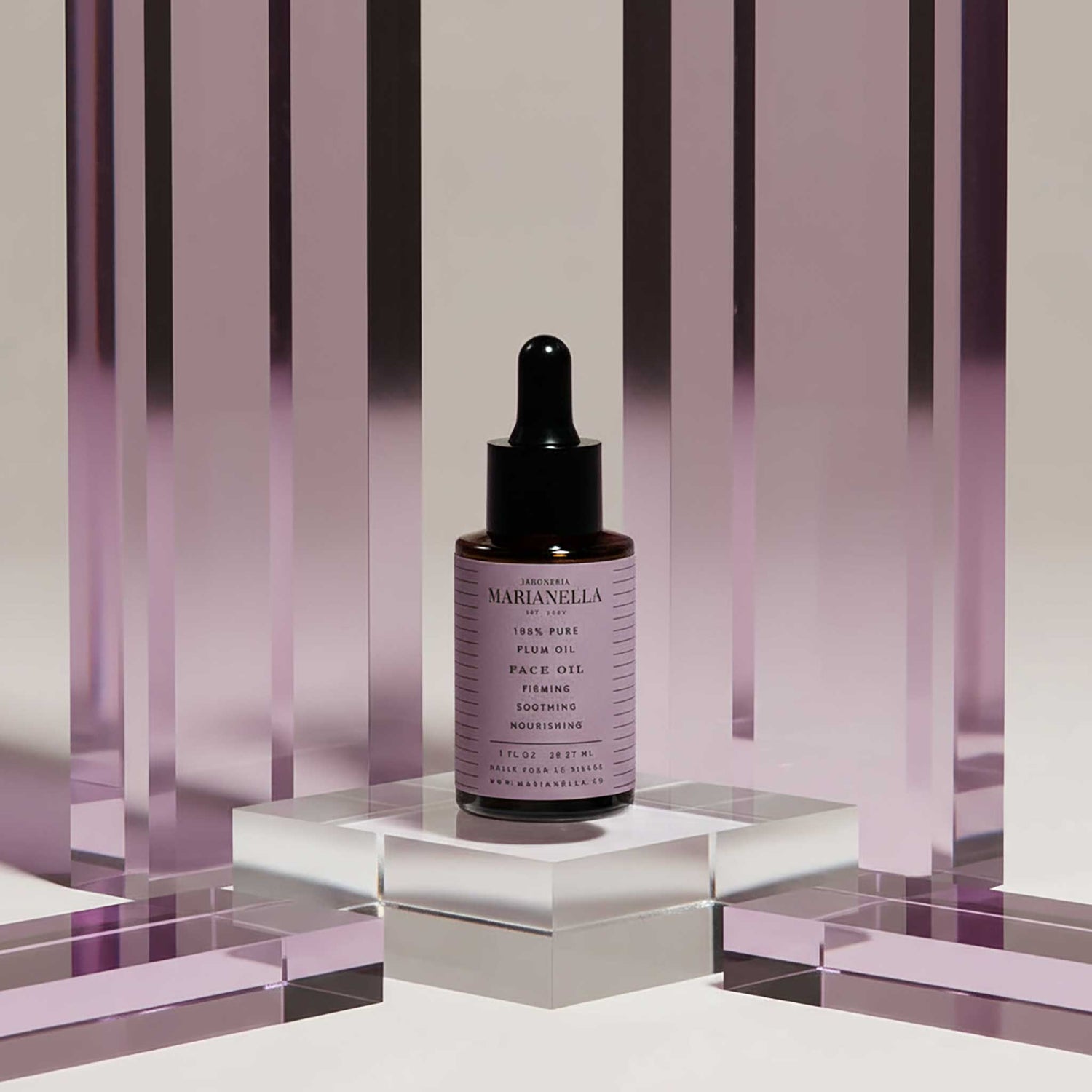
Plum Face Oil, $37
The Plum Face Oil is a daily face oil formulated to sit lightly on skin, drawing on grapeseed oil's dry-oil texture to deliver moisture and antioxidant support without a heavy finish. It is suited to layering under a moisturizer or worn alone as the last step of a routine.
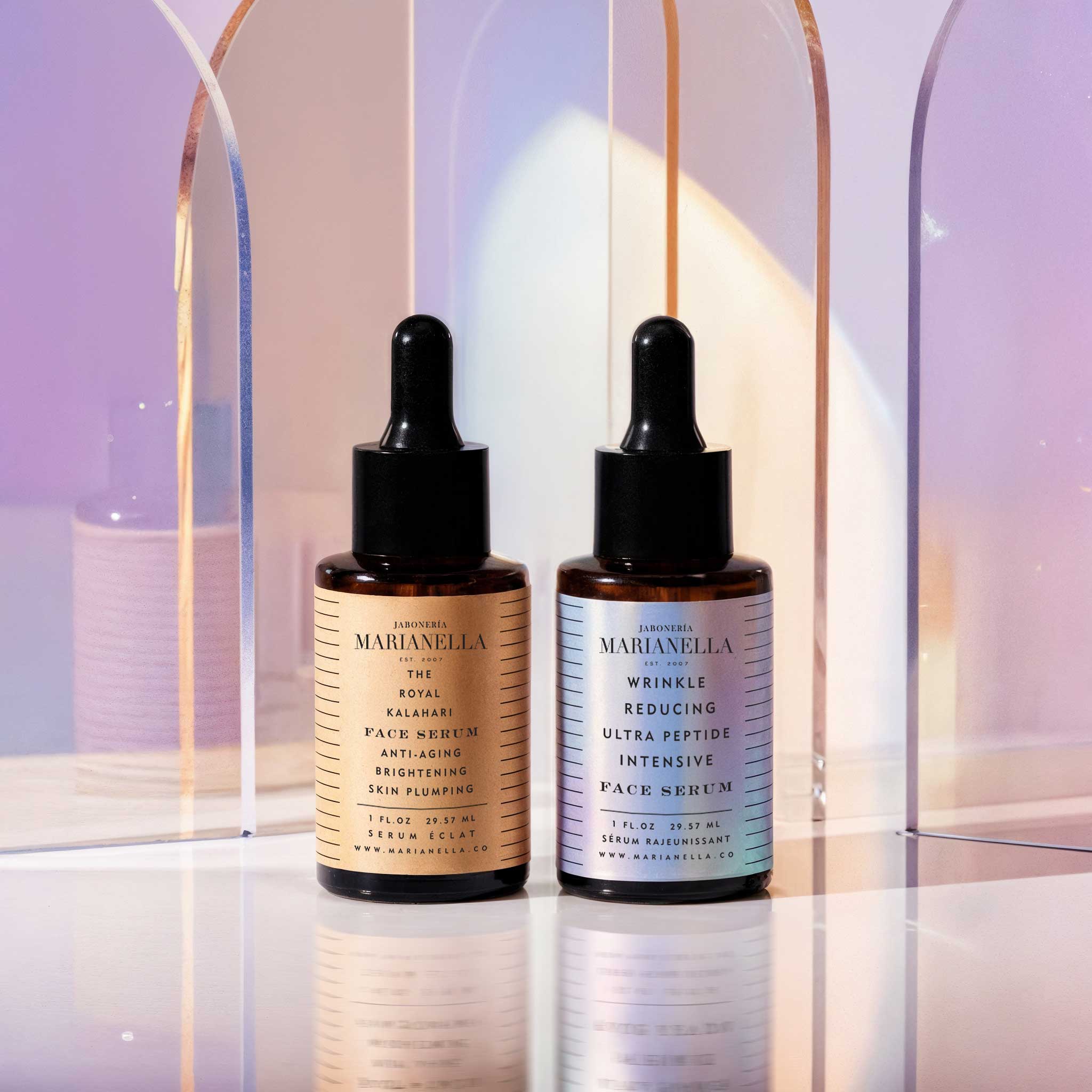
The Royal Kalahari Face Serum, $58
The Royal Kalahari Face Serum pairs grapeseed oil with the brand's signature Kalahari botanical complex, built for someone who wants a serum that feels luxurious in texture while still absorbing fully. It is one of Marianella's most recognized face formulas, worn as a step toward visibly more hydrated, even-looking skin.
The Royal Kalahari Under Eye and Lip Serum Roller Oil, $37
For the thinner, more reactive skin around the eyes and lips, the Royal Kalahari Under Eye and Lip Serum Roller Oil uses the same lightweight profile to deliver targeted hydration via a cooling rollerball applicator. It is designed for quick application during a morning routine or as a midday refresh.
How to Choose a Grapeseed Oil Product
Not every grapeseed oil product is formulated the same way. Cold-pressed extraction preserves more of the oil's natural fatty acids and antioxidant compounds than solvent extraction, so the sourcing method matters as much as the ingredient list. Someone shopping for the best grapeseed oil products in 2026 should also look at what the oil is blended with, since grapeseed oil is frequently paired with other botanicals to round out its benefits for a specific skin concern, whether that is dullness, visible fine lines, or general dehydration. Marianella's approach has stayed consistent since 2007: small batches, clean ingredients, and formulas made by hand rather than mass produced.
Explore the full range of grapeseed oil formulas in Marianella's Plum Face Oil, Royal Kalahari Face Serum, and Royal Kalahari Under Eye and Lip Serum Roller Oil collections.
FAQ
Is grapeseed oil good for all skin types?
Yes. Grapeseed oil is a healing emollient with a non-comedogenic rating of 1, meaning it will not clog pores or leave skin oily, and it is excellent for use with every skin type, especially sensitive and acne-prone skin. Its light texture makes it a common choice for combination and oily skin as well as dry skin.
What is the difference between grapeseed oil and grapeseed extract?
Grapeseed oil is rich in linoleic acid and vitamin E, providing nourishment, anti-inflammatory benefits, and antioxidant protection when applied topically, while grapeseed extract is richer in proanthocyanidins and different antioxidants, making its water-soluble nature an entirely different ingredient than the oil. They often appear together in formulas but serve different roles.
Can grapeseed oil help with fine lines?
Grapeseed oil supports the skin's appearance of hydration and smoothness through its fatty acid and antioxidant content, which can make fine lines look less pronounced over time. It is not a treatment for wrinkles in a medical sense, but a supportive ingredient within a broader skincare routine.
How is grapeseed oil sourced?
Grape seed oil is a vegetable oil pressed from the seeds of various varieties of Vitis vinifera grapes, an abundant by-product of winemaking. This makes it a naturally efficient ingredient, since it repurposes seeds that would otherwise be discarded after grape pressing.
Does grapeseed oil protect skin from environmental damage?
By neutralizing free radicals, grapeseed oil's antioxidant content helps reduce the rate at which intrinsic and extrinsic factors like UV radiation and pollution break down the skin's structural proteins, offering supportive protection that does not replace sunscreen. It works best as one layer of a full protective routine.

Dejar un comentario
Este sitio está protegido por hCaptcha y se aplican la Política de privacidad de hCaptcha y los Términos del servicio.