

What Is Avocado Oil in Skincare
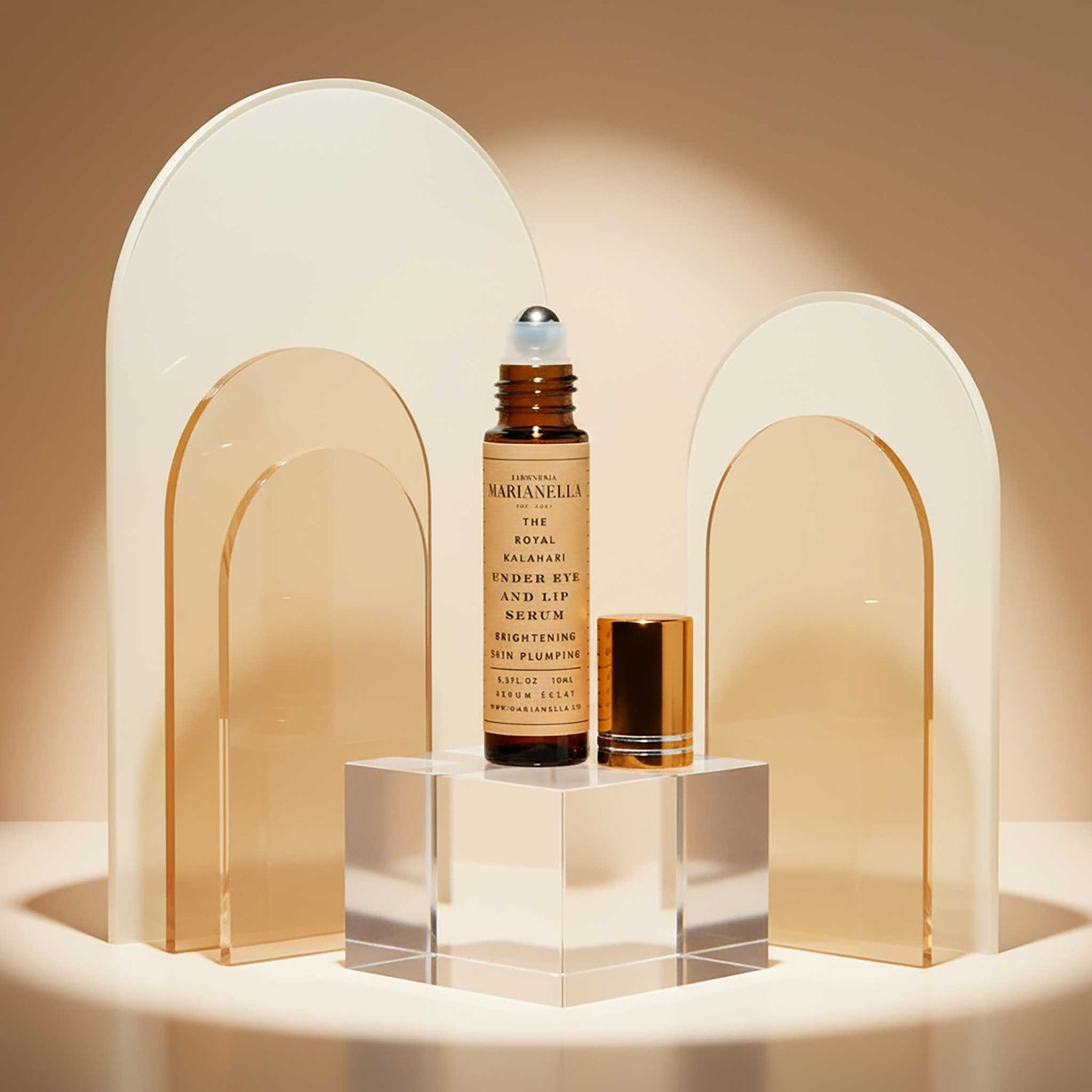
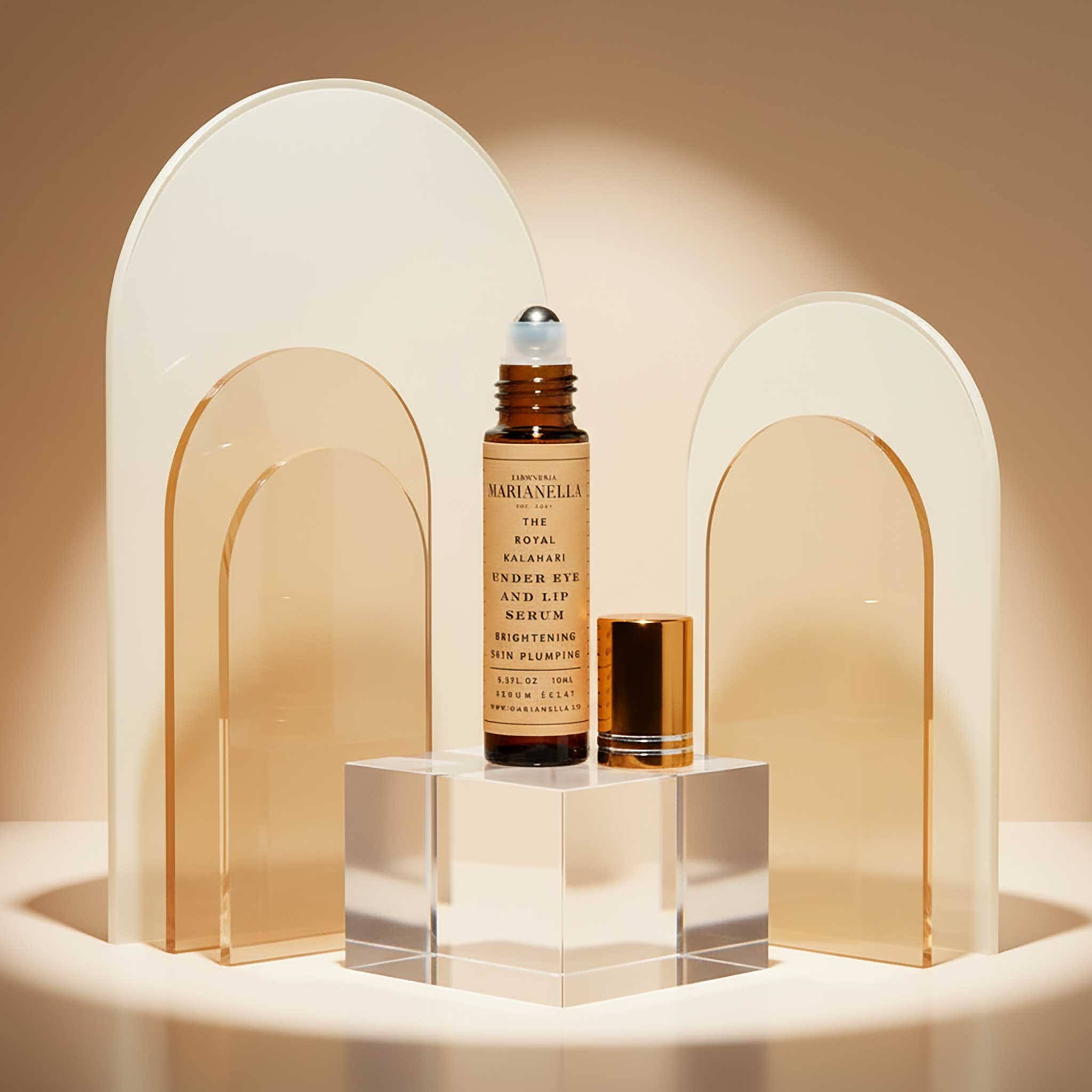
Avocado oil is a plant-derived oil pressed from the flesh of the avocado fruit, valued in skincare for its high concentration of oleic acid and its rich profile of vitamin E, sterols, and antioxidants. A 2025 review of compositional data across cultivars and extraction methods reports oleic acid ranging from 42.0% to 75.0% of total fatty acids, with linoleic acid trailing at 7.8% to 19.0%. This fatty acid density is exactly why avocado oil beauty benefits have made it a fixture in facial oils, eye serums, and body formulas for the person who wants their skincare grounded in something recognizable and unrefined. At Marianella, that same respect for raw, honest ingredients shapes how the oil is used across the line, most notably in the Royal Kalahari Under Eye and Lip Serum Roller Oil ($37) and The Midnight Youth Potion ($58).
Avocado Oil Benefits for Skin, Explained

|
$37 |

|
$58 |
The appeal of avocado oil comes down to composition. Cold-pressed avocado oil retains approximately 70 percent oleic acid, 12 percent palmitic acid, and 10 percent linoleic acid, along with significant amounts of vitamins E, A, and D, all crucial for skin health. Oleic acid is a monounsaturated fat, and its role in skin is largely mechanical. Oleic acid works by reinforcing the skin's lipid barrier, which helps to lock in moisture and prevent transepidermal water loss. That barrier effect is the throughline in nearly every clinical discussion of the oil, and it explains why formulas built around it tend to feel rich without feeling heavy.
The vitamin E content adds a second layer of function. Alpha-tocopherol, the most biologically active form of vitamin E, measures roughly 79 to 190 mg per kilogram in avocado oil. That level of tocopherol does double duty. That tocopherol content is part of why the oil resists rancidity well compared with more delicate seed oils. Practically, this means a formula built on avocado oil tends to hold its integrity in the jar as well as on the skin, which matters for a brand handcrafting in small batches rather than mass runs.
Barrier Support and Hydration
For someone dealing with tightness, dryness, or the kind of dullness that shows up after a long season of central heating or sun, the barrier-support case is the most substantiated one. Clinical studies highlight the abundance of oleic acid and vitamin E in avocado oil, which help reinforce the skin's barrier and reduce transepidermal water loss. The result centers on hydration that sits well under makeup and doesn't leave residue behind, which is why it shows up so often in eye and lip formulas where the skin is thinner and loses moisture faster.
Antioxidant Activity and Environmental Stress
Skin exposed to pollution, blue light, and UV carries an accumulating oxidative load, and this is where avocado oil's carotenoid and tocopherol content comes into play. The vitamin E and carotenoids in avocado oil provide antioxidant support, which can help protect skin from oxidative stress. None of this is a substitute for daily SPF, but as a supporting player in a nighttime routine, the antioxidant density is a genuine, measurable property of the oil rather than a marketing flourish.
What the Newer Research Actually Shows
It's worth being precise about where the science currently stands, because a lot of what circulates online overstates it. Most of the collagen and wound-healing data comes from animal models, not human facial skin. In a controlled rat study, a semisolid 50% avocado oil formulation produced 100% wound contraction by day 14 against 91.63% for a petroleum jelly control, and collagen density in the healing tissue reached 41.89% versus 34.08% in controls, with tensile strength measuring 1.68 g/mm² against 1.17 g/mm². Those numbers come from open wounds on rodents over a two-week period, not from an intact adult face over months. A separate 2025 animal study reinforces the mechanism: the essential fatty acids and oleic acid in avocado oil can promote collagen synthesis, a process that creates new connective tissue. The honest read is that avocado oil has strong, well-documented emollient and barrier properties, and promising but still preliminary evidence on the collagen and repair side. Marianella states the former plainly and does not claim the latter as fact.
Choosing the Best Avocado Oil Products in 2026
Not every avocado oil product is formulated the same way, and the difference between a filler oil and a functional one usually comes down to concentration, extraction, and what it's paired with. Looking ahead to 2026, the more useful question for a searcher isn't just "does this contain avocado oil" but "is the formula built around what avocado oil actually does well," which is barrier support and antioxidant delivery in a small, precise application area like the eye contour or lip line.
For the Eye and Lip Area
The under-eye and lip zones lose moisture faster than the rest of the face because the skin there is thinner and has fewer oil glands. Oleic acid works by reinforcing the skin's lipid barrier, which helps to lock in moisture and prevent transepidermal water loss, which is precisely why a roller-format oil suits that area. The Royal Kalahari Under Eye and Lip Serum Roller Oil ($37) is built for targeted, on-the-go application to that thin-skinned zone, handcrafted in Brooklyn in the small batches that define Marianella's approach across all 82 SKUs.
For Nighttime Repair Rituals
A richer, more concentrated formula suits the overnight window, when skin is meant to sit undisturbed and absorb without interference from makeup or environmental exposure. The Midnight Youth Potion ($58) is formulated for that slower, sensory ritual, drawing on the same barrier-supporting logic that runs through the science: rich fatty acids reinforcing the skin overnight while antioxidants counter the day's accumulated stress. Both products reflect the eco-luxury positioning Marianella has held since 2007, when the brand's founder began rebuilding, in Brooklyn, the world of small-batch, clean formulation first learned in Caracas.
How to Use Avocado Oil in a Skincare Routine
Application matters as much as formulation. Avocado oil is denser than lighter facial oils, so it performs best layered at the end of a routine, after serum and before or blended into a moisturizer, or used as a standalone night treatment on areas prone to dryness. It is richer than lightweight oils like jojoba oil, so people with oily or acne-prone skin should use it cautiously, especially on the face. For the eye and lip area specifically, a small rolled application morning and night tends to be sufficient given how concentrated the oil already is at that dose.
A patch test is worth doing before introducing any new oil-based product to sensitive or reactive skin, including around the eyes. A person with an inflammatory skin condition, such as eczema or psoriasis, may wish to test a patch of skin first to ensure that the oil does not trigger or aggravate their symptoms. This is a sensible practice regardless of how well-tolerated the oil generally is.
Marianella's Royal Kalahari Under Eye and Lip Serum Roller Oil and The Midnight Youth Potion both draw on avocado oil's documented strengths in barrier support and antioxidant delivery, offered in the small-batch, handcrafted format the brand has practiced since 2007.
FAQ
What does avocado oil do for skin?
Avocado oil primarily supports the skin's moisture barrier and slows water loss thanks to its high oleic acid content, while its vitamin E and carotenoid content offer antioxidant support against environmental stressors. Oleic acid works by reinforcing the skin's lipid barrier, which helps to lock in moisture and prevent transepidermal water loss. These effects are best documented for hydration and emolliency rather than deeper structural change.
Is avocado oil good for under-eye skin?
Yes, avocado oil's emollient, barrier-supporting properties suit the thin, moisture-poor skin around the eyes, which is why it appears in targeted formulas like roller oils. Its density means a small amount goes a long way in that concentrated area.
Does avocado oil increase collagen?
The evidence here is preliminary and comes largely from animal studies rather than human facial trials. A 2025 animal study found that the essential fatty acids and oleic acid in avocado oil can promote collagen synthesis, a process that creates new connective tissue. No human clinical trial has yet confirmed this effect on intact adult facial skin, so it should be treated as a promising mechanism rather than a settled claim.
Can avocado oil clog pores?
It can, for some skin types, given its richness relative to lighter oils. It is richer than lightweight oils like jojoba oil, so people with oily or acne-prone skin should use it cautiously, especially on the face. It tends to suit dry, mature, or dehydrated skin better than oily or breakout-prone skin.
How is avocado oil different from other facial oils?
Its fatty acid profile skews heavily toward oleic acid, which is denser and more occlusive than lighter oils like jojoba or squalane. Around 70 percent of the fat content found in avocado oil is typically monounsaturated oleic acid while up to 83 percent of the fat found in olive oil can be oleic acid. This makes it closer in behavior to olive oil than to lighter, fast-absorbing seed oils.

Dejar un comentario
Este sitio está protegido por hCaptcha y se aplican la Política de privacidad de hCaptcha y los Términos del servicio.