


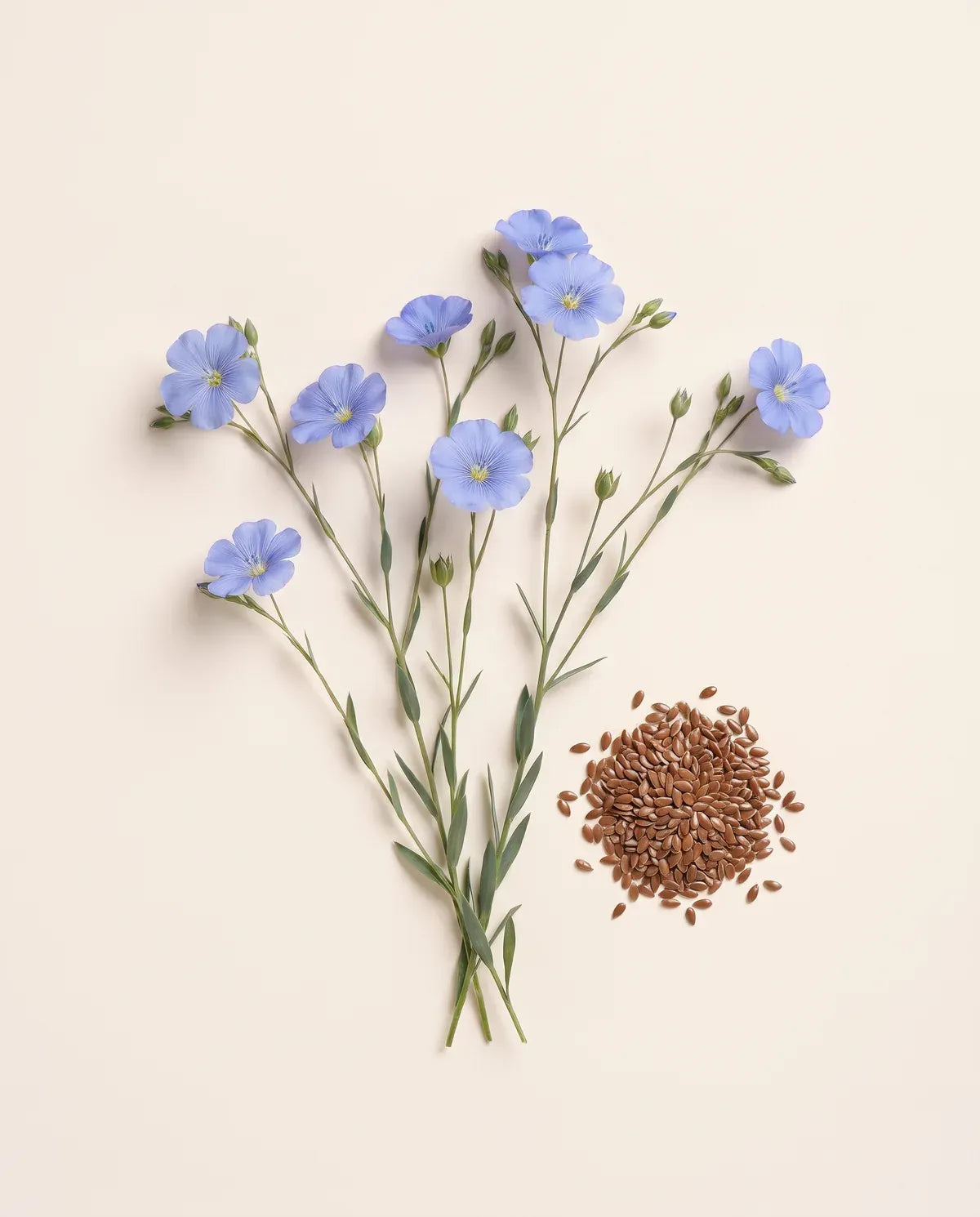
Flax seed oil belongs in a skincare routine because it is the richest plant source of alpha-linolenic acid, an omega-3 fatty acid, and skin with enough of these fats holds its water better and feels smoother. The best evidence comes from a 12-week trial in which people with sensitive skin took flax seed oil daily: their skin lost less water, felt less rough and reacted less to an irritant. The evidence for putting flax oil on the skin is newer and comes from finished formulas, so it is worth knowing which results came from which route.
What flax seed oil is made of
Flax seed oil, also sold as flaxseed oil or linseed oil, is pressed from the seeds of the flax plant, Linum usitatissimum. Its defining feature is alpha-linolenic acid (ALA), which typically makes up more than half of the oil. Published analyses put the fatty acids at roughly 53 to 66 percent linolenic acid, 10 to 16 percent linoleic acid, 10 to 12 percent oleic acid, and smaller amounts of stearic and palmitic acids. Few plant oils come close to that much omega-3.
The seeds also contain lignans, a family of plant polyphenols. The main one, secoisolariciresinol diglucoside (SDG), is an antioxidant in laboratory tests. Flax seeds contain far more lignans than most plant foods, though that comparison is about the whole seed, and a pressed oil carries a different mix from the seed it came from.
The 12-week trial, and what it measured
The study most often cited for flax and skin was a randomized, double-blind trial published in the British Journal of Nutrition. Women with sensitive skin took either flax seed oil or safflower seed oil every day for 12 weeks. Researchers measured how much water the skin lost, how rough and scaly it was, how hydrated it was, and how strongly it reddened when a mild irritant was applied.
In both oil groups, water loss through the skin fell by about 10 percent after six weeks. In the flax group it fell further by week 12. Roughness and scaling went down, smoothness and hydration went up, and skin reddened noticeably less when the irritant was applied. The safflower group improved too, but less, and later.
Those are meaningful results for dry and sensitive skin. They are also results from swallowing the oil, not from rubbing it in. They show that the fats in flax matter to how skin behaves. They do not, on their own, show what a cream or serum containing flax does.
What we know about flax on the skin
The case for applying flax rests on two things. First, plant oils in general form a light protective film that slows the escape of water from the skin, which raises hydration. That is simple and well established. Second, a 2024 clinical study tested creams made with hempseed and flaxseed oils. The versions with the most oil cut water loss through the skin by about half and showed the clearest drop in visible redness.
Other work suggests that how the oil is delivered matters. Researchers who placed the oil in a gel-cream base found its fatty acids passed into the skin more readily, which supports the idea that the formula around flax shapes how well it works. That is a useful lesson for anyone comparing products: flax on the label is a start, not a guarantee.
Claims that go further than the evidence
Flax attracts big promises. Some articles say its lignans mimic estrogen in the skin, rebuild collagen or stop sagging. Those ideas come from cell studies and from research on flax as food, and none has been shown in people using a skincare product. Claims that ALA "penetrates beyond the surface" and changes the skin's structure are also stronger than anything that has been measured.
What is fair to say is this: flax seed oil is an omega-3-rich emollient that helps skin hold moisture and feel smoother, and there is good reason to believe that skin short of these fats benefits from getting more of them. That is enough to justify using it.
Who it suits and how to wear it
Flax seed oil suits dry, sensitive and mature skin best, and anyone whose skin feels tight when the heating comes on. A few practical points:
- Apply it to slightly damp skin. Oils hold in moisture best when there is some on the surface to hold.
- Use it at night. ALA is sensitive to light and air, so evening suits it.
- Layer a richer cream over it if your skin is very dry.
- Give it time. The trial results appeared over 6 to 12 weeks of daily use, not overnight.
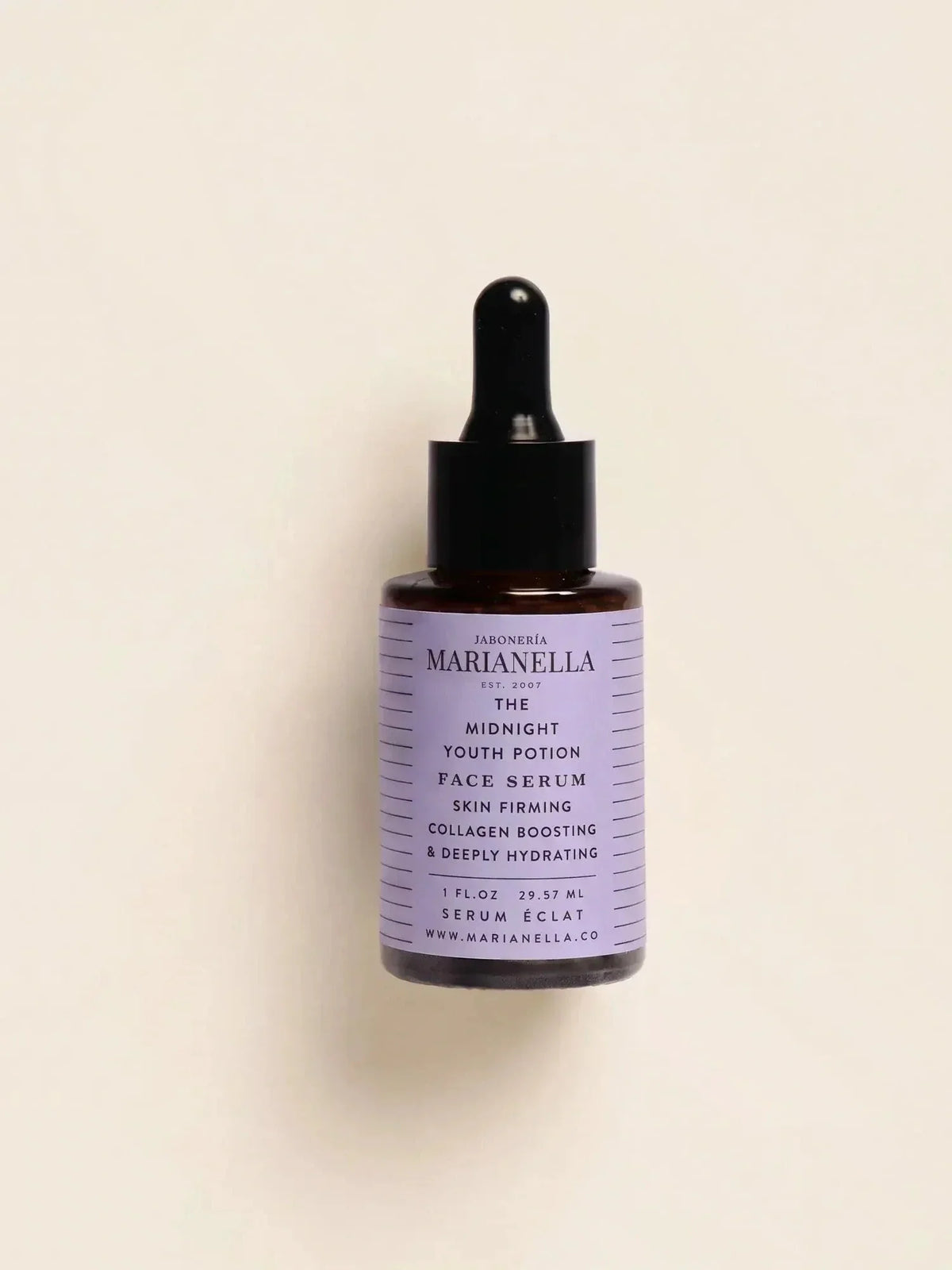
In our range, flax seed oil is one of the thirteen plant oils in The Midnight Youth Potion, our evening oil-serum. Press four to six drops into clean skin as the last step of your evening routine.
Questions about flax seed oil for skin
Do I need to take flax oil by mouth to see a difference in my skin?
The strongest study used flax oil taken by mouth. Creams made with flax oil have also reduced water loss and visible redness in a clinical study, so applying it is worthwhile, but the two routes have not been compared head to head.
Does flax seed oil help sensitive skin?
The evidence points that way. In the 12-week trial, sensitive skin reacted less to an irritant and felt smoother and more hydrated by the end.
How long does flax seed oil take to make a difference?
Skin feels softer as soon as the oil goes on. The measured changes in water loss and roughness appeared after six weeks and grew by twelve, so steady daily use matters.





















Leave a comment
This site is protected by hCaptcha and the hCaptcha Privacy Policy and Terms of Service apply.