


Carrot seed oil belongs in an evening face oil, not in your sun protection. The name covers two different oils, a steam-distilled essential oil and a cold-pressed seed oil, and both are defined by a molecule called carotol. Its real benefits are modest and worth having: it softens skin, and the pressed oil carries a large share of the vitamin E family. The popular claim that it has an SPF of 38 to 40 comes from a misread study, and tested on its own it offers almost no sun protection at all.
Two oils share one name
"Carrot seed oil" can mean either of two products made from the seeds of Daucus carota. The essential oil is steam-distilled, volatile and concentrated, and it is used in small amounts. The fixed oil is cold-pressed from the seed, like sunflower or grapeseed oil, and can be used in larger amounts. They have different compositions and behave differently on skin.
The seed gives up far more of one than the other. In a study of seeds grown in Turkey, the yield was 0.83 percent essential oil against 7.84 percent pressed oil. Every benefit you read about belongs to one of these two oils, and a good label or product description tells you which.
Carotol, and a harvest that changes
Carotol is what the two oils have in common. It is a sesquiterpene alcohol, one of the aromatic compounds that give the seed its earthy scent, and in the Turkish study it was the main component of both the essential oil and the pressed oil.
How much carotol an oil contains depends heavily on where the seed grew. Three essential oils of different origins measured 19 to 33 percent carotol, while the Turkish essential oil measured 66.78 percent. Researchers put the gap down to climate, the plant's nutrition, its variety and other growing conditions. A seed oil is a harvest, and it changes from field to field like one. That is a good reason to buy from a maker who works in small batches and can tell you what is in the bottle.
What the research supports
A softening oil with vitamin E
The pressed oil's clearest strength is its tocols, the vitamin E family. One analysis found its total tocol content close to that of sunflower oil. Vitamin E is an antioxidant that also helps keep oils fresh. On skin, the pressed oil works like other medium-weight seed oils: it softens and helps hold in moisture.
Antioxidant strength: mixed
Carrot seed oil is often sold on its antioxidant power, and the findings are mixed. In a Portuguese study, the antioxidant capacity of a wild carrot essential oil, measured two ways in the lab, was not significant. A more recent study of wild carrot seed extracts from Italy reported promising antioxidant activity, but that was also measured in a dish. Neither tells you much about what happens on a face.
Where the evidence runs out
One ingredient review states plainly that there are no human trials of carrot seed oil for skin or hair. Every larger promise, from firming to renewing skin, should be read with that in mind.
Does carrot seed oil have SPF?
No. The often-repeated SPF 38 to 40 figure traces back to a 2009 paper by Kapoor and Saraf, which measured the SPF of finished herbal sunscreen products sold in India. One of those products contained carrot seed oil alongside other ingredients, and the product as a whole tested in the high 30s. The oil was never tested alone.
When it was, in a 2021 study in Photochemical & Photobiological Sciences, carrot seed oil measured about SPF 0.1 in the lab and 2.5 on skin. That is close to nothing. Wear a real sunscreen in the morning. Carrot seed oil is for the other end of the day.
Other claims to set aside
- "A natural retinol." This rests on the idea that carrot seed oil is full of beta-carotene. The orange carotenoids belong mainly to the carrot root; the seed oil's signature compounds are carotol and daucol.
- "Regenerates skin cells." There is no human evidence for this.
- "Use it neat." The essential oil is concentrated and should not go on skin at full strength. In a finished formula, the dilution is already done for you.
How to choose a carrot seed oil product
- Look for which oil it is. The best products say whether they use the essential oil or the pressed seed oil.
- Prefer a blend. A finished face oil puts carrot seed among other oils at a sensible level.
- Skip any sun claim. A product that sells carrot seed oil as sun protection is repeating the 2009 mix-up.
- Know who made it. Carotol changes from harvest to harvest, so a maker who works in small batches is worth more than a long list of claims.
- Patch test. Carrot is in the same plant family as celery, and the essential-oil form can bother sensitive skin.
Where we use it: The Midnight Youth Potion
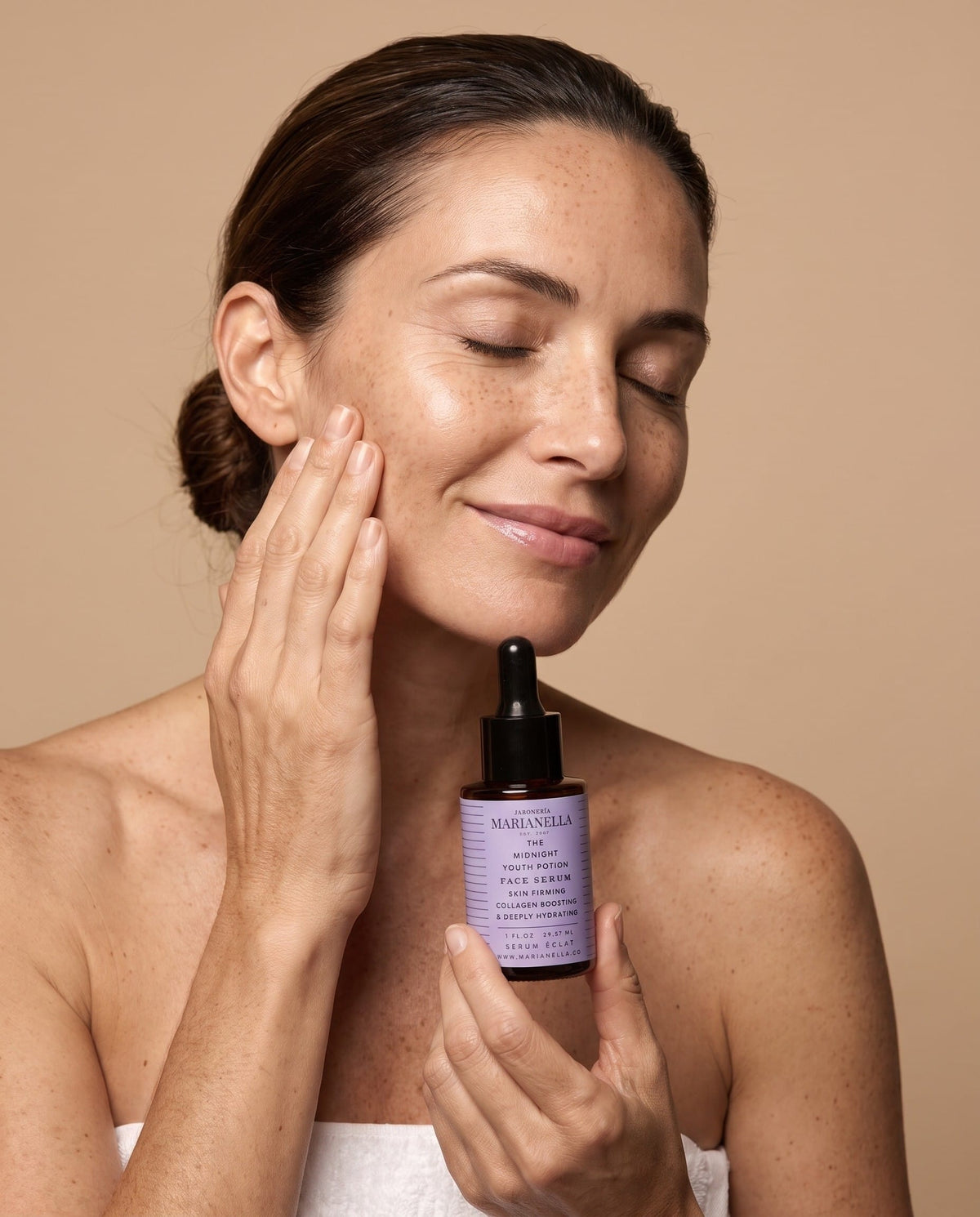
In our range, carrot seed oil is one of thirteen botanical oils in The Midnight Youth Potion, our evening oil-serum. It sits with grape seed and passionfruit, which keep the blend light, avocado and baobab, which add cushion, and rosehip, camellia, tamanu and Kalahari melon, with niacinamide, sodium hyaluronate and a vitamin C ester. There is no added fragrance; a faint floral note comes from tiare flower. We make no sun or retinol claims for it. Press four to six drops into clean skin as the last step of your evening, and wear sunscreen the next morning as usual. You can read our plain description of carrot seed oil in the Ingredient Library.
Questions about carrot seed oil claims
Is carrot seed oil an essential oil or a carrier oil?
It can be either. The name covers both the steam-distilled essential oil and the oil cold-pressed from the seed, and they have different compositions, so check which one a product uses.
What is carotol?
A sesquiterpene alcohol and the main compound in carrot seed oil. Studies have measured anywhere from about 19 percent to over 66 percent, depending on where and how the seed was grown.
Can carrot seed oil replace sunscreen?
No. Tested on its own it measured about SPF 0.1 in the lab and 2.5 on skin. The SPF 38 to 40 figure came from a sunscreen product that contained other ingredients.
Has carrot seed oil been tested on people's skin?
Not in proper trials. The research so far is chemical analysis and lab work, so it is best thought of as a good supporting oil in a well-made formula.





















Leave a comment
This site is protected by hCaptcha and the hCaptcha Privacy Policy and Terms of Service apply.