


The truth about tea tree oil is that it is useful but often oversold. At low strength in a well-made product it can be a pleasant, fresh-feeling part of a routine for oily or blemish-prone skin, but it works slowly, more is not better, and the oil changes as it ages: old, oxidized tea tree oil is far more likely to irritate skin than fresh oil. Strength and freshness matter as much as the ingredient itself.
The claim: it works like a drugstore spot gel
Tea tree oil is often sold as a natural swap for the strong spot gels in the pharmacy. The research behind that idea is limited. The best-known trials used gels or lotions at around 5 percent tea tree oil on blemish-prone skin, and the changes they reported came slowly, over weeks, and more slowly than with stronger options. The upside was fewer complaints of dryness and peeling.
Dermatology guidance still regards the evidence as too thin to call tea tree oil a first choice. The fair reading is that tea tree oil can be a gentle, supporting part of a routine, not a fast fix, and the results of those trials belong to the products tested. We do not make claims of that kind for our own products.
The claim: stronger is better
It is tempting to think a few drops of pure oil must work better than a diluted product. The research points the other way. In skin testing, tea tree oil at 2 percent did not cause significant irritation, and researchers suggest that concentrations under 5 percent are more suitable and gentler than higher ones. Pure oil is many times stronger than anything tested in those studies.
If you are using pure tea tree oil, dilute it well in a carrier oil and patch test before using it on your face. If you are using a finished product, let the formula decide the amount and do not add extra drops.
The part most labels skip: freshness
Fresh tea tree oil is a weak to moderate sensitizer, meaning a small number of people develop a reaction to it over time. When the oil is exposed to air, light and heat, terpinen-4-ol and other compounds oxidize into substances that are much more likely to cause a reaction. In practice, a half-used bottle that has sat open on a sunny shelf for a year is a different and harsher oil from the one you bought.
So keep tea tree products capped, away from heat and out of direct light, and replace any bottle that smells different from when it was new. Fresher stock is a real advantage with this ingredient, which is one reason small batches suit it.
Who should be careful
- Pregnant or breastfeeding: our Ingredient Library advises avoiding tea tree oil unless a clinician approves.
- Pet owners: keep tea tree products away from pets.
- Sensitive or reactive skin: patch test on the inner arm for a few days before using a new product on your face.
What to look for on a label
Genuine tea tree oil is Melaleuca Alternifolia Leaf Oil, and good suppliers work to the international standard, ISO 4730, which sets terpinen-4-ol at 30 to 48 percent and limits 1,8-cineole to 15 percent. In a finished product you will not see those numbers, so look instead for a sensible format, a base that cushions skin, and a brand that makes its products in small runs.
Match the format to the job, too. A cleanser rinses off within a minute. A gel stays on and should be light and gentle. An oil softens hair and the skin underneath.
Our approach to tea tree
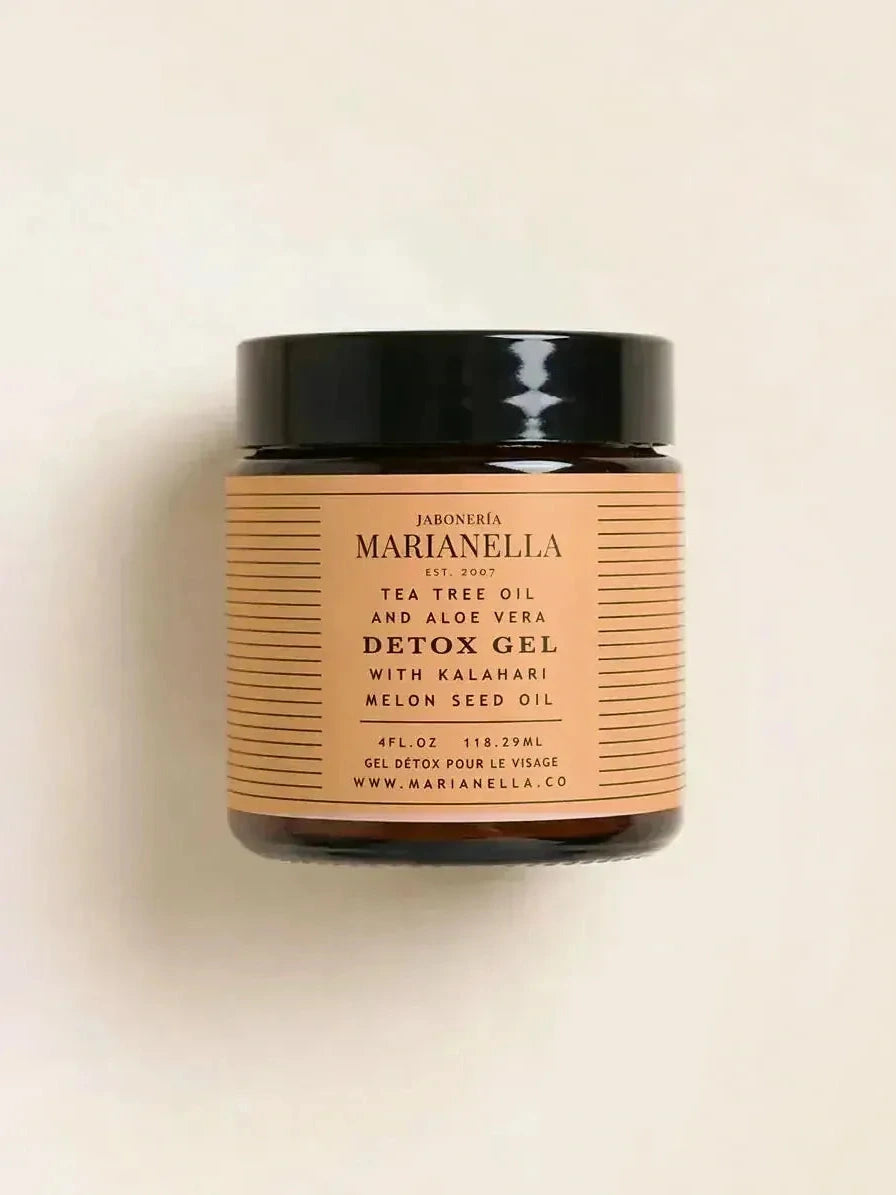
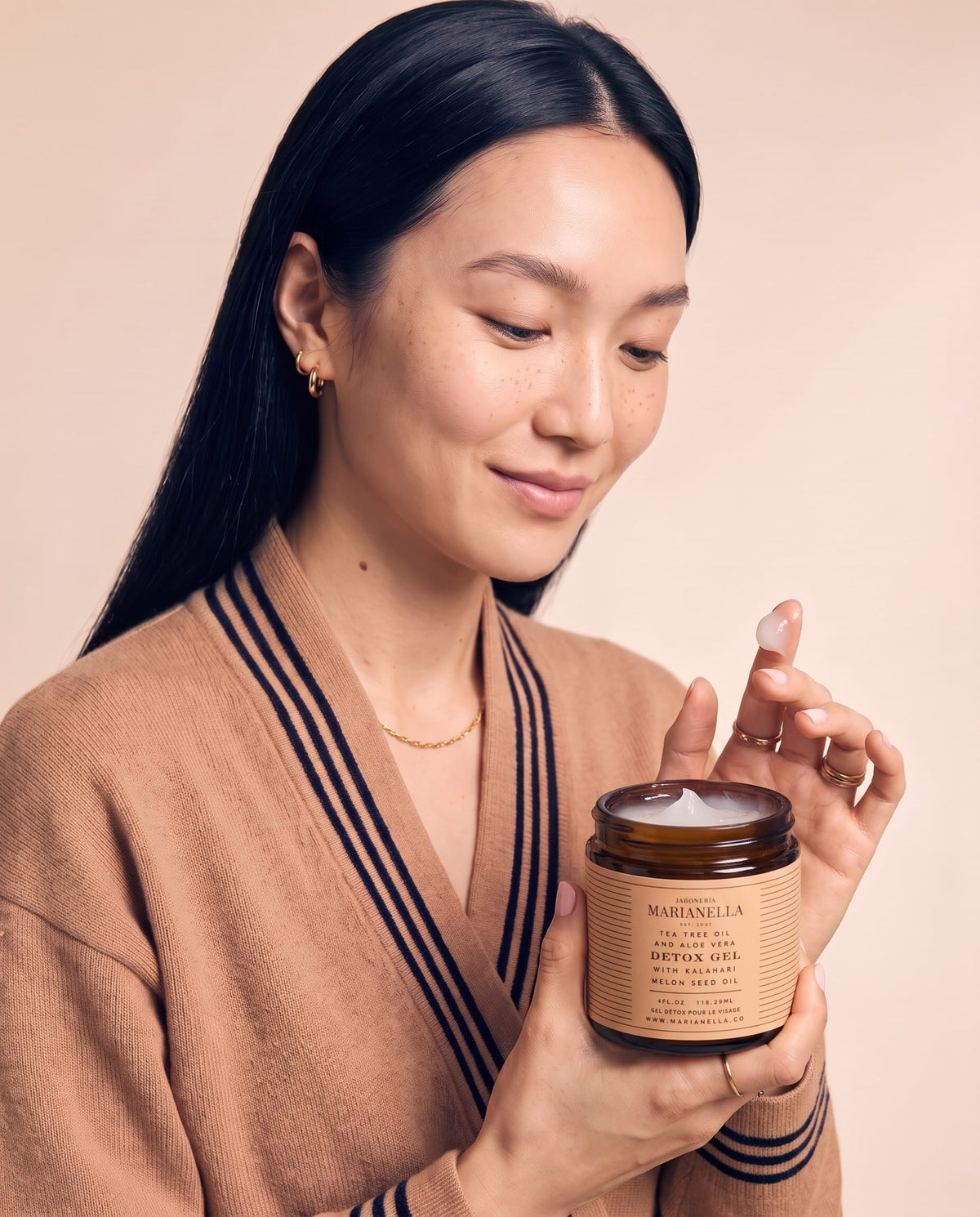
We keep tea tree oil in two formulas and in a supporting role. In our Detox Gel, a light, clear aloe gel with shea butter and Kalahari melon seed oil, it gives a crisp, herbal, clean scent. Smooth a thin layer over face and neck after cleansing, morning and night. In GRR Oil Beard Oil it joins peppermint, rosemary, green tea and hibiscus oils for a cool, herbal note in a conditioning base. Both are made by hand in our Williamsburg workshop in batches of 50 to 100, so what reaches you was made recently.
Questions about tea tree oil safety
Can I put tea tree oil directly on my face?
No. Undiluted oil is far stronger than anything tested on skin. Use a finished product that already contains it, or dilute pure oil well and patch test first.
Does tea tree oil go bad?
Yes. Air, light and heat oxidize it, and oxidized oil is more likely to cause a reaction. Keep it closed, cool and out of the light, and replace a bottle that smells different.
How much tea tree oil is in your products?
We do not publish percentages. In both the Detox Gel and GRR Oil, tea tree is one ingredient in a blend, there for scent and a fresh feel rather than as the main ingredient.





















Leave a comment
This site is protected by hCaptcha and the hCaptcha Privacy Policy and Terms of Service apply.