

The truth about goat milk in skincare is that its reputation rests on a few real properties and a larger set of claims that go further than the evidence. What holds up: goat milk naturally carries lactic acid, a gentle exfoliating acid; fats rich in short and medium chain fatty acids that soften skin; and fat globules that are measurably smaller than cow milk's. What does not hold up as well: that goat milk soap is hypoallergenic, that it matches your skin's pH, and that it repairs skin. Studies on finished goat milk products are still few. We do not use goat milk in any of our products, and this is a plain look at the ingredient.
What holds up: lactic acid
Lactic acid is the reason milk has been used on skin since antiquity, and it is one of the most studied gentle acids in skincare. It loosens the bonds between dead cells on the surface, so they shed without scrubbing, and it is a humectant, drawing water into the skin. It has also been linked to higher ceramide production, the lipids that hold the skin barrier together.
That combination is why milk-based cleansers tend to leave skin feeling smooth rather than raw. A scrub takes something off. Lactic acid takes something off and helps the skin keep its water. The amount of lactic acid in a milk product is far lower than in an acid serum, so expect a soft, gradual effect, not a peel.
What holds up: small fat globules
Here is the measurement that separates goat milk from cow milk on paper. In a study published in the Journal of Dairy Science in 2000, researchers compared milk from French Alpine goats and Holstein cows by laser particle analysis. Goat milk fat globules averaged 2.76 microns across, against 3.51 microns for cow milk, whose globules ran up to 15.75 microns. Goat milk's fat had a specific surface area of 21,778 square centimeters per milliliter, against 17,117 for cow milk.
Smaller globules mean more surface for the same amount of fat, and so more contact between the milk's lipids and your skin. The membrane around each globule contains phospholipids, including phosphatidylcholine and sphingomyelin, from the same families that make up the skin's own lipids. That is a reasonable explanation for why milk fats feel as though they sink in rather than sit on top.
The pH claim, with a catch
Healthy skin is slightly acidic. A 2014 paper in the Indian Journal of Dermatology measured it at a pH of 5.4 to 5.9. Raw goat milk sits at roughly 6.3 to 6.7, much closer to skin than most ordinary bar soaps, which test between 9 and 11. That gap is the tight, squeaky feeling after a harsh bar.
The catch is that a goat milk soap is still a soap. The pH of any true bar is set by the soapmaking, not by what is stirred into it, so adding milk does not turn a soap into something that matches your skin. Milk can make a bar feel creamier and leave a little more fat behind. It does not make the bar acidic. If a low-pH cleanse matters to you, a non-soap cleanser is the more reliable route.
What is overstated
- "Hypoallergenic." Goat milk soap has long been sold this way, but few studies have tested goat milk products against ordinary cleansers. Anyone with a milk protein allergy should avoid it.
- "Repairs" or "fixes" skin. Genetic research has linked goat milk proteins to genes involved in the skin barrier and immune response. That is interesting biology, and a review in the Journal of Integrative Dermatology notes that comparative data against conventional cleansers is still lacking. It is not evidence that a bar of soap changes your skin's condition.
- Exosomes and anti-aging. Recent studies of goat milk vesicles were done on cells in a dish. They say nothing yet about a cream on a face.
- Popularity as proof. Searches for goat milk soap nearly doubled between 2018 and 2023. Interest is not evidence.
If skin stays red, sore or irritated for more than a few days, that is a question for a dermatologist rather than a new soap.
Reading a goat milk label
If you do buy goat milk products, a few checks help. Ingredients are listed by amount, so goat milk should appear in the first third of the list, not after the fragrance. Fresh milk and reconstituted powder are different materials. Harsh sulfates in the same formula undo much of the gentleness you came for. And a rinse-off bar and a leave-on cream ask different things of the same ingredient: the bar cleans, and the cream is what stays.
What we use instead
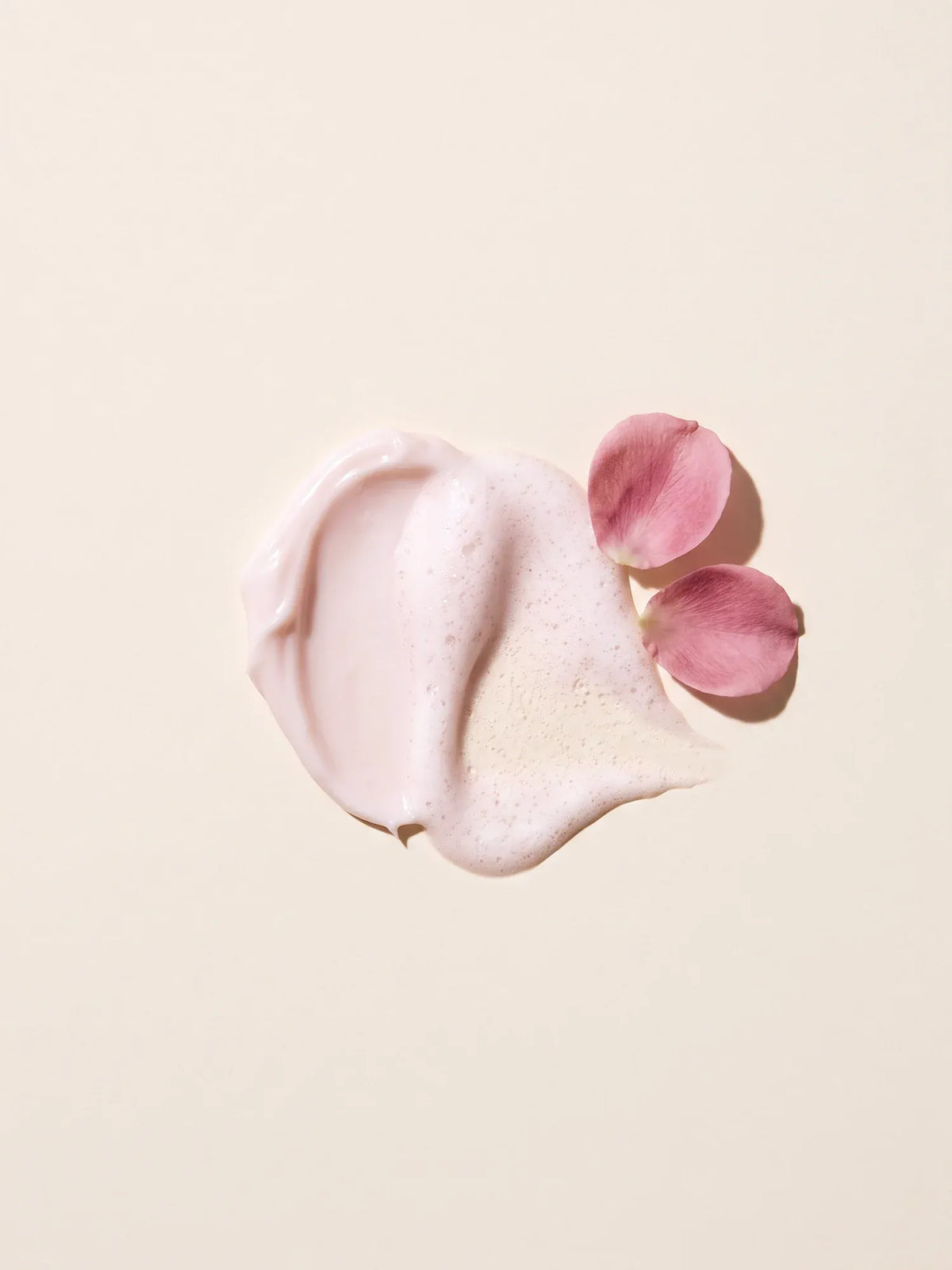
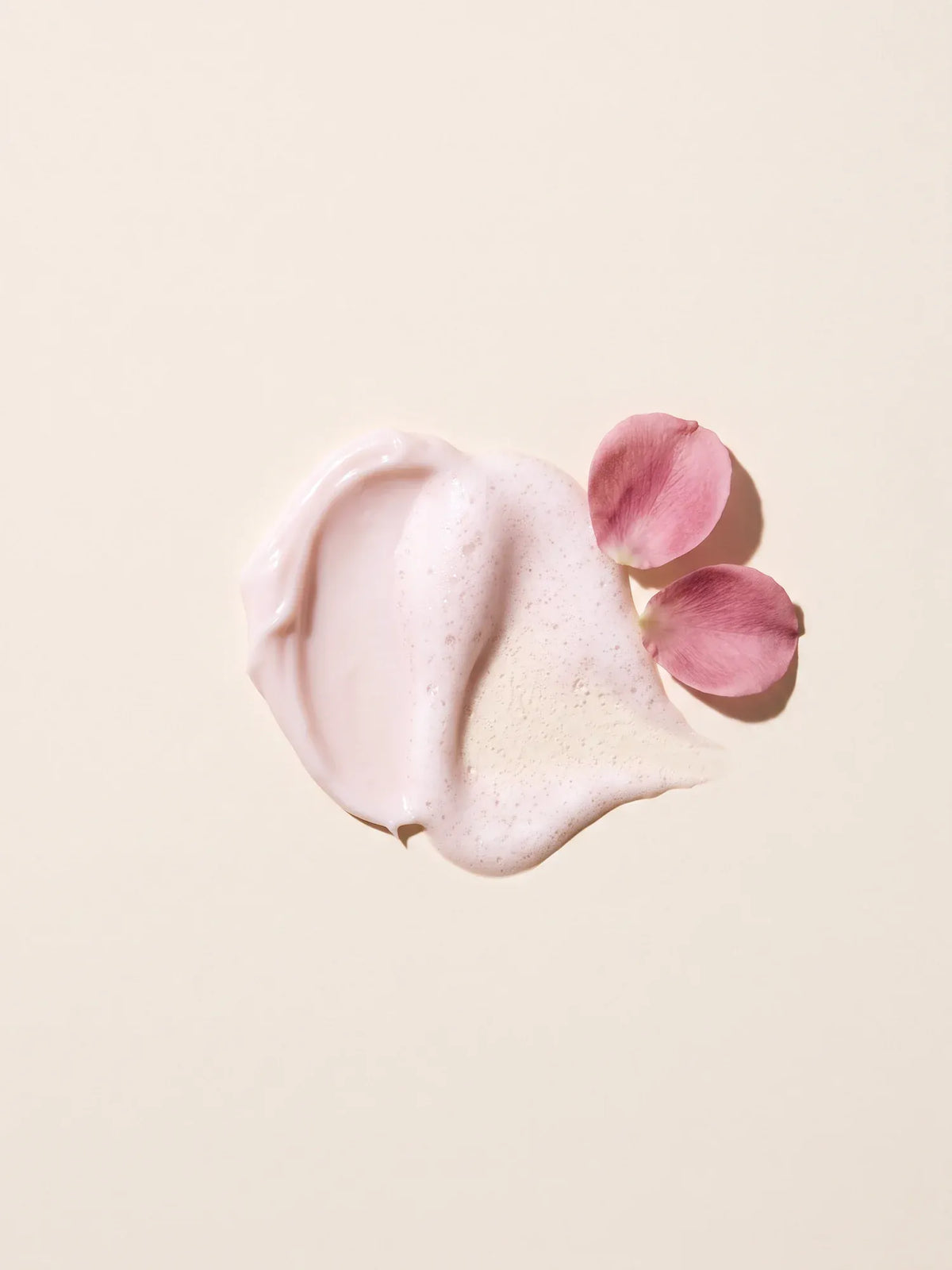
We do not use goat milk in our formulas. For a gentle cleanse, our Rose Face Wash Cream starts from our own soapmaking, softened with glycerin and sorbitol, with finely milled oat and calendula to keep the feel gentle and rosehip seed oil and shea butter for cushion. It was made for dry, normal and sensitive skin and rinses away without the tight, squeaky feel.
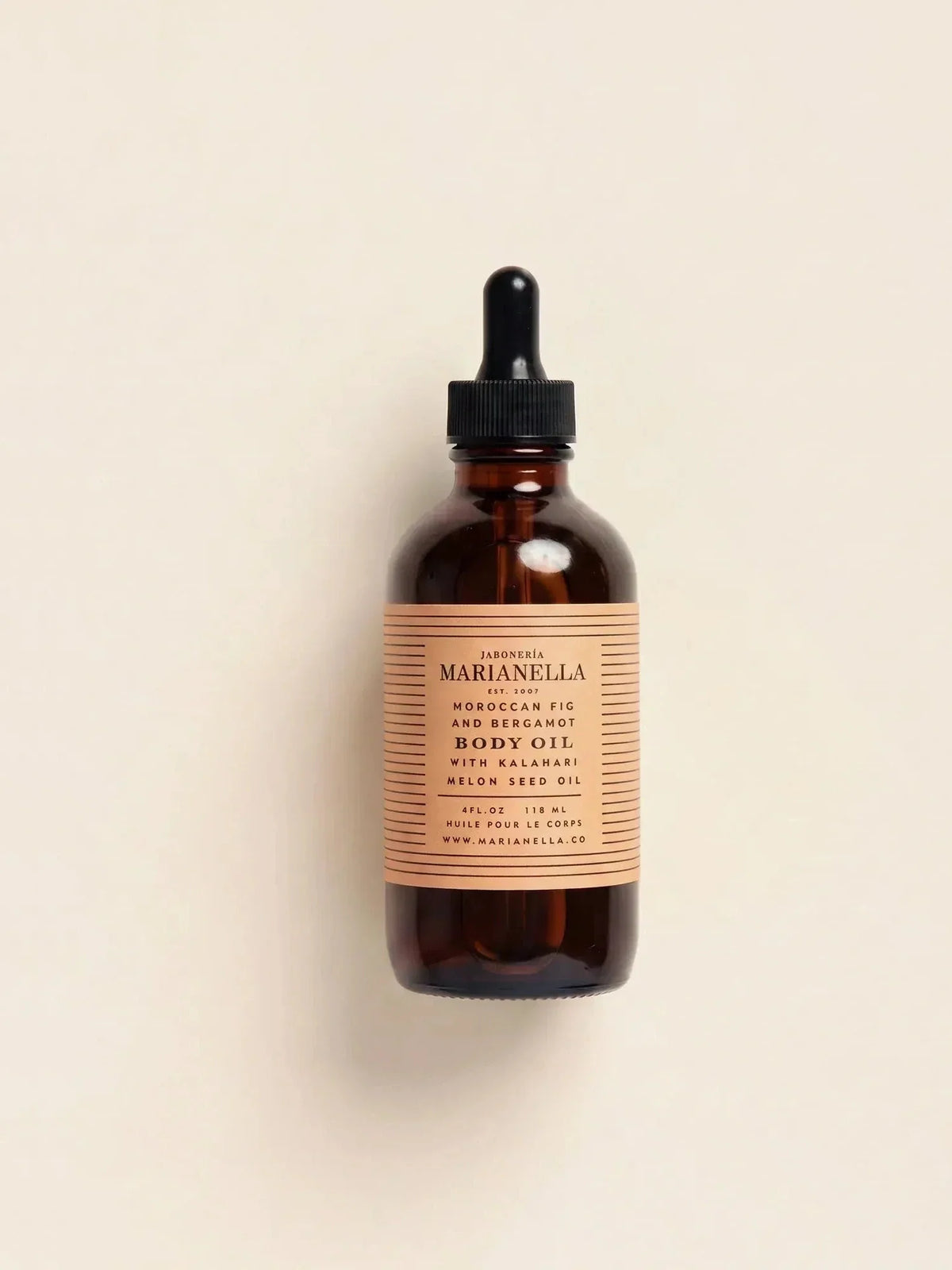
For the body, our Replenishing Body Wash is a castile-style soap of organic coconut, olive and jojoba oils with aloe, and the Rejuvenating Body Cream follows on damp skin with glycerin and plant oils to help it hold moisture. Every ingredient we use is listed in our Ingredient Library.
Questions about goat milk claims
Is goat milk soap hypoallergenic?
Not reliably. Few studies have compared goat milk products with ordinary cleansers, and people with a milk protein allergy should avoid it altogether.
Does goat milk soap have the same pH as skin?
No. Raw goat milk is close to skin's pH, but a true soap's pH is set by the soapmaking, so a goat milk bar is still alkaline like other soaps.
Is goat milk better than cow milk for skin?
On paper it has smaller fat globules, 2.76 microns on average against 3.51, which gives its fats more surface to touch the skin. Head-to-head trials of skincare made with each are lacking.
Do any Marianella products contain goat milk?
No. Our cleansers and creams are built on plant oils, glycerin, aloe and oat, all listed in our Ingredient Library.






















Leave a comment
This site is protected by hCaptcha and the hCaptcha Privacy Policy and Terms of Service apply.