

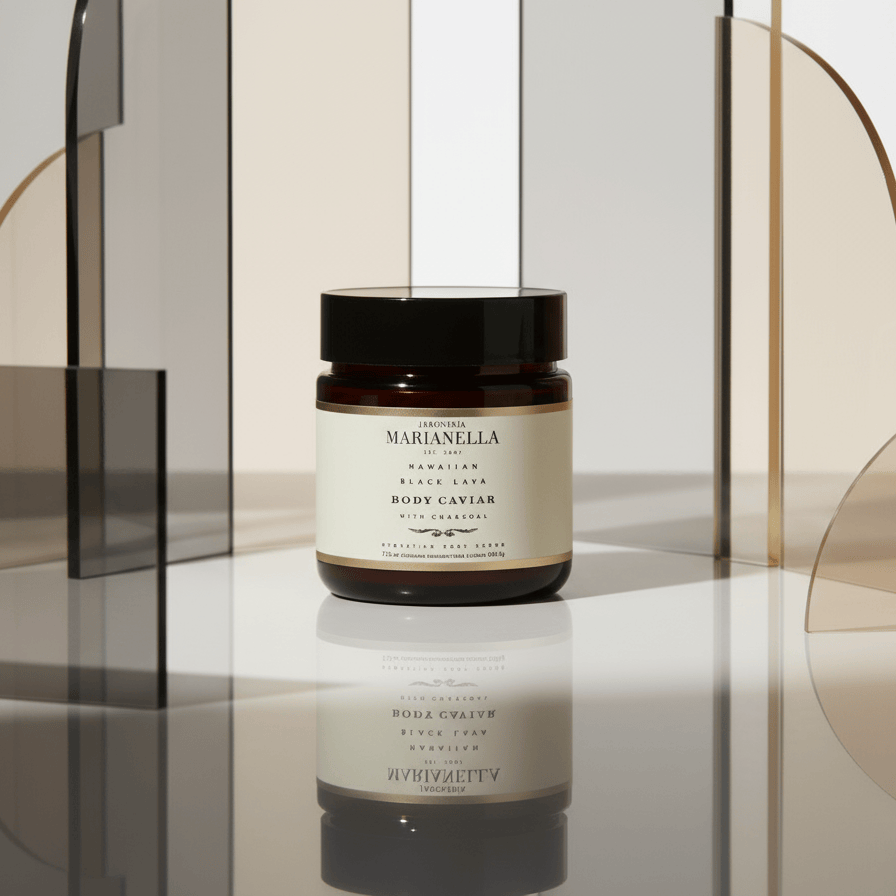
Rosemary extract beauty benefits center on one molecule doing most of the work: carnosic acid, a diterpene that scavenges free radicals and helps skin resist the visible effects of oxidative stress. Rosemary contains a variety of chemical compounds that make it useful in skincare and haircare formulations, including powerful antioxidant compounds such as carnosic acid, rosmarinic acid, and caffeic acid. The ingredient has moved well past herbal folklore. It now sits inside peer-reviewed dermatology research, and inside the body scrub currently formulated on Marianella's Brooklyn worktables. This is not a seasonal ingredient. It is a structural one, the kind that holds a formula together the way a good coat holds a room together.
What Is Rosemary Extract?
Rosemary extract is a concentrated botanical derivative of Rosmarinus officinalis, the Mediterranean evergreen shrub long used in cooking and now standardized for cosmetic use for its antioxidant load. The percentage of carnosol and carnosic acid in rosemary crops ranges from 11.7 to 17.3% and 1.09% to 3%, respectively. Commercial cosmetic extracts are often concentrated further. Some rosemary botanical extracts are standardized to contain 15% carnosic acid, delivering exceptional antioxidant protection. In formulation, that concentration is what separates a decorative ingredient from a functional one.
Rosemary Extract Beauty Benefits

The rosemary extract beauty benefits most cited in dermatology literature fall into three categories: antioxidant defense, barrier support, and product preservation. Rosemary extract has been reported to have antioxidant, anti-inflammatory, antidiabetic, and anticancer properties, and it contains many polyphenols, with carnosic acid and rosmarinic acid found in the highest concentrations. These are not marketing adjectives. They are measured outcomes from laboratory assays that track how efficiently a compound neutralizes free radicals before those radicals can degrade collagen, elastin, and lipid structures in skin.
There is also a formulation-side benefit that rarely makes it into beauty copy but matters enormously to a brand handcrafting in small batches. Rosemary extract is valued for its ability to slow oil oxidation, helping extend the shelf life of formulations while preserving freshness and performance. A body oil or balm built on natural plant oils is vulnerable to rancidity. Rosemary extract is one of the few plant-derived compounds that protects the formula itself, not only the skin it touches. For a house that measures batches by hand rather than by industrial run, that stability is not a footnote. It is the difference between a jar that holds its integrity for months and one that does not.
Where the Science Stands in 2026
The most consequential recent research comes from the University of Pennsylvania's Perelman School of Medicine. In a study published in JCI Insight, researchers showed in adult wound healing mouse models that an ethanol-based rosemary extract accelerates the speed of wound healing and mitigates fibrosis, and identified that carnosic acid activates the TRPA1 nociceptor on cutaneous sensory neurons to enhance tissue regeneration. The paper, published in late October 2025, gave long-circulating social media claims about rosemary a rare thing: a mechanism. The social media trend touting rosemary and rosemary extract as part of skincare routines is now backed by science, with a compound found in rosemary leaves shown to significantly improve the healing of skin wounds and reduce scarring.
Separately, oral supplementation research has looked at rosemary extract's effect on visible skin quality over time. A 12-week randomized controlled trial in 104 women ages 40 to 65 found that supplementation with rosemary extract improved measures of skin quality. A related trial measured the specifics. Following 12 weeks of use, a dietary supplement containing rosemary extract and its natural cofactors led to significant mean visible improvements compared to placebo in skin dullness, roughness and texture, erythema, and pore size. These are ingestible studies rather than topical ones, but they corroborate what topical formulators have observed for years: rosemary's polyphenols behave consistently across delivery methods because the underlying chemistry, radical scavenging, does not change with the route of application.
Antioxidant Strength, Measured
Antioxidant claims are easy to make and hard to substantiate. Rosemary extract is one of the rare botanicals with head-to-head data. Rosemary's carnosic acid has been shown to be a more effective antioxidant than vitamin E, and can also protect against UV-induced oxidative stress. Laboratory assays have quantified this. Extracts of R. officinalis exhibited a promoting antioxidant activity with IC50 values ranging from 0.236 mg/mL to 0.176 mg/mL, meaning smaller concentrations were required to neutralize half the free radical load, the standard measure of antioxidant efficiency. The market has responded to this data accordingly. The rosemary-containing health care products market was valued at USD $980.8 million in 2023.
Rosemary Extract in Body Care: Where It Meets Texture
September asks something specific of a body care routine. The windows close, the interiors turn formal again, and skin meets drier, more circulated air for the first time since spring. This is precisely the season in which an antioxidant-rich, texture-forward formula earns its place, not as comfort, but as preparation. Marianella's Hawaiian Black Lava Body Caviar Body Scrub with Charcoal ($38) is built for exactly this transition: a mineral-forward exfoliant that clears the way for whatever serum or oil follows it. It is handcrafted in small batches in Brooklyn, in keeping with the eco-luxury standard the brand has held since 2007, when its Venezuelan founder began rebuilding, ingredient by ingredient, the botanical world of a childhood in Caracas.
A body scrub is not a decorative step. It is a structural one, removing the barrier of dead skin that would otherwise sit between a formula and the tissue it is meant to reach. Pairing that exfoliation step with rosemary-derived antioxidants in the products that follow is less a trend than a return to formulation logic that has been documented since the compound was first isolated for cosmetic use.
Best Rosemary Extract Products 2026: What to Look For
Anyone searching for the best rosemary extract products 2026 has to season, should evaluate three things before ingredient marketing: concentration, extraction method, and what the extract is paired with. Cosmetic formulations typically use rosemary botanical extract at 0.5 to 2% in facial creams, serums, or age-defying lotions to boost antioxidant protection, improve firmness, and maintain skin's youthful resilience. A product that lists rosemary far down an ingredient list, at a fraction of a percent, is unlikely to deliver the antioxidant load the research above describes.
Extraction method matters almost as much as concentration. Research on supercritical fluid extraction found that rosmarinic acid and carnosic acid were best extracted at 150 bar and 80°C, with enhanced antioxidant activity observed in extracts rich in carnosol. Most cosmetic-grade extracts on the market today use ethanol or supercritical CO2 methods precisely because they preserve this compound profile more reliably than older solvent techniques. A best rosemary extract products 2026 shortlist should favor brands that are transparent about extraction and concentration rather than brands that simply print the botanical name on the label.
Finally, look at what the extract is formulated alongside. Rosemary's powerful antioxidant activity is attributed to its major polyphenol, rosmarinic acid, and to the phenolic diterpenes carnosol and carnosic acid, and the presence of these three compounds is also principally responsible for rosemary's anti-inflammatory properties. Formulas that pair rosemary extract with complementary botanicals rather than relying on it alone tend to perform better across both stability testing and sensory experience, which is part of why exfoliating and mineral-rich formulas make sensible partners for antioxidant-forward serums that follow.
The Marianella Approach
Marianella has been handcrafting eco-luxury skincare, bath, body, and home fragrance since 2007, with 82 SKUs spanning face, body, hand, home, and fragrance, priced between $40 and $160. The brand remains the only Venezuelan-founded, independent, luxury skincare and home fragrance house in the United States, sold at Bloomingdale's BEAUTYSPACE and covered by Vogue, Forbes, and the New York Times, among others. Every batch is still handcrafted in Brooklyn, a discipline that traces back to a family that rebuilt a botanical inheritance from Caracas, ingredient by ingredient, with no shortcuts taken along the way.
For a body care step that respects both the season and the science, consider the Hawaiian Black Lava Body Caviar Body Scrub with Charcoal, available now on marianella.co.
FAQ
What does rosemary extract do for skin?
Rosemary extract supplies antioxidant compounds, primarily carnosic acid and rosmarinic acid, that help neutralize free radicals from UV and pollution exposure. Rosemary extracts, particularly rosmarinic acid, carnosic acid, and carnosol, demonstrate strong antioxidant activity in vitro, scavenging free radicals and protecting against UV-induced and pollution-induced skin damage. It also helps stabilize the formulas it is added to, extending shelf life.
Is rosemary extract the same as rosemary oil?
No. Rosemary extract is typically a water or alcohol-based concentrate of the plant's polyphenols, standardized for antioxidant content, while rosemary essential oil is a distilled aromatic oil with a different, more volatile compound profile. Extracts are generally chosen for antioxidant and stability benefits, while oils are chosen for fragrance and scalp applications.
Can rosemary extract help with visible signs of aging?
Research suggests it may. A 12-week dietary supplement trial containing rosemary extract led to significant mean visible improvements compared to placebo in skin dullness, roughness and texture, erythema, and pore size. These findings describe visible appearance changes, not a change to skin's underlying biology.
What concentration of rosemary extract is used in cosmetics?
Rosemary botanical extract is typically used at 0.5 to 2% in facial creams, serums, and lotions, though concentration varies depending on the standardized carnosic acid content of the specific extract used.
Does rosemary extract help preserve skincare formulas?
Yes. Rosemary extract is valued for its ability to slow oil oxidation, helping extend the shelf life of formulations while preserving freshness and performance. This is one reason it appears frequently in naturally formulated body oils and balms that rely on plant oils prone to rancidity.

Leave a comment
This site is protected by hCaptcha and the hCaptcha Privacy Policy and Terms of Service apply.