


Rose water does the most in products that stay on the skin, such as mists, toners and water-based serums, where it can make up most of the formula. In a lotion or cream it can be part of the water side; in a soap or wash it rinses away and leaves mostly its scent; and a body oil rarely contains rose water at all, because water and oil do not mix. That is why the one place we use rose water is a face mist.
Where rose water comes from
Rose water is a hydrosol: the fragrant water that comes out of the still when rose petals are distilled for their oil. Rose petals hold very little oil, so a great many of them yield only a little rose oil, while the same distillation produces a generous amount of rose water. In that sense rose water is the larger part of the harvest, and the gentler one.
What is in it, and why two rose waters smell different
Rose water and rose oil come from the same flowers but are not the same. Rose oil is rich in geraniol and citronellol. Rose water is usually led by phenylethyl alcohol, the same compound that leads in the fresh flower, which is why a good rose water often smells closer to a rose in the garden than rose oil does.
The balance also changes from batch to batch. Studies of rose flowers have found that their scent compounds shift with the variety, where they grow, the time of day they are picked and the weather. Two rose waters can smell like two different gardens, and both can be genuine.
Mists, toners and serums: where it stays on the skin
Leave-on products are where rose water earns its place. In a mist or toner it can be most of what is in the bottle, so you get its full scent and its full light, hydrating feel. Sprayed over a freshly washed face, it leaves skin fresh and supple, and it makes the next layer, a serum or an oil, easier to spread.
In a water-based serum, rose water can stand in for plain water as the base that carries the other ingredients. It adds a softer scent and a more pleasant feel without changing what the serum is for.
Soaps and washes: mostly scent
A soap or wash is on your skin for a minute and then goes down the drain. Rose water in a cleanser can add a pleasant scent and make the experience nicer, but it has little time to do anything more. That is not a reason to avoid it, only a reason not to pay for it as a feature.
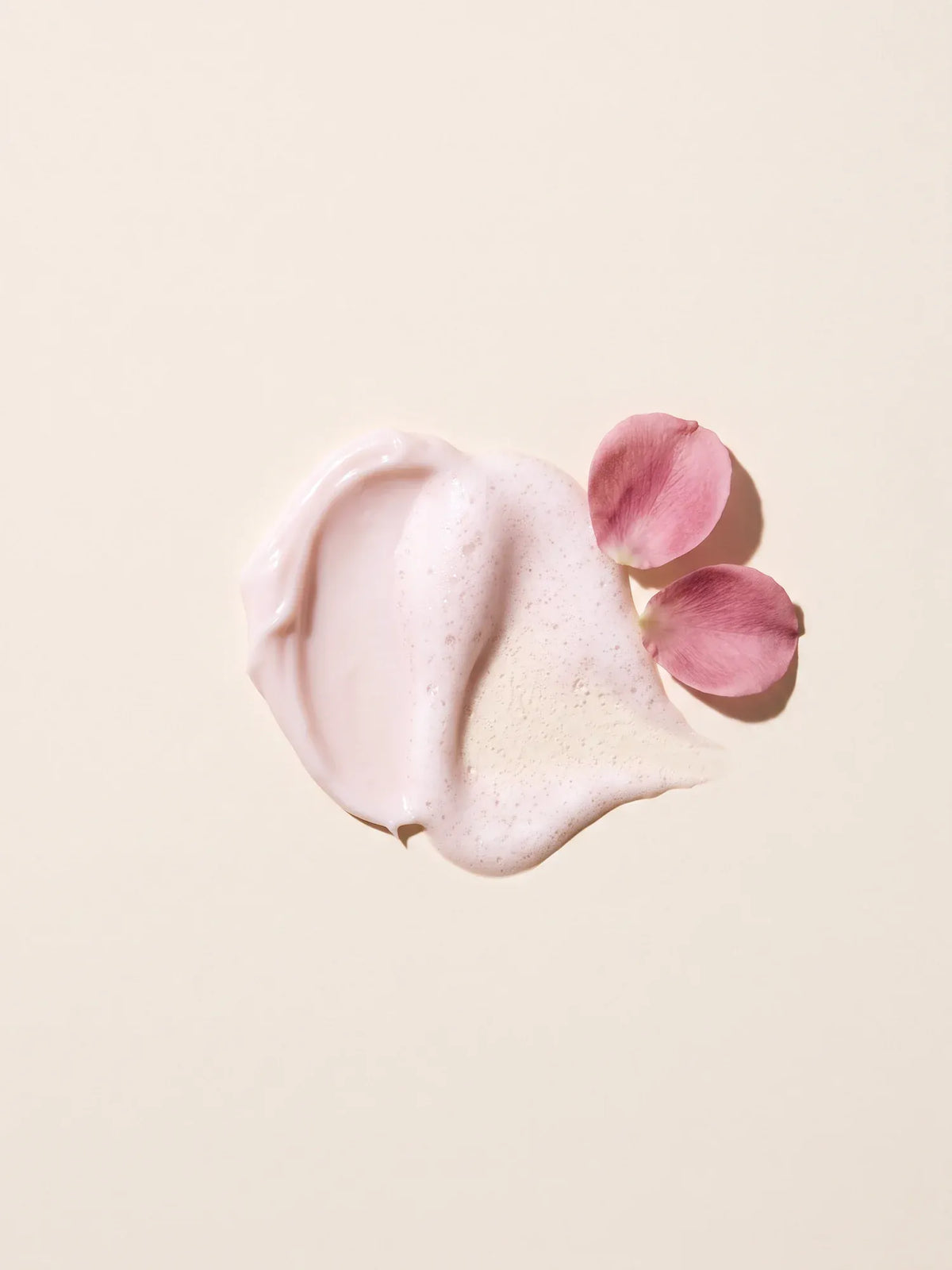
Our own Rose Face Wash Cream carries its rose in a different way: rosehip seed oil and shea butter for a velvety feel, and a touch of rose absolute for a light rose scent. It does not contain rose water, and it does not need to. Its job is to clean without leaving skin tight.
Lotions and creams: part of the water side
Most lotions and creams are a blend of water and oil. Rose water can replace some or all of the water, so it stays on the skin alongside the oils that help keep moisture in. In this format it adds scent and a little freshness; the oils and humectants do most of the moisturizing.
Plenty of good creams use other things for their water side. Our Rejuvenating Body Cream, for example, uses aloe leaf juice and glycerin for its fresh, watery layer of hydration, with Kalahari melon seed oil leading the oils.
Body oils: usually rose oil, not rose water
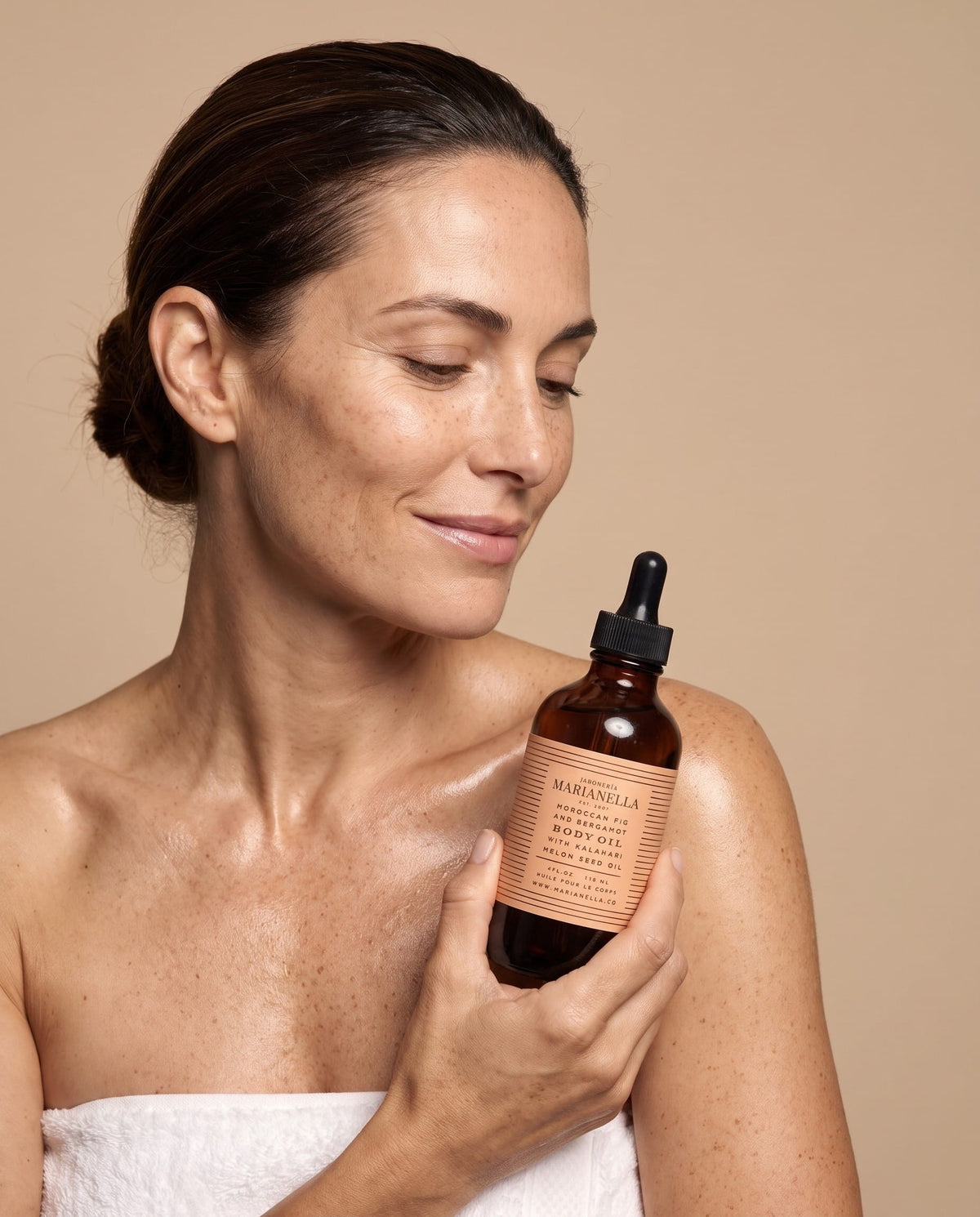
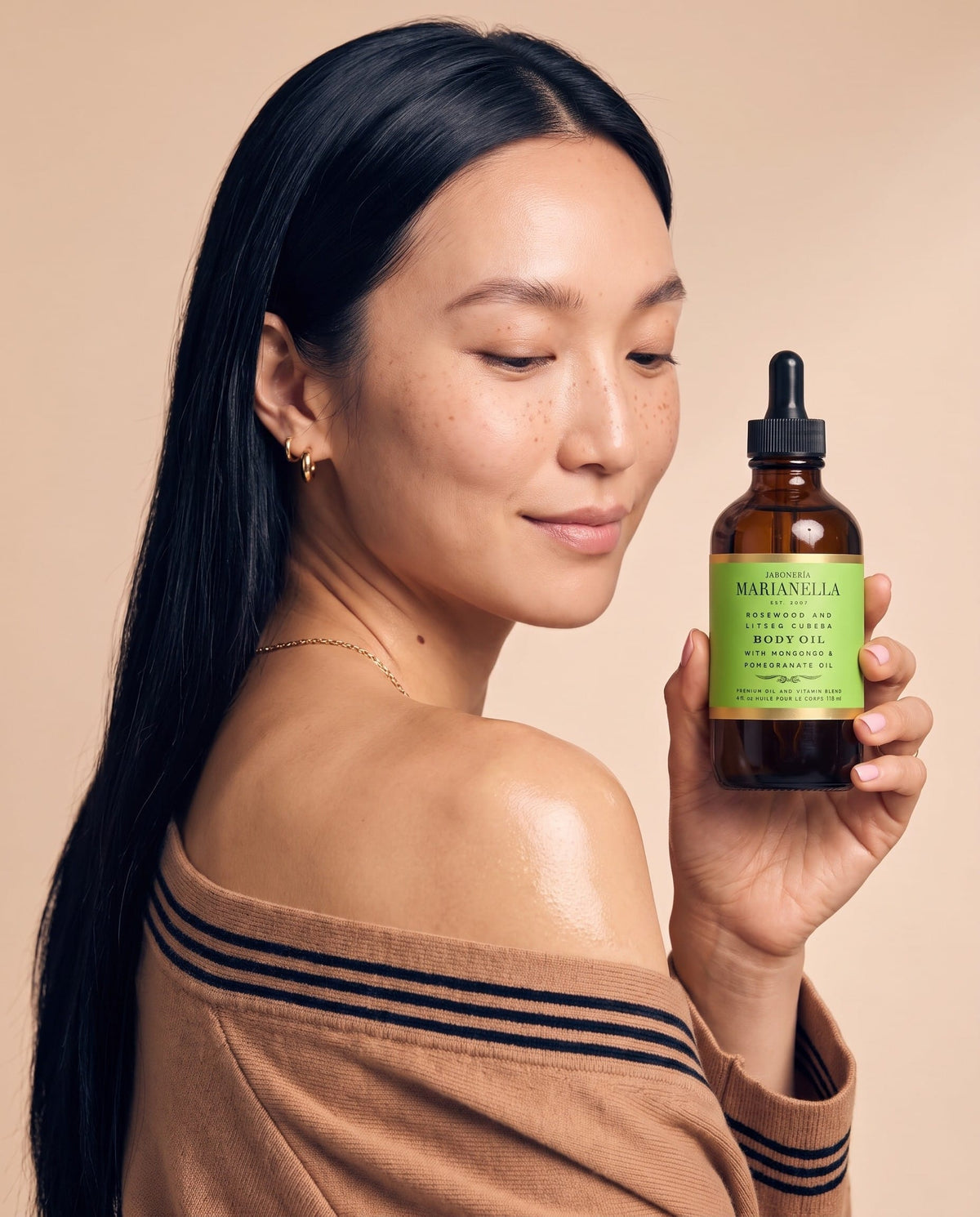
Water and oil do not mix on their own, so a pure body oil rarely contains rose water. When a body oil smells of rose, the scent usually comes from rose oil, rose absolute or a fragrance. Check the label to see which you are getting, especially if you are choosing it for the flower itself.
Reading a rose label
- Rosa damascena flower water is rose water from the damask rose.
- Rosa damascena flower oil or rose absolute is the concentrated scent, used in tiny amounts.
- Fragrance or parfum on its own means added scent, which may or may not include real rose.
Every ingredient we use is listed in our Ingredient Library, with the products it is in.
Natural rose contains compounds such as geraniol, citronellol, linalool and farnesol, which European cosmetics rules list as possible fragrance allergens. If your skin is sensitive, try any new rose product on a small area first.
Why our rose water is in a mist
If rose water does the most where it stays on the skin, the simplest way to use it is on its own. Rose Petal Mist Face Toner lists two ingredients, water and Rosa damascena flower water, with no added fragrance. Close your eyes, hold it at arm's length and mist after cleansing, before your serum, or any time during the day when skin feels dry.
Questions about rose water in products
What is the difference between rose water and rose oil?
Both come from distilling rose petals. The oil is a small, concentrated amount, rich in geraniol and citronellol; rose water is the larger, lighter part, usually led by phenylethyl alcohol.
Does Rose Face Wash Cream contain rose water?
No. It has rosehip seed oil, and its light rose scent comes from rose absolute. Our rose water is in Rose Petal Mist Face Toner.
Is rose water in a soap worth having?
It adds a pleasant scent, but it rinses away within a minute. For the feel of rose water on your skin, choose a mist or toner.
Why do some body oils smell of rose without rose water?
Because water does not mix into oil. The rose scent in a body oil usually comes from rose oil, rose absolute or a fragrance.



















Leave a comment
This site is protected by hCaptcha and the hCaptcha Privacy Policy and Terms of Service apply.