


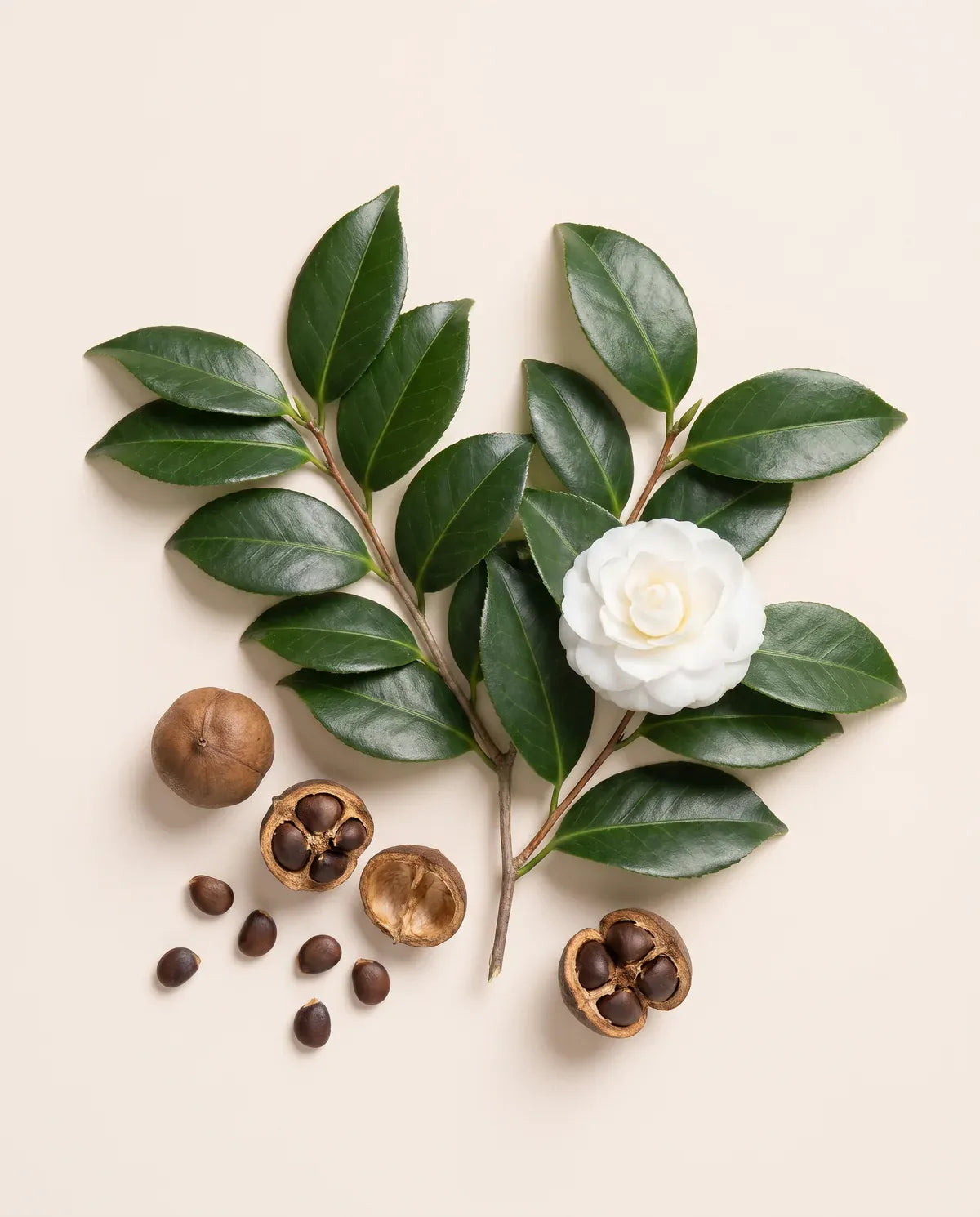
Camellia seed oil is a light, silky oil pressed from the seeds of the oil-tea camellia, and we use it because it sinks in quickly and leaves skin soft with a clean, non-greasy finish. Most of it is oleic acid, typically between 76 and 82 percent, which gives it a smooth slip and makes it unusually stable in the bottle. You will find it in three of our face formulas: The Royal Kalahari Face Serum, The Midnight Youth Potion and The Royal Kalahari Under Eye and Lip Serum Roller Oil.
What camellia seed oil is
Camellia seed oil is pressed from the mature seeds of camellia shrubs and trees. The species used most for oil is Camellia oleifera, the oil-tea camellia grown in southern China and Japan; Camellia japonica is also pressed, and Camellia sinensis is the plant that gives us tea. In China, Camellia oleifera has been grown as an oil crop for more than two thousand years, for cooking as well as for skin and hair.
The seeds are generous, usually 40 to 60 percent oil. Cold-pressed, the oil is nearly clear with a faint yellow cast, almost odorless, and light on the skin. On our labels it appears as Camellia Oleifera Seed Oil. Its fatty acids are so close to those of olive oil that it is sometimes called the olive oil of the East, though it feels lighter.
Why it feels the way it does
How an oil feels for the ten minutes after it touches your face comes down to its fatty acids. Camellia is mostly monounsaturated. In a 2026 comparison of seven Camellia oleifera oils, oleic acid was the main fatty acid in every sample, at 76.19 to 81.99 percent. Another analysis measured 73 percent oleic, 10 percent palmitic and 9 percent linoleic acid, with unsaturated fats making up about 84 percent of the total.
That profile is why a few drops seem to vanish. Camellia oil spreads easily, softens the surface of the skin and leaves no heavy film, which makes it one of the easier oils to wear on the face, even under makeup.
The smaller ingredients inside it
Fatty acids make up most of the oil, but camellia also carries small amounts of other compounds: vitamin E (tocopherols), plant sterols, polyphenols, carotenoids and squalene. Squalene is worth a note, because human skin makes it too, as part of its own natural oil. These minor compounds act as antioxidants inside the oil and help keep it fresh.
Why it keeps well, and why sourcing matters
Oils high in oleic acid are stable oils. They resist the oxidation that turns many seed oils stale, which matters for a bottle that sits on a bathroom shelf through a humid summer. One study described an oil at 80 percent oleic acid as highly stable for exactly that reason.
But not all camellia oil is the same. Species and growing conditions move the numbers: cold-pressed Camellia japonica oil in one analysis measured about 76 percent oleic and 6 percent linoleic acid, while three Camellia oleifera cultivars ranged from about 68 to 77 percent oleic. Two oils with the same name can feel different on skin. Working in small batches lets us check how each oil behaves in a blend before it goes into a bottle.
Where we use camellia seed oil
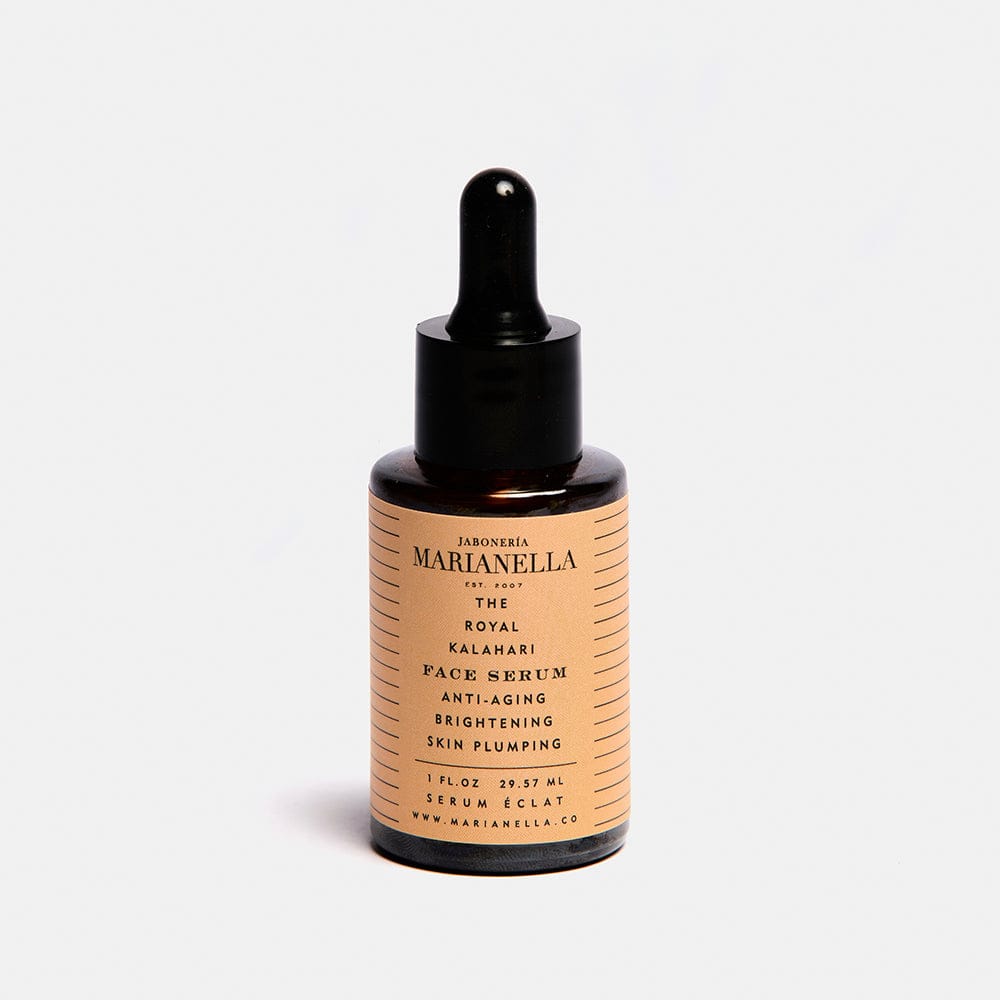
The Royal Kalahari Face Serum
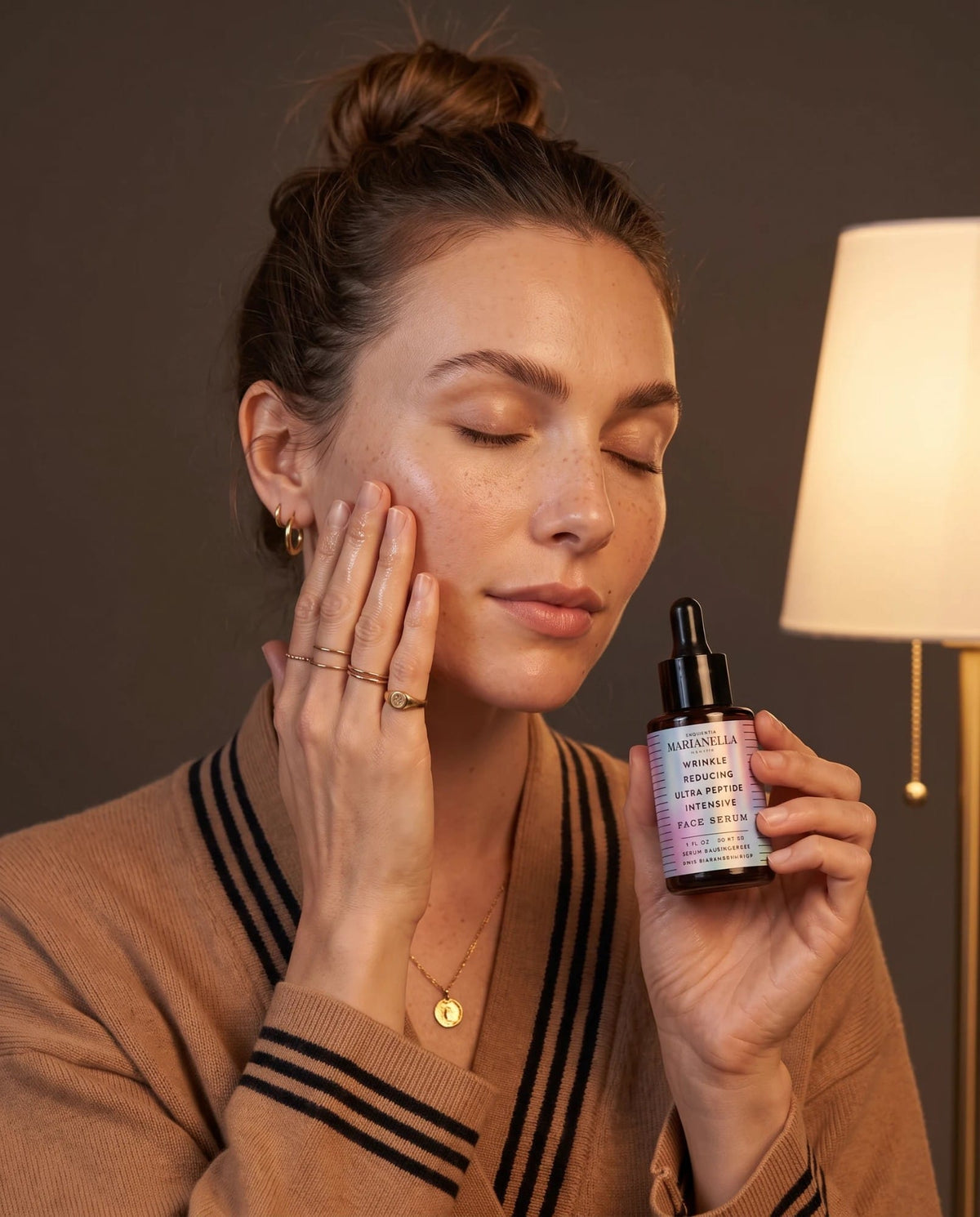
The Royal Kalahari Face Serum, winner of People's Star Beauty Award for Best Facial Care Product, is led by Kalahari melon seed oil, a light oil rich in linoleic acid. Baobab and camellia seed oils cushion and soften dry skin alongside it, with passion fruit seed, tamanu, mongongo, monoi de Tahiti and vitamins C and E. Camellia's quick absorption is part of why the serum sinks in without a greasy feel. Warm four to six drops between your fingertips and press them into face and neck, morning and night.
The Midnight Youth Potion
The Midnight Youth Potion is our evening oil-serum: thirteen botanical oils, camellia among them, blended with niacinamide, sodium hyaluronate and a vitamin C ester. It goes on silky and settles in quickly, so you can apply it and still read a chapter in bed without a film across your forehead. Press four to six drops into clean skin as the last step of your evening routine.
The Royal Kalahari Under Eye and Lip Serum Roller Oil
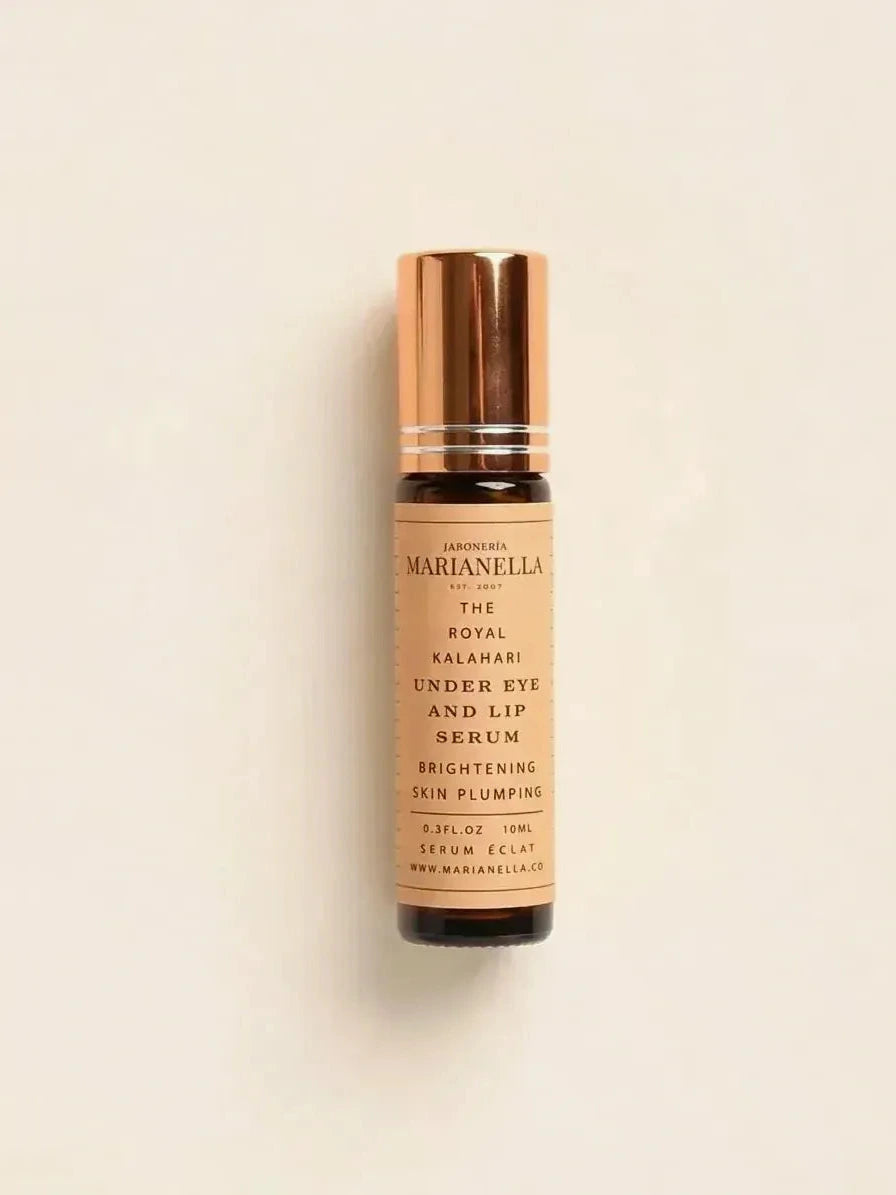
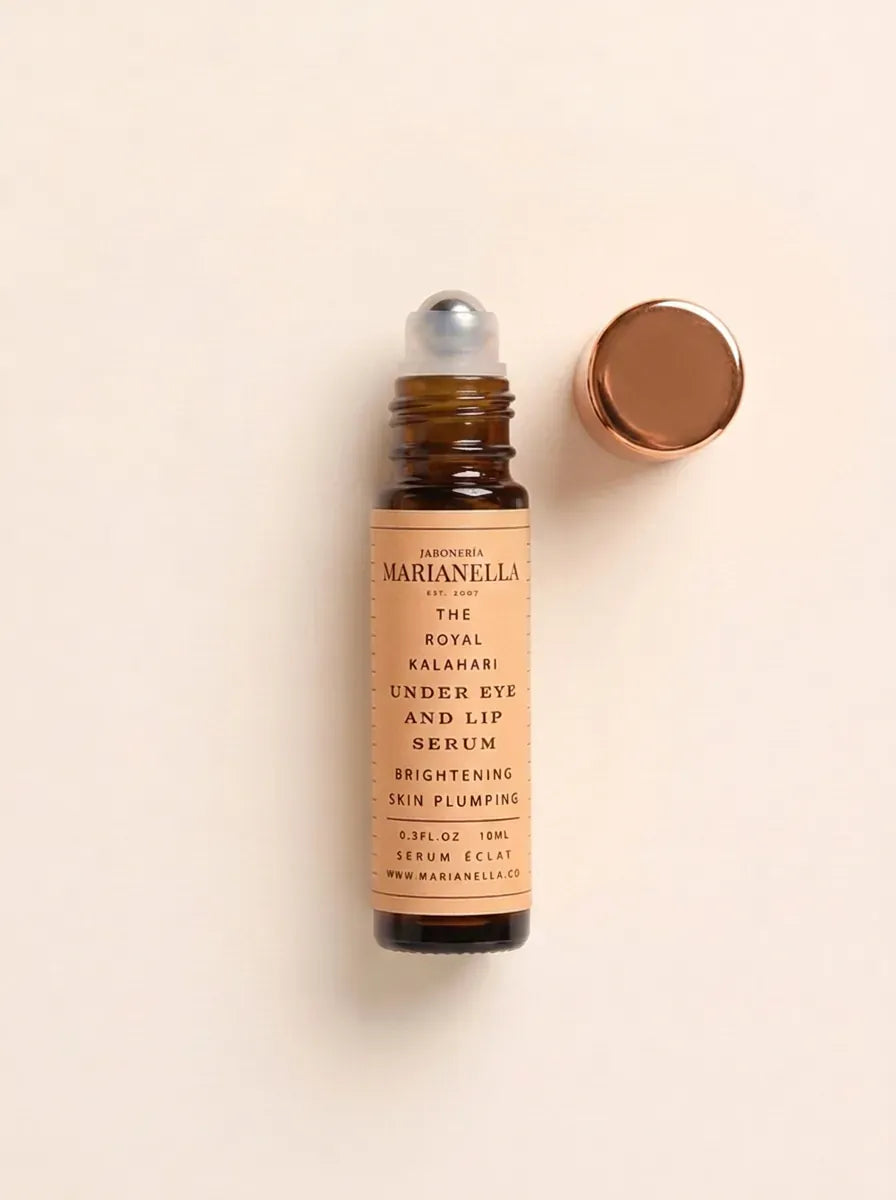
The Royal Kalahari Under Eye and Lip Serum Roller Oil brings the same family of oils, camellia included, to the two places on the face with the thinnest skin and the least oil of their own. Castor oil adds a soft, glossy cushion. A steel ball lets you trace a line under each eye and over your lips in a few seconds, and it suits normal, dry, mature and sensitive skin.
Using a camellia oil well
- Apply it to damp skin. An oil this high in oleic acid helps seal in water that is already there, so press it on after washing or after a mist.
- Press, do not rub. Warm the drops between your fingertips and press them in.
- Last at night, under sunscreen by day. In the evening, oils go on last. In the morning, let the oil settle for a minute, then apply sunscreen.
- Patch test. Try any new oil along the jaw for a few nights before using it all over.
The Ingredient Library lists camellia seed oil and every other ingredient we use, with where it comes from and how it feels.
Questions about camellia seed oil
Is camellia seed oil the same as tea tree oil?
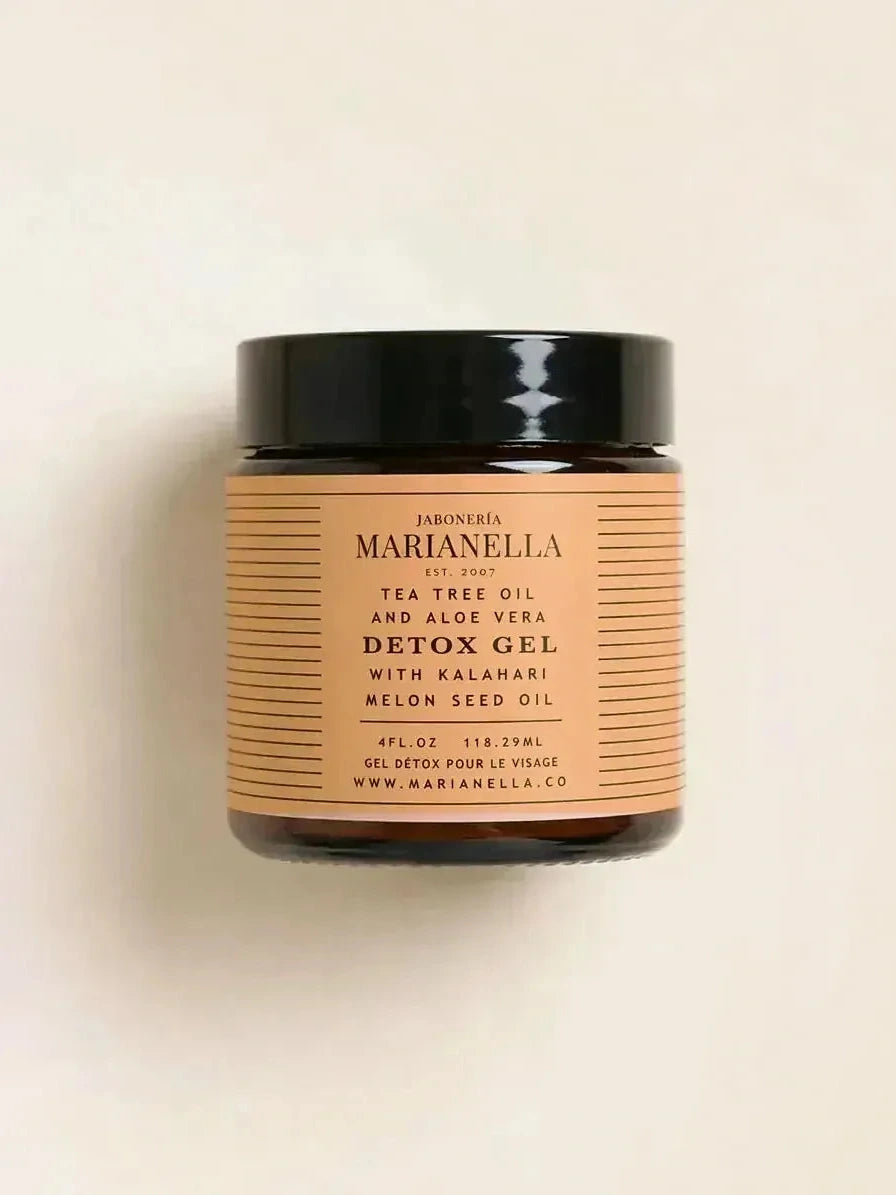
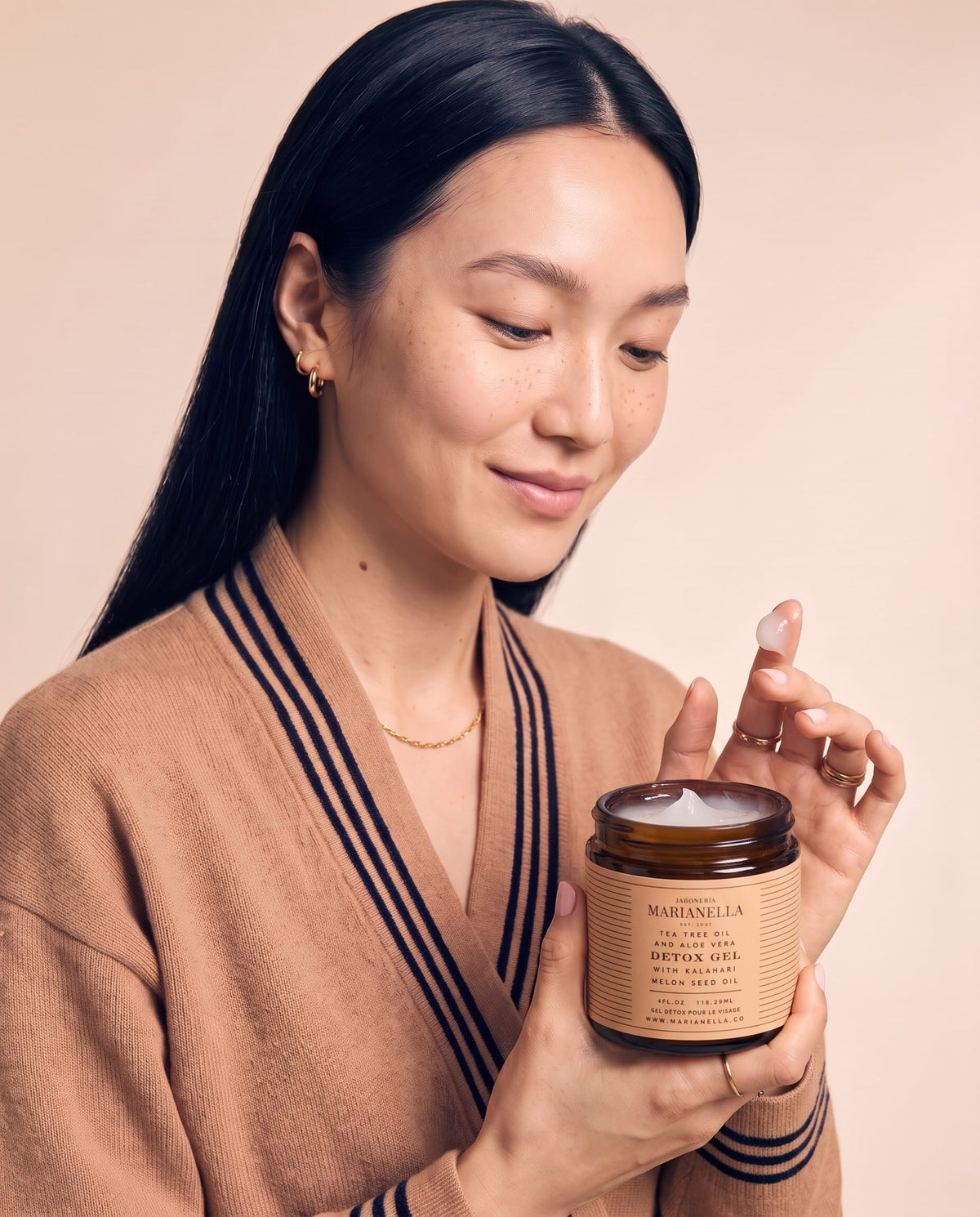
No. Camellia seed oil is a mild, nearly odorless oil pressed from camellia seeds. Tea tree oil is a sharp essential oil distilled from the leaves of an Australian shrub and used in tiny amounts; in our range it gives the Detox Gel its fresh, herbal scent.
Will camellia seed oil clog pores?
It is generally considered unlikely to, and it is light enough for combination skin. Skin varies, so patch test along the jaw for a few nights before using it all over.
How is camellia oil different from olive oil?
Their fatty acids are similar, both led by oleic acid. Camellia is lighter on the skin, nearly odorless, and absorbs more quickly.
Can camellia seed oil be used around the eyes?
Yes, in a product made for it. Our Royal Kalahari Under Eye and Lip Serum Roller Oil contains camellia and is designed for the under-eye area and the lips.



















Leave a comment
This site is protected by hCaptcha and the hCaptcha Privacy Policy and Terms of Service apply.