

Tea tree oil skincare benefits are well-documented in peer-reviewed research, making it one of the most credibly studied botanical ingredients available to formulators today. For oily, acne-prone, or congestion-prone skin, it works on three simultaneous fronts: antimicrobial, anti-inflammatory, and pore-clarifying. The science holds. The question is whether the formulation does, too.
At Marianella, we have been handcrafting in Brooklyn since 2007. Eighteen years of formulation work, three generations of Venezuelan botanical knowledge, and a deep respect for ingredients that perform. Tea tree oil earns its place in our lineup not because it is trendy, but because the data behind it is hard to ignore.
What Is Tea Tree Oil?
Tea tree oil is an essential oil made from steaming the leaves of a tree that grows in Australia. Other names for it include melaleuca oil or tea tree essential oil. It is extracted from Melaleuca alternifolia with known antibacterial, anti-inflammatory, and antioxidant properties, and is widely used in cosmetic formulations. Australia accounts for 81% of global production of steam-distilled, ISO 4730:2017-compliant tea tree oil.
Tea tree oil typically contains approximately 100 constituents, with 8 key compounds, including terpinen-4-ol, α-terpinene, γ-terpinene, 1,8-cineole, terpinolene, p-cymene, α-pinene, and α-terpineol, typically comprising up to 90% of the oil. Because of the scope for batch-to-batch variation, the composition of oil sold as tea tree oil is regulated by an international standard for "Oil of Melaleuca, terpinen-4-ol type," which sets maxima and/or minima for 14 components of the oil.
The Science Behind Tea Tree Oil for Skin
Terpinen-4-ol: The Active Driver
Tea tree oil is composed of several active compounds, with the most notable being terpinen-4-ol. This compound has been extensively studied for its antimicrobial properties, which help combat bacteria and fungi on the skin. Other components, such as alpha-terpineol and gamma-terpinene, also contribute to its therapeutic effects.


The terpinen-4-ol chemotype typically contains levels of terpinen-4-ol of between 30 to 40%, and is the chemotype used in commercial tea tree oil production. The International Standard ISO 4730 requires tea tree oil to be obtained by steam distillation from the foliage and terminal branchlets of Melaleuca alternifolia, and to have a minimum content of 30% terpinen-4-ol and a maximum content of 15% 1,8-cineole.
Tea tree oil functions by disrupting the structural integrity of microbial cell membranes, leading to the leakage of essential intracellular components and cell death. The secondary metabolites found within Melaleuca alternifolia, particularly the oxygenated monoterpenes, represent a sophisticated defense mechanism against a wide array of pathogens.
Research has confirmed that terpinen-4-ol, terpinolene, α-terpinene, and α-terpineol have strong inhibitory activities against Propionibacterium acnes and Staphylococcus aureus, two of the primary bacterial drivers of acne. In conclusion from that research, terpinen-4-ol is the major active component responsible for tea tree oil's antibacterial efficacy, with a concentration under 5% considered more suitable and safer for treating acne than higher concentrations.
Anti-Inflammatory Action on Breakout Skin
Tea tree oil has three important features that make it beneficial for skin: it is anti-inflammatory, antibacterial, and it can work as a solvent to help break up buildups of dirt, oil, or debris clogging the pores.
These properties are predominantly due to terpinen-4-ol. This compound is notably effective at breaking down the protective barrier surrounding bacteria, attributing to their loss of membrane integrity and function, essentially breaking down bacteria's defense mechanism. The result is visibly calmer skin, reduced redness around active lesions, and a cleaner pore environment. Not through harsh stripping, but through targeted molecular action.
Clinical Efficacy: What the Research Shows in 2026
In clinical study data, tea tree oil gel was 3.55 times more effective than placebo for total lesion count (TLC) and 5.75 times more effective for acne severity index (ASI). That is not marginal performance. That is a measurable, documented gap between using a well-formulated tea tree product and using nothing at all.
In some studies, tea tree oil reduced the number of pimples and made skin less oily. Although it did not work quite as well as the acne treatment benzoyl peroxide, tea tree oil had fewer side effects. For anyone who has experienced the dryness, peeling, or photosensitivity associated with benzoyl peroxide, fewer side effects is not a small distinction.
Research suggests that putting a gel that contains 5% tea tree oil may help relieve acne. Tea tree oil may irritate the skin less than other acne treatments such as benzoyl peroxide. Tea tree oil is generally considered safe for topical use at concentrations under 15%.
A systematic review published in Frontiers in Pharmacology covering randomized controlled trials between 2016 and 2024 continued to surface tea tree oil as a credible dermatological ingredient across acne treatment, skin hydration, and inflammatory skin conditions. Notable findings included the efficacy of tea tree oil for acne treatment and the anti-inflammatory properties of plant extracts.
Tea Tree Oil for Skin: Specific Benefits by Concern
Acne and Breakout-Prone Skin
This is where tea tree oil's reputation is most established and most deserved. Propionibacterium acnes, a type of bacteria that thrives in oily conditions, can proliferate and lead to inflamed acne lesions. Tea tree oil addresses that bacteria at the membrane level, not through antibiotic overreach, which matters in an era where overuse or misuse of antibiotics can lead to the development of resistant strains of Propionibacterium acnes, making acne more difficult to manage.
Many studies have shown that tea tree oil has both antimicrobial and anti-inflammatory activity in the laboratory. Clinical trials have demonstrated that the oil can help in treating conditions such as dandruff, colonization with methicillin-resistant Staphylococcus aureus in the nose, and acne.
Oily and Congested Skin
Tea tree oil is astringent and has antiseptic properties, which can help balance sebum production and reduce the size and severity of pimples. Tea tree oil does not clog pores. It is one of the more skin-friendly essential oils for acne-prone skin, with antibacterial and anti-inflammatory properties that can help keep pores clear.
The current approach in 2026 formulation is pairing tea tree oil with complementary actives rather than relying on it as a standalone treatment. When researchers compared tea tree oil head-to-head with benzoyl peroxide, benzoyl peroxide was better at reducing oiliness over time, and one study found no significant decrease in sebum secretion from tea tree oil alone. The takeaway: tea tree oil likely helps reduce surface oiliness as part of a broader skincare routine, but it works better as one piece of a routine than as the whole solution.
Sensitivity and Redness Alongside Breakouts
Breakout-prone skin is not always oily. Sensitive skin can break out too, and the usual acne arsenal is often too aggressive. According to the American Academy of Dermatology's 2024 guidelines, there is insufficient evidence to recommend topical tea tree oil as a primary acne treatment. That said, its generally mild effects on the skin make it a potential option for those seeking a more natural approach, ideally as a complementary rather than primary treatment. That measured assessment is exactly why tea tree oil belongs in a thoughtful formulation: purposeful but not overpromised.
How Marianella Formulates with Tea Tree Oil
Marianella was founded in 2007 by a Venezuelan-born formulator carrying three generations of botanical knowledge into a Brooklyn studio. The brand now spans 82 products across face, body, and home, each small-batch and handcrafted. Featured in Vogue, Allure, Forbes, and Oprah, and the recipient of the People Magazine Star Beauty Award, the line is now available at Bloomingdale's BEAUTYSPACE. The formulation philosophy is the same in 2026 as it was at founding: botanical ingredients placed in scientifically considered context, not used for marketing value alone.
Tea tree oil appears in two distinct Marianella formulations, serving different skin concerns at different moments in a routine.
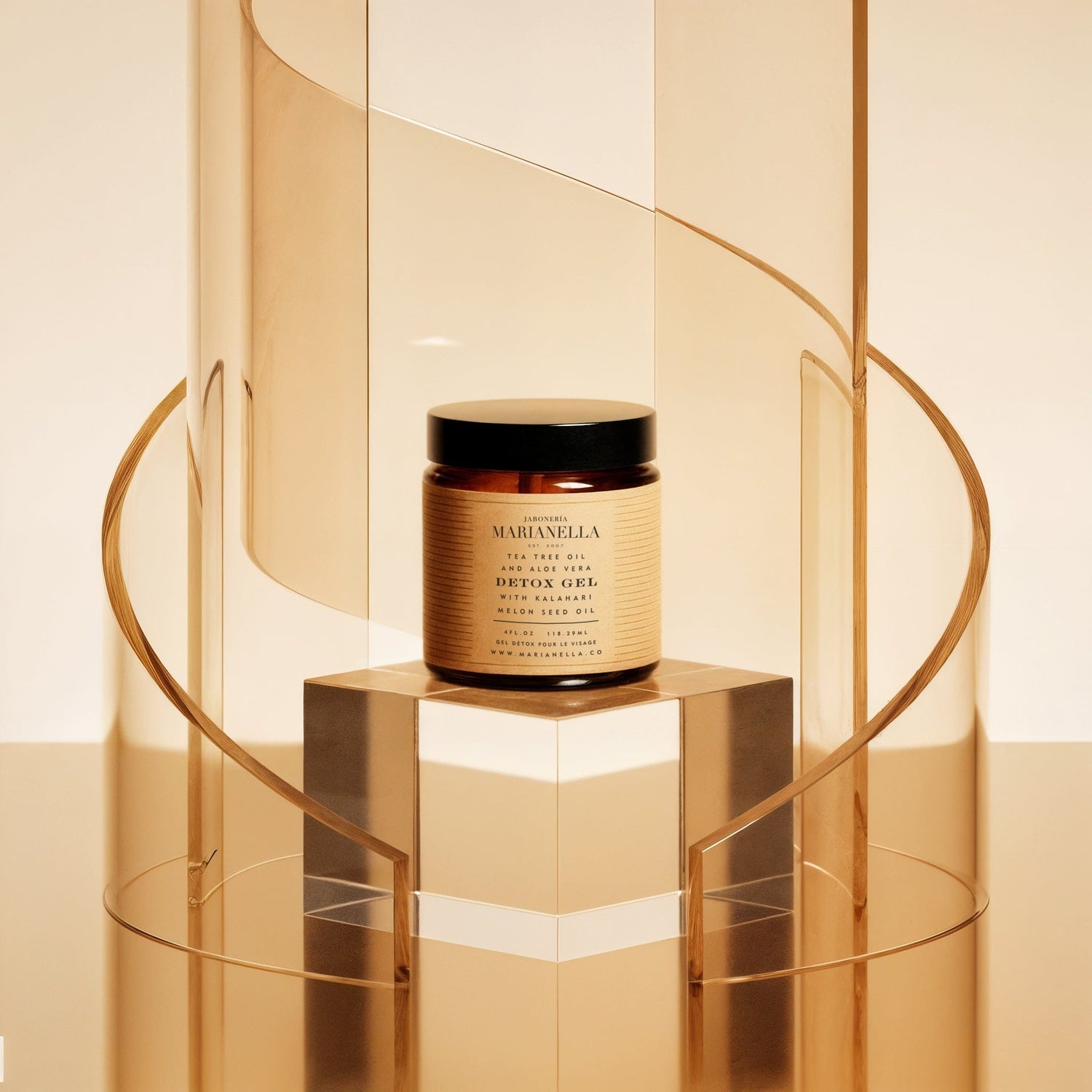
Detox Gel Now with Kalahari Melon Seed Oil
A clarifying gel treatment designed for congested, oily, and breakout-prone skin. Tea tree oil brings its documented antimicrobial and anti-inflammatory properties to a formula that also incorporates Kalahari melon seed oil, a lightweight, nutrient-dense botanical from the Kalahari desert. The combination addresses bacterial activity and inflammation without stripping the moisture barrier, a pairing that reflects eighteen years of formulation experience rather than a single-ingredient approach.
Detox Gel now with Kalahari Melon Seed Oil. $42.
Rose Face Wash Cream
A creamy, daily-use cleanser that places tea tree oil in a hydrating base. The goal here is to bring antibacterial action to the cleansing step without disrupting skin texture or the moisture barrier. Suitable for daily use, morning or evening, and particularly well-suited for combination skin that needs clarification without tightness. Three generations of Venezuelan botanical sensibility inform how rose and tea tree sit together in this formula.
Rose Face Wash Cream. $36.
How to Use Tea Tree Oil in Your Skincare Routine
The most common mistake with tea tree oil is concentration. For facial use, the standard dilution when using pure oil is about 1 drop per teaspoon (5 ml) of carrier. This gives roughly a 1% to 2% concentration, which is enough to be effective without overwhelming the skin. Some over-the-counter products contain up to 5% tea tree oil, which is the concentration used in most clinical studies. Pre-formulated products handle this correctly by design.
For a practical routine built around tea tree oil for skin:
- Cleanse with the Rose Face Wash Cream ($36) to introduce antibacterial action at the cleansing step.
- Follow with the Detox Gel now with Kalahari Melon Seed Oil ($42) as a targeted treatment for congestion, oiliness, or active breakouts.
- Finish with a non-comedogenic moisturizer to maintain the moisture barrier, particularly important when using any clarifying active.
Old or oxidized oil is not just less effective; it is more likely to cause allergic reactions. This is why formulation quality and freshness matter more with tea tree oil than with many other botanical ingredients. Small-batch production, handcrafted in Brooklyn, addresses this directly.
What to Look for in Tea Tree Oil Skincare Products
Not all tea tree oil formulations are equal. Look for products standardized to at least 30% terpinen-4-ol (the ISO standard minimum), sourced from Melaleuca alternifolia. In a finished skincare product, this means trusting brands that are transparent about sourcing and demonstrate consistent formulation standards. Eighteen years of handcrafting in Brooklyn is that kind of track record.
There are actually over 100 different chemical components of tea tree oil, with terpinen-4-ol and alpha-terpineol being the most active. A quality formulation respects this complexity rather than reducing tea tree oil to a fragrance note or a marketing claim.
The Bottom Line on Tea Tree Oil for Skin in 2026
Tea tree oil remains one of the most scientifically substantiated botanicals in modern skincare. Its antimicrobial action is rooted in real chemistry. Its anti-inflammatory role is backed by clinical data. Its value in a well-designed formulation, positioned alongside complementary botanicals, is exactly what 18 years of expertise looks like in practice.
Both the Detox Gel now with Kalahari Melon Seed Oil ($42) and the Rose Face Wash Cream ($36) are available now at Marianella and at Bloomingdale's BEAUTYSPACE. Start with the cleanser. Let the formulation do the work.
```

Dejar un comentario
Este sitio está protegido por hCaptcha y se aplican la Política de privacidad de hCaptcha y los Términos del servicio.