

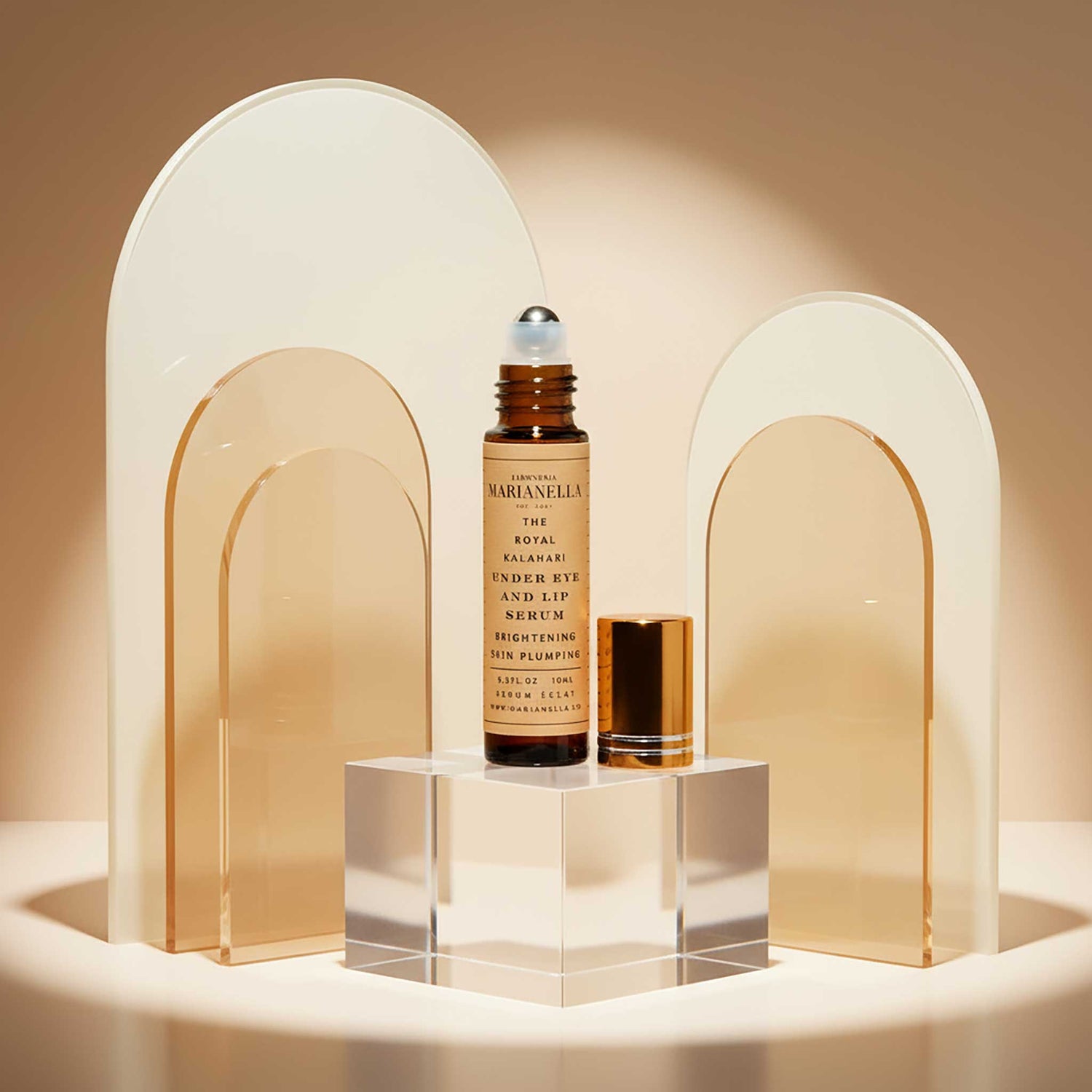
Castor oil skincare benefits have been documented across cosmetic dermatology, traditional medicine, and modern formulation science for good reason. This dense, pale-yellow oil is one of the most compositionally unusual plant oils on earth, and in 2026 it remains a cornerstone ingredient for anyone serious about barrier repair, deep hydration, and targeted under-eye care. Marianella has worked with it as part of 18 years of small-batch formulation in Brooklyn, drawing on Venezuelan botanical knowledge that spans three generations.
What Is Castor Oil? A Definition for Skin Science
Castor oil is a vegetable oil derived from the seeds of the Ricinus communis plant. It is produced by cold-pressing castor seeds and then applying heat. The result is an oil unlike nearly anything else in the botanical world, and its distinction comes down to one molecule.
Ricinoleic acid is the primary constituent of castor oil, making up approximately 85–90% of the oil's composition, with a molecular formula of C18H34O3 and a molecular weight of 298.47 g/mol. That level of concentration is essentially a technical-grade purity, something that rarely happens in nature with plant oils. Most botanical oils are blends of five or more fatty acids. Castor oil is, by comparison, almost a single compound.
Castor oil is well known as a source of ricinoleic acid, a monounsaturated, 18-carbon fatty acid. Among fatty acids, ricinoleic acid is unusual in that it has a hydroxyl functional group on the 12th carbon atom, which causes it to be more polar than most fats. That polarity changes how the oil behaves on and within skin, which is exactly what makes castor oil for skin worth understanding in chemical terms, not just cosmetic ones.
The Core Castor Oil Skincare Benefits, Explained
Deep Occlusive Hydration
In its triglycerol form, hydrogen bonding occurs between the hydroxyl groups, resulting in greater viscosity than in other oils. The hydroxyl group also imparts increased oxidative stability, providing castor oil with a longer shelf life. That viscosity is not a cosmetic flaw. It is the mechanism behind castor oil's ability to form a sustained occlusive film on skin, slowing transepidermal water loss more effectively than thinner oils.

Castor oil is primarily acclaimed for its hydrating properties, largely due to its richness in oleic acid. Naturally found in sebum, oleic acid is known for its film-forming action and is capable of strengthening the skin's protective hydrolipidic film.
Anti-Inflammatory Properties
Constituents like triricinolein, phenolic compounds, and linoleic, ricinoleic, palmitic, stearic, and oleic acid give castor oil anti-inflammatory, antioxidant, and antibacterial features. These are not isolated or theoretical claims. Castor oil has been used alongside dermatological treatments to help soothe skin, and some studies indicate that it may inhibit the activities of phospholipase A2 enzymes, some of which release arachidonic acid. Arachidonic acid is a key mediator in the inflammatory cascade, so inhibiting its release has direct relevance to reactive and sensitized skin.
In a study measuring edema reduction, after 4 hours the volume of edema was 0.38 ± 0.01 mL in untreated subjects, compared to 0.14 ± 0.01 mL in subjects that received castor oil. The reference anti-inflammatory drug diclofenac brought it to 0.11 mL. Castor oil performed close. These figures matter when evaluating puffiness and periorbital inflammation in a skincare context.
Low Comedogenic Rating
One persistent myth is that a thick oil must clog pores. The data says otherwise. Castor oil has a comedogenic rating of 1 on the standard 0–5 scale, which means it has a low likelihood of clogging pores and causing breakouts, making it suitable for most skin types, including acne-prone and sensitive skin. Castor oil is relatively stable and resistant to oxidation, which helps maintain its low comedogenic rating and makes it a reliable choice for long-term skincare use.
Antimicrobial Activity
Ricinoleic acid is an omega-9 fatty acid with antibacterial and cleansing properties, and it is found only in castor oil. Ricinoleic acid has strong antibacterial properties, which contributes to the benefits of castor oil-based skincare products. This makes castor oil a functional choice for formulations targeting both dryness and surface congestion simultaneously.
Antioxidant Protection
According to research, castor oil may be capable of combating free radicals and protecting the skin from their harmful effects. Free radical damage is a primary driver of visible aging, particularly around the thinner skin of the eye contour and lip area. An ingredient that addresses both barrier hydration and oxidative stress has compounding value in a targeted formula.
Castor Oil for Under-Eye Skin: What the Clinical Evidence Shows
The periorbital zone is where castor oil's properties converge most precisely. The skin under the eyes is the thinnest on the face, averaging 0.5mm compared to 2mm elsewhere, making it the first area to show dehydration, pigmentation, and laxity.
A clinical trial at the Molecular Dermatology Research Center of Shiraz University of Medical Sciences explored the efficacy of topical castor oil cream in treating patients with infraorbital hyperpigmentation. Using convenience sampling, 25 patients were enrolled and instructed to apply topical castor oil cream twice daily for 2 months.
The VisioFace scores decreased significantly by the end of the study (right eyes: mean difference −5.63, p < 0.001; left eyes: mean difference −5.91, p < 0.001). Castor oil cream significantly reduced the melanin level, wrinkles, and skin laxity in the infraorbital region (p < 0.05).
The results demonstrated that castor oil cream could be a safe alternative cosmetic agent for treating patients with infraorbital hyperpigmentation. Additional evidence notes that castor oil does not have remarkable transdermal absorption, meaning that adverse events from topical application will be rare, and periocular application did not produce side effects in studied subjects.
By hydrating the delicate skin under the eyes, castor oil can reduce dryness and improve skin texture, potentially making dark circles less noticeable. Its anti-inflammatory effects might also help reduce puffiness and soothe irritated skin.
How to Use Castor Oil for Skin: Application That Makes a Difference
The density of castor oil means formulation context matters. Applied straight from a bottle, it can feel too thick for daily facial use and resists even blending. The most effective delivery method for delicate zones like the under-eye and lip contour is a purpose-built roller oil, where the oil is pre-dispersed in a blend calibrated for that specific skin zone.
Consistency is the variable that most affects results. Most clinical and anecdotal reports suggest a minimum of 6–8 weeks of consistent nightly use before any meaningful changes in under-eye darkness become apparent. This is not a slow ingredient. It is an ingredient that requires time for the skin's structural response to catch up to its chemistry.
Application technique matters as much as formulation. Gently massaging castor oil under the eyes can enhance blood flow, helping to reduce puffiness and discoloration. A roller applicator naturally encourages this light pressure without the risk of pulling the skin.
The Best Castor Oil Product for 2026: Royal Kalahari Under Eye and Lip Serum Roller Oil
Marianella's Royal Kalahari Under Eye and Lip Serum Roller Oil is the brand's precision delivery vehicle for the periorbital and lip contour zones. Handcrafted in Brooklyn in small batches, it brings 18 years of formulation expertise to the two areas of the face most vulnerable to dehydration, pigmentation, and fine lines. $46.
The roller format is not a convenience choice. It is a precision choice. The stainless steel ball applies consistent, gentle pressure with each pass, encouraging lymphatic movement and product absorption simultaneously. There is no warming between palms, no guessing about how much to use, and no drag on the delicate periorbital skin.
Marianella's Venezuelan botanical heritage and three generations of plant-based knowledge inform how ingredients like castor oil are selected and paired. That lineage is not marketing language. It is the reason formulations built from this tradition perform differently from lab-assembled alternatives. The brand has been recognized in Vogue, Forbes, Oprah, and People Magazine, where it received the Star Beauty Award. The Royal Kalahari Under Eye and Lip Serum Roller Oil is available at Bloomingdale's BEAUTYSPACE and on marianella.co.
Castor Oil vs. Other Eye Area Oils: A Comparative View
Most skincare oils, like rosehip, jojoba, argan, and squalane, are blends of several different fatty acids. Their properties are distributed across that blend. Castor oil operates differently. Castor oil is unique among plant oils because nearly 90% of its composition is ricinoleic acid, a fatty acid rarely found in such high concentrations elsewhere in nature. This gives castor oil its thicker texture and allows it to stay in contact with the skin longer than most oils.
That prolonged contact time is not incidental. It extends the window during which the anti-inflammatory and humectant properties of ricinoleic acid are active on the skin surface. Thinner oils absorb and dissipate quickly. Castor oil stays present.
Who Should Use Castor Oil for Skin
Castor oil is appropriate for most skin types, including dry, mature, and combination. Sensitive skin types will appreciate castor oil's gentle nature. Its anti-inflammatory properties can help calm redness and irritation. Those with very oily or acne-prone skin may want to use it in a formulated blend rather than as a standalone oil, given its density, though its comedogenic rating of 1 remains well within safe range for most.
For the under-eye zone specifically, almost every skin type benefits. Dehydration, laxity, and periorbital pigmentation affect dry and oily skin alike, and the low-oil-feel delivery of the Royal Kalahari roller keeps the experience comfortable regardless of skin type.
Final Thoughts: Castor Oil Skincare Benefits in 2026
Castor oil earns its place in precision skincare not through trend cycles but through chemistry. It is a natural oil made from the seeds of the Ricinus communis plant and has been used for generations because of its anti-inflammatory, moisturizing, and medicinal properties. The science now supports what botanical traditions understood long before clinical trials were designed to test them.
For a formulation that puts castor oil where it performs best, the Royal Kalahari Under Eye and Lip Serum Roller Oil represents the intersection of ingredient science, generational botanical knowledge, and small-batch craft. Explore it at marianella.co or at Bloomingdale's BEAUTYSPACE.
```

Dejar un comentario
Este sitio está protegido por hCaptcha y se aplican la Política de privacidad de hCaptcha y los Términos del servicio.