

Bakuchiol skincare benefits have moved from niche botanical curiosity to one of the most researched topics in modern dermatology. If you're looking for a clinically validated alternative to retinol that works without the irritation, flaking, and photosensitivity that come with vitamin A derivatives, bakuchiol deserves a serious look. Backed by peer-reviewed data, compatible with sensitive skin, and rooted in centuries of botanical tradition, it's one of the few ingredients in 2026 that earns the word "breakthrough" without hyperbole.
What Is Bakuchiol?
Bakuchiol is a meroterpene phenol from the seeds of the Psoralea corylifolia plant , commonly known as babchi. It has been used in traditional Ayurvedic and Chinese medicine for centuries. In chemistry, a meroterpene is a hybrid molecule, one that combines elements of terpenoid and phenolic structures. This hybrid structure allows bakuchiol to interact with various metabolic pathways , which is precisely why it delivers such a wide range of skin benefits from a single compound.
Bakuchiol, a meroterpene from the Psoralea corylifolia seed, has retinol functionality through retinol-like regulation of gene expression. That last part matters. It does not share retinol's molecular structure, but it produces many of the same downstream effects in skin cells. Although bakuchiol and retinol have similar results, research has shown that bakuchiol does not use the same retinoic acid receptors as retinol. This structural divergence is what makes it so much gentler on the skin barrier.
The Science Behind Bakuchiol for Skin
Collagen, Elasticity, and the Anti-Aging Mechanism
In DNA microarray studies, bakuchiol can upregulate type I and IV collagen, and in an adult fibroblast model, it can stimulate type III collagen. These three collagen subtypes are central to skin density, firmness, and the structural integrity that starts to decline in your late twenties.
Research from Beiersdorf published in the International Journal of Cosmetic Science went further. Bakuchiol and retinol application led to a significant augmentation of COL1A1, COL7A1, and FN protein levels. What made bakuchiol stand out was what retinol couldn't do: wounds supplemented with bakuchiol but not retinol displayed a significant increase in epidermis regeneration, and areas treated with a bakuchiol-containing formulation showed a statistically significant increase in fibronectin protein values after a 4-week application.
These data provide evidence for the multidirectional efficacy of bakuchiol against cellular hallmarks of skin ageing. Its activity profile shares some common features with retinol but demonstrates several hitherto unknown biopositive effects, namely stimulation of the critical extracellular matrix component fibronectin, and accelerated epidermal regeneration and wound healing.
What the Landmark Clinical Trial Found
The most cited study in bakuchiol research is the Dhaliwal et al. randomized, double-blind trial published in the British Journal of Dermatology. This was a 12-week study in which 44 patients applied either bakuchiol 0.5% cream twice daily or retinol 0.5% cream daily. The results were unambiguous.
Bakuchiol and retinol both significantly decreased wrinkle surface area and hyperpigmentation, with no statistical difference between the compounds. The retinol users reported more facial skin scaling and stinging. On the hyperpigmentation measure specifically, results were most marked after the full 12 weeks, with a 20 percent reduction in wrinkle severity. 59 percent of the participants in the bakuchiol group showed improvement in their hyperpigmentation at week 12, compared to 44 percent of those in the retinol group.
The conclusion from the researchers was direct: "Bakuchiol is comparable with retinol in its ability to improve photoageing and is better tolerated than retinol. Bakuchiol is promising as a more tolerable alternative to retinol."
Antioxidant Activity: A Property Retinol Lacks
One of the most significant differentiators between bakuchiol and retinol isn't what they share. It's what bakuchiol does that retinol cannot. In contrast to retinol, bakuchiol demonstrated high antioxidative efficacy. Bakuchiol has been proven to activate Nrf2, a transcription factor that plays an important role in cellular resistance to oxidative stress. With its additional antioxidant abilities, including its ability to scavenge oxygen free radicals, it has a good role in preventing mitochondrial lipid peroxidation.
Free radical damage is one of the primary drivers of accelerated skin aging. An ingredient that both rebuilds collagen and neutralizes the oxidative stress degrading that collagen is doing two jobs at once. That efficiency matters.
Anti-Inflammatory Benefits
The main skin bioactivities of bakuchiol include antifungal, antibacterial, antioxidant, anti-inflammatory, antiaging, depigmenting, and anticancer properties. On the inflammation front, levels of prostaglandin E2 and macrophage migration inhibitory factor were significantly decreased by both bakuchiol and retinol. Bakuchiol but not retinol significantly increased FGF7 protein levels, a fibroblast growth factor associated with skin repair and barrier maintenance.
Bakuchiol vs. Retinol: The Honest Comparison
Retinol remains clinically important. Clinical studies using sophisticated imaging technology show that prescription-strength retinoids can reduce wrinkle depth by up to 35% over six months. For moderate to severe photoaging, a dermatologist may still reach for a retinoid first.
But for the majority of people navigating daily skincare, bakuchiol offers a compelling argument. Clinical studies show bakuchiol delivers comparable results to retinol without the harsh side effects that many cannot tolerate, especially during high-UV months. Unlike retinol, bakuchiol does not cause photosensitivity, meaning it can be used morning and evening without the concern of sun-induced irritation that governs retinol use.
There's also evidence on longevity of results. Bakuchiol maintained its benefits during an 8-week post-treatment observation period, while some retinol benefits showed signs of regression once treatment stopped. This suggests that bakuchiol may offer more sustainable long-term results.
The effective concentration range is well-established. Sytheon Ltd., the manufacturer of Sytenol A, the pharmaceutical-grade bakuchiol used in most professionally formulated products, recommends that effective, safe use falls within 0.5% to 1.0%. Those applying 0.5% bakuchiol twice daily saw comparable reductions in wrinkle severity to those applying 0.5% retinol once daily.
Who Should Be Using Bakuchiol
Sensitive Skin and Reactive Skin Types
Patients with sensitive skin find topical retinoid use for anti-aging purposes challenging due to irritation. A clinical study published in the Journal of Drugs in Dermatology evaluated bakuchiol specifically in this population. 60 female subjects, Fitzpatrick skin types I through V, ages 40 to 65, with sensitive mild to moderate photodamaged skin were enrolled. The sensitive skin panel included eczema/atopic dermatitis, rosacea, and cosmetic intolerance syndrome.
The skincare products were well tolerated and efficacious (P<0.001) in terms of investigator-assessed improvement in visual smoothness, tactile smoothness, clarity, radiance, overall appearance, and global anti-aging. Cheek corneometry measurements demonstrated a statistically significant 16% increase in skin moisture content (P<0.001). A 16% increase in measured skin hydration from an anti-aging active is not a minor finding.
Skin Prone to Breakouts
Bakuchiol for skin goes beyond anti-aging. A clinical trial using 1% bakuchiol showed a remarkable 57% reduction in acne after just 6 weeks. In a separate study examining combination therapy, the best results were seen in the combined bakuchiol and salicylic acid group, who showed a 70% decrease in acne lesions and inflammation after six weeks of twice daily use.
Pregnancy and Breastfeeding Considerations
Retinoids are explicitly contraindicated during pregnancy due to teratogenic risk. Bakuchiol, a plant-derived compound from Psoralea corylifolia, has emerged as a compelling option: clinically shown to deliver retinol-like benefits without the teratogenic risks. Bakuchiol is associated with fewer irritative reactions than retinol. It is better tolerated by sensitive skin, including during pregnancy, a period when skin can be more fragile. That said, there are no studies to prove that bakuchiol is definitively safe during pregnancy, and the FDA has not assigned this ingredient a pregnancy safety rating. Consult your dermatologist or OB before adding any new active to a pregnancy skincare routine.
How to Use Bakuchiol in Your Skincare Routine
Because bakuchiol does not increase photosensitivity the way retinol does, it can be used in both morning and evening routines. Its lipophilic nature means it absorbs most effectively after water-based serums and before heavier moisturizers. For morning use, always follow with broad-spectrum SPF 30 or higher.
Start with once daily use to allow your skin to acclimate, then build to twice daily over two to four weeks. The clinically validated concentration range is 0.5% to 1.0%. Products below 0.5% are unlikely to deliver the results seen in peer-reviewed trials.
Bakuchiol layers well with vitamin C, hyaluronic acid, niacinamide, and peptides. It is one of the rare anti-aging actives that can be combined with most of your existing routine without conflict.
Bakuchiol and the Marianella Formulation Philosophy
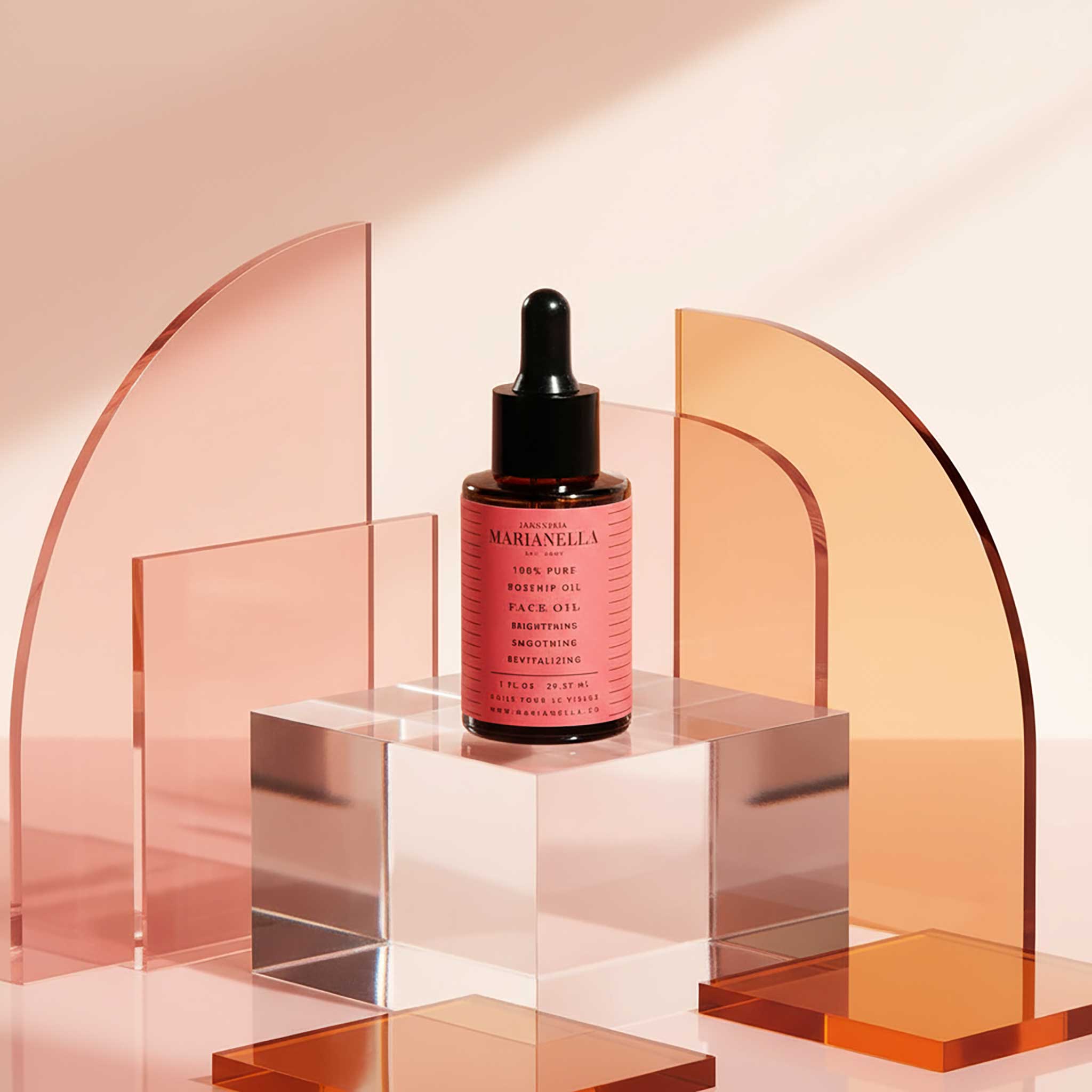
Marianella has been handcrafting skincare in Brooklyn since 2007. Eighteen years of formulation expertise, informed by three generations of Venezuelan botanical knowledge, shapes how every active is selected, sourced, and combined. Founder Mariela Farias built the brand as the only Venezuelan-founded luxury beauty brand in the United States, bringing a tradition of plant-based beauty intelligence that long predates the current botanical skincare moment.
That context matters when it comes to an ingredient like bakuchiol. Venezuelan botanical heritage includes deep familiarity with plant-derived actives that deliver results without destabilizing the skin barrier. Bakuchiol fits that philosophy precisely. It is not a synthetic approximation of a natural process. It is a plant compound with a centuries-long history of use, now validated by peer-reviewed clinical data.
Marianella's 82 products across face, body, and home reflect a commitment to small-batch formulation where ingredient integrity is non-negotiable. Every SKU is handcrafted. Nothing is scaled beyond what quality control allows. That discipline is what earned placement at Bloomingdale's BEAUTYSPACE, recognition from Vogue, Forbes, Oprah, and Allure, and the People Magazine Star Beauty Award.
For skin that responds to science and demands the precision of small-batch craft, Marianella's collection is available now at Bloomingdale's BEAUTYSPACE and at Marianella.com.
The Bottom Line on Bakuchiol Skincare Benefits in 2026
The science is consistent and growing. In a 12-week clinical trial, skincare products using bakuchiol showed significant improvements in lines and wrinkles, elasticity, and pigmentation, while reducing damage caused by retinol without the unwanted effects of retinol. The antioxidant, collagen-stimulating, and anti-inflammatory mechanisms are documented. The tolerability profile is superior to retinol across multiple skin types. And the sustainability of results over time appears to hold even after use is discontinued.
For anyone navigating sensitive skin, pregnancy skincare, daily sun exposure, or simply a low tolerance for irritation, bakuchiol is not a compromise. It is a studied, substantiated choice. Explore the Marianella collection to find the formulation right for your skin.
```


Dejar un comentario
Este sitio está protegido por hCaptcha y se aplican la Política de privacidad de hCaptcha y los Términos del servicio.