

Vitamin C skincare benefits are among the most rigorously studied in modern dermatology, and for good reason. Topical ascorbic acid is one of the few cosmetic ingredients with a direct, documented mechanism for increasing collagen production, neutralizing UV-generated free radicals, and visibly reducing hyperpigmentation. In 2026, it remains the benchmark antioxidant in serious skincare formulation, and Marianella has been working with it across multiple serums since the brand's founding in Brooklyn in 2007.
What Is Vitamin C in Skincare?
Vitamin C, in its most bioavailable topical form, is L-ascorbic acid (L-AA), a water-soluble antioxidant and recognized cosmeceutical. L-ascorbic acid is a hydrophilic molecule with multiple functions in skin health. It acts as the most potent antioxidant in the skin, serves as a cofactor in collagen synthesis, enhances fibroblast proliferation, and inhibits tyrosinase. Humans cannot synthesize vitamin C endogenously. Vitamin C is synthesized by most animals and plants; however, humans lack the enzyme L-gulono gamma-lactone oxidase, which is required for its endogenous production. Consequently, humans must obtain this vitamin through dietary sources.
Clinical data suggest that, despite high-dose oral supplementation, the concentration of vitamin C in the skin remains low. The only effective method to increase skin concentration is by topical application of L-ascorbic acid, which has led to its widespread use in cosmeceutical products. That gap between dietary intake and skin-level concentration is exactly why a well-formulated topical serum matters.
The Science Behind Vitamin C Skincare Benefits
Collagen Synthesis and Skin Thickening
Vitamin C activates transcription factors involved in collagen synthesis and stabilizes procollagen messenger RNA that regulates Type I and III collagen production. Studies show vitamin C increases the steady-state level of mRNA for collagen types I and III through boosted transcription and prolonged half-life of the transcripts.

|
$43 |

|
$72 |

|
$43 |

|
$28 |
The structural consequences of this are real and measurable. Vitamin C benefits human skin physiology notably by stimulating the biosynthesis of collagen. The main cutaneous collagens are types I and III, which are less synthesized with aging. A 2025 study published in the Journal of Investigative Dermatology pushed the understanding further. Researchers in Japan discovered that vitamin C helps thicken the skin by directly activating genes that control skin cell growth and development. The findings suggest the ingredient does not just support collagen scaffolding but works at the gene-expression level to reactivate epidermal renewal.
Antioxidant Protection Against Photoaging
Ascorbic acid has neutralizing properties of free radicals, being able to interact with superoxide, hydroxyl and free oxygen ions, preventing the inflammatory processes, carcinogens, and other processes that accelerate photoaging in the skin. Clinical studies underscore the effectiveness of topical L-ascorbic acid in preventing photoaging, reducing wrinkles, and mitigating hyperpigmentation.
Multiple randomized controlled trials have documented improvements in wrinkle depth, skin texture, and pigmentation with 12 weeks of consistent topical application. This is not a slow-burn ingredient. Twelve weeks is a realistic window for measurable results, which separates vitamin C from many trending actives with far thinner clinical records.
Brightening and Hyperpigmentation Reduction
Vitamin C interacts with copper ions at tyrosinase-active sites and inhibits the enzyme tyrosinase, the main enzyme responsible for converting tyrosine into melanin. This mechanism decreases melanin formation and addresses age spots and uneven skin tone. The inhibition in melanin production by vitamin C is thought to be due to the vitamin's ability to reduce the ortho-quinones generated by tyrosinase, although other mechanisms are also possible.
The brightening effect works through a fundamentally different pathway than exfoliation. Rather than removing pigmented cells, vitamin C interrupts the biochemical signal that produces excess melanin in the first place. That makes it effective for melasma, sun spots, and post-inflammatory discoloration across skin tones.
Formulation Matters: pH, Concentration, and Stability
Vitamin C is one of the most demanding ingredients to formulate correctly. Its benefits are entirely concentration- and pH-dependent. L-ascorbic acid must be formulated at pH levels less than 3.5 to enter the skin. Maximal concentration for optimal percutaneous absorption was 20%. Tissue levels were saturated after three daily applications; the half-life of tissue disappearance was about 4 days.
Research consistently demonstrates that L-ascorbic acid below 8% provides antioxidant surface protection but fails to stimulate meaningful collagen production. Concentrations between 10% and 20% cross the clinical threshold, where peer-reviewed studies document measurable improvements in photoaging, hyperpigmentation, and skin firmness. Above 20%, absorption plateaus and irritation risk increases sharply with no proportional benefit.
Stability is the other formulation challenge. Formulation strategies, including pH adjustment and encapsulation, are explored to address the intrinsic instability of L-ascorbic acid. This is a technical problem Marianella's team has spent 18 years approaching through small-batch production, where each batch can be carefully monitored rather than scaled past the point of quality control. Three generations of Venezuelan botanical formulation knowledge inform how Marianella pairs vitamin C with synergistic ingredients to support both performance and stability.
Vitamin C and Niacinamide: A High-Performance Pairing
There has been long-standing confusion about combining vitamin C with niacinamide. The concern is now resolved by the evidence. A persistent myth about pairing vitamin C and niacinamide traces back to outdated research. Early studies tested pure forms of both ingredients at very high temperatures, which produced nicotinic acid, resulting in skin irritation. However, these conditions don't reflect modern skincare. Today's well-formulated products remain stable when stored at room temperature, making the combination safe for daily use.
Dermatologists emphasize that niacinamide and vitamin C are both powerful antioxidants that work synergistically to protect the skin from environmental damage and signs of aging. Vitamin C brightens, protects, and supports collagen. Niacinamide strengthens the barrier, calms inflammation, and addresses pigmentation through a different pathway. Together, they give more complete results than either ingredient alone.
Marianella brings this pairing to market in a single, precisely formulated serum (more on that below), eliminating the need to layer and sequence two separate products.
For Skin: Vitamin C Addresses Multiple Concerns Simultaneously
One reason vitamin C maintains its position as a cornerstone active is that it works on several concerns at once. It acts as the most potent antioxidant in the skin, serves as a cofactor in collagen synthesis, enhances fibroblast proliferation, and inhibits tyrosinase. Vitamin C has the potential to mitigate the damage caused by oxidative stress, reduce the appearance of lines and wrinkles, and diminish hyperpigmentation.
As we age, the epidermis, the outermost layer of skin, gradually becomes thinner and loses its protective strength. About 90% of the cells in this layer are keratinocytes, which originate from deeper layers of the epidermis and migrate upward, ultimately forming the skin's protective barrier. Vitamin C directly supports the renewal of this system, which is why consistent use changes both the texture and resilience of skin over time.
Marianella's Vitamin C Serums
Marianella, handcrafted in Brooklyn and featured in Vogue, Oprah, Forbes, and Allure, now available at Bloomingdale's BEAUTYSPACE, builds vitamin C into several distinct serums across the 82-SKU lineup. Each addresses different skin concerns and pairs vitamin C with complementary actives chosen with 18 years of formulation precision behind them.
Vitamin C Collagen Boosting Face Serum with Niacinamide
The most direct expression of vitamin C in the Marianella lineup. This serum pairs the antioxidant and collagen-stimulating properties of vitamin C with niacinamide's barrier-strengthening and brightening action. The combination addresses photoaging, hyperpigmentation, and skin texture through two clinically validated pathways simultaneously. A focused serum for anyone targeting uneven tone or early signs of aging. Vitamin C Collagen Boosting Face Serum with Niacinamide. $43.
The Royal Kalahari Face Serum
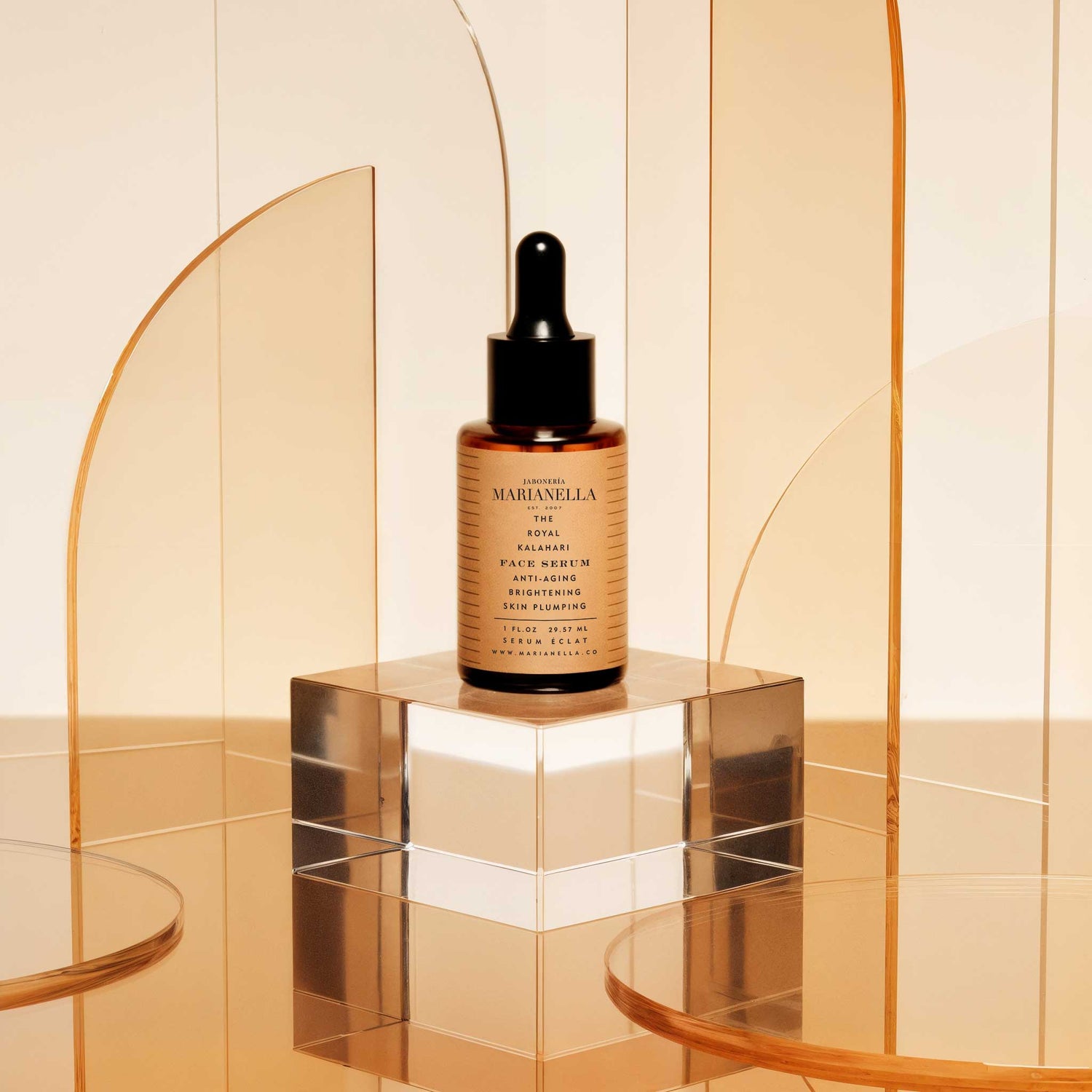
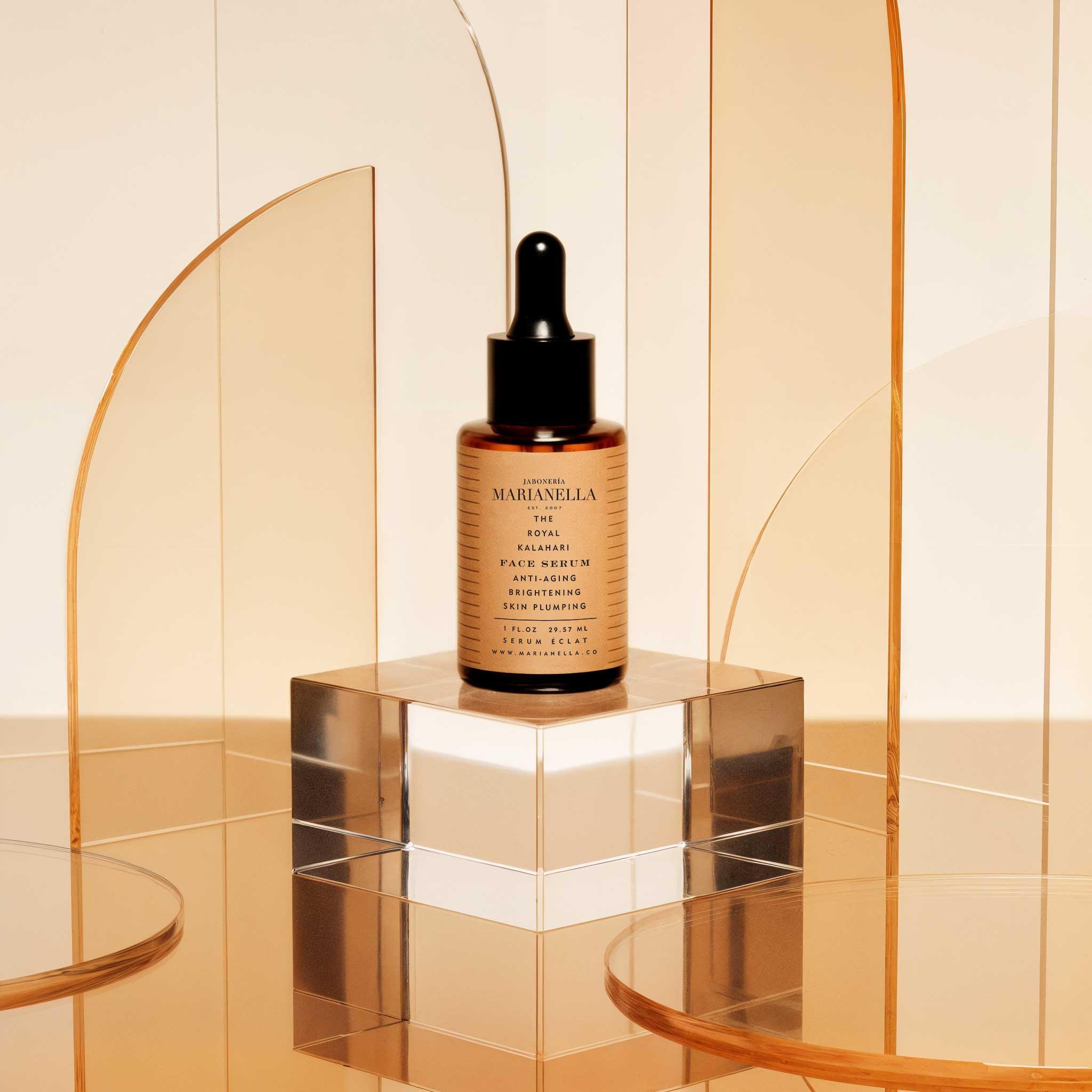
One of Marianella's most recognized formulas, the Royal Kalahari Face Serum draws on three generations of botanical sourcing knowledge, combining African botanical actives with vitamin C to support luminosity and skin tone. People Magazine's Star Beauty Award winner. Lightweight and fast-absorbing, it fits a morning routine without disrupting subsequent steps. The Royal Kalahari Face Serum. $43.
Wrinkle Reducing Ultra Peptide Intensive Face Serum
A more intensive option that brings vitamin C into a peptide-forward formula designed to address deeper lines and firmness. Peptides and vitamin C operate through complementary mechanisms, with peptides signaling collagen production directly and vitamin C providing the cofactor support and antioxidant environment that keeps that production functioning efficiently. For skin concerned with visible wrinkle depth. Wrinkle Reducing Ultra Peptide Intensive Face Serum. $72.
The Royal Kalahari Under Eye and Lip Serum Roller Oil
Ascorbic acid is widely used in topical compositions to treat or prevent a range of cosmetic and dermatological conditions, including reducing the appearance of dark circles under the eyes. Marianella's roller-tip serum brings that benefit to the periorbital area in a targeted, low-friction application format. The roller tip controls pressure and reduces product waste, which matters when working around delicate under-eye skin. The Royal Kalahari Under Eye and Lip Serum Roller Oil. $28.
How to Use Vitamin C for Skin: Application Basics
Vitamin C performs best on clean skin, before moisturizer and SPF in a morning routine. Apply vitamin C first on clean skin, wait 1 to 2 minutes for absorption, then apply niacinamide. This gives vitamin C the best pH environment to work, and niacinamide will still be effective when applied afterward. For serums with both ingredients already combined, that sequencing is handled within the formula itself.
Consistency matters more than quantity. Maximal concentration for optimal percutaneous absorption is 20%. Tissue levels are saturated after three daily applications; the half-life of tissue disappearance is about 4 days. Using vitamin C daily, rather than occasionally at high concentration, keeps tissue levels steady and the antioxidant reservoir replenished.
Who Should Use Vitamin C Skincare Products in 2026
Almost everyone. The evidence for vitamin C's safety across skin types and tones is strong. It addresses concerns that span age groups: early users benefit from the photoprotective and brightening effects, while mature skin benefits additionally from the collagen-synthesis stimulation and epidermal thickening documented in recent research.
Sensitive skin types should start with a lower-concentration formula or a more stable vitamin C derivative rather than high-percentage L-ascorbic acid. The Marianella lineup offers entry points at different intensity levels, so the choice is less about whether to use vitamin C and more about which formulation suits the skin's current needs.
Marianella's collection is available online and at Bloomingdale's BEAUTYSPACE. Eighteen years of small-batch formulation in Brooklyn, built on Venezuelan botanical tradition, informs every product in the lineup.
```

Dejar un comentario
Este sitio está protegido por hCaptcha y se aplican la Política de privacidad de hCaptcha y los Términos del servicio.