

Niacinamide skincare benefits are not a trend. They are among the most rigorously documented outcomes in modern cosmetic dermatology, backed by decades of peer-reviewed clinical research and validated across every skin type. Niacinamide, an active form of vitamin B3, is recognized for its significant dermal benefits including skin brightening, anti-aging properties, and the protection of the skin barrier. In 2026, it remains one of the few ingredients that earns a place in virtually every serious formulation, from daily serums to targeted treatments. At Marianella, it sits at the core of three distinct formulas, each designed to deliver its benefits in combination with complementary actives.
What Is Niacinamide?
Niacinamide (nicotinamide) is the heterocyclic aromatic amide form of water-soluble vitamin B3 (niacin). It is a component of coenzymes such as nicotinamide adenine dinucleotide (NAD+), reduced nicotinamide adenine dinucleotide (NADH), nicotinamide adenine dinucleotide phosphate (NADP+), and reduced nicotinamide adenine dinucleotide phosphate (NADPH). In plain terms, niacinamide is a cellular fuel source. It replenishes the coenzymes that power DNA repair, energy metabolism, and antioxidant defense inside skin cells. That biological centrality is why its topical effects reach so broadly across barrier function, pigmentation, and structural integrity.
Niacinamide is a powerful antioxidant and anti-inflammatory agent with the additional advantage of rehabilitating the skin barrier and enhancing extracellular matrix integrity. Its widespread incorporation into cosmetic products, ranging from cleansers to serums, is attributed to its safety profile and proven efficacy.
The Core Niacinamide Skincare Benefits, Explained by Science
Skin Barrier Reinforcement
A compromised barrier is the origin of most chronic skin concerns: dehydration, sensitivity, accelerated aging, and reactive flare-ups. Niacinamide addresses the barrier at the structural level. Studies have shown that 2% niacinamide can increase the synthesis of free fatty acids, cholesterol, and ceramides, resulting in a healthier and stronger skin barrier, decreased trans-epidermal water loss, and better hydrated skin.

|
$84 |

|
$50 |

|
$50 |
NADPH is a cofactor for the synthesis of fatty acids and lipids such as ceramides, which are crucial for epidermal barrier function. Niacinamide also increases the production of proteins such as keratin, involucrin, and filaggrin, important factors in the formation and maintenance of the cornified envelope, or outermost layer of the skin. These are not cosmetic effects. They are measurable structural changes to the architecture of the stratum corneum.
Anti-Aging: Collagen, Glycation, and the NAD+ Connection
The anti-aging case for niacinamide for skin is built on several distinct mechanisms, each working in parallel. The anti-aging benefits of niacinamide are due in part to its ability to increase intracellular NAD and NADP, whose reduced forms function as antioxidants. Topical niacinamide increases collagen production, inhibits deposition of excessive glycosaminoglycans, and prevents protein glycation. Glycation results in the crosslinking of collagen and elastin molecules, making them stiff and rigid, changing the viscoelastic properties of the skin.
Landmark research found that 5% niacinamide applied twice daily for 12 weeks produced significant improvements in fine lines, wrinkles, and skin elasticity. These results come from enhancing procollagen gene expression (types I and III) while inhibiting matrix metalloproteinases (MMPs), enzymes that break down existing collagen. The dual action means niacinamide builds new structural proteins while protecting what you already have.
The numbers from clinical trials are specific. A 12-week clinical study of a topical 5% niacinamide emulsion demonstrated a 21% improvement in fine lines along with a 14% skin tone clarity and 15% radiance improvement. These are the kinds of quantified outcomes that separate niacinamide from the crowded field of anti-aging marketing claims.
Age-related NAD+ decline contributes to cellular dysfunction, making niacinamide supplementation particularly relevant for aging skin. Topical application offers a direct route to replenishing this coenzyme at the skin level, supporting both repair and resilience over time.
Brightening and Hyperpigmentation
Niacinamide does not work on hyperpigmentation the way most brightening agents do. It does not inhibit tyrosinase or suppress melanin production at the source. Instead, it operates at the transfer point. The data suggest niacinamide is an effective skin lightening compound that works by inhibiting melanosome transfer from melanocytes to keratinocytes.
The inhibition is measurable. Niacinamide demonstrated 35 to 68% inhibition of melanosome transfer in coculture models, and clinical trials included 18 subjects with hyperpigmentation who used a 5% niacinamide moisturizer in a paired design. In those clinical studies, niacinamide significantly decreased hyperpigmentation and increased skin lightness compared with vehicle alone after four weeks of use.
Most studies show significant improvement within twelve weeks of daily use. Consistency is the variable. The mechanism is well established.
Sebum Regulation and Anti-Inflammatory Action
With its broad anti-inflammatory activity and ability to repair the skin barrier, niacinamide is a useful ingredient for many dermatologic conditions, including acne, rosacea, and eczema. A comparative study found that topical niacinamide gel 5% significantly improved acne vulgaris from baseline and resulted in a similar reduction in acne lesions as treatment with 2% clindamycin. Similar studies showed that 4% niacinamide gel is comparable in efficacy to 1% clindamycin for treating acne vulgaris. Niacinamide has significant advantages, including lack of dryness, irritation, and risk for antibiotic resistance.
Concentration Matters
Not all niacinamide formulas perform equally. Effective concentration is a real variable. Niacinamide is effective at concentrations as low as 2%, and most clinical studies demonstrating barrier and tone improvements use between 2% and 5%. For barrier repair, rosacea, or general skin health, 2% delivers results. For hyperpigmentation and more intensive anti-aging benefits, 5% is the target.
Formulation context also shapes delivery. Research has shown a 32% increase in niacinamide diffusivity when combined with other brightening agents that also work as penetration enhancers. These findings suggest that formulations containing multiple synergistic agents may improve skin penetration of niacinamide and enhance the effectiveness of treatment. This is precisely why ingredient pairing matters as much as concentration.
Why Pairing Niacinamide with Vitamin C and Peptides Amplifies Results
Niacinamide's profile is notably compatible with other high-performance actives. While vitamin C acts as a direct antioxidant, niacinamide supports cellular antioxidant systems and provides additional benefits including barrier enhancement and anti-inflammatory effects. The two can be used together for comprehensive antioxidant coverage, with niacinamide's anti-inflammatory properties and barrier benefits complementing the direct antioxidant effects of vitamin C.
Pairing with peptides is equally logical. Niacinamide, postbiotics, and peptides are described in the literature as ingredients that improve skin barrier function and affect melanin and sebum levels in individuals. These combinations are not marketing stacks. They reflect the reality that niacinamide's mechanisms, centered on barrier rebuilding and cellular energetics, leave room for targeted actives to address fine lines and structural protein synthesis simultaneously.
Marianella's Niacinamide Formulas
Marianella has been handcrafting skincare in Brooklyn since 2007, drawing on 18 years of formulation expertise and three generations of Venezuelan botanical beauty traditions. These are small-batch serums, each with a clear purpose. They are available now at Bloomingdale's BEAUTYSPACE and online.
Vitamin C Collagen Boosting Face Serum with Niacinamide
This is where niacinamide and vitamin C work together directly. The serum pairs two of the most clinically validated brightening and antioxidant actives in one formula, designed to address uneven tone, dullness, and early collagen loss simultaneously. The combination makes biological sense: vitamin C works on melanin synthesis while niacinamide interrupts melanosome transfer, targeting pigmentation through two distinct pathways.
Vitamin C Collagen Boosting Face Serum with Niacinamide. $50.
The Midnight Youth Potion
Formulated for overnight use, this serum takes advantage of the skin's natural nocturnal repair cycles. Niacinamide contributes barrier support and anti-inflammatory action while other actives work on renewal. The result is a formula positioned for skin that wakes up more even, more hydrated, and measurably calmer.
The Midnight Youth Potion. $50.
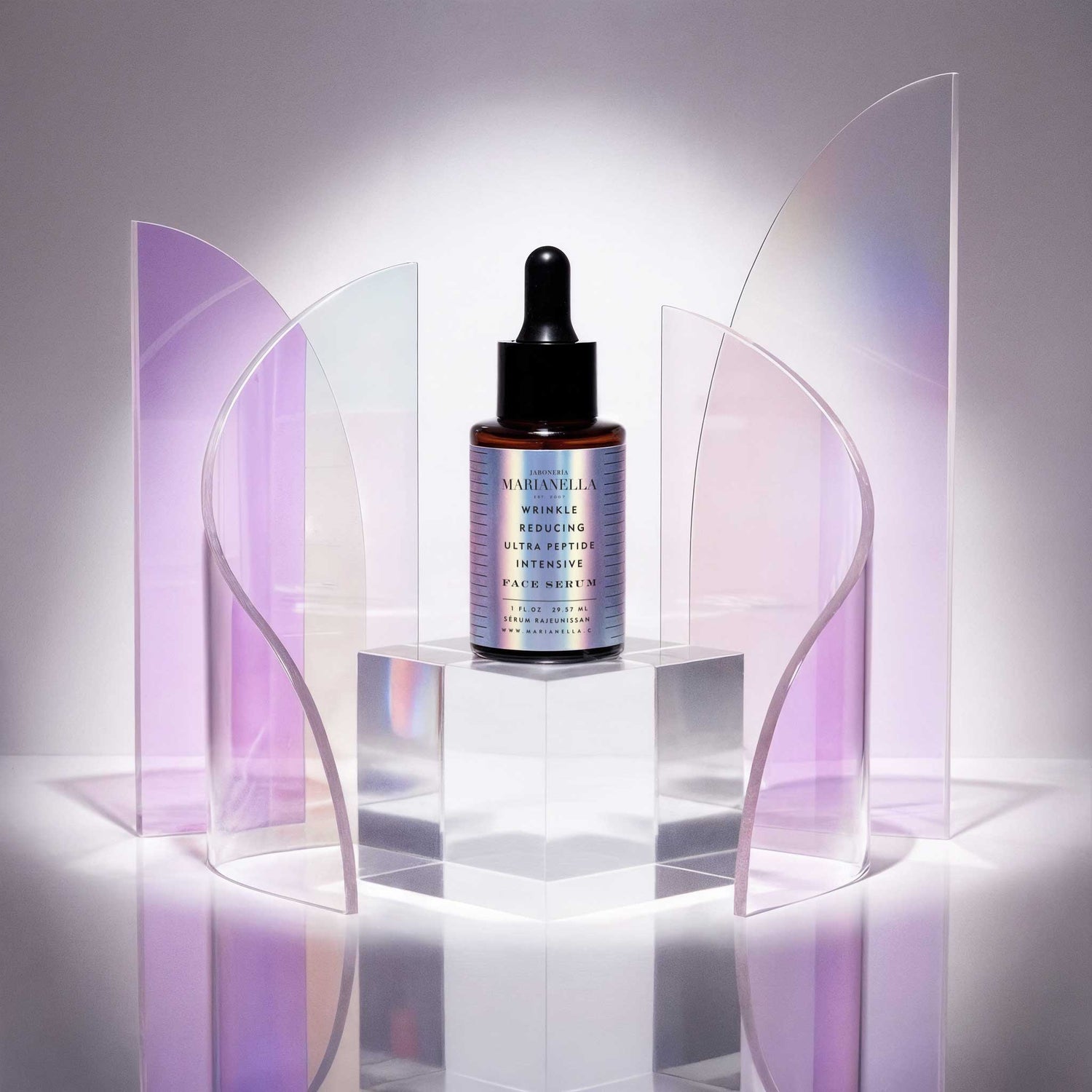
Wrinkle Reducing Ultra Peptide Intensive Face Serum
The highest-concentration formula in this trio. Niacinamide anchors the barrier and anti-glycation work while a peptide complex addresses structural protein synthesis directly. This is the appropriate choice for skin that is actively losing firmness or showing deeper line formation. Eighteen years of formulation expertise, channeled into one targeted serum.
Wrinkle Reducing Ultra Peptide Intensive Face Serum. $84.
How to Use Niacinamide for Skin: Practical Guidance
Niacinamide is one of the most layerable actives in a skincare lineup. It does not require isolation from other acids or antioxidants, and its tolerability profile is well established. Niacinamide is generally well-tolerated, even by those with sensitive skin. Apply after cleansing and before moisturizer. Morning or evening use both work, though pairing with vitamin C in the morning and a barrier-focused formula at night is a logical structure.
For brightening, give the ingredient time. Most studies show significant improvement within twelve weeks of daily use. For barrier repair and hydration, measurable changes in hydration levels begin appearing within weeks, as documented in controlled trials.
The Best Niacinamide Products in 2026: What to Look For
The best niacinamide products in 2026 share three characteristics: clinically relevant concentrations (2 to 5%), well-considered partner ingredients that support penetration and efficacy, and formulation integrity that does not compromise actives through poor pH or incompatible preservative systems.
Marianella's approach adds a fourth: provenance. Every serum is handcrafted in Brooklyn, reflecting a brand that has held a consistent standard since 2007. Featured in Vogue, Oprah, Forbes, and Allure, and recognized by People Magazine with its Star Beauty Award, Marianella brings the same rigor to niacinamide that it brings to every active in its 82-product lineup.
Niacinamide for skin is not complicated. Choose the right concentration, pair it with ingredients that amplify its delivery, and use it consistently. The science does the rest. Browse Marianella's niacinamide serums to find the formula that fits where your skin is now.
```


Dejar un comentario
Este sitio está protegido por hCaptcha y se aplican la Política de privacidad de hCaptcha y los Términos del servicio.