

Argan oil skincare benefits are not a trend. They are documented at the molecular level, studied across peer-reviewed journals, and practiced across generations of botanical tradition long before the beauty industry gave the ingredient a marketing name. If you are looking for a face oil that earns its place in a serious routine, the science on argan oil is worth understanding.
What Is Argan Oil?
Argan oil is a naturally occurring oil produced by cold pressing kernels from an argan tree native to Morocco. Its botanical name is Argania spinosa. The argan tree generally lives for about 150 to 200 years, reaches full productivity only after fifty years, and a single tree can provide just 1 liter of oil per year. That scarcity is real, not manufactured. The yield is low, the process is labor-intensive, and the resulting oil earns its reputation.
Argan oil has gained significant attention due to its well-balanced fatty acid profile, rich in oleic and linoleic acids, and its high levels of antioxidant compounds, including tocopherols, polyphenols, and phytosterols, particularly schottenol and spinasterol. Those are not filler ingredients. Each one plays a distinct role in how the oil performs on skin.
The Molecular Profile: Why Argan Oil Works
Understanding argan oil for skin requires looking at its composition directly. Argan oil is composed of about 80% unsaturated fatty acids and only approximately 19g/100g saturated fatty acids. That ratio matters for how the oil absorbs and functions at the skin barrier level.

Oleic Acid (43–49%)
The omega-9 monounsaturated fatty acid known as oleic acid makes up a large proportion of the oil (43 to 49 percent) and has been found to be a penetration enhancer by disturbing the skin barrier. In practical terms, this means argan oil does not sit on top of the skin. It moves through the epidermal layers, carrying active compounds with it.
Linoleic Acid (29–36%)
Linoleic acid, an omega-6 polyunsaturated fatty acid comprising 29 to 36 percent of the oil, is integral in the biosynthesis of inflammatory prostaglandins through the arachidonic acid pathway, and its presence may help prevent or decrease inflammation. Linoleic acid is also a component of ceramide 1 linoleate, which is decreased in dry skin. Topical application of linoleic acid can raise ceramide 1 linoleate levels in the skin, thus reducing xerosis.
Tocopherols, Polyphenols, and Rare Phytosterols
Argan oil is rich in unsaturated fatty acids and bioactive molecules, such as polyphenols, tocopherols, squalene, xanthophyll, CoQ10, and sterols. The sterols deserve particular attention. The main sterols are schottenol and spinasterol, which are very rare in vegetable oils. This unique sterol profile is part of what distinguishes argan oil from other botanical face oils with similar fatty acid ratios.
Preclinical studies, both in vitro and in vivo, have demonstrated that argan oil reduces oxidative stress by preventing DNA damage, protein carbonylation, and lipid peroxidation, while simultaneously increasing antioxidant defenses. Furthermore, it modulates inflammatory responses by decreasing pro-inflammatory biomarkers, increasing anti-inflammatory markers, and limiting immune cell infiltration across different tissues.
Argan Oil Skincare Benefits Backed by Research
Skin Elasticity and Anti-Aging
Argan oil has a measurable effect on skin elasticity. A study published in Clinical Interventions in Aging tested both oral consumption and topical application of argan oil in postmenopausal women over 60 days. Both methods produced significant improvements across multiple measures of skin elasticity, including gross elasticity, net elasticity, and biological elasticity. Olive oil, used as a comparison, did not produce statistically significant improvements.
The mechanism behind this anti-aging effect connects directly to the oil's fatty acid and antioxidant profile. Applying argan oil to skin can help support skin health and elasticity, resulting in skin that is slower to sag or wrinkle, warding off common signs of aging.
Hydration and Barrier Support
On the skin, argan oil hydrates and balances the lipid environment, creating a favorable setting for beneficial microorganisms, while also possessing antimicrobial and anti-inflammatory properties. A weakened skin barrier is behind many common complaints: dryness, flakiness, tightness, and increased sensitivity. The linoleic acid in argan oil helps replenish the lipids that make up this barrier, while the oleic acid acts as an emollient, softening the spaces between skin cells. The result is skin that holds onto moisture longer rather than just feeling temporarily slippery after application.
In a small study, the nightly topical application of argan oil resulted in a moisturizing effect, and in statistically significant decreases in transepidermal water loss and increases in the water content of the epidermis.
Anti-Inflammatory and Acne-Prone Skin
Argan oil rates 0 on the comedogenicity scale, which ranges from 0 (won't clog pores) to 5 (highly likely to clog pores). That gives it an edge over many popular face oils. Jojoba oil, often recommended for acne-prone skin, rates 1 to 2 by comparison.
Research has consistently shown that people with acne-prone skin tend to have lower levels of linoleic acid in their sebum, which makes their natural oil thicker and more likely to clog pores. Applying a linoleic-acid-rich oil like argan can help normalize sebum composition. The antioxidant and anti-inflammatory compounds in argan oil may reduce the redness and irritation caused by acne, which can help to promote a smoother, calmer complexion.
Oxidative Stress Defense
The antioxidant and anti-inflammatory effects of argan oil are thought to be linked to its ability to regulate key signaling pathways, such as Nrf-2 and NF-κB. Studies suggest that its main bioactive components, including fatty acids, gamma-tocopherol, ferulic acid, and campesterol, can influence these pathways, either by activating Nrf2 to boost antioxidant defenses or by inhibiting NF-κB to suppress inflammation. For a daily-use skincare product, this kind of baseline oxidative protection has compounding value over time.
What to Look for in the Best Argan Oil Products in 2026
Not all formulations deliver argan oil's benefits equally. The extraction method, concentration, and surrounding formula all determine whether you get the science or just the label claim. Cold-pressed, cosmetic-grade argan oil preserves the tocopherol and polyphenol content that drives most of its documented skin benefits. The quality and composition of argan oil are significantly influenced by its extraction and processing methods, which can affect its bioactive compound profile, sensory attributes, and oxidative stability.
Beyond the oil itself, the delivery system matters. A well-formulated cleanser or cream can introduce argan oil into a daily routine without the feel of a straight face oil, making it accessible for more skin types and textures.
Argan Oil in the Marianella Formulation Process
Marianella has been handcrafting small-batch skincare in Brooklyn since 2007. Eighteen years of formulation expertise, grounded in three generations of Venezuelan botanical beauty knowledge, inform how every ingredient is selected and combined. Founder Marianella's Venezuelan heritage brings a long tradition of understanding plant-derived actives not as trend ingredients, but as functional skin biology tools.
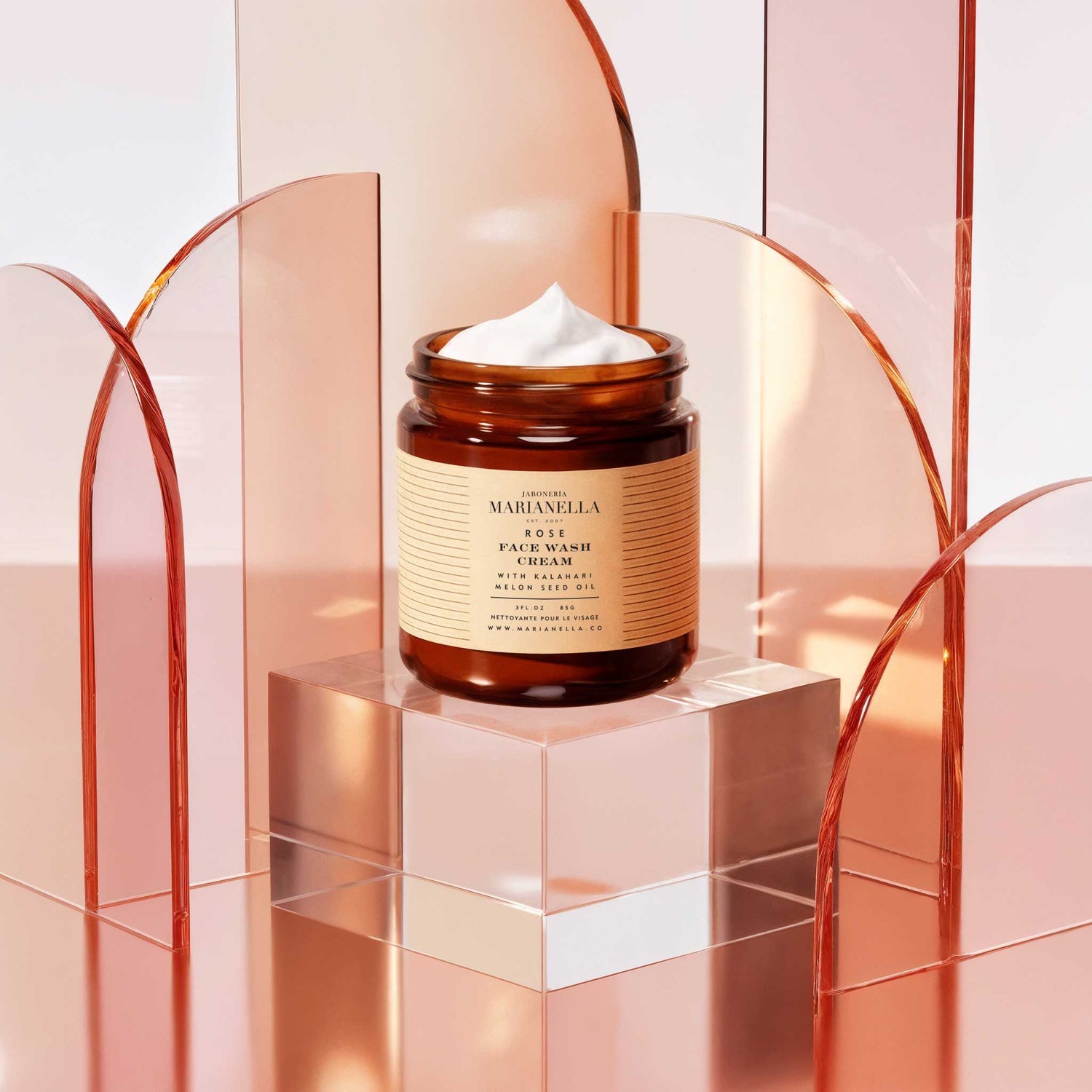
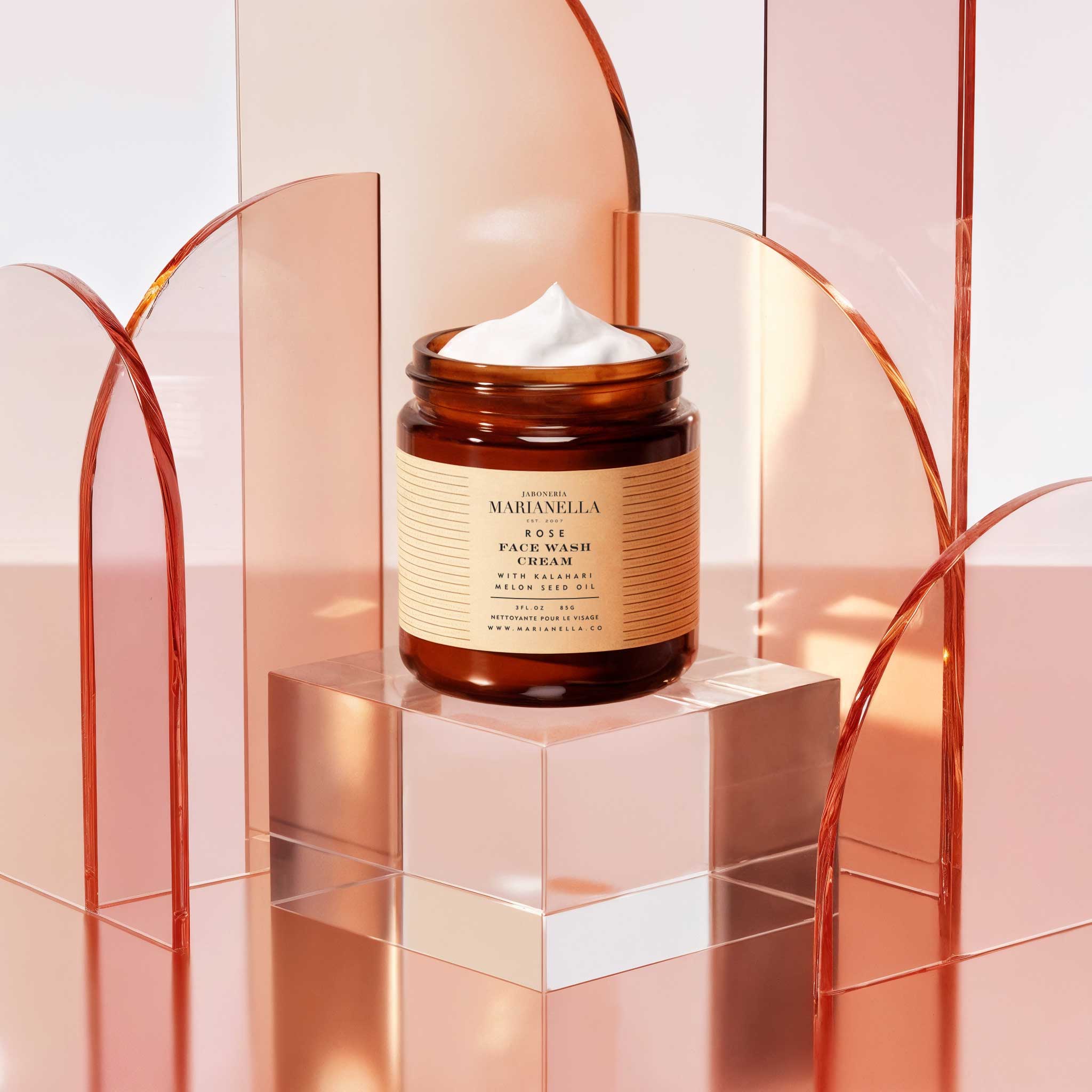
That philosophy is visible in the Rose Face Wash Cream ($25), a daily cleanser that incorporates argan oil into a formula designed for skin that needs both effective cleansing and lipid replenishment. A cleanser is one of the highest-contact products in a routine. Using that daily touchpoint to deliver argan oil's barrier-supportive fatty acids makes formulation sense. It is gentle enough for sensitive skin, effective enough for daily use, and priced accessibly within Marianella's 82-product range, which spans $12 to $160.
Marianella's work has been recognized by People Magazine with a Star Beauty Award, and the brand is featured across Vogue, Forbes, Oprah, and Allure. In 2026, the line is available at Bloomingdale's BEAUTYSPACE, bringing the Brooklyn-crafted formulas to a national luxury retail audience.
How to Use Argan Oil in a Skincare Routine
Cleanser Step
An argan oil-infused cleanser, like the Rose Face Wash Cream, is an efficient entry point. You get the lipid-supportive benefits without adding another product to your routine. Cleanse with lukewarm water, which keeps the skin barrier intact and allows the oil components to perform their function rather than being stripped away with hot water.
Who It Works For
Argan oil's comedogenic rating of zero makes it viable for most skin types. All dry and sensitive types benefit from this ingredient, but it is particularly well-suited for dry, resistant, non-wrinkled; dry, resistant, pigmented, wrinkled; dry, sensitive, non-tight; dry, sensitive, non-wrinkled; dry, sensitive, pigmented, tight; and dry, sensitive, pigmented, wrinkled skin types. For oily or acne-prone skin, the linoleic acid content provides specific value around sebum normalization and barrier integrity.
Layering
If you use argan oil as a standalone face oil, apply it after water-based serums and before SPF in the morning, or as the final step at night. The oleic acid content acts as a carrier, so applying it after actives like niacinamide or peptides can support ingredient absorption. Keep usage to two to four drops. More is not more with a high-oleic oil.
The Broader Picture on Argan Oil for Skin in 2026
The research base on argan oil continues to grow. Argan oil boasts a unique composition characterized by high levels of linoleic and oleic acids, is rich in polyphenols and tocopherols which provide potent antioxidant properties, and additionally contains minor compounds such as carotenoids, squalene, sterols, and xanthophylls. For a naturally derived ingredient, that is a dense active profile. Most synthetic alternatives target one or two of those mechanisms. Argan oil addresses several simultaneously, which is why it holds up under scrutiny.
The best argan oil products in 2026 are those that honor the ingredient's actual chemistry: cold-pressed extraction, purposeful formulation, and an honest understanding of what the science supports. At Marianella, that standard has been the baseline for 18 years.
Explore the Rose Face Wash Cream and the full Marianella collection at marianella.co or at Bloomingdale's BEAUTYSPACE.
```

Dejar un comentario
Este sitio está protegido por hCaptcha y se aplican la Política de privacidad de hCaptcha y los Términos del servicio.