

Shea butter skincare benefits go well beyond basic moisturization. This West African botanical fat is one of the most rigorously studied natural emollients in dermatology, with a molecular profile that supports barrier repair, anti-inflammatory activity, collagen preservation, and antioxidant protection. For anyone building a serious 2026 skincare routine, understanding what shea actually does, at the chemistry level, changes how you use it.
What Is Shea Butter?
Shea butter is a solid fatty oil extracted from the nuts of the Karite nut tree (Butyrospermum parkii or Vitellaria paradoxa), primarily found in central and West Africa. African communities have trusted shea butter for centuries to protect and heal skin. It is not a trend ingredient. It is a foundational one, backed by generations of use and, increasingly, by peer-reviewed science.
Shea butter's composition, rich in triglycerides, fatty acids, vitamins, and polyphenols, makes it an attractive ingredient for topical applications aimed at enhancing skin barrier function and hydration. What separates it from common plant oils is the complexity of its non-saponifiable fraction, the portion that does not convert to soap, and where most of the bioactive action happens.
The Chemistry Behind Shea Butter for Skin
Fatty Acid Foundation
Fatty acid composition in shea butter is dominated by stearic (28–56%) and oleic (34–61%) acids. Stearic and oleic acids make up over 85% of the fatty acid content on average. The other three fatty acids present are arachidic, linoleic, and palmitic. These fatty acids are not passive ingredients. They penetrate deeply to restore the skin's natural moisture barrier.

The Non-Saponifiable Fraction: Where the Science Gets Interesting
The non-saponifiable fraction comprises 5–17% of shea butter's composition. This portion contains triterpenes, tocopherols, and phytosterols. These compounds deliver anti-inflammatory and antioxidant benefits that protect skin from environmental damage.
Most plant oils carry less than 1% unsaponifiables. The content of unsaponifiables in shea butter is at least 4% and can reach up to 10%, including phytosterols, tocopherols, and triterpenes. That density is rare. It is also why shea performs differently than a standard botanical oil in a formulation.
Shea butter's non-saponifiable lipids contain relatively high total levels of phytosterols, including campesterol, stigmasterol, and α-sitosterol, along with triterpene alcohols in the form of 4,4′-dimethylsterols, cinnamic acid esters, α-amyrin, beta-amyrin, parkeol, butyrospermol, and lupeol.
The phenolic profile of shea butter is composed of catechin family compounds similar to those found in green tea, which has gained wide attention as an antioxidant-rich ingredient.
Shea Butter Skincare Benefits, Backed by Research
Barrier Repair and Hydration
A 2025 in vitro study using advanced analytical chemistry, including GC-MS, HPLC, FTIR, and transepidermal water loss measurements, produced some of the most specific data to date on shea's barrier effects. Results showed that transepidermal water loss (TEWL) decreased by 37.8% after 24 hours, and skin hydration increased by 58% after 24 hours. Impedance spectroscopy showed a 33% increase in skin impedance. These are measurable, structural changes to the skin barrier, not surface-level softening.
Overall, the study demonstrates the potential of shea butter as a natural, effective, and safe moisturizer for improving skin barrier function and hydration.
Anti-Inflammatory Activity at the Molecular Level
The triterpenes in shea, specifically lupeol, have been studied for their mechanisms at the cellular level. These anti-inflammatory effects are due to an inhibitory action of lupeol on lipopolysaccharide-induced iNOS, COX-2, TNF-α, IL-1β, and IL-12 mRNA expressions. Moreover, lupeol suppresses IκB phosphorylation and NF-κB nuclear translocation. These findings explain the molecular basis of shea butter's bioactivity against various inflammatory conditions.
In plain terms: shea butter does not just sit on the surface and soothe. It interacts with known inflammatory pathways at a molecular level. The anti-inflammatory and protease-inhibiting activity of triterpene esters indicates the material's potential for reducing skin stress induced by environmental factors.
Collagen Preservation and Anti-Aging
Shea butter contains triterpenes. These naturally occurring chemical compounds are thought to deactivate collagen fiber destruction. This may minimize the appearance of fine lines and result in plumper skin.
The mechanism is specific. A study has shown that triterpenes have a positive regulatory activity on collagen production. They help inhibit matrix metalloproteinase 3 (MMP-3), which is responsible for the degradation of type III skin collagen. Furthermore, the triterpenes in shea butter contribute to cellular renewal by increasing the thickness of the epidermis, playing a role in the resistance and protection of the skin barrier.
Vitamin A, found in shea butter, stimulates the production of collagen and elastin, which help the skin maintain its elasticity. It smooths wrinkles and fine lines and prevents skin sagging.
In a clinical study, 49 volunteers applied pure shea butter twice a day. For 75% of the volunteers, a reduction in wrinkles and an improvement in skin flexibility was observed.
Antioxidant Protection
Shea butter has significant levels of vitamins A and E, which means it promotes strong antioxidant activity. Antioxidants are important because they protect skin cells from free radicals, which can lead to premature aging and dull-looking skin.
Vitamins A and E in shea butter neutralize reactive oxygen species. These antioxidants protect cellular structures from environmental damage. Studies indicate regular application reduces visible signs of photoaging.
Skin Cell Renewal
The combined effects of shea butter's moisturizing and antioxidant properties promote skin cell regeneration. Shea butter is known for bioactive triterpenes, which are plant compounds that are anti-inflammatory. These compounds can help soothe skin breakouts, redness, and eczema. They are also skin-regenerating, so they may boost collagen production and accelerate healing.
Non-Comedogenic Profile
The non-comedogenic rating of pure shea butter sits at 0–2 on a 5-point scale. That low rating matters for anyone who has historically avoided rich butters out of concern for congestion. The fatty acid profile, particularly its oleic and stearic composition, allows the butter to absorb without occluding pores. Although shea butter is extremely thick, it is noncomedogenic, meaning it does not clog pores. People with acne find it helps soothe breakouts and restore the skin's natural barrier and oil production.
How Marianella Uses Shea Butter
Marianella has been formulating botanical skincare in Brooklyn since 2007. Eighteen years of small-batch, handcrafted production, rooted in three generations of Venezuelan botanical knowledge, have shaped an approach to ingredients that prioritizes performance over trend. When shea butter appears in a Marianella formula, it is there for what it does at the molecular level, not for marketing shorthand.
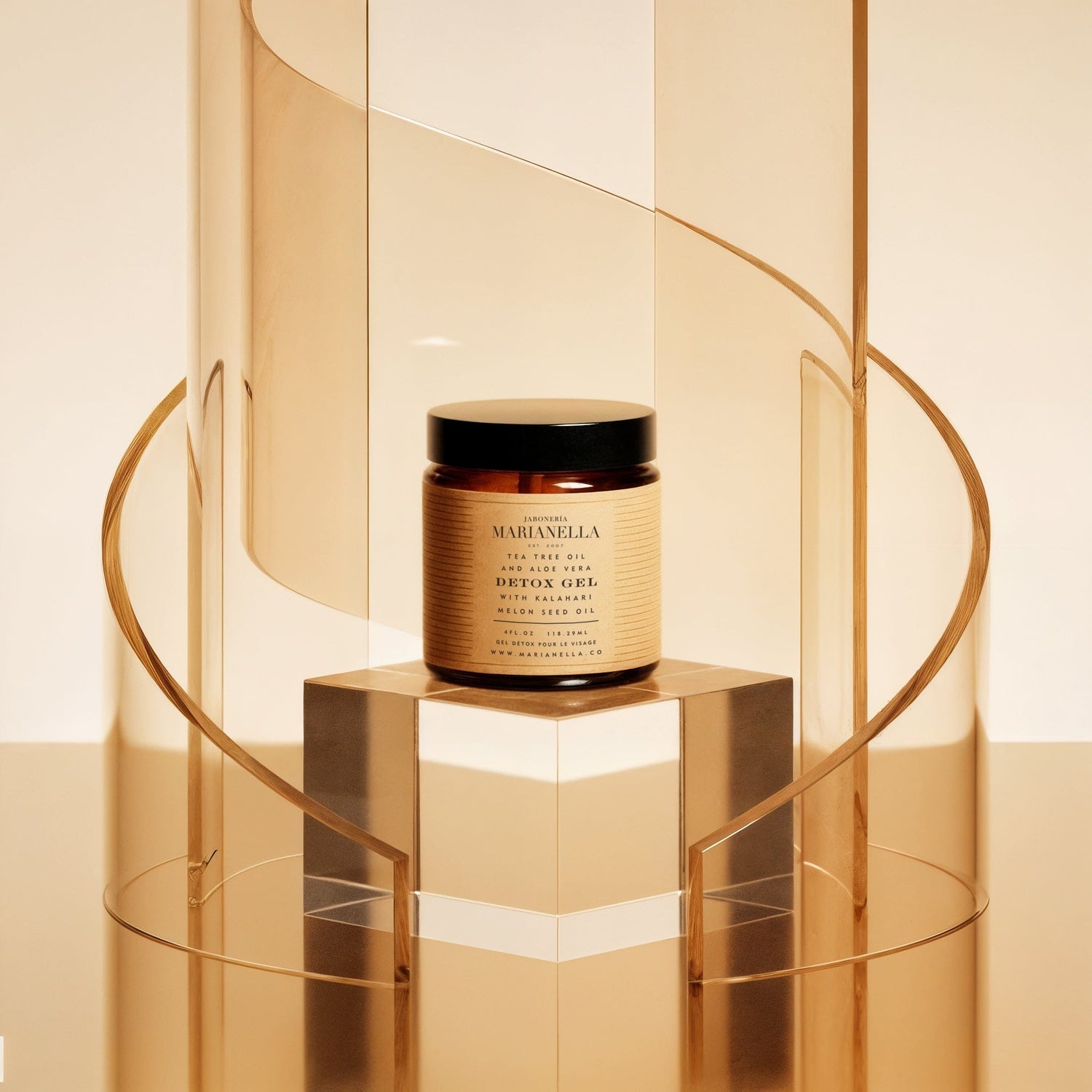
The Detox Gel now with Kalahari Melon Seed Oil ($29) pairs shea butter's barrier-supporting fatty acids with Kalahari melon seed oil, a lightweight southern African botanical rich in linoleic acid. The combination addresses two distinct skin needs simultaneously: deep nourishment from shea's dense lipid profile and the refinishing clarity of a detox-focused gel formula. It sits at the accessible end of Marianella's 82-product range, $12 to $160, and is available at Bloomingdale's BEAUTYSPACE.
The brand's formulation philosophy, recognized by Vogue, Oprah, Forbes, Allure, WWD, and People Magazine's Star Beauty Award, is built on exactly this kind of precision pairing. Not shea butter as a filler. Shea butter as a functional anchor.
How to Use Shea Butter for Skin Effectively
Layer It Correctly
Shea butter performs best when applied to slightly damp skin. The fatty acids bind to existing moisture on the surface, sealing it in rather than simply resting on top. In a multi-step routine, a shea-containing formula works well as a second or third step, after water-based serums have been absorbed.
Refined vs. Unrefined: What to Know
Shea butter can be sourced unrefined (virgin) or refined, and these have very different profiles. Compared to refined shea butter, unrefined shea butter is darker in color, has a stronger natural odor, has a higher level of fatty acids, and is absorbed more slowly by the skin. Research demonstrates that raw shea butter maintains higher concentrations of triterpene alcohols. These compounds contribute significantly to anti-inflammatory effects.
For skincare formulations, the choice between refined and unrefined depends on the intended texture, stability, and application. A well-formulated product, regardless of which form is used, will account for this in its development process.
Skin Types That Benefit Most
Sensitive skin reacts adversely to many conventional skincare ingredients. Shea butter's hypoallergenic nature makes it suitable for reactive skin types. Dry and compromised skin responds well to its barrier-repairing fatty acids. Paradoxically, dehydrated oily skin often overproduces sebum as compensation for moisture loss. Shea butter provides essential hydration without triggering excess oil production.
Why Shea Butter Still Leads in 2026
Skincare trends move fast. Ingredient science moves slower, and for good reason. Shea butter has earned its place not through a brand campaign but through decades of published research confirming what West African communities understood long before the first laboratory study. Research confirms its anti-inflammatory, antioxidant, and barrier-repair capabilities. In 2026, with consumers asking harder questions about ingredient efficacy, that depth of evidence is not a baseline. It is a differentiator.
Marianella's 18 years of formulation expertise means knowing which ingredients hold up under scrutiny and which dissolve when you look closely. Shea butter holds up.
Explore the Detox Gel now with Kalahari Melon Seed Oil or browse the full Marianella collection at Bloomingdale's BEAUTYSPACE and at marianella.co.
```


Dejar un comentario
Este sitio está protegido por hCaptcha y se aplican la Política de privacidad de hCaptcha y los Términos del servicio.