

Peptides vs Retinol: Which One Does Your Skin Actually Need in 2026?
The peptides vs retinol skincare debate is one of the most searched questions in beauty science right now, and for good reason. Both ingredients target collagen, fine lines, and skin aging, but they work through fundamentally different biological mechanisms, carry different risk profiles, and suit different skin types. The short answer: neither is universally superior. The right choice depends on your skin's tolerance, your goals, and whether you understand what each ingredient is actually doing at the cellular level.
What Are Peptides in Skincare?
Peptides are short chains of amino acids, the building blocks of proteins like collagen, elastin, and keratin. In skincare, peptides are known for their ability to signal the skin to produce more collagen and repair itself. Think of them as intercellular messengers. Rather than forcing a biological reaction, they communicate with fibroblasts, the cells responsible for collagen synthesis, prompting the skin to do more of what it naturally does well.

|
$84 |

|
$112 |
Bioactive peptides helped boost fibroblast production of collagen and elastin, according to a 2024 Journal of Drugs in Dermatology review. A study in the International Journal of Cosmetic Science found that participants using peptide-enriched creams saw a 10–20% improvement in elasticity and a reduction in wrinkle depth over 12 weeks. The results are cumulative, not immediate, which is precisely what makes peptides a sustainable long-term strategy.
What Is Retinol in Skincare?
Retinol is a vitamin A derivative and one of the most extensively studied topical ingredients in dermatology. Retinol, a vitamin A derivative, speeds up cell turnover and boosts collagen, while peptides act as signalling molecules that tell the skin to repair, firm, and strengthen itself. Retinol's mechanism is more direct and more forceful: it binds to nuclear receptors in skin cells and drives gene-level changes in collagen production and epidermal renewal.
Normally, keratinocyte cell turnover takes about 28 days, but retinol can reduce this time to approximately 14 days. Additionally, transforming growth factor beta is upregulated by retinol, leading to improved collagen and elastin production. The effect of retinol on collagen is two-fold: production is increased, and the rate of degradation is decreased. That dual action is why retinol has anchored anti-aging routines for decades.
The Science: How Peptides and Retinol Compare
Collagen Stimulation
Both ingredients drive collagen, but via distinct pathways. They target collagen production through distinct molecular pathways: retinol acts through nuclear retinoic acid receptors to upregulate collagen gene transcription, while signal peptides mimic matrikine signaling to stimulate fibroblast activity. The distinction matters. Retinol triggers the process from the inside of the cell nucleus outward, while peptides work at the extracellular level, mimicking the body's own repair signals.
The clinical data on retinol's collagen impact is substantial. Treatment of photodamaged skin with tretinoin produced an 80 percent increase in collagen I formation, as compared with a 14 percent decrease in collagen formation with the use of vehicle alone. On the peptide side, in one comparative study, GHK-Cu cream increased collagen production in 70% of subjects, compared to 50% for vitamin C and 40% for retinoic acid.
Tolerability and Skin Barrier Impact
This is where the comparison shifts decisively in favor of peptides for many users. Up to 52% of first-time retinol users experience skin irritation, which can include redness, dryness, and sensitivity. Retinol also induces skin irritation in many individuals, including erythema, stinging, and desquamation, which occurs through the activation of nuclear retinoic acid receptors and cytokine release. This irritation presents a challenge in dermatology and cosmetic formulations, as it limits retinol's applicability for sensitive skin.
Peptides carry no such barrier burden. Peptides are more skin-friendly than retinol by a long shot, due to their more moisturizing nature. This can make them more amenable to everyday use. For anyone with reactive, rosacea-prone, or barrier-compromised skin, a well-formulated peptide serum is not a compromise. It is the scientifically sound choice.
Speed of Results
Retinol tends to produce visible changes faster, particularly in texture and pigmentation. Four weeks of retinoic acid and retinol treatments both increased epidermal thickness, and upregulated genes for collagen type 1 and collagen type 3 with corresponding increases in procollagen protein expression. Facial image analysis showed a significant reduction in facial wrinkles following 12 weeks of retinol application.
Peptides operate on a longer timeline with a gentler arc. Most people notice initial improvements in hydration and texture within 2–4 weeks. Structural firming and measurable wrinkle reduction typically emerge between 8 and 12 weeks of consistent use. Quality peptide serums offer real, incremental, and cumulative results. That incremental quality is a feature, not a limitation, for skin that needs long-term management rather than aggressive intervention.
Peptides vs Retinol for Skin: Who Should Use Which
When Peptides Make More Sense
Choose peptides for hydration, skin barrier repair, and gentle anti-aging. Peptides are appropriate for daily use on all skin types, including those that have never tolerated retinol. They are also the preferred option during pregnancy, for those with eczema or psoriasis, and for anyone managing chronic sensitivity. The barrier-supportive properties of peptides mean they can be layered with most other actives without conflict.
For neurotransmitter peptides such as SYN-AKE, a 2025 Karger review found visible smoothing of expression lines at 4 and 8 weeks. Signal peptides, carrier peptides, and enzyme-inhibiting peptides each address different aspects of skin aging, which is why a peptide-forward formula can be genuinely comprehensive for anti-aging goals without the volatility of retinol.
When Retinol Makes More Sense
Opt for retinol if you are targeting wrinkles, pigmentation, or acne and are comfortable with a stronger ingredient. Retinol remains the benchmark for photoaging correction, acne management, and accelerated epidermal renewal. Clinical trials demonstrate that retinol at concentrations of 0.1–1% improves texture by 30–50%. For those who have built tolerance and can use it consistently, the evidence base behind retinol is deep and well-established.
The trade-off is adaptation time and ongoing sun sensitivity. Retinol effectively protects against photoaging by preventing UV-induced collagen breakdown and improving pigmentation irregularities. Common side effects include dryness and sun sensitivity, which can be mitigated by starting with lower concentrations and wearing daily SPF.
Can You Use Peptides and Retinol Together?
Yes, and the science in 2026 increasingly supports the combination. Retinol and peptides do not cancel each other out. They target collagen production through distinct molecular pathways. A clinical study published in Dermatology and Therapy in 2025 demonstrated that a formulation combining low-dose retinol, pea peptide, and an antioxidant blend produced additive anti-aging benefits with maintained tolerability.
Some studies and dermatologists suggest that peptides might enhance results by reducing inflammation and fortifying the skin's barrier, which helps the skin tolerate retinol better. In practical terms, this means layering a peptide-rich moisturizer over a retinol serum, or using a peptide serum on non-retinol nights, can smooth out the irritation cycle that causes many people to abandon retinol prematurely.
Retinol provides deep biological stimulation that encourages renewal, while peptides maintain structure and comfort. Rather than viewing them as competing ingredients, the most effective approach may be combination strategies that leverage both mechanisms.
Best Peptides vs Retinol Products 2026: Marianella's Approach
Marianella has been handcrafting small-batch formulas in Brooklyn since 2007. Eighteen years of formulation expertise, rooted in three generations of Venezuelan botanical beauty knowledge, inform every product. The brand's peptide lineup reflects a specific philosophy: deliver clinically meaningful actives without the barrier disruption that sidelines so many effective anti-aging regimens.
Two formulas anchor the peptide offering.
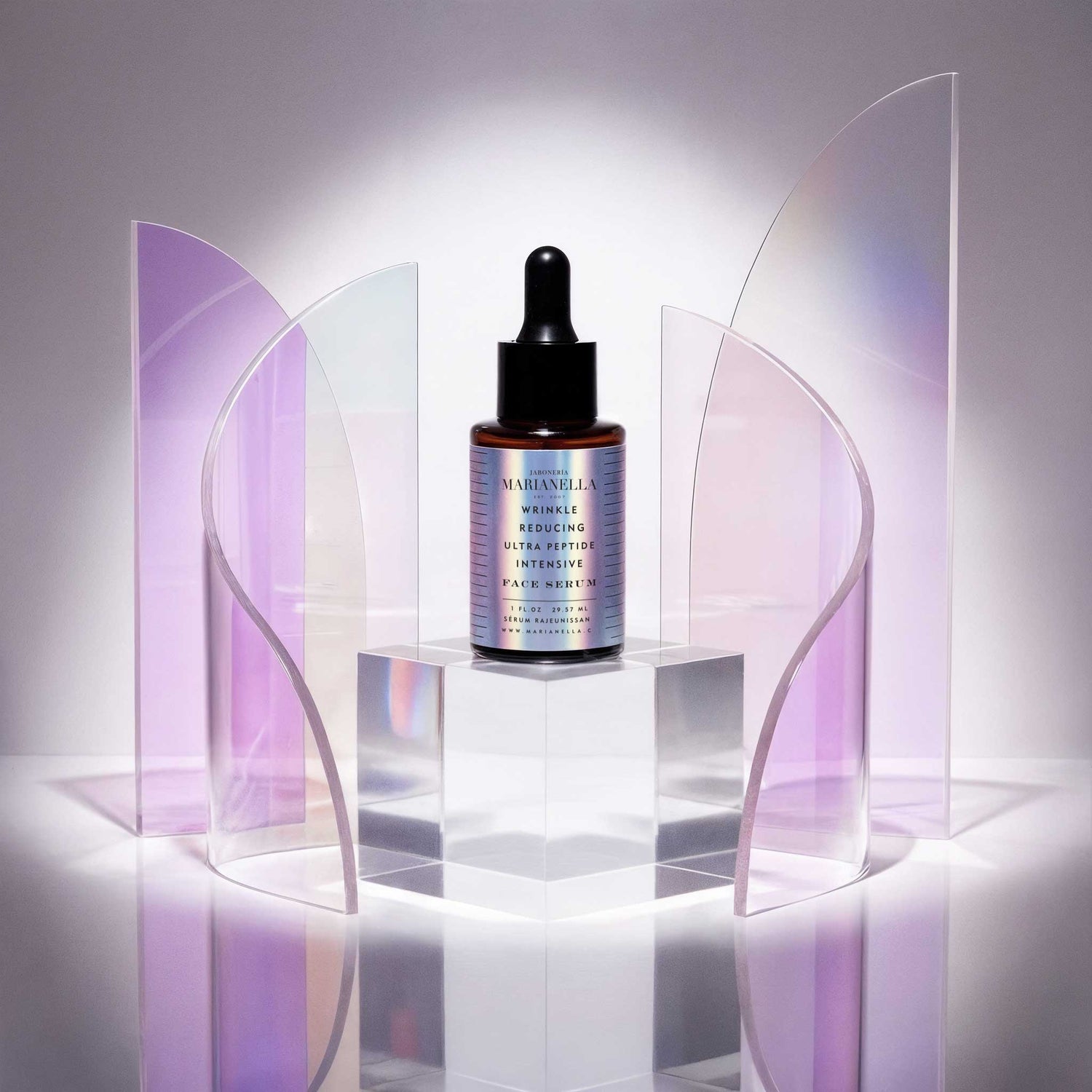
Wrinkle Reducing Ultra Peptide Intensive Face Serum
A concentrated serum designed for daily use, this formula delivers peptides in a lightweight base that absorbs quickly without residue. It targets fine lines, loss of firmness, and uneven texture through sustained peptide signaling. Consistent use builds results over time, making it an effective standalone for peptide-only routines or a strong complement on nights off from retinol.
Wrinkle Reducing Ultra Peptide Intensive Face Serum, $84.
Wrinkle Reducing Ultra Peptide Intensive Night Cream
The night cream version of Marianella's peptide strategy is formulated for the hours when skin is in active repair mode. A richer texture supports overnight barrier recovery while peptides drive fibroblast activity. For those integrating peptides and retinol into the same routine, this cream layers well over a retinol serum, addressing the tolerability gap that makes combination routines difficult to maintain.
Wrinkle Reducing Ultra Peptide Intensive Night Cream, $112.
Both products are available now at Bloomingdale's BEAUTYSPACE. As featured in Vogue, Oprah, Forbes, and Allure, and recognized with the People Magazine Star Beauty Award, Marianella's formulas have been vetted by editors and experts who distinguish between cosmetic marketing and functional skincare.
The Final Word on Peptides vs Retinol Skincare Benefits
In 2026, the choice between peptides and retinol should not be framed as an either-or decision. Each active contributes differently to the skin's long-term resilience. If your skin is tolerant and you are managing active photodamage, retinol remains among the most powerful tools available. If your priorities are daily collagen support, barrier integrity, and a protocol that works every night without adaptation periods or sun sensitivity concerns, peptides are the more sustainable path.
For most people, the answer is both, used strategically. A peptide serum or cream that works every day, a retinol formula used progressively at night, and the understanding that these ingredients are not in competition. They are, at the molecular level, designed to work together.
Explore Marianella's peptide collection to find the right entry point for your skin.
```

Dejar un comentario
Este sitio está protegido por hCaptcha y se aplican la Política de privacidad de hCaptcha y los Términos del servicio.