

Passionfruit oil skincare benefits are grounded in hard chemistry, not marketing copy. The cold-pressed oil extracted from the seeds of Passiflora edulis is one of the most linoleic acid-dense botanical oils available, and that singular fact explains why it performs so reliably across skin types. At Marianella, where 18 years of formulation expertise have been built on three generations of Venezuelan botanical knowledge, passionfruit oil is not a trend ingredient. It is a cornerstone.
What Is Passionfruit Oil?
Passionfruit seed oil, also known as Maracuja Oil, is a natural oil extracted from the seeds of the passionfruit plant, scientifically known as Passiflora edulis, a tropical vine species native to South America. The extraction process involves cold pressing the seeds, a method that ensures nutrients remain potent. The resulting oil is light and non-greasy, with a slight nutty aroma that is easily absorbed into the skin.
Indigenous communities in the Amazon rainforest have long used passionfruit seed oil for its soothing properties. In Venezuela and across South America, botanicals like this one have been embedded in beauty traditions for generations. That ancestral knowledge is precisely what Marianella's founder brought to Brooklyn when the brand was established in 2007, and it informs every small-batch formula made today.
The Science Behind Passionfruit Oil for Skin
The appeal of passionfruit oil to cosmetic formulators is structural. Its fatty acid profile is extraordinary. Research on Passiflora edulis seed oil shows high levels of unsaturated fatty acids at 87.59%, including mainly linoleic acid at 73.14% and oleic acid at 13.83%, alongside significant tocopherol content of 499.30 mg/kg and phenolic compounds.

|
$72 |

|
$72 |

|
$48 |
The linoleic acid content of passionfruit seed oil is higher than that of grape seed oil at 66.85%, walnut oil at 57.30%, and cold-pressed sesame oil at 42.09 to 43.38%. In the fatty acid hierarchy, passionfruit oil sits at the top for linoleic concentration among widely used cosmetic oils.
Linoleic Acid and the Skin Barrier
Linoleic acid is not simply a moisturizing agent. Its role in skin biology is structural. Linoleic acid is an essential component of ceramides, contributing to the formation of the lipid lamellae that maintain cellular cohesion in the stratum corneum. A deficiency in linoleic acid can lead to conditions such as atopic dermatitis.
Too little linoleic acid weakens the skin's waterproofing layer, disrupting ceramide production. The high concentration of omega-6 linoleic acid in passionfruit oil helps replace essential fatty acids and reduce transepidermal water loss (TEWL). For anyone dealing with dehydration, sensitivity, or compromised barrier function, this mechanism matters far more than surface-level hydration claims.
Antioxidant Depth: Tocopherols, Carotenoids, and Polyphenols
Passionfruit seed oil contains 87.59% unsaturated fatty acids and other compounds including tocopherol at 499.30 mg/kg, phenolics, and vitamin C. It has high antioxidant activity with a radical scavenging mechanism of up to 82.81%.
Studies have shown that passionfruit oil has antioxidant activity because it contains carotenoids, polyphenols, and tocopherols, antioxidants that have a positive effect on skin health. The high content of tocotrienol and tocopherol helps protect the skin from external stresses by strengthening barrier function.
Literature notes that purple passionfruit seed oil has antioxidant, anti-inflammatory, and skin-lightening effects. The oil is rich in stilbenes, vitamins, and catechin, and contains piceatannol and resveratrol. Resveratrol is the same polyphenol that drives significant research interest in anti-aging dermatology. Finding it naturally present in passionfruit oil is not incidental. It is part of why this ingredient earns its place in serious formulations.
Anti-Inflammatory Properties
The unsaponifiable matter of passionfruit oil includes flavonoids with sebum-regulating properties, and compounds passiflorine and maracujine show a soothing effect on the skin. The oil contains natural anti-inflammatory compounds that can soothe irritated skin and reduce redness. A study in the International Journal of Cosmetic Science found that passionfruit oil effectively calms inflamed skin conditions such as eczema and rosacea.
Collagen Support and Visible Aging
Passionfruit oil has been found to both increase collagen production and inhibit collagen and elastin degradation, which can help the skin retain its moisture and elasticity. Vitamin A in the form of carotenoids helps skin cells regrow and repair. Passionfruit oil encourages the body to produce more vitamin A, which promotes cell turnover and plumps skin.
In 2026, the skincare conversation has shifted decisively toward barrier-first formulation. Passionfruit oil addresses exactly what that means in practice: rebuilding lipid structure, reducing oxidative damage, and keeping moisture where it belongs.
Passionfruit Oil for Every Skin Type
Passionfruit oil's light, non-greasy texture ensures the skin absorbs it quickly, making it a great moisturizer for all skin types, including acne-prone skin. It is noncomedogenic, meaning it won't clog pores, and is gentle enough for even sensitive skin.
For oily and combination skin, this is particularly relevant. While research is limited, some believe that passionfruit seed oil may help regulate sebum production. The linoleic-rich profile also means it works with the skin's natural chemistry rather than against it, unlike heavier oils high in oleic acid, which can exacerbate congestion in some skin types.
For dry and mature skin, the tocopherol content and high unsaturated fatty acid concentration provide sustained nourishment without the occlusive weight of traditional facial oils. The result is balanced moisture, not a greasy film.
Passionfruit Oil in Marianella Formulas
Marianella has been handcrafting in Brooklyn since 2007. Each formula begins with a clear question: what does this ingredient actually do at a molecular level, and does it belong here. Passionfruit oil answers that question consistently. Below are three products where it appears.
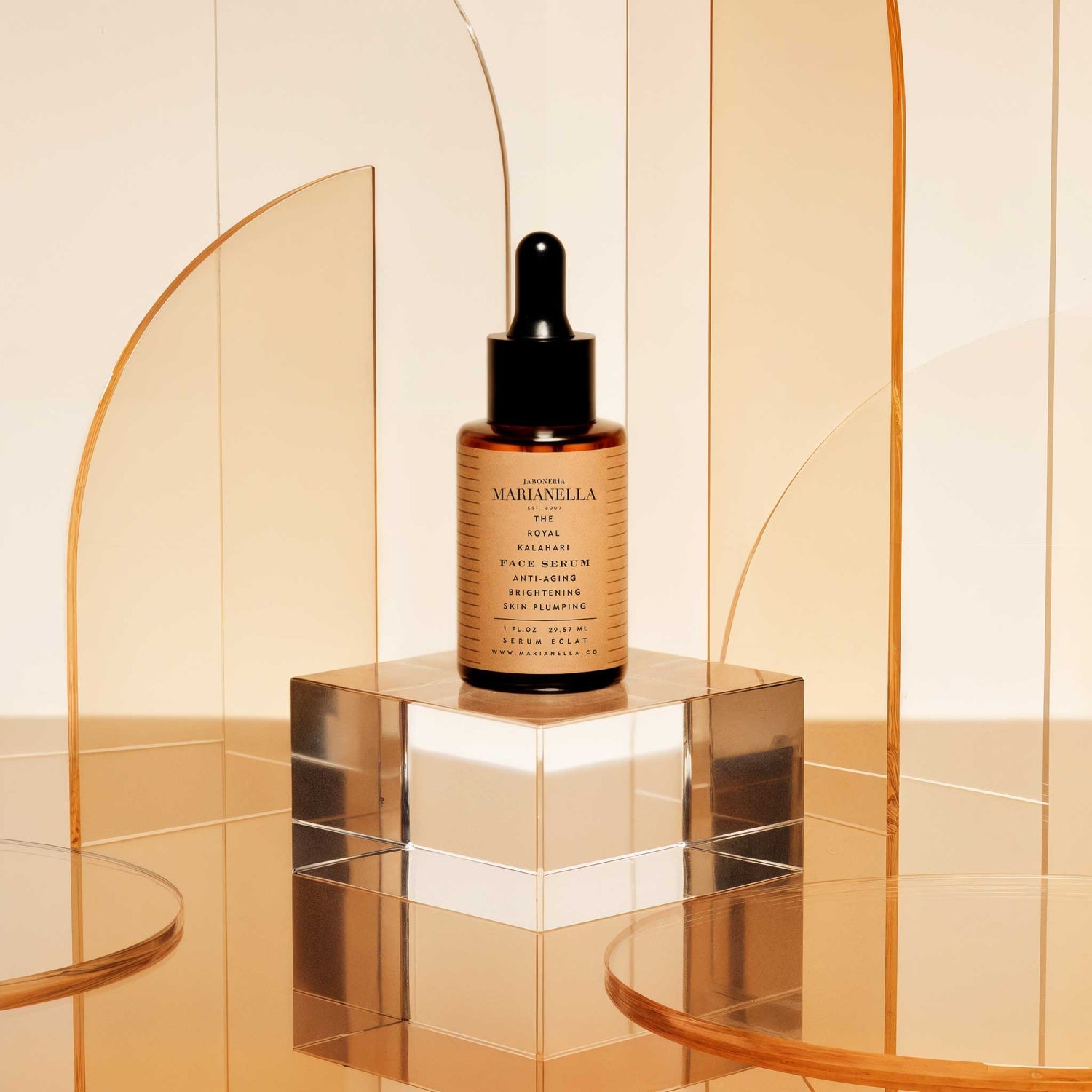
The Royal Kalahari Face Serum
A serum built for those who want serious barrier support and visible brightening without heavy texture. The passionfruit oil component contributes linoleic acid density and antioxidant depth, working alongside the formula's broader botanical architecture. Lightweight enough for daily morning and evening use across skin types.
The Royal Kalahari Face Serum, $72.
The Midnight Youth Potion
A night formula designed to work with the skin's natural overnight repair cycle. Passionfruit oil's ability to support ceramide biosynthesis and reduce transepidermal water loss makes it an architecturally sound choice for an overnight product. The antioxidant profile, including tocopherols and polyphenols, addresses oxidative stress accumulated during the day.
The Midnight Youth Potion, $72.
Hawaiian Black Lava Body Caviar Body Scrub with Charcoal
The passionfruit oil in this body scrub is not decorative. After the charcoal and lava work to draw impurities and exfoliate, the skin is open and receptive. Passionfruit oil delivers fatty acids and antioxidants at that moment of maximum absorption, leaving skin genuinely nourished rather than stripped. A body product that treats the skin on your body with the same rigor as a face serum.
Hawaiian Black Lava Body Caviar Body Scrub with Charcoal, $48.
How to Use Passionfruit Oil Products
Layering Order
Apply passionfruit oil-based serums after water-based products and before heavier creams. The molecular weight allows it to penetrate without being blocked by preceding layers. For night formulas, applying to slightly damp skin can enhance absorption and extend the hydrating effect by reinforcing TEWL reduction.
Who Benefits Most
Passionfruit oil for skin is genuinely universal, but the profiles that see the most measurable difference tend to be: compromised or sensitized skin that needs barrier rebuilding; mature skin looking for antioxidant protection and collagen support; and oily or acne-prone skin seeking hydration without comedogenic risk. The noncomedogenic rating and sebum-regulating flavonoid content make it a rare oil that works in that last category without compromise.
Frequency
Twice daily use is appropriate for serum formats. For body scrubs, two to three times weekly is sufficient. Consistency matters more than concentration. The fatty acid replenishment that linoleic acid provides is a cumulative process, not an immediate event.
Why Passionfruit Oil Belongs in a Serious Skincare Formula in 2026
The broader skincare industry has spent the last several years rediscovering what botanical formulators have known for decades. Barrier function is not a secondary concern. It is foundational. An ingredient that delivers over 70% linoleic acid, nearly 500 mg/kg of tocopherol, and a measurable antioxidant scavenging capacity of up to 82.81% is not a filler. It is a formulation anchor.
Marianella's Venezuelan heritage and three generations of botanical beauty knowledge have always centered ingredients that perform at this level. Featured in Vogue, Forbes, Oprah, and Allure, and now available at Bloomingdale's BEAUTYSPACE, the brand's 82 products share a common standard: every ingredient must justify its presence scientifically. Passionfruit oil does precisely that.
If you are building a routine around barrier health, oxidative protection, or simply want skin that holds moisture through the day, passionfruit oil is worth understanding. The three Marianella products above offer distinct entry points, from targeted face serums to full-body treatment. Start where your skin needs the most support.
```

Dejar un comentario
Este sitio está protegido por hCaptcha y se aplican la Política de privacidad de hCaptcha y los Términos del servicio.