

Glycerin Beauty Benefits: What the Science Actually Says
Glycerin is a humectant skincare ingredient that pulls water into the skin's outer layer and holds it there, making it one of the most studied hydrating compounds in cosmetic chemistry. Compared to hyaluronic acid, urea, sorbitol, or even propylene glycol, glycerin is the most effective humectant available according to a 2016 study. That single finding explains why glycerin beauty benefits keep surfacing in dermatology literature decade after decade, and why the ingredient remains a fixture in formulas built for real, daily hydration rather than trend-driven claims. This piece walks through what glycerin is, how it works at the molecular level, and where to find it done well in 2026, including in Marianella's own Rose Face Wash Cream.
What Is Glycerin?

Glycerin, also known as glycerol, is a natural compound derived from vegetable oils or animal fats, appearing as a clear, colorless, odorless, and syrupy liquid with a sweet taste. This trihydroxy alcohol contains three hydroxyl groups that create strong hydrogen bonds with water molecules, which makes it an exceptional humectant. Glycerin has been recognized for its moisturizing properties for over 90 years, and is widely used in cosmetic preparations. In fact, its inclusion in cosmetic and medicinal skin formulations reflects a scientific basis for an empirical practice more than 200 years old. Few ingredients in skincare carry that kind of track record, and fewer still have held up under modern clinical scrutiny the way glycerin has.
How Glycerin Benefits Skin at the Molecular Level
A Small Molecule With an Outsized Job
Glycerin's effectiveness comes partly from its molecular weight of 92 daltons, which enables deep skin penetration. That size matters. A molecule this small can move past the surface and settle into the layers where hydration is actually needed, rather than sitting on top of skin the way heavier hydrators do. Glycerol has the ability to permeate the stratum corneum and draw water toward the epidermis from the dermis or the environment under humid conditions, thanks to its three hydrophilic hydroxyl groups that bind and retain water. The result is a kind of built-in delivery system, one that does not require added technology to function.
The Reservoir Effect
Glycerol creates a reservoir in the deep layers of the stratum corneum within the lipid bilayers, holding onto that moisture rather than releasing it immediately. This is part of why a glycerin-based formula can feel hydrating hours after application, not just at the moment of use. Research measuring moisture retention found that the moisture-retention capacity of glycerin increased with concentration from 0 to 60 percent by weight, plateauing at concentrations of 60 to 70 percent. Formulators do not need to reach those extremes to see results. Research shows that glycerin works best combined with other emollients at concentrations between 5 and 20 percent, giving a balanced moisture effect while preventing dehydration in low-humidity conditions.
Outperforming Other Humectants
Glycerin's reputation is not built on marketing language, it is built on side-by-side data. A study revealed that 10 percent glycerin performed better than both 10 percent propylene glycol and 10 percent urea in providing skin hydration over three hours. That kind of head-to-head result is rare in cosmetic science, where most humectants show only marginal differences from one another. Glycerin's consistent outperformance across studies is a large part of why it remains the benchmark ingredient other humectants get measured against.
Glycerin Skin Care Benefits Beyond Hydration
Barrier Support and Repair
Hydration is only part of the story. One study found that stratum corneum hydration showed the highest values at glycerol-treated sites after three days of treatment, with glycerol creating a stimulus for barrier repair and improving stratum corneum hydration. That barrier-repair function is a meaningfully different mechanism than simple surface moisturizing, and it is one reason glycerin appears so often in formulas meant to calm compromised or reactive skin. Beyond hydration, glycerin helps strengthen the skin's barrier function and supports natural skin processes, including desmosomal degradation and the speeding of wound-healing processes.
Pairing With Occlusives
Glycerin does its best work in company. In skincare products, glycerin is commonly used with occlusives, another type of moisturizing agent, to trap the moisture it draws into the skin. A humectant without an occlusive partner can, under very dry conditions, pull moisture from deeper skin layers rather than the air. That is why thoughtful formulation, not just ingredient inclusion, determines whether a glycerin product actually delivers on its promise.
Best Glycerin Products 2026: What to Look For
Not every product listing glycerin on its label is formulated with the same intention. The best glycerin products in 2026 tend to share a few traits: a concentration in the researched 5 to 20 percent range, a supporting cast of emollients or occlusives, and a formulation philosophy that treats glycerin as a workhorse rather than a headline claim. Marianella has spent nineteen years building formulas around that same principle, favoring small-batch precision over ingredient lists designed to impress rather than perform.
Marianella's Rose Face Wash Cream
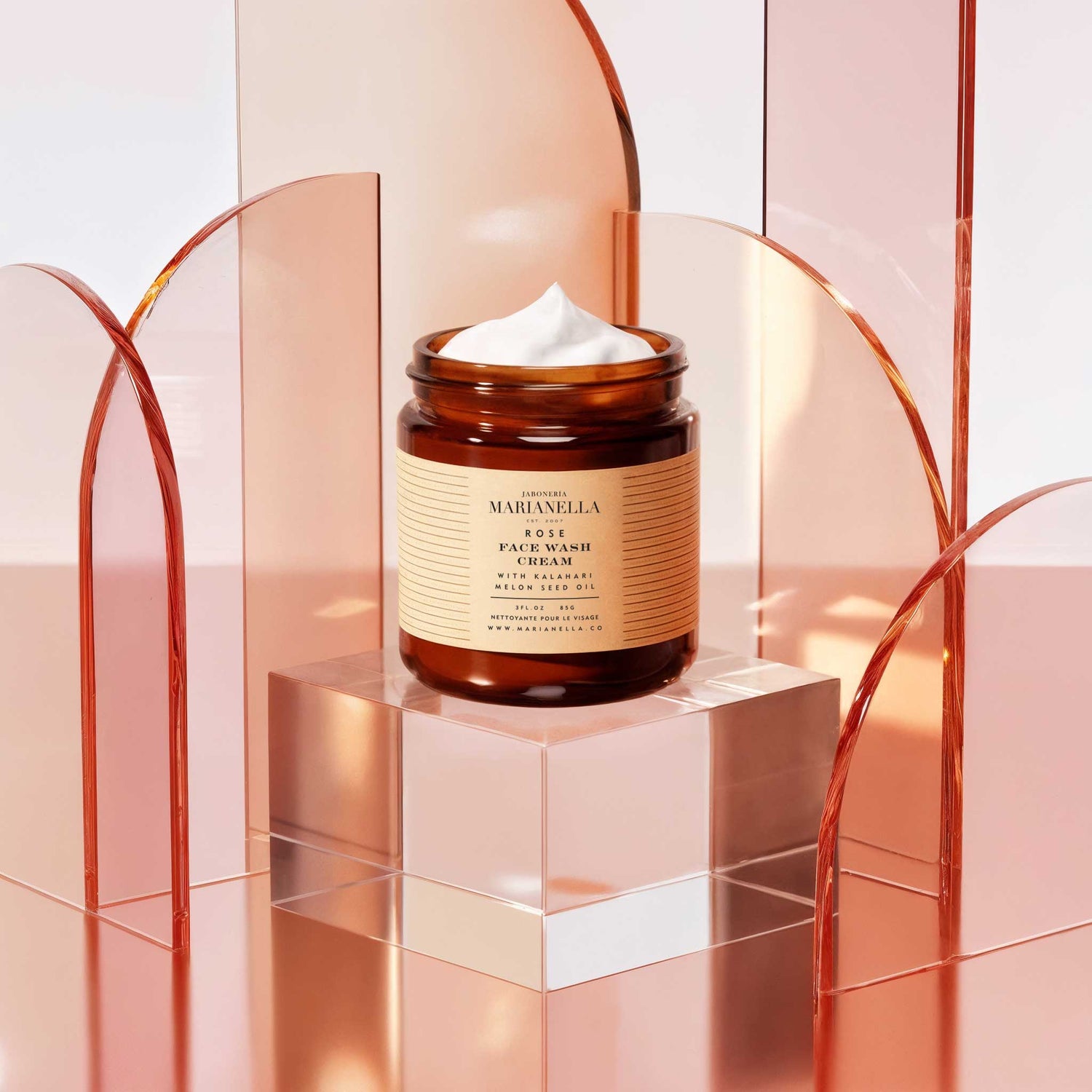
The Rose Face Wash Cream ($29) is handcrafted with glycerin as part of its hydrating base, formulated to cleanse without stripping the skin's natural moisture. Rose has its own supporting research, a 2019 study found that rose had positive antioxidant and anti-inflammatory effects on the skin, which pairs naturally with glycerin's humectant function in a single cleansing step. The formula reflects the brand's Venezuelan roots and its handcrafted-in-Brooklyn production, where small batches allow for ingredient concentrations that larger, mass-produced lines rarely commit to.
How to Use Glycerin in a Skincare Routine
Glycerin performs best on slightly damp skin, since it needs a water source to draw from before it can distribute that moisture through the stratum corneum. Applying a glycerin-based cleanser or cream immediately after washing, while skin still holds some surface moisture, maximizes the humectant effect described in the studies above. Layering an occlusive moisturizer afterward helps seal that hydration in, particularly in drier climates or seasons. For those building a 2026 routine around proven ingredients rather than passing trends, glycerin remains one of the few actives with decades of consistent clinical support behind it.
Explore Marianella's Rose Face Wash Cream ($29) to experience a glycerin-infused cleanse formulated in small batches in Brooklyn.
FAQ
What does glycerin do for the skin?
Glycerin acts as a humectant, meaning it draws water into the skin's outer layer and helps it stay there. It increases skin hydration and decreases uncontrolled evaporation of water from the epidermis, preventing dehydration and the resulting physical damage. It also supports the skin's barrier function over time with consistent use.
Is glycerin better than hyaluronic acid?
They work differently rather than one being universally better. Hyaluronic acid's larger molecular size makes it fantastic at hydrating the skin's surface, while glycerin's smaller size allows it to wedge deeper into the skin, providing effective daily hydration and a soft, supple feel. Many formulas, including well-regarded ones, use both together.
What concentration of glycerin is best in skincare?
Research shows that glycerin works best combined with other emollients at concentrations between 5 and 20 percent. Products formulated within this range tend to balance hydration with comfort, avoiding the tackiness or moisture-pulling issues that can occur with very high, undiluted concentrations.
Can glycerin cause dry skin?
Undiluted or very high concentrations can, in low humidity, pull moisture from deeper skin layers rather than the air, which is why formulation matters. Properly formulated products that pair glycerin with occlusive ingredients avoid this issue and instead support lasting hydration.
Is glycerin natural or synthetic?
Glycerin is a natural compound derived from vegetable oils or animal fats, though it can also be produced synthetically. Plant-derived glycerin is the more common source in clean and eco-luxury skincare formulations.

Dejar un comentario
Este sitio está protegido por hCaptcha y se aplican la Política de privacidad de hCaptcha y los Términos del servicio.